
High protein foods, listed by the gram.
Meat, fish, eggs, dairy, pulses and soya all carry useful protein, but the amounts per portion differ by more than you might expect. Here is a UK list per 100g and per portion, and the everyday staples that do most of the work.

Quick answer. The highest protein foods in the UK's food composition data (CoFID 2021) are lean meat and fish: grilled turkey breast has 35g of protein per 100g, grilled chicken breast 32g, Cheddar 25.4g and tinned tuna 24.9g. Eggs (14.1g), tempeh (20.7g), peanuts (25.8g) and pulses such as lentils and chickpeas (about 8g, cooked) are the main everyday and plant options. UK adults need about 0.75g of protein per kg of bodyweight a day, which the British Nutrition Foundation puts at 56g for men and 45g for women.
What are the best high protein foods?
Protein is found in most foods, but a few groups carry far more than the rest: meat, fish, eggs, dairy, pulses, nuts and soya. Under GB law, a food can only be labelled "high protein" when at least 20% of its energy comes from protein, and a "source of protein" when it is at least 12%, according to the nutrition claims rules.
The list below is from the government's Composition of Foods Integrated Dataset (CoFID), 2021 release, per 100g of the food as eaten, with the protein in a typical portion beside it.
High protein foods UK list
| Food (as eaten) | Protein per 100g | In a typical portion |
|---|---|---|
| Turkey breast fillet, grilled | 35g | 35g (100g) |
| Chicken breast, grilled, no skin | 32g | 32g (100g) |
| Peanuts, plain, unsalted | 25.8g | 7.7g (30g handful) |
| Cheddar cheese | 25.4g | 7.6g (30g) |
| Tuna, canned in brine, drained | 24.9g | 34.9g (140g) |
| Peanut butter, smooth | 22.8g | 6.8g (30g) |
| Tempeh | 20.7g | 16.6g (80g) |
| Sardines, canned in tomato sauce | 18.5g | 25.9g (140g) |
| Eggs, boiled | 14.1g | 8.5g (one 60g egg) |
| Edamame beans, boiled | 12.2g | 9.8g (80g) |
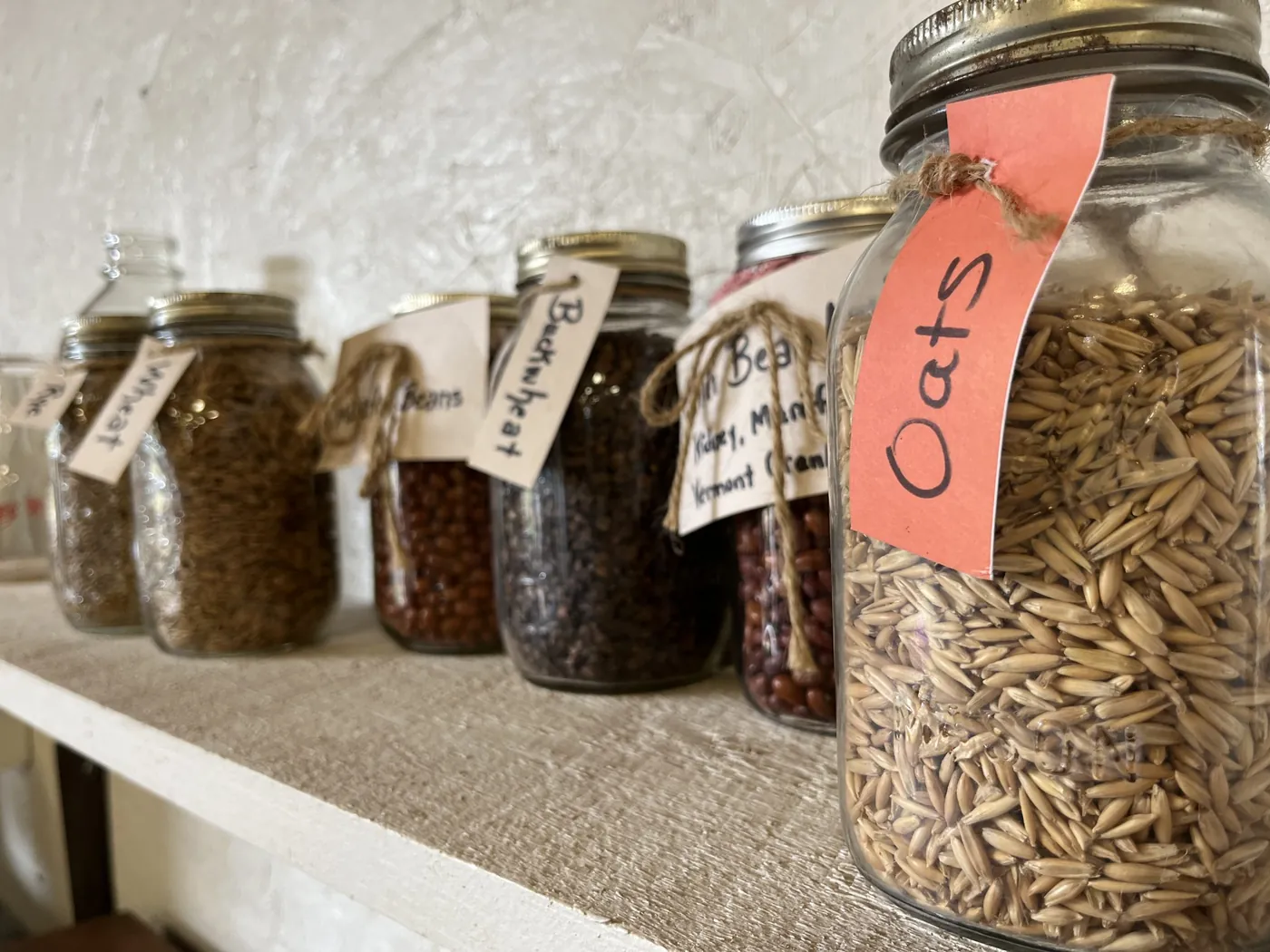
| Porridge oats, dry | 10.9g | 8.2g (75g) |
| Chickpeas, canned, drained | 8.4g | 6.7g (80g) |
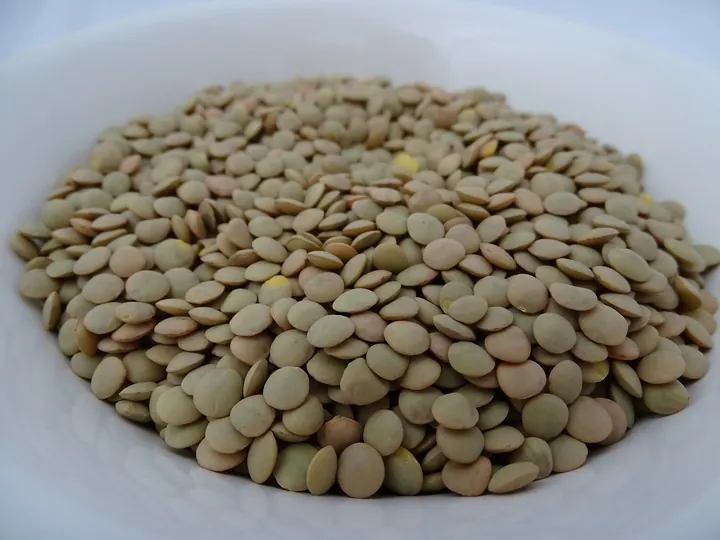
| Red lentils, boiled | 8.1g | 6.5g (80g) |
| Tofu, steamed | 8.1g | 6.5g (80g) |
| Greek style yoghurt, plain | 5.7g | 7.1g (125g pot) |
| Baked beans in tomato sauce | 5g | 4g (80g) |
| Semi-skimmed milk | 3.5g | 7g (200g glass) |
Portion figures are calculated from the per-100g values at the portion sizes used on our food pages. Linked foods open their own page with the full figures for every vitamin and mineral.
Two things stand out. Per portion, a tin of tuna (34.9g) or a chicken breast (32g) carries more than half the daily figure for women on its own. And per 100g, cooked pulses look modest at around 8g because they are mostly water once boiled: CoFID gives raw red lentils 25.6g per 100g, which becomes 8.1g after boiling.
What are the cheap high protein foods in the UK?
Prices change week to week, so this list sticks to the staples that keep well and are sold in own-label versions in most UK supermarkets. Each one carries a useful amount of protein per portion.
- Eggs. 8.5g in one boiled egg, and two make a meal with 17g.
- Tinned fish. 34.9g in a 140g portion of tuna and 25.9g in sardines in tomato sauce.
- Dried or tinned pulses. Lentils, chickpeas and beans carry 6.5g to 6.7g in an 80g cooked portion. The British Nutrition Foundation says "Pulses such as kidney beans, baked beans, chickpeas and lentils all provide a plant-based source of protein."
- Milk. 7g in a 200g glass of semi-skimmed.
- Peanut butter. 6.8g in a 30g serving.
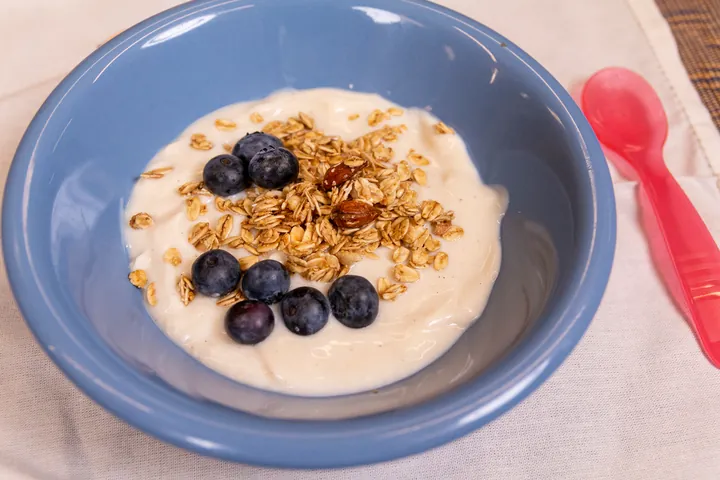
- Porridge oats. 8.2g in a 75g portion before any milk is added.
Combining them adds up fast. Porridge made with a glass of milk, two boiled eggs and a 140g tin of tuna come to about 67g in a day, calculated from the table.
What are the best plant-based high protein foods?
The NHS vegetarian diet page says "Pulses include beans, peas and lentils." It lists other non-dairy protein sources as eggs and meat alternatives, "such as tofu, mycoprotein (such as Quorn), textured vegetable protein, and tempeh."
- Tempeh has 20.7g per 100g, the most of the soya foods in the table.
- Tofu varies a lot by how it is made. Steamed tofu in CoFID has 8.1g per 100g, and fried tofu 23.5g, because frying drives off water.
- Quorn pieces have 14.0g per 100g as purchased.
- Edamame beans have 12.2g per 100g, about 9.8g in an 80g portion.
- Peanuts have 25.8g per 100g, though at 564kcal per 100g a 30g handful is the usual portion.
How much protein do you need a day?
The British Nutrition Foundation's protein page says the recommendation "for adults this is 0.75g per kg of bodyweight." It adds: "Current recommendations are 56g/day for men and 45g/day for women (based on bodyweights of 75kg for men and 60kg for women)." The UK Government Dietary Recommendations give 55.5g for men and 45.0g for women aged 19 to 64.
Most people already reach it. The BNF says that on average UK men eat about 85g and women about 67g of protein a day, and that athletes and older adults may need more. For everyday exercise it says "People who do some physical activity, like going for a run or to an exercise class are unlikely to need any extra protein." The UK figures by age and body weight are in our guide to how much protein you need a day. Our guide to what to eat after a run covers meals around training.
Where Immufix fits.
Immufix is not a protein food. One scoop (25g) contains 2.1g of protein, so it adds little to the totals above, and we make no protein claim for it. It is a daily vitamin and mineral powder, taken as one scoop in around 200ml of water, once a day.
One scoop contains 3.75mg of zinc (38% of the NRV), 50µg of chromium (125%) and 70mg of magnesium (19%). Zinc and chromium contribute to normal macronutrient metabolism. Magnesium contributes to normal muscle function. More on the nutrients behind muscle is in our guide to nutrients for normal muscle function, and the full list of amounts is on the science page.
The short version.
- Per 100g, grilled turkey breast (35g), chicken breast (32g), peanuts (25.8g), Cheddar (25.4g) and tinned tuna (24.9g) lead the UK list.
- Per portion, a tin of tuna (34.9g) and a chicken breast (32g) carry the most.
- Eggs, tinned fish, pulses, milk, peanut butter and oats are the staples that keep well and add up quickly.
- Tempeh, tofu, Quorn, edamame and pulses are the main plant sources.
- Adults need about 0.75g per kg of bodyweight a day, and most UK adults already eat more than that.
Food supplements should not be used as a substitute for a varied, balanced diet and a healthy lifestyle. If you have a medical condition, are pregnant, breastfeeding or taking medication, speak to your GP or pharmacist before taking any food supplement.


Daily Immune Support
Vitamins, minerals and plant nutrients in one daily scoop. The formula Paula Radcliffe has taken every day since 1998.
4.8 out of 5 · 89 reviewsMonthly subscription. £52.00 is charged every month until you cancel. Minimum three payments, then cancel any time. Subscription terms
New here? 20% off your first order with code TRYIMMUFIX. Apply it
Dispatched the same day on weekday orders placed before 2pm.
Free standard UK delivery. Royal Mail 48 tracked, 2 to 3 working days. UK addresses only.
30‑day money-back guarantee. Try your first pouch of IMMUFIX for up to 30 days. If it’s not for you, we’ll refund your first qualifying pouch, less £10 shipping and handling. First purchase only. T&Cs apply.
Checkout completes securely on immufix.com
More from the journal.
The UK's high fibre foods, by the gram.
The UK foods with the most fibre, with AOAC fibre per 100g from the government's CoFID data and per standard portion, from bran and beans to fruit.
10 October 2026 · 6 min read
Where to find zinc in everyday food.
Which foods have the most zinc, with per-100g figures from UK government data, the NHS daily amounts for men and women, and simple ways to eat more.
10 October 2026 · 6 min read
How much calcium you need each day.
The NHS says adults need 700mg of calcium a day. UK figures for every age, how milk, cheese and yoghurt add up, and the 1,500mg supplement line.
7 November 2026 · 6 min read