
How much calcium you need each day.
The NHS figure for adults is 700mg of calcium a day, and most people can get it from food. Teenagers need more, and the number to know if you take supplements is 1,500mg.
Quick answer. The NHS says: "Adults aged 19 to 64 and over need 700mg of calcium a day." Teenagers need more: 1,000mg a day for boys aged 11 to 18 and 800mg for girls, under the UK Government Dietary Recommendations. For supplements, the NHS line is: "Taking 1,500mg or less a day is unlikely to cause any harm."
How much calcium a day do adults need in the UK?
The NHS page on calcium gives one figure for adults: "Adults aged 19 to 64 and over need 700mg of calcium a day." It adds: "You should be able to get all the calcium you need from your daily diet."
The figure comes from the UK Government Dietary Recommendations, published by Public Health England in August 2016. Its mineral figures, in its own words, "were obtained from Dietary Reference Values for Food Energy and Nutrients for the United Kingdom (1991)." The amount is the same for men and women, and it does not change at 65 or 75.
One group is set higher. The British Dietetic Association's calcium food fact sheet lists 1,250mg a day for women who are breastfeeding.
How much calcium do children and teenagers need?
The same government tables set a figure for every age band. These are the daily amounts, in milligrams:
| Age | Males, per day | Females, per day |
|---|---|---|
| 1 to 3 years | 350mg | 350mg |
| 4 to 6 years | 450mg | 450mg |
| 7 to 10 years | 550mg | 550mg |
| 11 to 14 years | 1,000mg | 800mg |
| 15 to 18 years | 1,000mg | 800mg |
| 19 to 64 years | 700mg | 700mg |
| 65 to 74 years | 700mg | 700mg |
| 75 years and over | 700mg | 700mg |
The teenage years carry the highest figures of any age. From 11 to 18, boys need 1,000mg and girls 800mg, then both drop to 700mg at 19.
More on calcium, and the UK foods that carry most of it, in our calcium guide.
Is the calcium daily intake 700mg or 800mg?
Both numbers are real. They answer different questions.
- 700mg is the government's daily amount for adults. It is the figure to compare your diet with.
- 800mg is the nutrient reference value (NRV) for calcium, set in food labelling law. Every pack uses it, so a label can show "30% NRV" on a common scale. It is a yardstick, not a personal target.
So 100% NRV on a label is a little more than the adult figure. Our guide to what NRV means explains the sum behind the percentage.
How do you get 700mg of calcium a day from food?
The NHS lists milk, cheese and other dairy foods; green leafy vegetables such as curly kale and okra; soya drinks with added calcium; bread and anything made with fortified flour; and fish where you eat the bones, such as sardines and pilchards. It leaves spinach off the list, noting that "spinach does contain high levels of calcium but the body cannot digest it all".
The BDA fact sheet gives calcium per portion. These are its figures:
| Food | Portion | Calcium |
|---|---|---|
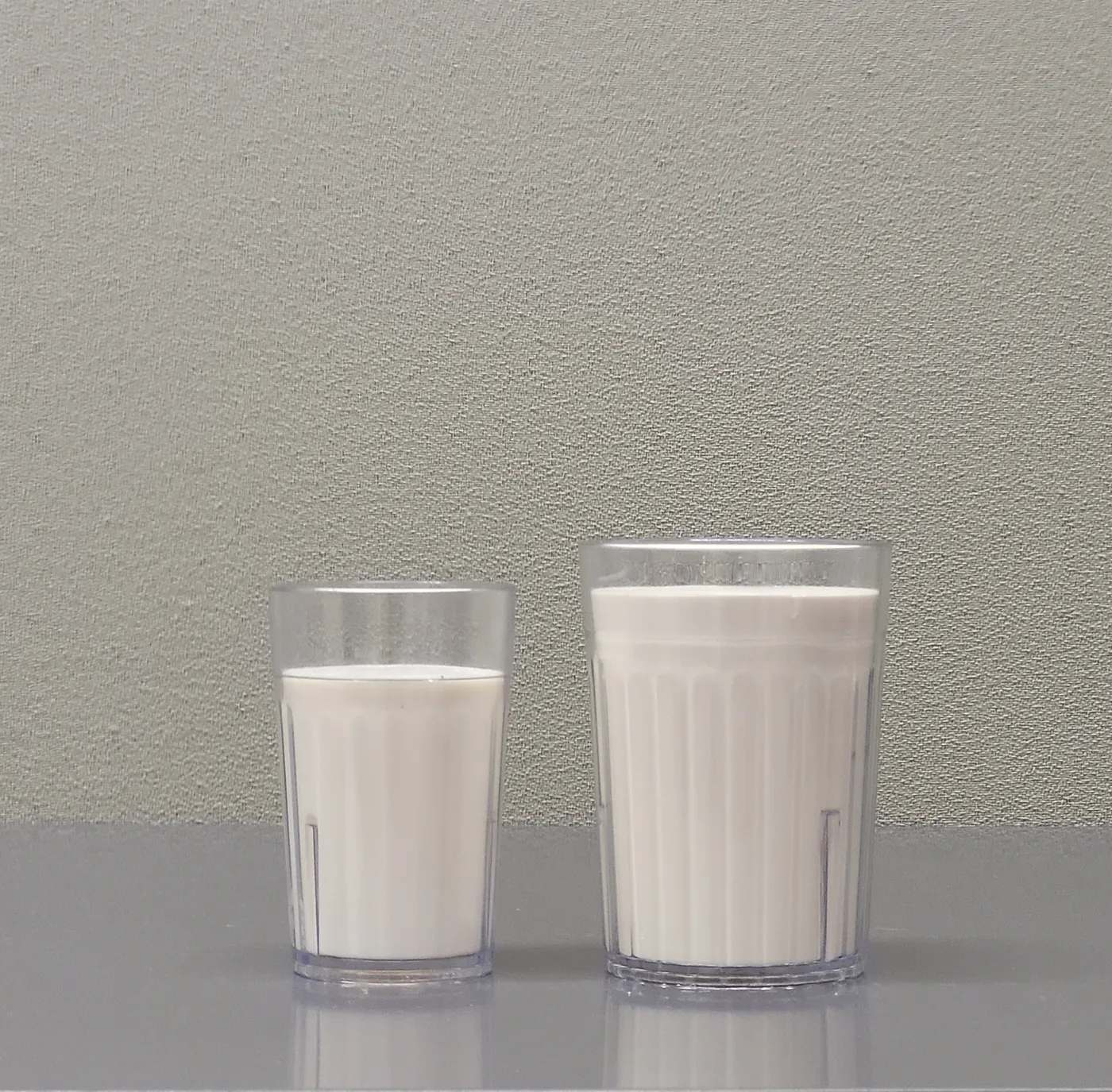
| Cow's milk | 200ml | 240mg |
| Cheddar | 30g | 240mg |
| Plain yoghurt | 150g | 240mg |
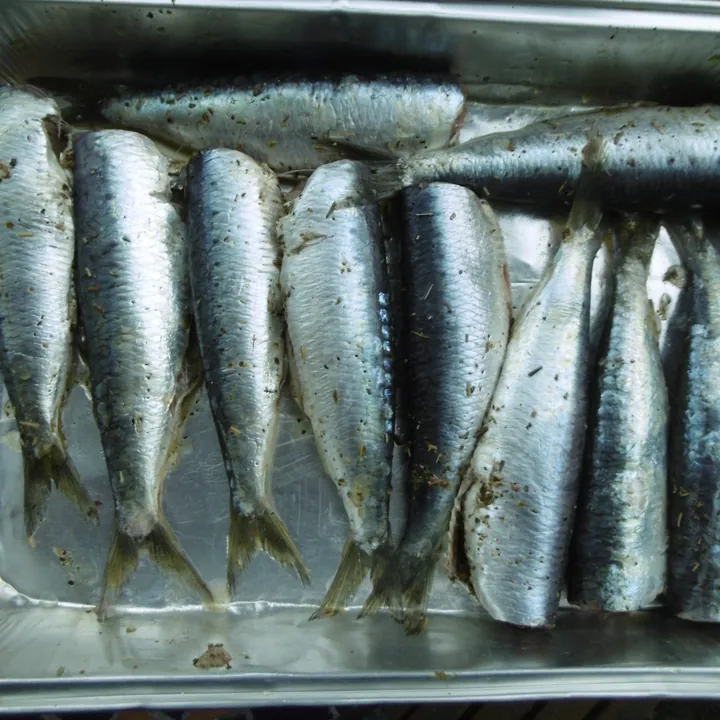
| Sardines, with bones | Half a tin (60g) | 240mg |
| Calcium-fortified plant drink | 100ml | 120 to 190mg |
| White bread | 2 large slices (100g) | 155mg |
| Kale, boiled | 100g | 150mg |
| Wholemeal bread | 2 large slices (100g) | 105mg |
By our calculation, a 200ml glass of milk, a 30g piece of Cheddar and a 150g pot of plain yoghurt add up to 720mg, just over the adult figure. The BDA adds two useful points: "Low-fat dairy products have the same amount of calcium as the full-fat versions", and for plant drinks, "It is important to check that the products you are buying contain added calcium as many organic products, for example, are not fortified."
Which foods have the most calcium per 100g?
The UK government's food composition data, CoFID 2021, gives these amounts per 100g:
- English Cheddar: 739mg.
- Sardines, canned in brine, drained: 679mg.
- Almonds: 269mg.
- White bread, sliced: 177mg.
- Low-fat plain yoghurt: 162mg.
- Semi-skimmed milk: 120mg.
Cheese and tinned fish are dense sources, but portions are small. Milk and yoghurt carry less per 100g, but they are eaten in larger portions. Our guide to calcium-rich foods has the full table.
How much calcium is too much?
The NHS guidance on taking too much is about supplements. The Department of Health and Social Care advice on its calcium page is:
- "If you take calcium supplements, do not take too much as this could be harmful."
- "Taking 1,500mg or less a day is unlikely to cause any harm."
The BDA adds that "if you think you need more than 500mg of extra calcium, it is advisable to discuss this with a pharmacist, doctor or registered dietitian". Add up the calcium line on every product you take. Our guide to reading a supplement label shows where to find it.
What does vitamin D have to do with calcium?
The BDA puts it simply: "Vitamin D helps your body to absorb and use calcium from the foods you eat." Vitamin D holds these authorised health claims in Great Britain, in their set wording:
- Vitamin D contributes to normal absorption and utilisation of calcium and phosphorus.
- Vitamin D contributes to the maintenance of normal bones and teeth.
Our guide to vitamin D foods covers where to find it.
Where Immufix fits.
Food comes first, and calcium comes from food. Immufix is one scoop (25g) in around 200ml of water, once a day. Calcium is present only at trace levels and is not declared on the label, so Immufix is not a source of calcium and we make no claim for it. Each scoop provides 1.25µg of vitamin D3, 25% of the NRV, and vitamin D contributes to the maintenance of normal bones and teeth. That is well below the 10µg a day the NHS advises everyone to consider taking from October to March, so Immufix does not cover that advice. Every amount in the formula is on the science page.
The short version.
- The NHS says adults need 700mg of calcium a day, and the figure stays the same over 65.
- Teenagers need the most: 1,000mg a day for boys aged 11 to 18 and 800mg for girls.
- A glass of milk, a piece of Cheddar and a pot of yoghurt add up to about 720mg.
- Labels use a separate yardstick, the NRV of 800mg.
- Keep calcium from supplements at 1,500mg a day or less. Add up every product you take.
Food supplements should not be used as a substitute for a varied, balanced diet and a healthy lifestyle. If you have a medical condition, are pregnant, breastfeeding or taking medication, speak to your GP or pharmacist before taking any food supplement.


Daily Immune Support
Vitamins, minerals and plant nutrients in one daily scoop. The formula Paula Radcliffe has taken every day since 1998.
4.8 out of 5 · 89 reviewsMonthly subscription. £52.00 is charged every month until you cancel. Minimum three payments, then cancel any time. Subscription terms
New here? 20% off your first order with code TRYIMMUFIX. Apply it
Dispatched the same day on weekday orders placed before 2pm.
Free standard UK delivery. Royal Mail 48 tracked, 2 to 3 working days. UK addresses only.
30‑day money-back guarantee. Try your first pouch of IMMUFIX for up to 30 days. If it’s not for you, we’ll refund your first qualifying pouch, less £10 shipping and handling. First purchase only. T&Cs apply.
Checkout completes securely on immufix.com
More from the journal.
How much selenium you need each day.
The NHS says men need 75µg of selenium a day and women 60µg. UK figures for every age, the 350µg supplement line and how to add up your products.
10 October 2026 · 6 min read
How much iron you need each day.
The NHS says men need 8.7mg of iron a day and women aged 19 to 49 need 14.8mg. UK figures for every age, iron-rich foods and the 17mg supplement line.
7 November 2026 · 6 min read
How much vitamin B12 you need each day.
The NHS says adults need about 1.5 micrograms of vitamin B12 a day. UK figures by age, the best foods, vegan sources and the 2mg supplement line.
7 November 2026 · 6 min read