
Vitamin D foods in the UK, by the numbers.
Oily fish, egg yolks and fortified foods carry most of the vitamin D in a UK diet, and most other foods carry very little. Here are the figures from the government's own food data, and what they mean between October and March.
Quick answer. In the UK your skin cannot make enough vitamin D from sunlight between October and March, so in winter it has to come from food or a supplement. The best food sources are oily fish (herring, kippers, mackerel, salmon, trout, sardines), egg yolks and fortified foods such as some fat spreads and breakfast cereals; per 100g, grilled herring has 16.1µg and grilled mackerel 8.5µg in the government's CoFID 2021 data, while milk, cheese, white fish and vegetables have little or none. Because few foods carry much, the NHS advises everyone to consider a 10 microgram vitamin D supplement a day in autumn and winter.
How do you get vitamin D in winter naturally?
Most vitamin D does not come from food. The body makes it from sunlight on the skin, and in the UK that only works for part of the year. The NHS says that from about late March or early April to the end of September "most people should be able to make all the vitamin D they need from sunlight", but "between October and early March we do not make enough vitamin D from sunlight" (NHS). NICE puts it more bluntly: "It is not possible to get enough vitamin D from sunlight between October and March in the UK" (NICE NG34).
That leaves food as the only natural source in winter. The NHS is plain about the limits of that: "Vitamin D is also found in a small number of foods." It goes on to say that "since it's difficult for people to get enough vitamin D from food alone", everyone should consider a daily supplement containing 10 micrograms during the autumn and winter. Our guide to vitamin D in a UK winter covers that advice and who should take it all year.
So the honest answer is this. Eat the foods below, and eat them often, but do not expect them to reach 10 micrograms a day on their own.
What are the best vitamin D foods in the UK?
The NHS lists oily fish (such as salmon, sardines, trout, herring or mackerel), red meat, egg yolks, liver, and fortified foods such as some fat spreads and breakfast cereals. The British Dietetic Association adds "some mushrooms", infant formula and unsweetened soya "milk" with added vitamin D.
For the numbers, the source is the government's Composition of Foods Integrated Dataset (CoFID). Every figure below is from its 2021 release, per 100g of the food as described.
| Food (as described in CoFID) | Vitamin D per 100g | Share of the NHS 10µg |
|---|---|---|
| Herring, grilled | 16.1µg | 161% |
| Pink salmon, canned in brine, drained | 13.6µg | 136% |
| Egg yolk, boiled | 12.6µg | 126% |
| Kippers, grilled | 10.1µg | 101% |
| Mackerel, grilled | 8.5µg | 85% |
| Rainbow trout, baked | 8.2µg | 82% |
| Farmed salmon, grilled | 7.8µg | 78% |
| Fat spread, reduced fat, polyunsaturated | 5.8µg | 58% |
| Bran flakes, fortified | 4.6µg | 46% |
| Sardines, canned in brine, drained | 3.3µg | 33% |
| Eggs, whole, boiled | 3.2µg | 32% |
| Tuna, canned in brine, drained | 1.1µg | 11% |
| Ox liver, stewed | 1.1µg | 11% |
| Butter | 0.9µg | 9% |
| Beef mince, stewed | 0.8µg | 8% |
| Cheddar cheese | 0.3µg | 3% |
| Cod, baked | Trace | Trace |
| Whole milk, pasteurised | Trace | Trace |
| White mushrooms, raw | 0.0µg | 0% |
The right-hand column is calculated: each CoFID figure divided by the 10 micrograms the NHS advises in autumn and winter. "Trace" is CoFID's own term for an amount too small to give a figure. Fortified foods vary by brand, so the label on the pack is the figure to trust for spreads and cereals.
How much vitamin D is in a portion of oily fish?
The NHS fish page says "A portion is around 140g", and that a healthy, balanced diet "should include at least 2 portions of fish a week, including 1 of oily fish." The figures above multiply CoFID's per-100g values by 1.4.
One portion of grilled mackerel comes close to 12 micrograms. That is a good meal for vitamin D. Spread across a week, though, one oily fish meal works out at under 2 micrograms a day (11.9 divided by 7, calculated). That gap is why, in winter, the NHS sees food as part of the picture, not the whole of it.
The NHS also says girls, women who may have a child one day, and pregnant and breastfeeding women should eat no more than 2 portions of oily fish a week. It also says "Fresh and canned tuna do not count as oily fish", which matches the low CoFID figure for canned tuna.
Which everyday foods have almost no vitamin D?
Several foods people assume are good sources barely register in the UK data:
- Milk. CoFID lists whole, semi-skimmed and skimmed pasteurised milk at a trace. The NHS says UK cows' milk "is generally not a good source of vitamin D because it is not fortified, as it is in some other countries." Our article on whether vitamin D is added to milk in the UK goes through the figures.
- Cheese and yoghurt. 0.3µg per 100g for Cheddar, 0.1µg or less for most yoghurts.
- White fish. Cod is listed at a trace, baked, grilled or in batter. The vitamin D is in the oily fish.
- Ordinary mushrooms. CoFID measures white mushrooms at 0.0µg. The BDA says "some mushrooms", not all, so check the label of any mushrooms sold for their vitamin D.
- Fruit and vegetables. Excellent for many other nutrients, but not a source of vitamin D.
What does vitamin D do?
The NHS says vitamin D "helps regulate the amount of calcium and phosphate in the body", and that these nutrients "are needed to keep bones, teeth and muscles healthy."
The health claims allowed for vitamin D in Great Britain use set wording:
- Vitamin D contributes to the maintenance of normal bones and teeth.
- Vitamin D contributes to normal muscle function.
- Vitamin D contributes to normal absorption and utilisation of calcium and phosphorus.
How can you add more vitamin D foods to a UK diet?
- Make one fish meal a week oily. Mackerel, kippers, herring, trout or salmon, grilled or baked.
- Keep tins in the cupboard. Canned pink salmon (13.6µg per 100g) and sardines (3.3µg) need no cooking.
- Eat the whole egg. The vitamin D is in the yolk: 12.6µg per 100g of yolk against 3.2µg per 100g of whole egg.
- Read the label on cereals and spreads. Fortified versions carry useful amounts. Unfortified ones may carry none.
- Then follow the NHS advice. From October to March, consider a daily 10 microgram supplement as well.
Where Immufix fits.
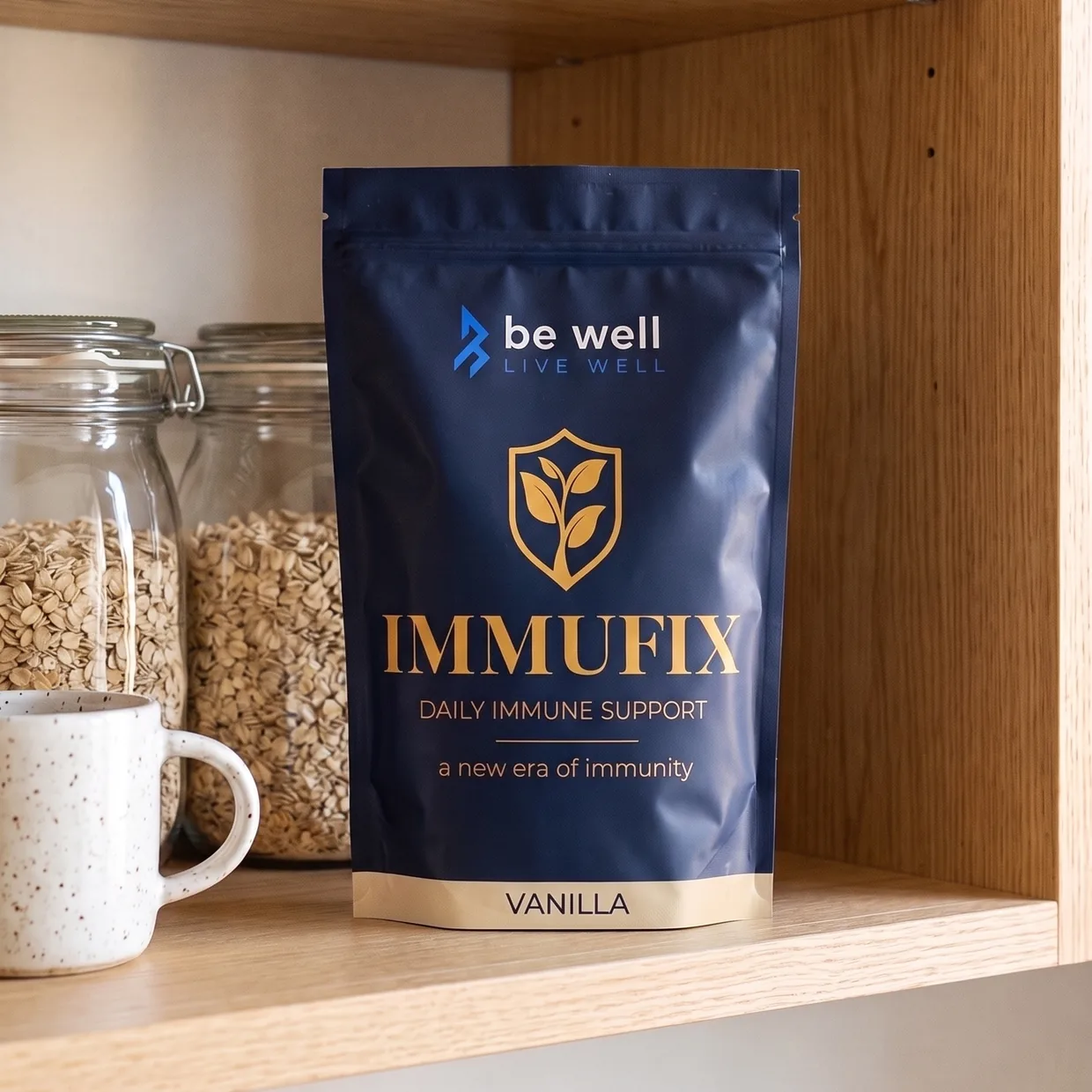
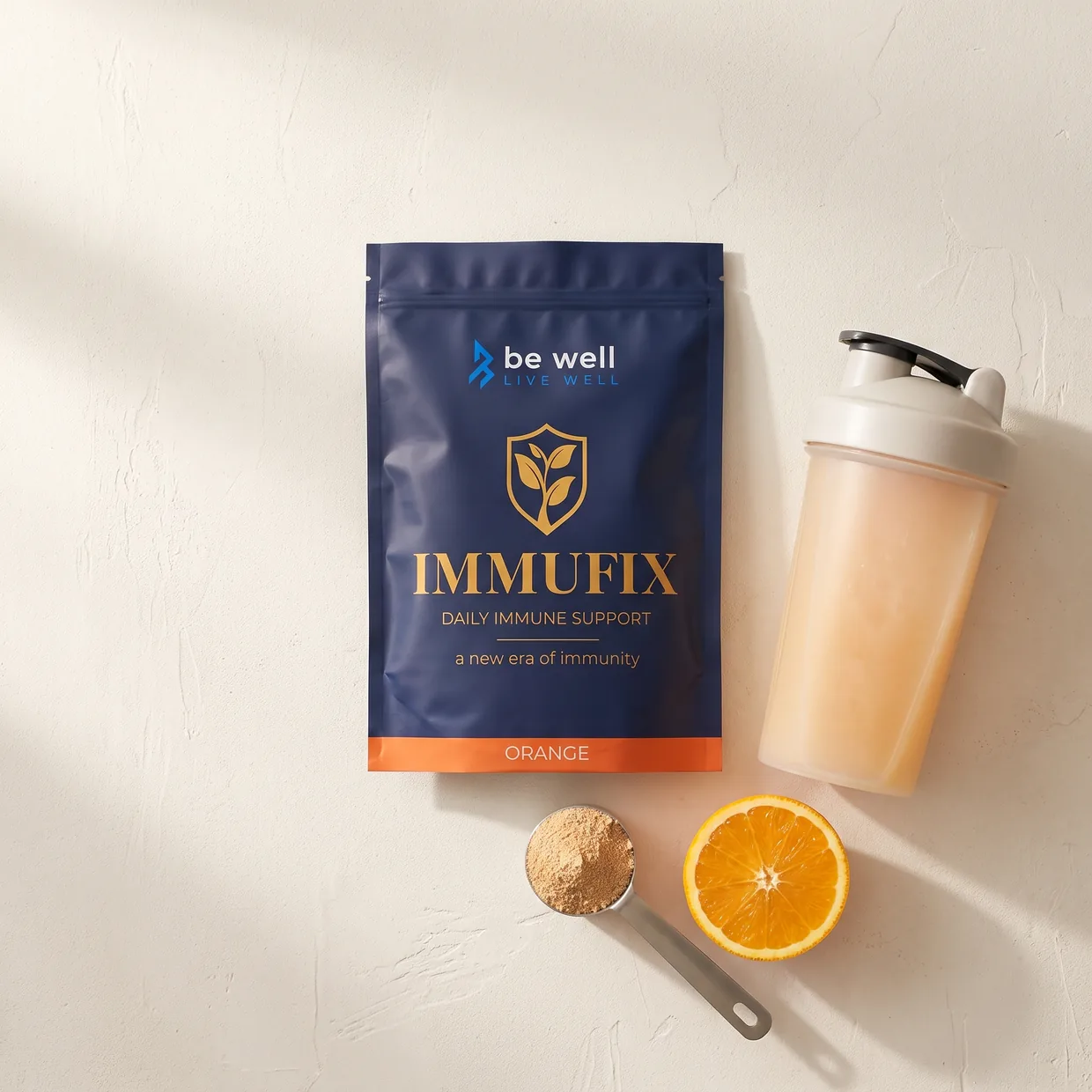
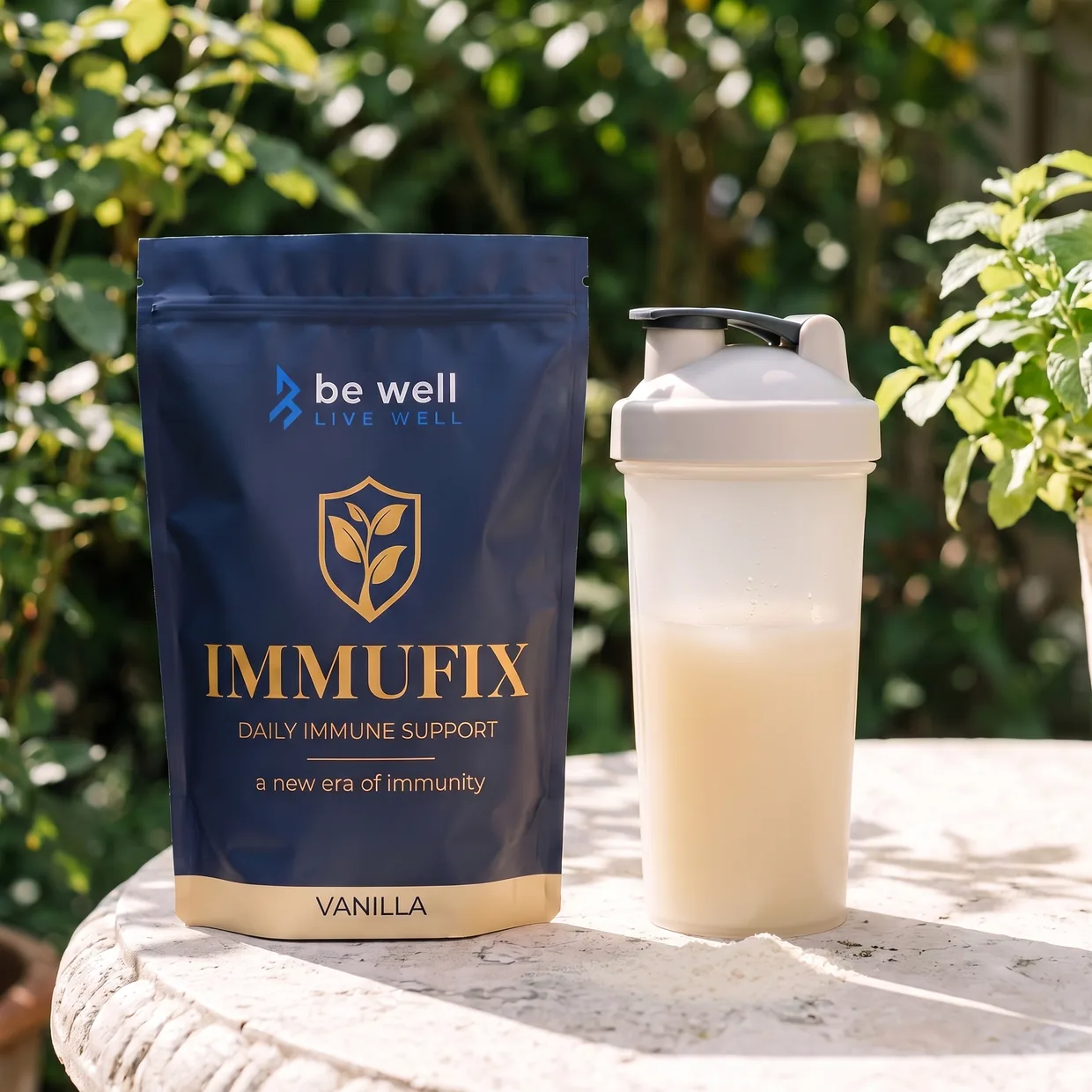
Immufix is not a vitamin D supplement and it does not replace one. One scoop (25g) in around 200ml of water, once a day, provides 1.25 micrograms of vitamin D3, which is 25% of the nutrient reference value but only 12.5% of the 10 micrograms the NHS advises in autumn and winter (calculated). If you follow the NHS advice, take a dedicated vitamin D supplement and count the 1.25 micrograms in your total. Vitamin D contributes to the maintenance of normal bones and teeth and to normal muscle function. Every amount in a scoop is listed on the science page.
The short version.
- In the UK, sunlight cannot provide enough vitamin D between October and March, so winter vitamin D comes from food or a supplement.
- Per 100g, grilled herring (16.1µg), canned pink salmon (13.6µg), egg yolk (12.6µg) and grilled mackerel (8.5µg) lead the UK data.
- Milk, cheese, white fish, ordinary mushrooms and vegetables carry little or none.
- One 140g portion of oily fish a week averages under 2 micrograms a day (calculated).
- The NHS advises everyone to consider 10 micrograms a day from a supplement in autumn and winter.
Food supplements should not be used as a substitute for a varied, balanced diet and a healthy lifestyle. If you have a medical condition, are pregnant, breastfeeding or taking medication, speak to your GP or pharmacist before taking any food supplement.

Daily Immune Support
Vitamins, minerals and plant nutrients in one daily scoop. The formula Paula Radcliffe has taken every day since 1998.
4.8 out of 5 · 89 reviewsDispatched the same day on weekday orders placed before 2pm.
Free standard UK delivery. Royal Mail 48 tracked, 2 to 3 working days. UK addresses only.
30‑day money-back guarantee. Try your first pouch of IMMUFIX for up to 30 days. If it’s not for you, we’ll refund your first qualifying pouch, less £10 shipping and handling. First purchase only. T&Cs apply.
Checkout completes securely on immufix.com
More from the journal.
What antioxidants are, in plain English.
What antioxidants are, what oxidative stress means in plain English, which nutrients hold the authorised claim, and the UK foods that provide them.
10 October 2026 · 7 min read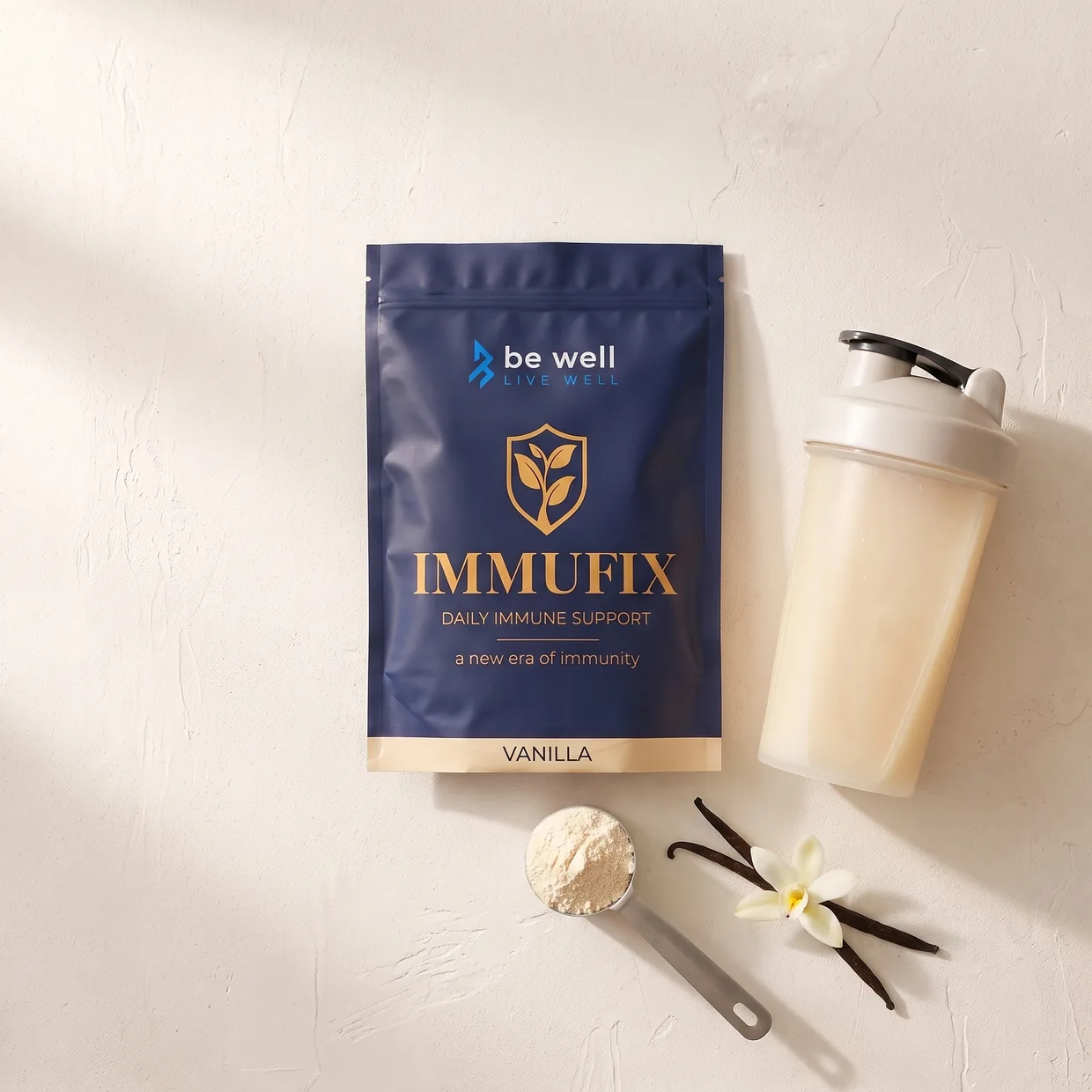
Biotin, what it does and where it is.
Biotin (vitamin B7) foods per 100g from UK government data, what the NHS says about biotin, its authorised claims and the NHS 0.9mg supplement guide.
10 October 2026 · 5 min read
What chromium is, and where you find it.
What chromium is, which foods contain it, how much the NHS says adults need, and the one authorised health claim chromium holds in Great Britain.
10 October 2026 · 6 min read