
Vitamin D in a UK winter, explained.
On the shortest day of the year London gets under eight hours of daylight and Edinburgh under seven. That is why the NHS gives everyone in the UK the same piece of advice every autumn.

Quick answer. The NHS advises everyone in the UK to consider a daily 10 microgram vitamin D supplement from October to March. Some people are advised to take it all year. Adults should not take more than 100 micrograms a day.
Why the UK is different in winter.
The body makes most of its vitamin D from sunlight on the skin. The NHS says that from about late March or early April to the end of September, "most people should be able to make all the vitamin D they need from sunlight". The rest of the year is different. In the NHS's words, "between October and early March we do not make enough vitamin D from sunlight". The UK sits far enough north that the winter sun stays low and the days are short.
From the last Sunday in October the clocks go back as well (GOV.UK), which moves an hour of daylight out of the evening. For most people with an office job, a winter weekday means leaving home in the dark and coming back in the dark.
What the NHS advises.
The advice is short and it applies to almost everyone. In the NHS's words, "everyone (including pregnant and breastfeeding women) should consider taking a daily supplement containing 10 micrograms of vitamin D during the autumn and winter."
Some people are advised to take 10 micrograms throughout the year, not only in winter. The NHS lists adults and children over 4 who:
- are not often outdoors
- are in an institution like a care home
- usually wear clothes that cover up most of their skin when outdoors
The NHS also says that people with dark skin, for example those of African, African-Caribbean or south Asian background, should consider a daily 10 microgram supplement all year round. There is separate advice for babies and children aged 1 to 4, and it is worth reading in full on the NHS vitamin D page.
Everyone should consider taking a daily supplement containing 10 micrograms of vitamin D during the autumn and winter.
NHS advice for the UKWhat vitamin D does.
The NHS describes it simply: vitamin D "helps regulate the amount of calcium and phosphate in the body", and those nutrients "are needed to keep bones, teeth and muscles healthy."
The claims a food or supplement is allowed to make about vitamin D in Great Britain say the same thing in more formal language. Vitamin D contributes to the maintenance of normal bones and teeth, to normal muscle function, and to the normal absorption and use of calcium and phosphorus.
Where to find it in food.
Vitamin D is found in a small number of foods. The NHS lists:
- oily fish, such as salmon, sardines, trout, herring or mackerel
- red meat
- liver
- egg yolks
- fortified foods, such as some fat spreads and breakfast cereals
Because so few foods carry much of it, the NHS advice for autumn and winter is a supplement rather than a change of diet.
How much is too much.
More is not better. The NHS says adults should not take more than 100 micrograms (4,000 IU) of vitamin D a day, "as it could be harmful". If you take more than one product, add up the vitamin D in each. Your GP or pharmacist can help if you are unsure.
Where Immufix fits.
Immufix is not a vitamin D supplement and it does not replace one. One 25g scoop contains 1.25 micrograms of vitamin D3, which is 25% of the nutrient reference value. That counts towards your day, but on its own it is well short of the 10 micrograms the NHS advises in autumn and winter. If you follow the NHS advice, take a dedicated vitamin D supplement as well, and count the 1.25 micrograms in your total.
What Immufix does is put a broad range of vitamins, minerals and plant nutrients into one daily drink. B vitamins and magnesium contribute to normal energy-yielding metabolism and to the reduction of tiredness and fatigue, and magnesium also contributes to normal muscle function. Every amount is listed on the science page.

The short version.
- From October to March, the NHS advises everyone in the UK to consider 10 micrograms of vitamin D a day.
- Some people are advised to take it all year round.
- Oily fish, red meat, liver, egg yolks and fortified foods contain some, but few foods contain much.
- Do not take more than 100 micrograms a day.
- Immufix contains 1.25 micrograms per scoop. It contributes, it does not cover the advice on its own.
Food supplements should not be used as a substitute for a varied, balanced diet and a healthy lifestyle. If you have a medical condition, are pregnant, breastfeeding or taking medication, speak to your GP or pharmacist before taking any food supplement.

Daily Immune Support
Vitamins, minerals and plant nutrients in one daily scoop. The formula Paula Radcliffe has taken every day since 1998.
4.8 out of 5 · 89 reviewsDispatched the same day on weekday orders placed before 2pm.
Free standard UK delivery. Royal Mail 48 tracked, 2 to 3 working days. UK addresses only.
30‑day money-back guarantee. Try your first pouch of IMMUFIX for up to 30 days. If it’s not for you, we’ll refund your first qualifying pouch, less £10 shipping and handling. First purchase only. T&Cs apply.
Checkout completes securely on immufix.com
More from the journal.

What antioxidants are, in plain English.
What antioxidants are, what oxidative stress means in plain English, which nutrients hold the authorised claim, and the UK foods that provide them.
10 October 2026 · 7 min read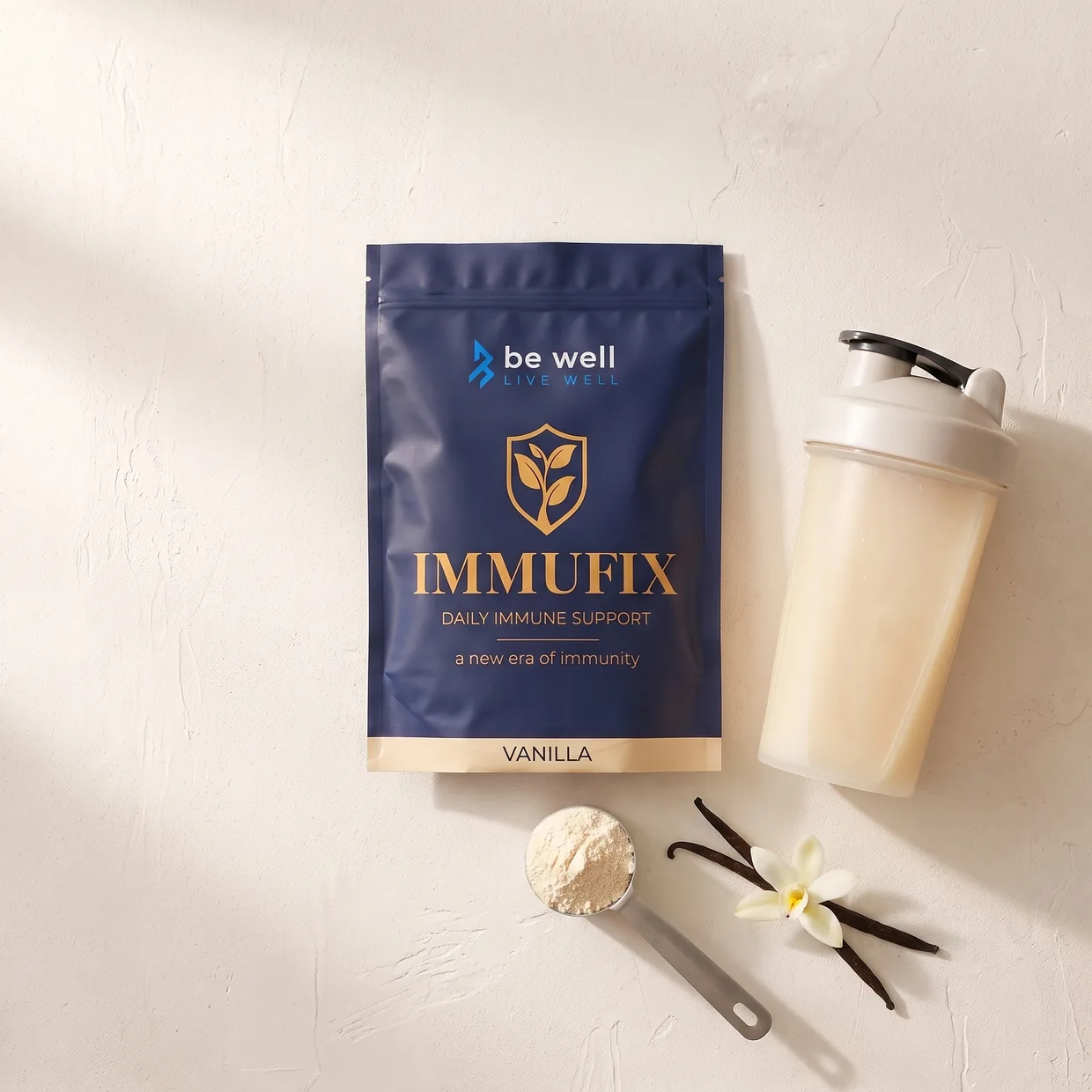
Biotin, what it does and where it is.
Biotin (vitamin B7) foods per 100g from UK government data, what the NHS says about biotin, its authorised claims and the NHS 0.9mg supplement guide.
10 October 2026 · 5 min read
What chromium is, and where you find it.
What chromium is, which foods contain it, how much the NHS says adults need, and the one authorised health claim chromium holds in Great Britain.
10 October 2026 · 6 min read