
What chromium is, and where you find it.
Chromium is a trace mineral that the body needs in tiny amounts, measured in micrograms. Here is what it is, which foods carry it, and what UK and European experts say about how much is enough.
Quick answer. Chromium is a trace mineral found in small amounts in many foods, mainly in the form called trivalent chromium. The NHS lists meat, nuts and cereal grains as good sources, and says around 25 micrograms (µg) a day should be enough for adults. In Great Britain chromium holds one authorised health claim: chromium contributes to normal macronutrient metabolism. Most people get enough from a varied diet.
What is chromium?
Chromium is a metallic element. In nutrition it counts as a trace mineral, which means the body needs it in micrograms rather than milligrams. A microgram is a thousandth of a milligram.
It comes in more than one chemical form, and the difference matters. A 2023 scoping review for the Nordic Nutrition Recommendations (Henriksen and Bügel) says: "Chromium is a trace element mainly in the form of trivalent chromium in foods and dietary supplements." Trivalent chromium is also written as chromium III or Cr(III).
The other form you may read about is hexavalent chromium, or chromium VI. That is the industrial form. The same review lists its uses as "chrome pigment production, chrome plating, stainless steel manufacturing, and leather tanning". It is not the form in food or in food supplements, and the two should not be confused.
Which foods contain chromium?
The NHS keeps its list to three. Its page on other vitamins and minerals names good sources of chromium as:
- Meat
- Nuts
- Cereal grains
The Nordic review gives a slightly longer list: "Chromium is ubiquitously found in foods, but fish, whole grain products, nuts, pulses, spices, and processed meats are good sources." It adds that most other foods have at least low amounts, under 10µg per 100g.
In practice, everyday foods that fit those groups include:
- Whole grains: porridge oats, wholemeal bread, brown rice and wholewheat pasta.
- Pulses: lentils, chickpeas and beans.
- Nuts: a handful of almonds, hazelnuts or Brazil nuts.
- Meat and fish: as part of ordinary meals.
- Spices: named in the Nordic review, though most recipes use them by the pinch.
Why is there no table of chromium per 100g?
Because the reliable figures do not exist for UK foods. The UK government's food composition dataset, CoFID, lists iron, zinc, selenium, iodine and other minerals for thousands of foods, but it has no chromium column.
Chromium is hard to measure in food. The Nordic review explains that analysis "requires special sampling procedures to avoid chromium contamination from the environment (air, stainless steel, etc.)", and warns that older figures, from before about 1980, should be used with care. Any website that gives a precise chromium figure for a single food is worth reading with that in mind.

How much chromium do I need a day?
The NHS says: "Around 25 micrograms of chromium a day should be enough for adults." It also says "You should be able to get all the chromium you need by eating a varied and balanced diet."
Different bodies use different figures, and it helps to see them side by side:
- NHS: around 25µg a day should be enough for adults.
- Labels: the nutrient reference value is 40µg, set in Annex XIII of Regulation 1169/2011. Every % NRV for chromium on a UK label is worked out from this.
- European Food Safety Authority: in its 2014 opinion, it concluded "that no Average Requirement and no Population Reference Intake for chromium can be defined", and did not set an adequate intake either.
- Typical intakes: the Nordic review reports EFSA's estimate that adults in Europe take in 57 to 84µg a day from their diet.
So scientists still disagree on exactly how much people need, and the Nordic review notes that the question of whether chromium is essential "is disputed". What the UK figures agree on is that a varied diet covers it for most people. For how a single label figure like 40µg relates to these UK amounts, see our guide to what NRV means.
Can you have too much chromium?
From food, it is very unlikely. The NHS says there is "not enough evidence to know what the effects might be of taking high doses of chromium each day", and that "Having 10mg or less a day of chromium from food and supplements is unlikely to cause any harm." 10mg is 10,000µg, so 50µg is 0.5% of that level (calculated).
The Nordic review notes that many food supplements contain 50 to 100µg of chromium per serving. If you take more than one product, add up the chromium across all of them. If you take medication or have a medical condition, ask your GP or pharmacist before adding a supplement.
What does chromium do?
In Great Britain, chromium holds one authorised health claim that a product at the right level may use. The wording is set in the GB nutrition and health claims register:
- Chromium contributes to normal macronutrient metabolism.
Macronutrients are the three nutrients the body needs in large amounts: carbohydrate, protein and fat. Metabolism is the set of chemical processes that break them down and use them. The register says the claim may be used only for food which is "at least a source of trivalent chromium", which is the food form described above. Zinc holds the same claim; our guide to zinc-rich foods covers it.
Where Immufix fits.
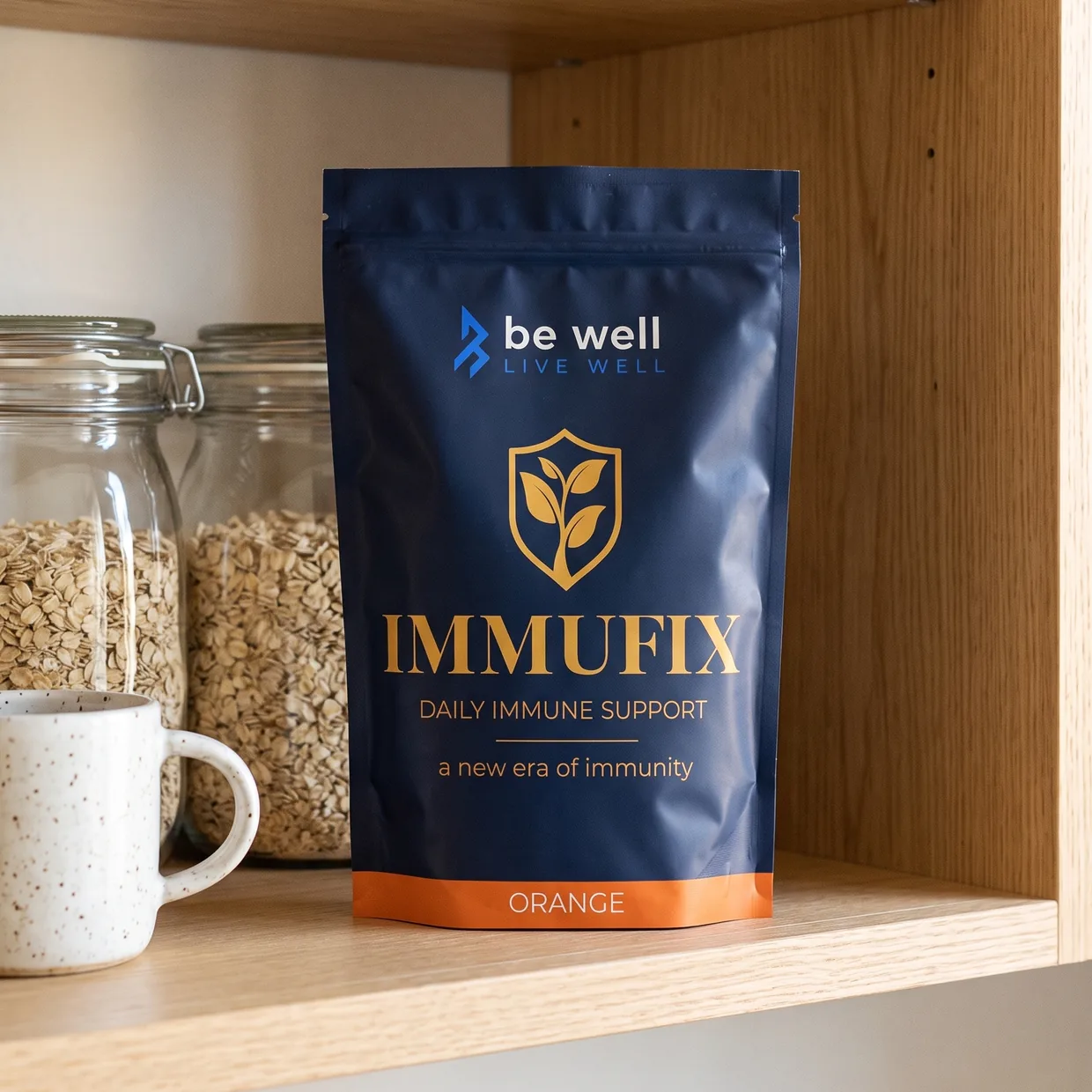
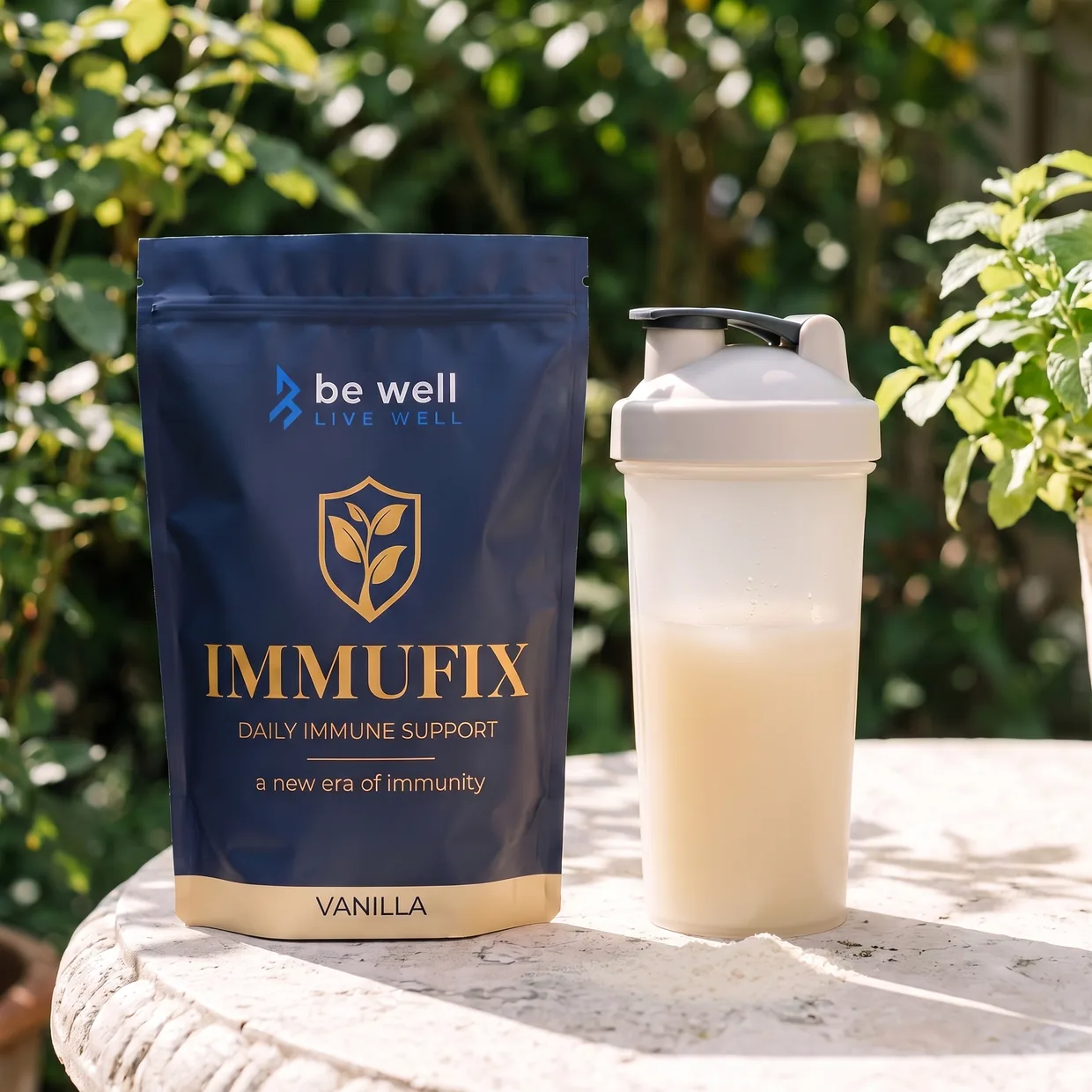
Food comes first, and the NHS is clear that a varied diet covers chromium for most adults. Immufix is a daily food supplement for people who want a consistent base underneath their diet. One scoop (25g) in around 200ml of water, once a day, provides 50µg of chromium, which is 125% of the NRV. Chromium contributes to normal macronutrient metabolism. The full list of amounts is on the science page.
The short version.
- Chromium is a trace mineral. In food and supplements it is trivalent chromium, not the industrial chromium VI.
- The NHS names meat, nuts and cereal grains as good sources. Fish, whole grains, pulses and spices also carry it.
- Around 25µg a day should be enough for adults, according to the NHS. The label NRV is 40µg.
- The NHS says 10mg or less a day from food and supplements is unlikely to cause harm.
- Chromium contributes to normal macronutrient metabolism. That is its only authorised claim.
Food supplements should not be used as a substitute for a varied, balanced diet and a healthy lifestyle. If you have a medical condition, are pregnant, breastfeeding or taking medication, speak to your GP or pharmacist before taking any food supplement.

Daily Immune Support
Vitamins, minerals and plant nutrients in one daily scoop. The formula Paula Radcliffe has taken every day since 1998.
4.8 out of 5 · 89 reviewsDispatched the same day on weekday orders placed before 2pm.
Free standard UK delivery. Royal Mail 48 tracked, 2 to 3 working days. UK addresses only.
30‑day money-back guarantee. Try your first pouch of IMMUFIX for up to 30 days. If it’s not for you, we’ll refund your first qualifying pouch, less £10 shipping and handling. First purchase only. T&Cs apply.
Checkout completes securely on immufix.com
More from the journal.
What antioxidants are, in plain English.
What antioxidants are, what oxidative stress means in plain English, which nutrients hold the authorised claim, and the UK foods that provide them.
10 October 2026 · 7 min read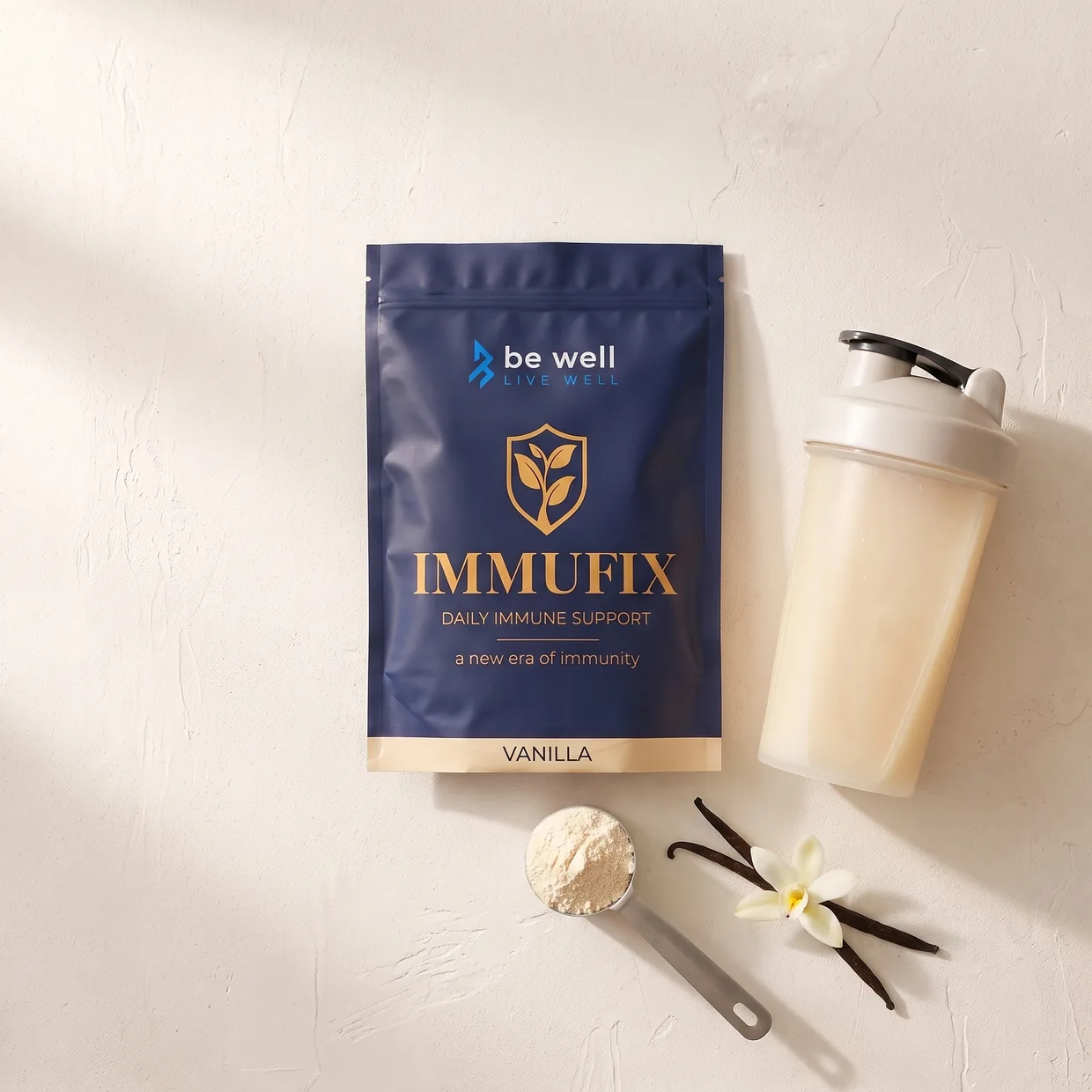
Biotin, what it does and where it is.
Biotin (vitamin B7) foods per 100g from UK government data, what the NHS says about biotin, its authorised claims and the NHS 0.9mg supplement guide.
10 October 2026 · 5 min readFolate and folic acid, side by side.
Folate is the form of vitamin B9 found in food, folic acid is the manmade form. UK food sources per 100g, the NHS daily amount and its 1mg supplement guide.
10 October 2026 · 7 min read