
What NRV means on a label.
Every vitamin and mineral on a UK supplement label comes with a percentage. That number is a % NRV, and once you know how it is worked out you can read any label in a few seconds.
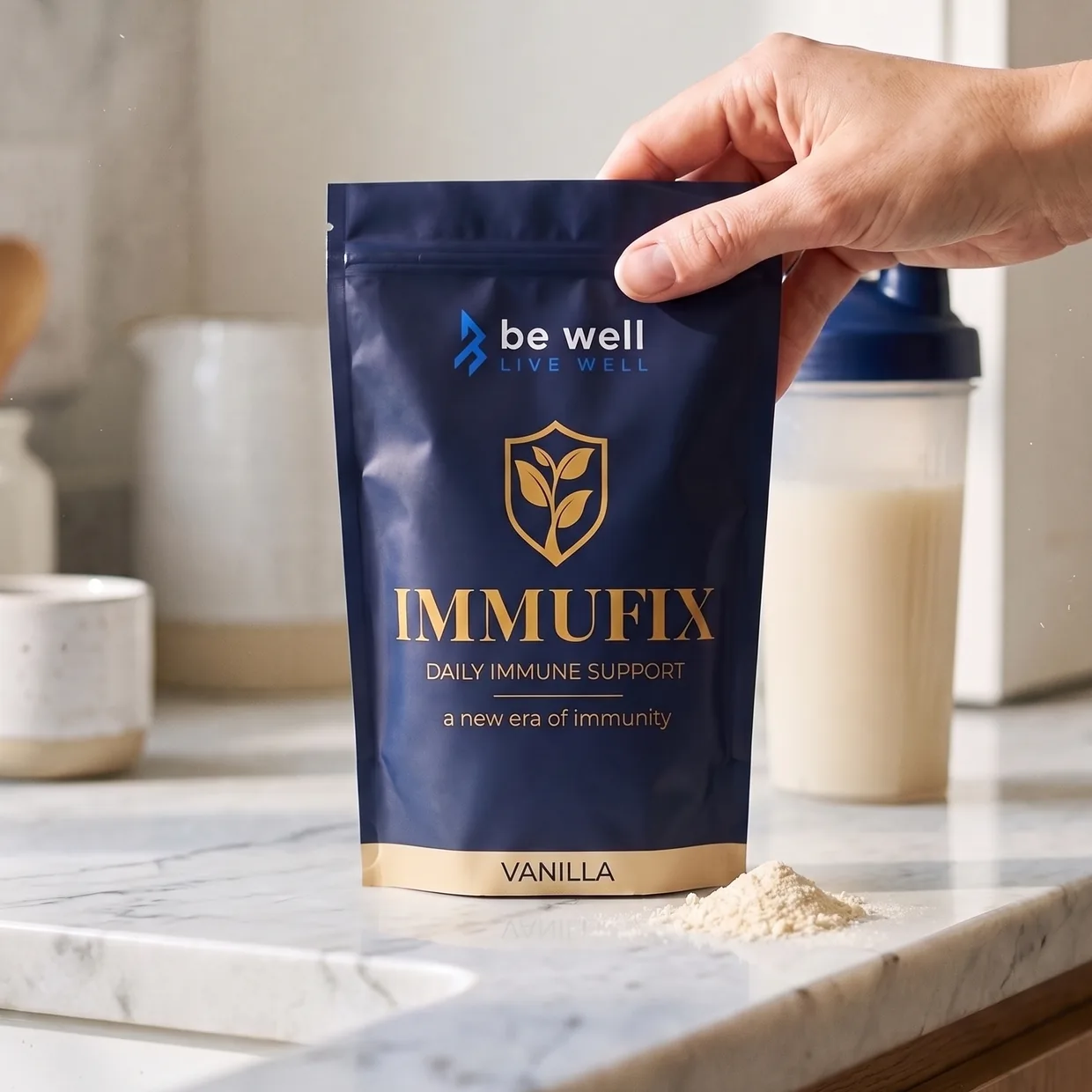
Quick answer. NRV stands for nutrient reference value: one daily figure for each vitamin and mineral, set in law for food labels in Great Britain by Annex XIII of retained Regulation (EU) 1169/2011. % NRV is the amount in a serving divided by that figure, times 100, so 100mg of vitamin C against an NRV of 80mg is 125%. A vitamin or mineral generally has to reach 15% of its NRV before a "source of" or health claim can be made about it. NRVs are labelling yardsticks, not personal targets, and they differ from the UK's reference nutrient intakes (RNIs).
What does NRV mean?
NRV is short for nutrient reference value. It is a single daily amount for each vitamin and mineral, used on food and supplement labels so that every product is measured against the same yardstick. The list sits in Annex XIII of Regulation (EU) No 1169/2011, which remains law in Great Britain. Point 1 of the annex is headed "Vitamins and minerals which may be declared and their nutrient reference values (NRVs)".
There is one value per nutrient, for adults. It does not change with age or sex, which is what makes it useful on a label and less useful as a personal target.
For supplements, the % NRV is compulsory. The Food Supplements (England) Regulations 2003 require each listed vitamin and mineral to "be expressed also as a percentage" of its reference value, worked out on "the amount per portion of the product as recommended for daily consumption".
How is % NRV calculated?
Take the amount in one daily dose, divide it by the NRV, and multiply by 100. The units must match: milligrams with milligrams, micrograms with micrograms.
Worked examples from a 25g scoop of Immufix:
- Vitamin C: 100mg ÷ 80mg × 100 = 125% NRV.
- Selenium: 75µg ÷ 55µg × 100 = 136% NRV (136.4, rounded).
- Vitamin D: 1.25µg ÷ 5µg × 100 = 25% NRV.
- Magnesium: 70mg ÷ 375mg × 100 = 19% NRV (18.7, rounded).
- Vitamin B12: 0.25µg ÷ 2.5µg × 100 = 10% NRV.
| Nutrient | NRV | Immufix per 25g scoop |
|---|---|---|
| Vitamin A | 800µg | 200µg · 25% NRV |
| Vitamin D | 5µg | 1.25µg · 25% NRV |
| Vitamin C | 80mg | 100mg · 125% NRV |
| Vitamin B6 | 1.4mg | 0.5mg · 36% NRV |
| Vitamin B12 | 2.5µg | 0.25µg · 10% NRV |
| Biotin | 50µg | 37µg · 74% NRV |
| Iron | 14mg | 1.25mg · 9% NRV |
| Zinc | 10mg | 3.75mg · 38% NRV |
| Selenium | 55µg | 75µg · 136% NRV |
| Magnesium | 375mg | 70mg · 19% NRV |
NRVs are taken from Annex XIII. Amounts are per 25g serving as declared on the Immufix label.
Some ingredients have no NRV at all, such as prebiotic FOS or L-glutamine. A UK label shows their amount but no percentage, because there is nothing to divide by.
Why does 15% NRV matter?
Fifteen per cent is the line between a nutrient that can carry a claim and one that cannot.
The rule starts in the claims law. Article 5 of Regulation (EC) No 1924/2006 allows a nutrition or health claim only where the nutrient "is contained in the final product in a significant quantity as defined in applicable enactments". Annex XIII then says what counts as significant: "15 % of the nutrient reference values" per 100g of a food, 7.5% per 100ml of a drink, or "15 % of the nutrient reference values specified in point 1 per portion if the package contains only a single portion". For a supplement, the amounts and percentages on the label are given per recommended daily dose, and that is the amount the 15% test is applied to.
The same threshold sets the two nutrition claims you see most. A "source of" claim needs at least a significant amount. A "high" claim, under the annex to Regulation 1924/2006, needs "at least twice the value" of a source claim, so 30% of the NRV.
On the Immufix label, vitamin K (13%), copper (12%), vitamin B12 (10%) and iron (9%) are below 15%. They are declared, but we make no claims for them. That is the rule working as intended.
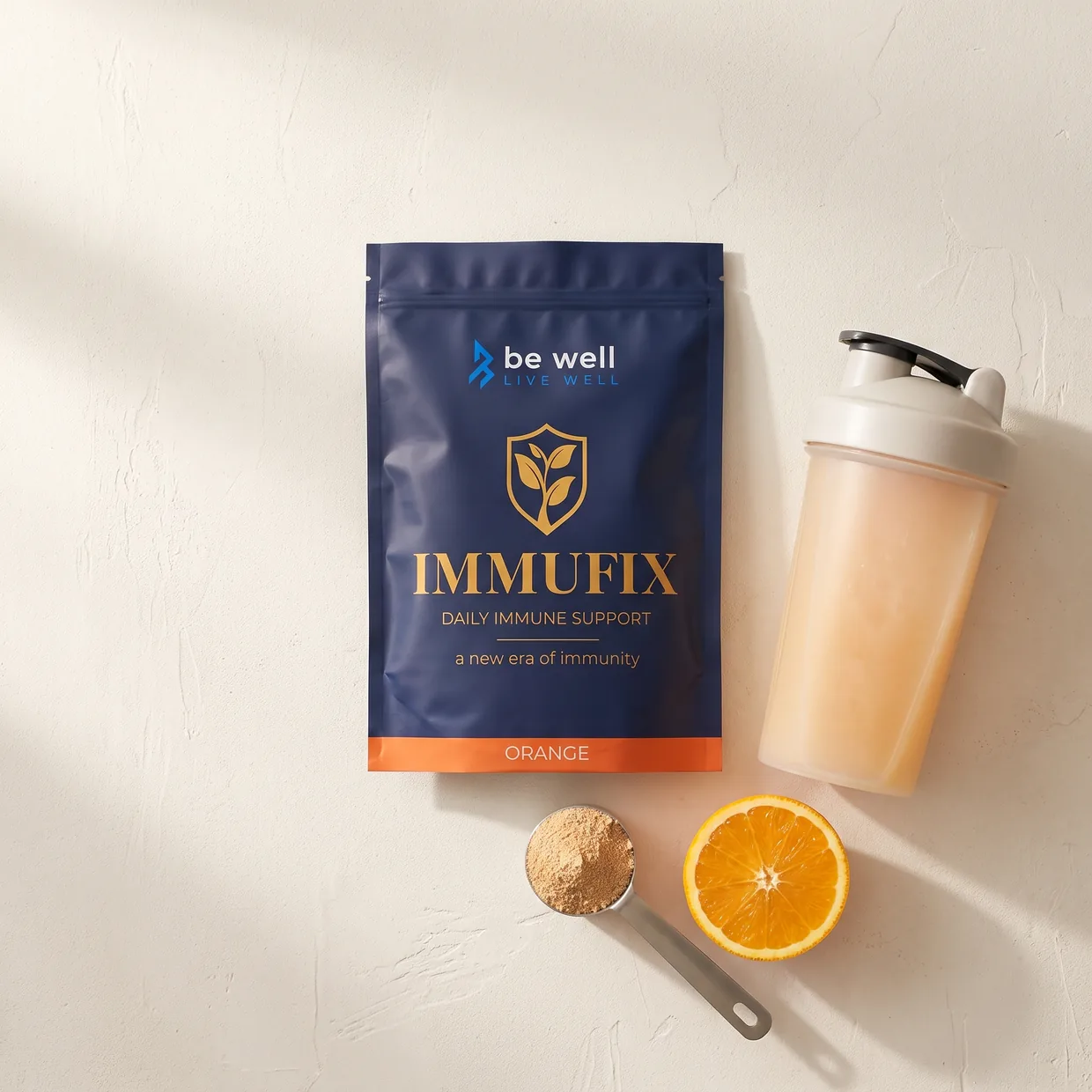
Is NRV the same as the UK RNI?
No. The reference nutrient intake (RNI) comes from the UK's dietary reference values, set by the Committee on Medical Aspects of Food Policy and the Scientific Advisory Committee on Nutrition. The British Nutrition Foundation describes the RNI as "the amount of a nutrient that is enough to ensure that the needs of nearly all the group (97.5%) are being met." RNIs vary by age and sex. The NRV is a single labelling figure for adults.
For several nutrients the two are quite different. Adult figures from the government's dietary recommendations (aged 19 to 64):
- Vitamin C: NRV 80mg. RNI 40mg.
- Vitamin D: NRV 5µg. UK recommendation 10µg.
- Magnesium: NRV 375mg. RNI 300mg for men, 270mg for women.
- Zinc: NRV 10mg. RNI 9.5mg for men, 7.0mg for women.
- Selenium: NRV 55µg. RNI 75µg for men, 60µg for women.
- Iron: NRV 14mg. RNI 8.7mg for men, 14.8mg for women aged 19 to 50.
Vitamin D shows why this matters. The 1.25µg in a scoop of Immufix is 25% of the 5µg NRV, but only 12.5% of the 10µg a day that the NHS advises everyone to consider in autumn and winter (calculated). A % NRV tells you how a product compares on the label. It does not tell you whether you are meeting UK advice. Our vitamin D guide covers that advice.
Does more than 100% NRV mean too much?
Not on its own. 100% NRV is a labelling reference, not a ceiling. Immufix, for example, provides 125% of the NRV for vitamin C and 136% for selenium. Upper amounts are a separate question, set nutrient by nutrient. The NHS says, for example, not to take more than 100 micrograms of vitamin D a day, and lists side effects of taking more than 1,000mg of vitamin C a day. Add up what you take from every product, and if you are unsure, ask a pharmacist.
Where Immufix fits.
Immufix is one 25g scoop in around 200ml of water, once a day. Its label lists every vitamin and mineral with its amount and % NRV, and only nutrients at 15% or more carry claims. Vitamin C, riboflavin, niacin, pantothenic acid, vitamin B6, folic acid and magnesium contribute to the reduction of tiredness and fatigue. Selenium and zinc contribute to the protection of cells from oxidative stress. The full list is on the science page.
The short version.
- NRV means nutrient reference value: one adult daily figure per vitamin and mineral, set for UK labels in Annex XIII of Regulation 1169/2011.
- % NRV = amount per daily dose ÷ NRV × 100. 100mg of vitamin C is 125% of its 80mg NRV.
- 15% of the NRV is generally the minimum for a "source of" or health claim. 30% is needed for "high".
- NRVs are not the same as UK RNIs. Vitamin C's NRV is 80mg; the adult RNI is 40mg. Vitamin D's NRV is 5µg; UK advice is 10µg.
Food supplements should not be used as a substitute for a varied, balanced diet and a healthy lifestyle. If you have a medical condition, are pregnant, breastfeeding or taking medication, speak to your GP or pharmacist before taking any food supplement.

Daily Immune Support
Vitamins, minerals and plant nutrients in one daily scoop. The formula Paula Radcliffe has taken every day since 1998.
4.8 out of 5 · 89 reviewsDispatched the same day on weekday orders placed before 2pm.
Free standard UK delivery. Royal Mail 48 tracked, 2 to 3 working days. UK addresses only.
30‑day money-back guarantee. Try your first pouch of IMMUFIX for up to 30 days. If it’s not for you, we’ll refund your first qualifying pouch, less £10 shipping and handling. First purchase only. T&Cs apply.
Checkout completes securely on immufix.com
More from the journal.
Who regulates supplements in the UK.
Yes. UK supplements are regulated as food. Who does what: local councils and Trading Standards, the FSA, DHSC, the MHRA, the ASA and the claims register.
10 October 2026 · 7 min read
How to read a supplement label.
How to read a UK supplement label: the name, daily dose, warnings, % NRV, allergens and best before date, and why it differs from a US Supplement Facts panel.
10 October 2026 · 7 min read
How much sugar a day, and what the label means.
The NHS says adults should have no more than 30g of free sugars a day. What "of which sugars" means on a label, and the 9.9g in Immufix in context.
10 October 2026 · 7 min read