
What a food supplement is in UK law.
"Food supplement" is a legal term with a fixed definition. It decides what a product can contain, how it is sold, what its label must say and what it may never claim.
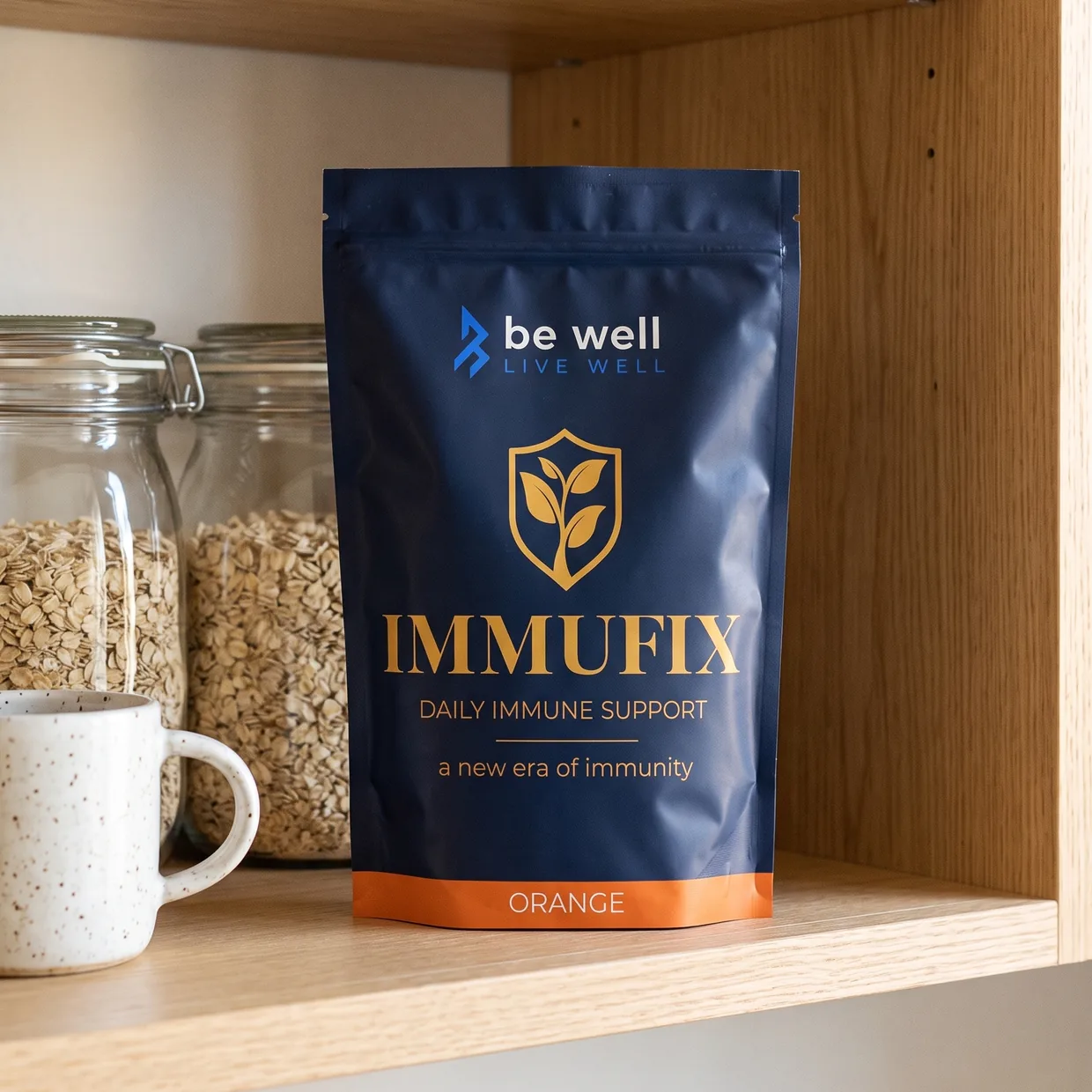
Quick answer. In UK law a food supplement is "any food the purpose of which is to supplement the normal diet" that is a concentrated source of a vitamin, mineral or other substance with a nutritional or physiological effect, and is sold in dose form, such as tablets, capsules or measured powders. It is regulated as a food, not a medicine. In England the rules are the Food Supplements (England) Regulations 2003, and Scotland, Wales and Northern Ireland have matching regulations with the same definition. The label must say "food supplement" and give the daily dose with set warnings, and local councils enforce the rules.
What is a food supplement?
The definition sits in regulation 2 of the Food Supplements (England) Regulations 2003. A food supplement "means any food the purpose of which is to supplement the normal diet and which" passes two tests:
- it "is a concentrated source of a vitamin or mineral or other substance with a nutritional or physiological effect, alone or in combination"; and
- it "is sold in dose form".
Three parts of that sentence do most of the work. "Any food" means a supplement is a food first, so general food law applies to it. "Supplement the normal diet" means it adds to meals rather than replacing them. "Concentrated source" means the nutrients come in a small daily amount, not spread through a plate of food.
The other three nations use the same words. The Food Supplements (Scotland) Regulations 2003, the Food Supplements (Wales) Regulations 2003 and the Food Supplements Regulations (Northern Ireland) 2003 all carry an identical definition. GOV.UK's guidance for consumers puts it plainly: "a food supplement is something you take to add extra nutrients to your normal meals."
What can a food supplement contain?
Vitamins and minerals are tightly controlled. Regulation 5 says a supplement may only use a vitamin or mineral that is on a set list, in a chemical form that is on a second list and that meets purity criteria. Both lists now sit in the Nutrition (Amendment) (EU Exit) Regulations 2019.
"Other substances" cover a wider range. GOV.UK's guidance for businesses lists vitamins, minerals, "amino acids", "essential fatty acids", "fibre" and "various plants and herbal extracts". Immufix's own label is a good example of the mix: vitamins and minerals, plus 1g of L-glutamine, 500mg of taurine and 250mg of L-methionine (amino acids) and 6.9g of prebiotic FOS (a type of fibre). The amino acids and FOS have no reference value, so the label shows them as amounts only.
What does "dose form" mean?
This is the test that separates a supplement from an ordinary food that happens to be rich in a nutrient. The regulations define dose form as "a form such as capsules, pastilles, tablets, pills, and other similar forms, sachets of powder, ampoules of liquids, drop dispensing bottles, and other similar forms of liquids or powders designed to be taken in measured small unit quantities".
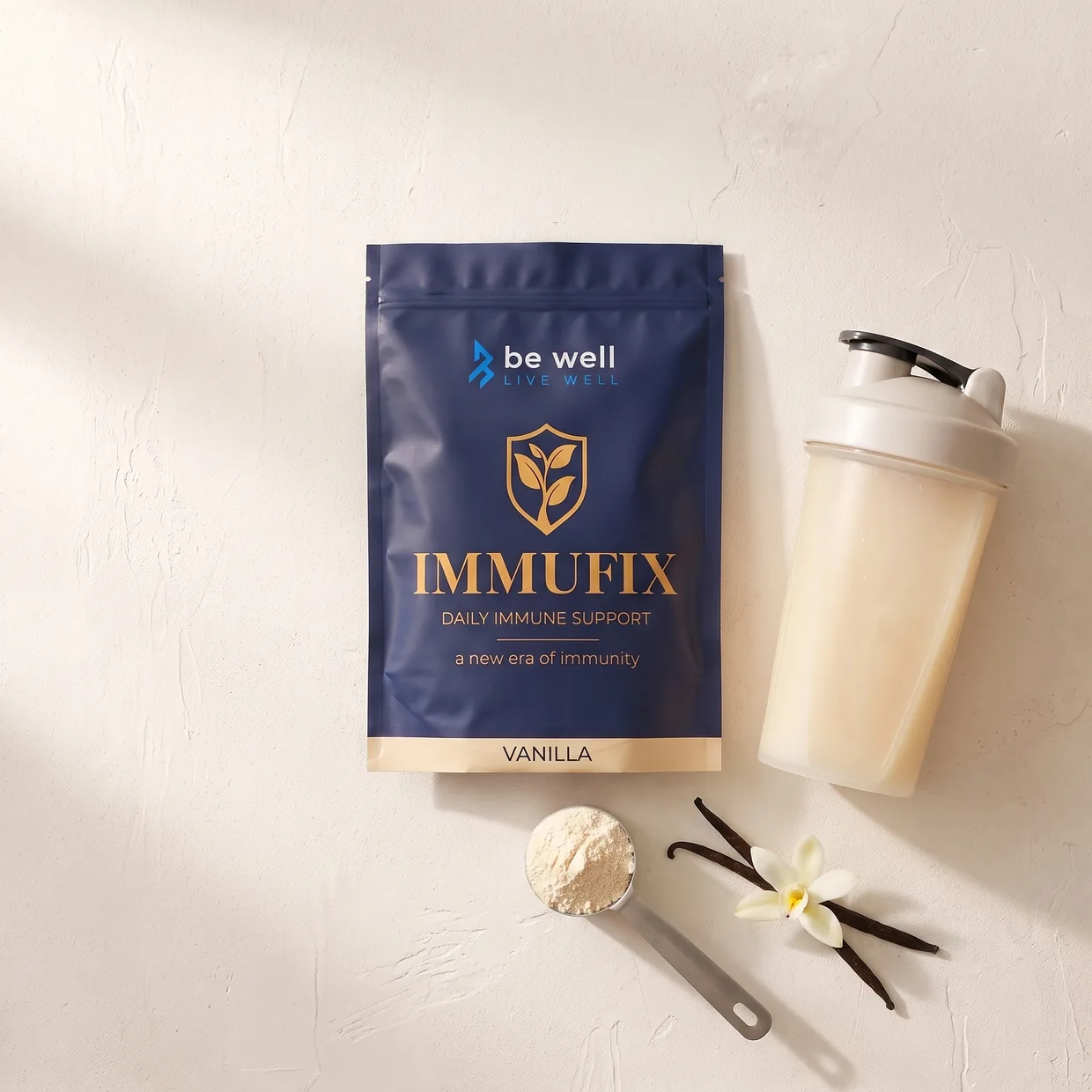
In practice that covers almost everything on a supplement shelf. GOV.UK's consumer guidance lists the forms people will see as tablets, capsules, gummies, powders and liquids. What they share is a measured daily amount. Immufix is a powder measured with a scoop, and the label's recommended daily portion is one 25g scoop.
Supplements must also be sold sealed. Regulation 4 says "No person shall sell any food supplement to the ultimate consumer unless it is prepacked", which is why you will not find one sold loose by weight.
Is a food supplement a food or a medicine?
A food. Regulation 3 says the rules "apply to food supplements sold as food and presented as such", and that they "do not apply to medicinal products". Food Standards Scotland's consumer advice puts it simply: "Food supplements are regulated as foods, not medicines."
GOV.UK's guidance for businesses explains what that means: supplements "are not medicinal products and as such cannot exert a pharmacological, immunological or metabolic action." The consumer guidance adds that a supplement must not be sold as able to do what medicines do, because "this is the function of medicines, and is an offence".
Two pieces of law hold that line:
- Food information law. Article 7(3) of Regulation (EU) No 1169/2011, which still applies in Great Britain, says food information "shall not attribute to any food the property of preventing, treating or curing a human disease, nor refer to such properties."
- Medicines law. The MHRA decides where the border is. Its borderline products guidance says supplements containing "familiar substances like vitamins, amino acids or minerals are generally subject to food safety and food labelling legislation rather than medicines control unless presented for medicinal uses."
The words "unless presented for medicinal uses" matter. A product can be classed as a medicine because of what its label, adverts, website or social media say about it, as well as because of what it contains. That is why a supplement's claims are limited to an authorised list, which we explain in what an authorised health claim is.
What must a food supplement label say?
Regulation 6 sets the minimum. The product must be sold under the name "food supplement", and GOV.UK's business guidance adds that it "must be labelled as 'food supplement' and not 'dietary supplement'". The label must also give:
- the category of nutrient or substance that characterises the product;
- "the portion of the product recommended for daily consumption";
- "a warning not to exceed the stated recommended daily dose";
- a statement that supplements "should not be used as a substitute for a varied diet";
- a statement that the product should be stored "out of the reach of young children"; and
- the amount of each vitamin, mineral or other substance, per daily portion, with vitamins and minerals also shown as a percentage of their reference value.
Regulation 6(4) adds one rule about wording: the labelling, presentation and advertising must not include "any mention, express or implied, that a balanced and varied diet cannot provide appropriate quantities of nutrients in general." Our guide on how to read a supplement label walks through every line using the Immufix pack.
Who enforces the food supplement rules?
Local councils. Regulation 8 says: "Each food authority shall enforce and execute these Regulations in its area." A food authority is the local council that covers the area. GOV.UK's page on reporting misleading labelling tells people in England and Wales to "Contact Trading Standards if you think that the food label is misleading or missing information", and lists health claims first among the examples.
Policy is split across the four nations. GOV.UK's business guidance says responsibility sits with the Department of Health and Social Care in England, Food Standards Scotland in Scotland, the Welsh Government in Wales and the Food Standards Agency in Northern Ireland. The wider picture, including the MHRA and the advertising regulator, is in are supplements regulated in the UK.
Where Immufix fits.
Immufix is sold as a food supplement, and its label says so. The recommended portion is one 25g scoop in around 200ml of water, once a day, and the pack carries the compulsory statements: do not exceed the stated recommended daily dose, keep out of reach of young children, and food supplements should not be used as a substitute for a varied, balanced diet and a healthy lifestyle. Its claims belong to named nutrients: vitamin C, vitamin D, zinc and selenium contribute to the normal function of the immune system. Every amount and % NRV is on the science page.
The short version.
- A food supplement is a food that supplements the normal diet, is a concentrated source of nutrients or other substances, and is sold in dose form.
- England, Scotland, Wales and Northern Ireland each have 2003 regulations with the same definition.
- Dose form means a measured daily amount: tablets, capsules, gummies, liquids or powders.
- Supplements are regulated as foods, not medicines, and may not claim the properties of a medicine.
- The label must say "food supplement", give the daily dose and carry set warnings. Local councils enforce the rules.
Food supplements should not be used as a substitute for a varied, balanced diet and a healthy lifestyle. If you have a medical condition, are pregnant, breastfeeding or taking medication, speak to your GP or pharmacist before taking any food supplement.

Daily Immune Support
Vitamins, minerals and plant nutrients in one daily scoop. The formula Paula Radcliffe has taken every day since 1998.
4.8 out of 5 · 89 reviewsDispatched the same day on weekday orders placed before 2pm.
Free standard UK delivery. Royal Mail 48 tracked, 2 to 3 working days. UK addresses only.
30‑day money-back guarantee. Try your first pouch of IMMUFIX for up to 30 days. If it’s not for you, we’ll refund your first qualifying pouch, less £10 shipping and handling. First purchase only. T&Cs apply.
Checkout completes securely on immufix.com
More from the journal.
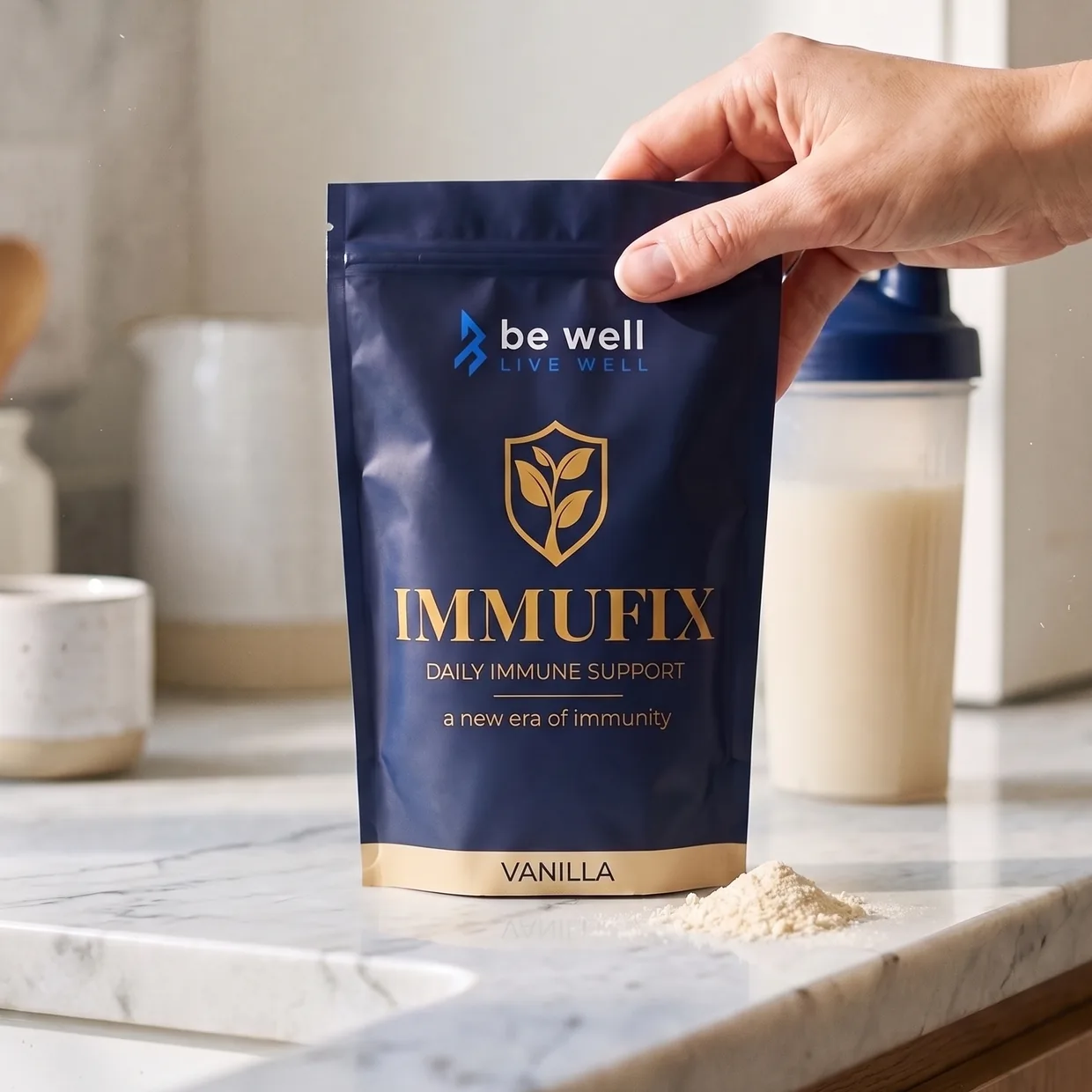
Who regulates supplements in the UK.
Yes. UK supplements are regulated as food. Who does what: local councils and Trading Standards, the FSA, DHSC, the MHRA, the ASA and the claims register.
10 October 2026 · 7 min read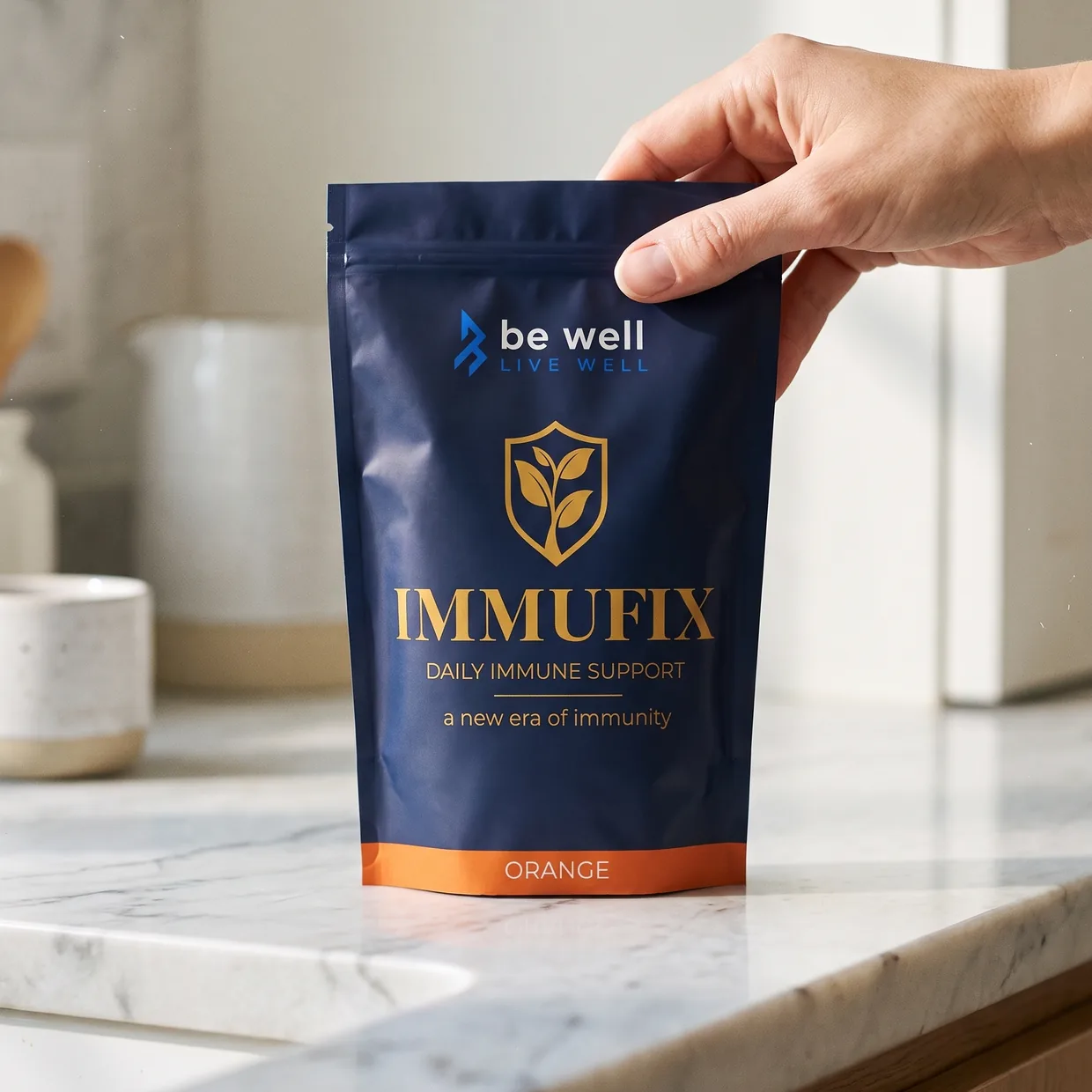
How to read a supplement label.
How to read a UK supplement label: the name, daily dose, warnings, % NRV, allergens and best before date, and why it differs from a US Supplement Facts panel.
10 October 2026 · 7 min read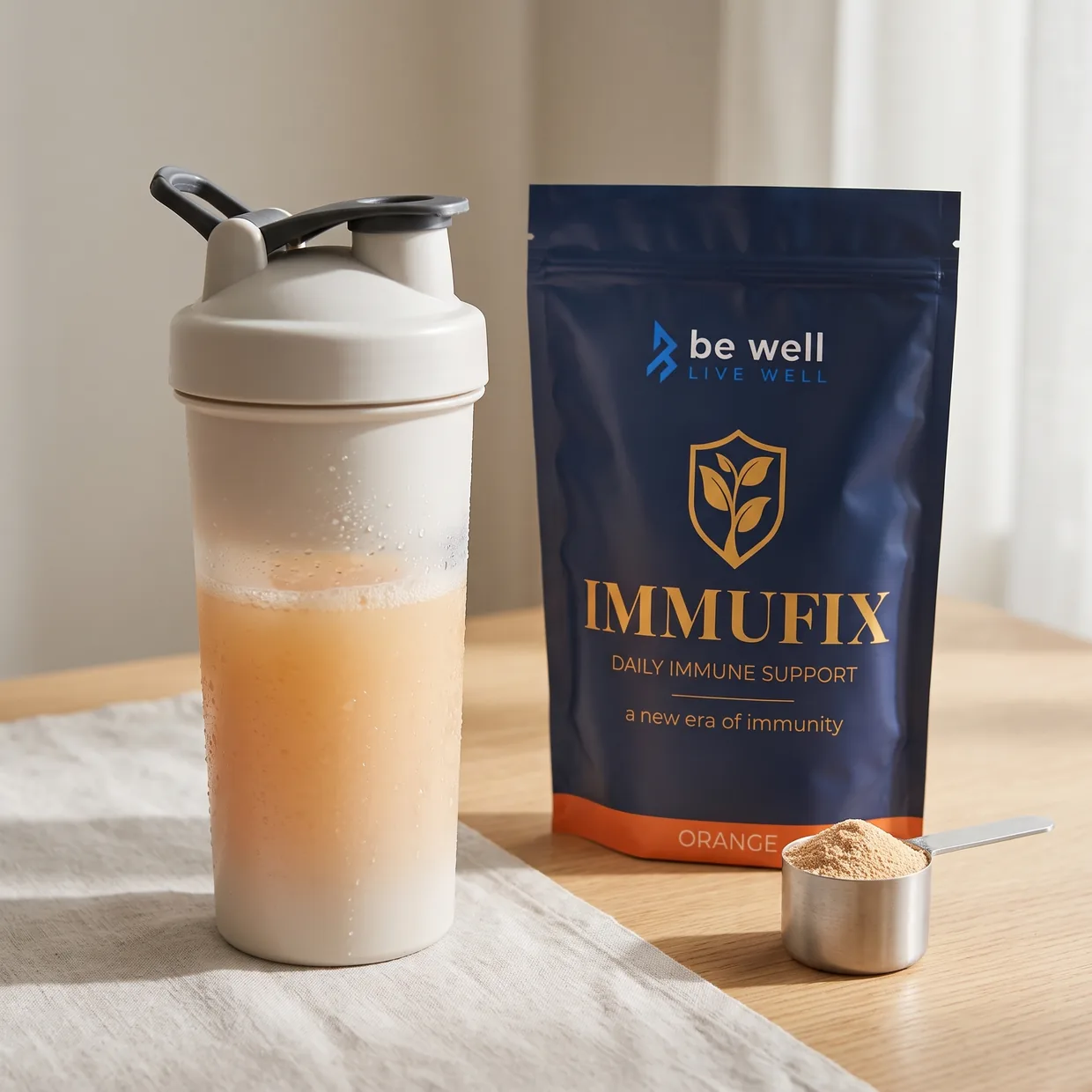
How much sugar a day, and what the label means.
The NHS says adults should have no more than 30g of free sugars a day. What "of which sugars" means on a label, and the 9.9g in Immufix in context.
10 October 2026 · 7 min read