
Folate rich foods, portion by portion.
Green vegetables, pulses, liver and fortified cereals carry most of the folate in a UK diet. Here are the government figures per 100g and per portion, so you can see what one serving actually gives you.
Quick answer. The most folate rich foods in the UK's food composition data (CoFID 2021) are liver (1,350µg per 100g in fried chicken liver), fortified bran flakes (367µg), black-eyed beans (210µg), asparagus (175µg), lentils (152µg), and green vegetables such as purple sprouting broccoli, spinach and Brussels sprouts (124µg to 140µg, boiled). An 80g portion of most of these gives around half the 200µg adults need a day, according to the NHS. Folic acid is the manmade form of folate, added to fortified foods and used in supplements.
What are the most folate rich foods?
The NHS vitamin B page lists the good sources of folate as broccoli, Brussels sprouts, leafy green vegetables such as cabbage, kale, spring greens and spinach, peas, chickpeas and kidney beans, liver, and breakfast cereals fortified with folic acid. On liver it adds "(avoid liver if you are pregnant)".
The figures below are from the government's Composition of Foods Integrated Dataset (CoFID), 2021 release, per 100g of the food as eaten. The last column is the portion used on our food pages and its share of the 200µg NRV used on labels.
| Food (as eaten) | Folate per 100g | In a typical portion |
|---|---|---|
| Chicken liver, fried | 1,350µg | 1,350µg (100g), 675% NRV |
| Bran flakes, fortified | 367µg | 147µg (40g bowl), 73% NRV |
| Black-eyed beans, boiled | 210µg | 168µg (80g), 84% NRV |
| Asparagus, raw | 175µg | 140µg (80g), 70% NRV |
| Green and brown lentils, boiled | 152µg | 122µg (80g), 61% NRV |
| Purple sprouting broccoli, boiled | 140µg | 112µg (80g), 56% NRV |
| Baby spinach, boiled | 135µg | 108µg (80g), 54% NRV |
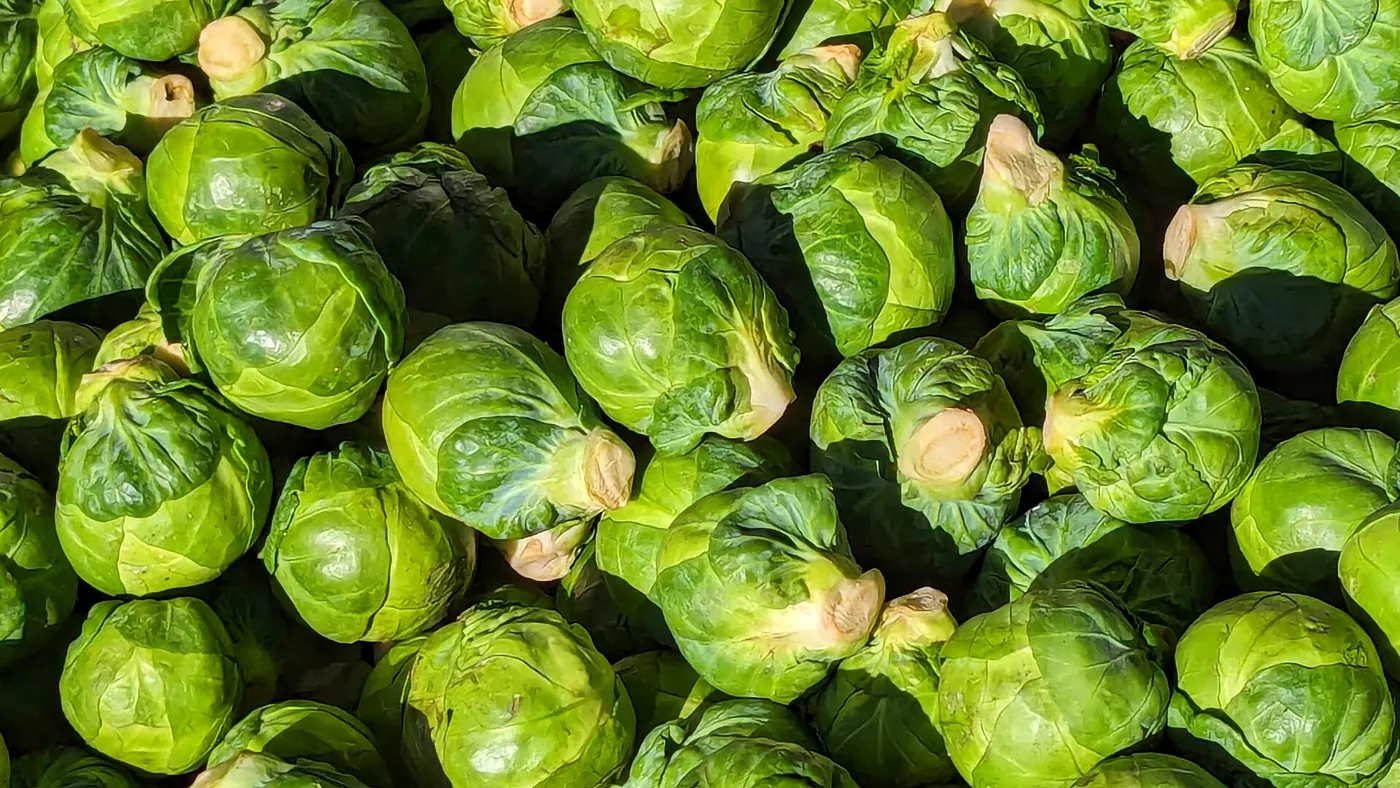
| Brussels sprouts, boiled | 124µg | 99µg (80g), 50% NRV |
| Curly kale, boiled | 97µg | 78µg (80g), 39% NRV |
| Spring greens, boiled | 66µg | 53µg (80g), 26% NRV |
| Red kidney beans, canned, drained | 45µg | 36µg (80g), 18% NRV |
| Chickpeas, canned, drained | 35µg | 28µg (80g), 14% NRV |
| Green broccoli, boiled | 34µg | 27µg (80g), 14% NRV |
| Peas, frozen, boiled | 31µg | 25µg (80g), 12% NRV |
Portion figures are calculated from the per-100g values. Fortified cereals vary by brand, so the label on the pack is the figure to trust for those. Linked foods open their own page with the full per-100g figures. More on what folate is and what the law allows it to be said to do is in our folate guide.
Which foods are high in folate in the UK?
In a normal UK week, most folate comes from green vegetables, pulses and fortified cereal. Liver is the richest food by far, but the NHS advises avoiding it in pregnancy, and few people eat it often. It is also very high in vitamin A, and our guide to vitamin A foods has the NHS advice on how often to eat it.
- Beans and lentils. An 80g portion of boiled black-eyed beans carries 168µg, and green or brown lentils 122µg. Tinned chickpeas and kidney beans carry less, 28µg to 36µg a portion.
- Green vegetables. Asparagus (140µg), purple sprouting broccoli (112µg), baby spinach (108µg) and Brussels sprouts (99µg) each give around half the NHS daily figure in one 80g portion.
- Fortified cereal. A 40g bowl of fortified bran flakes carries 147µg, from the folic acid added to it. Bran flakes also rank near the top of our high fibre cereal list.
- Yeast extract. CoFID gives 2,620µg per 100g, though it is eaten a few grams at a time.
Two of these in a day, such as a bowl of fortified cereal and a portion of greens with dinner, already pass 200µg. The NHS says "There are no long-term stores in the body, so you need to eat folate-containing foods frequently."
Does cooking reduce folate in vegetables?
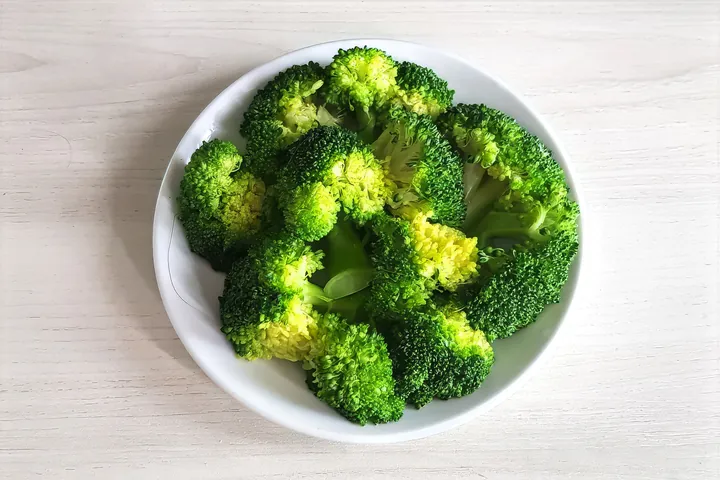
Yes, and how much depends on the vegetable and the method. In CoFID, green broccoli goes from 95µg per 100g raw to 34µg boiled. Brussels sprouts hold up better, from 135µg raw to 124µg boiled. Part of each change is the vitamin itself changing and part is the change in the food's water content.
Our guide to folate and folic acid covers cooking methods in more detail, along with the UK rules on folic acid in flour.
How much folate do you need a day?
The NHS says "Adults need 200 micrograms of folate a day." The UK Government Dietary Recommendations give the same 200µg for adults, and the label reference, the NRV, is also 200µg under the food information rules.
Around pregnancy the advice is different. The NHS pregnancy vitamins page says that when you are trying to get pregnant, ideally 3 months before, or as soon as you find out you are pregnant, it is recommended you take "400 micrograms of folic acid every day", and to "Take folic acid for the first 12 weeks of pregnancy." It adds that "it's difficult to get the amount you need from food alone." Some people are advised to take a higher dose, and a GP or midwife can advise on that.
For everyone else, the NHS says "Taking 1mg or less a day of folic acid supplements is unlikely to cause any harm."
Where Immufix fits.
Food comes first, and the table shows how easily a few portions cover 200µg. Immufix is a daily food supplement taken as one scoop (25g) in around 200ml of water, once a day. One scoop contains 50µg of folic acid, which is 25% of the NRV. That is well below the 400µg folic acid supplement the NHS advises before and in early pregnancy, so it is not a substitute for it.
Folate contributes to the reduction of tiredness and fatigue, to normal psychological function and to the normal function of the immune system. Our guide to B vitamins and tiredness covers the rest of the B group, and the full list of amounts is on the science page.
The short version.
- Per 100g, liver, fortified bran flakes, black-eyed beans, asparagus and lentils lead the UK data for folate.
- An 80g portion of asparagus, purple sprouting broccoli, spinach or Brussels sprouts gives around half the daily figure.
- Adults need 200µg a day, according to the NHS, and the body keeps no long-term store, so regular intake matters.
- Folic acid is the manmade form, used in fortified foods and supplements.
- The NHS advises a 400µg folic acid supplement a day when trying to get pregnant and for the first 12 weeks of pregnancy.
Food supplements should not be used as a substitute for a varied, balanced diet and a healthy lifestyle. If you have a medical condition, are pregnant, breastfeeding or taking medication, speak to your GP or pharmacist before taking any food supplement.


Daily Immune Support
Vitamins, minerals and plant nutrients in one daily scoop. The formula Paula Radcliffe has taken every day since 1998.
4.8 out of 5 · 89 reviewsMonthly subscription. £52.00 is charged every month until you cancel. Minimum three payments, then cancel any time. Subscription terms
New here? 20% off your first order with code TRYIMMUFIX. Apply it
Dispatched the same day on weekday orders placed before 2pm.
Free standard UK delivery. Royal Mail 48 tracked, 2 to 3 working days. UK addresses only.
30‑day money-back guarantee. Try your first pouch of IMMUFIX for up to 30 days. If it’s not for you, we’ll refund your first qualifying pouch, less £10 shipping and handling. First purchase only. T&Cs apply.
Checkout completes securely on immufix.com
More from the journal.
Calcium rich foods, with and without dairy.
The UK foods highest in calcium per 100g from government data, the best dairy free calcium sources, and how much calcium adults need a day.
7 November 2026 · 6 min read
The foods highest in iron, per 100g.
The UK foods highest in iron per 100g from government data, the best iron rich foods for vegetarians, and how much iron adults need a day.
7 November 2026 · 6 min read
High protein foods, listed by the gram.
A list of high protein foods in the UK with protein per 100g and per portion from government data, plus everyday staples and plant sources.
7 November 2026 · 6 min read