
Vitamin A in food, and where to stop.
Vitamin A comes from two places in the diet: retinol in animal foods, and beta-carotene in orange and green vegetables. It is also one of the few vitamins where the NHS spends as long on too much as on enough.
Quick answer. The NHS says adults aged 19 to 64 need 700µg of vitamin A a day (men) or 600µg (women), and that a varied diet should provide it. Good UK sources include cheese, eggs, oily fish, fortified low-fat spreads, milk and yoghurt, plus beta-carotene from carrots, sweet potatoes, spinach and red peppers. In the government's food composition data (CoFID 2021), boiled carrots have 1,850µg per 100g (as retinol equivalents) and Cheddar 388µg. The NHS advises keeping food and supplements combined to no more than 1.5mg (1,500µg) a day, and says "Do not eat liver or liver products, such as pâté, more than once a week."
Which foods are high in vitamin A in the UK?
The NHS page on vitamin A lists good sources of vitamin A as retinol: cheese, eggs, oily fish such as salmon, sardines, trout, herring or mackerel, fortified low-fat spreads, milk and yoghurt, and liver and liver products such as liver pâté.
It adds a second route: "You can also get vitamin A by including good sources of beta-carotene in your diet, as the body can convert this into retinol." The main beta-carotene sources it names are yellow, red and green leafy vegetables such as spinach, carrots, sweet potatoes and red peppers, and yellow fruit such as mango, papaya and apricots.
For the numbers, the source is the government's Composition of Foods Integrated Dataset (CoFID). It gives vitamin A as retinol equivalents, which count retinol in full and beta-carotene at one sixth of its weight. Every figure below is from its 2021 release, per 100g of the food as described.
| Food (as eaten) | Vitamin A per 100g | Share of the NHS 700µg a day (men) |
|---|---|---|
| Lamb's liver, fried | 19,710µg | 2,816% |
| Liver pâté | 7,322µg | 1,046% |
| Carrots (old), boiled | 1,850µg | 264% |
| Low-fat spread (26 to 39% fat), polyunsaturated | 962µg | 137% |
| Sweet potato, boiled | 927µg | 132% |
| Spinach (mature leaves), boiled | 640µg | 91% |
| Cheddar cheese | 388µg | 55% |
| Curly kale, boiled | 350µg | 50% |
| Eggs, whole, boiled | 120µg | 17% |
| Mango, ripe | 116µg | 17% |
| Dried apricots | 105µg | 15% |
| Red pepper, raw | 97µg | 14% |
| Mackerel, grilled | 61µg | 9% |
| Whole milk | 38µg | 5% |
The right-hand column is calculated: each CoFID figure divided by the 700µg the NHS gives for men. Against the 600µg for women, each share is a little higher.
Two things stand out. Carrots and sweet potatoes are among the richest everyday sources once beta-carotene is counted. And liver is in a different league: 100g of fried lamb's liver carries about 13 times the 1,500µg daily figure the NHS uses as its upper guide (calculated).
How much vitamin A do you need?
The NHS says "The amount of vitamin A adults aged 19 to 64 need is" 700µg a day for men and 600µg a day for women. The same figures appear in the government's dietary recommendations.
The NHS adds: "You should be able to get all the vitamin A you need from your diet." Vitamin A is also stored. In the NHS's words, "Any vitamin A your body does not need immediately is stored for future use. This means you do not need it every day."
Labels use a different figure. The nutrient reference value (NRV) for vitamin A is 800µg, set in Annex XIII of the food information regulation. Our guide to what NRV means explains why the two differ.
What happens if you have too much vitamin A?
This is where the NHS is most specific. It says "Some research suggests that having more than an average of 1.5 mg (1,500 µg) a day of vitamin A over many years may affect your bones, making them more likely to fracture when you're older." It singles out older people, especially women, as the group this matters most for.
On liver, the NHS states it plainly:
- "If you eat liver or liver pâté more than once a week, you may be getting too much vitamin A."
- "Liver is a very rich source of vitamin A. Do not eat liver or liver products, such as pâté, more than once a week."
- "If you eat liver every week, do not take supplements that contain vitamin A."
On supplements, it says: "If you take supplements containing vitamin A, make sure your daily intake from food and supplements does not exceed 1.5 mg (1,500 µg)." It also points out that many multivitamins contain vitamin A, and that fish liver oil is high in it. Our guide to whether a multivitamin is worth taking covers how to avoid doubling up. Its reassurance is equally clear: "Having an average of 1.5mg a day or less of vitamin A from diet and supplements combined is unlikely to cause any harm."
The NHS pregnancy guidance says: "Do not take cod liver oil or supplements containing vitamin A (sometimes called retinol) when you're pregnant." Immufix contains vitamin A, so that advice applies to it.

What does vitamin A do?
The NHS says vitamin A helps with "vision in dim light" and with "keeping skin and the lining of some parts of the body, such as the nose, healthy." In Great Britain, the authorised health claims for vitamin A, listed in the government's nutrition and health claims register, include:
- Vitamin A contributes to the maintenance of normal skin.
- Vitamin A contributes to the maintenance of normal vision.
- Vitamin A contributes to the maintenance of normal mucous membranes.
- Vitamin A contributes to normal iron metabolism.
- Vitamin A contributes to the normal function of the immune system.
Mucous membranes are the linings the NHS describes, such as the inside of the nose.
Where Immufix fits.
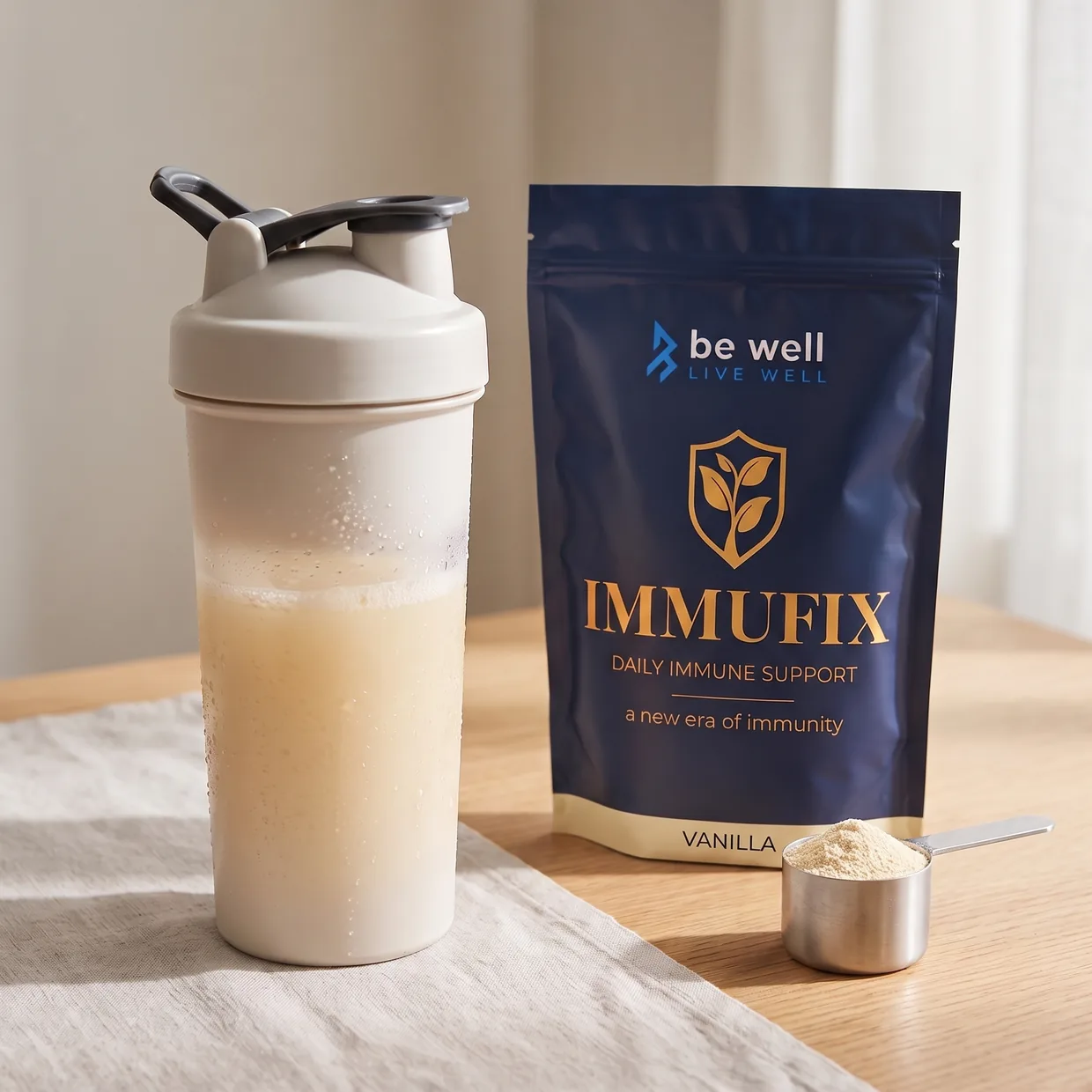
Most people get enough vitamin A from food. Immufix is a daily food supplement for people who want a consistent base underneath their diet. One scoop (25g) in around 200ml of water, once a day, provides 200µg of vitamin A, which is 25% of the NRV and about 13% of the NHS 1,500µg upper guide (calculated). Vitamin A contributes to the maintenance of normal skin and normal vision, and to the normal function of the immune system. If you eat liver every week, the NHS advice above means a supplement containing vitamin A is not for you. The full list of amounts is on the science page.
The short version.
- The NHS says adults aged 19 to 64 need 700µg of vitamin A a day (men) or 600µg (women), and the body stores what it does not use.
- Retinol comes from cheese, eggs, oily fish, fortified spreads, milk and liver. Beta-carotene comes from carrots, sweet potatoes, spinach, red peppers and yellow fruit.
- Per 100g, boiled carrots carry 1,850µg and Cheddar 388µg. Fried lamb's liver carries 19,710µg.
- The NHS says keep food and supplements combined to 1.5mg (1,500µg) a day or less, and do not eat liver more than once a week.
- If you eat liver every week, or are pregnant, the NHS says not to take supplements containing vitamin A.
Food supplements should not be used as a substitute for a varied, balanced diet and a healthy lifestyle. If you have a medical condition, are pregnant, breastfeeding or taking medication, speak to your GP or pharmacist before taking any food supplement.

Daily Immune Support
Vitamins, minerals and plant nutrients in one daily scoop. The formula Paula Radcliffe has taken every day since 1998.
4.8 out of 5 · 89 reviewsDispatched the same day on weekday orders placed before 2pm.
Free standard UK delivery. Royal Mail 48 tracked, 2 to 3 working days. UK addresses only.
30‑day money-back guarantee. Try your first pouch of IMMUFIX for up to 30 days. If it’s not for you, we’ll refund your first qualifying pouch, less £10 shipping and handling. First purchase only. T&Cs apply.
Checkout completes securely on immufix.com
More from the journal.
What antioxidants are, in plain English.
What antioxidants are, what oxidative stress means in plain English, which nutrients hold the authorised claim, and the UK foods that provide them.
10 October 2026 · 7 min read
Biotin, what it does and where it is.
Biotin (vitamin B7) foods per 100g from UK government data, what the NHS says about biotin, its authorised claims and the NHS 0.9mg supplement guide.
10 October 2026 · 5 min read
What chromium is, and where you find it.
What chromium is, which foods contain it, how much the NHS says adults need, and the one authorised health claim chromium holds in Great Britain.
10 October 2026 · 6 min read