
Is a multivitamin worth it? An honest answer.
For most people a varied diet does most of the work, and the NHS says so. There is one piece of supplement advice for everyone in the UK, a few more for particular groups, and a simple way to judge the rest.
Quick answer. For most adults in the UK a multivitamin is optional, not necessary: the NHS says "most people should get all the nutrients they need by having a varied and balanced diet". The one piece of advice for everyone is vitamin D, with a daily 10 microgram supplement to consider in autumn and winter. Some groups have specific advice, such as folic acid before and in early pregnancy. If you take a multivitamin, read the amounts and % NRV on the label and do not double up.
Are any multivitamins worth taking?
It depends on what you eat and on your circumstances. The NHS position, on its vitamins and minerals page, is that "most people should get all the nutrients they need by having a varied and balanced diet", "although some people may need to take extra supplements."
The law takes the same line. Under the Food Supplements (England) Regulations 2003, no supplement may be sold with any suggestion "that a balanced and varied diet cannot provide appropriate quantities of nutrients in general". Every UK supplement label also has to say that supplements should not be used as a substitute for a varied diet.
So a multivitamin is not a replacement for food. For some people it is a practical addition. Whether it is worth it for you comes down to three things: how varied your diet is, whether you are in a group with specific advice, and what the particular product actually contains.
What does food first mean?
In the UK, food first means the NHS Eatwell Guide. It "applies to most of us", "whether we eat meat or are vegetarian", though it "does not apply to children under the age of 2". Its main points, in the guide's own words:
- "Eat at least 5 portions of a variety of fruit and vegetables a day"
- "Base meals on potatoes, bread, rice, pasta or other starchy carbohydrates"
- "Have some dairy or alternatives (such as soya drinks and yoghurts)"
- "Eat some beans, pulses, fish, eggs, meat and other protein foods"
- "Choose unsaturated oils and spreads, and eat in small amounts"
- "Drink plenty of fluids", with 6 to 8 cups or glasses a day as a guide
A diet built on these gives most people most of what they need. Vitamin C is a good example. The NHS says adults aged 19 to 64 need 40mg a day and that "you should be able to get all the vitamin C you need from your daily diet."
What is the NHS advice on vitamin D?
Vitamin D is the exception to food first. The government's dietary recommendations note that it "is found only in a small number of foods", and the body makes it when sunlight reaches the skin. The NHS vitamin D page says that "between October and early March we do not make enough vitamin D from sunlight", and that "government advice is that everyone should consider taking a daily vitamin D supplement during the autumn and winter."
- How much: "Children from the age of 1 year and adults need 10 micrograms (mcg) of vitamin D a day."
- All year: the NHS advises a daily supplement throughout the year for people at high risk of not getting enough vitamin D, all children aged 1 to 4, and all babies, with exceptions for babies having more than 500ml of infant formula a day.
- Not too much: "Do not take more than 100 micrograms (4,000 IU) of vitamin D a day as it could be harmful."
Many multivitamins contain some vitamin D, but not always 10µg. Check the label. Our guide to vitamin D in a UK autumn and winter goes through the advice in full.
Who might consider a multivitamin?
Beyond vitamin D, the NHS gives specific supplement advice to a few groups. In most of these it points to particular nutrients rather than a general multivitamin.
Before and in early pregnancy.
The NHS pregnancy advice is a 400 microgram folic acid supplement every day "until the end of your first trimester (12 weeks)", starting when you begin trying for a baby. It also says "you should avoid supplements and multivitamins containing vitamin A (retinol)" in pregnancy. Speak to your midwife, GP or pharmacist before taking any multivitamin while pregnant or trying.
Young children.
The NHS vitamins for children page says the government recommends that all children aged 6 months to 5 years are given supplements containing vitamins A, C and D every day, and warns "be careful not to give your child 2 supplements at the same time."
People who eat a limited range of foods.
If whole food groups are missing from your diet, by choice or circumstance, some nutrients become harder to get. The NHS guide to the vegan diet notes, for example, that vitamin B12 "sources for vegans are limited and a vitamin B12 supplement may be needed", alongside fortified foods.
Anyone with a medical condition or on medication.
Ask a GP or pharmacist before taking any supplement. They can tell you whether you need one and which.
How to judge a multivitamin.
If you decide one is worth it, a few minutes with the label tells you most of what you need to know.
- Read the amounts and % NRV. Every vitamin and mineral on a UK label is shown per daily dose and as a % of its nutrient reference value. Our guide to what NRV means explains how to read them.
- Do not double up. Add up what you take from every product. Two products containing the same nutrient can add up to more than the NHS upper amounts for some nutrients, such as 100µg a day for vitamin D.
- Stick to the dose. The UK government's guidance for consumers says "do not take more than the recommended dose, as this can potentially lead to side effects such as nausea and headaches."
- Check the claims. The same guidance says to "check that any health claims that you see on products are authorised health claims".
Where Immufix fits.
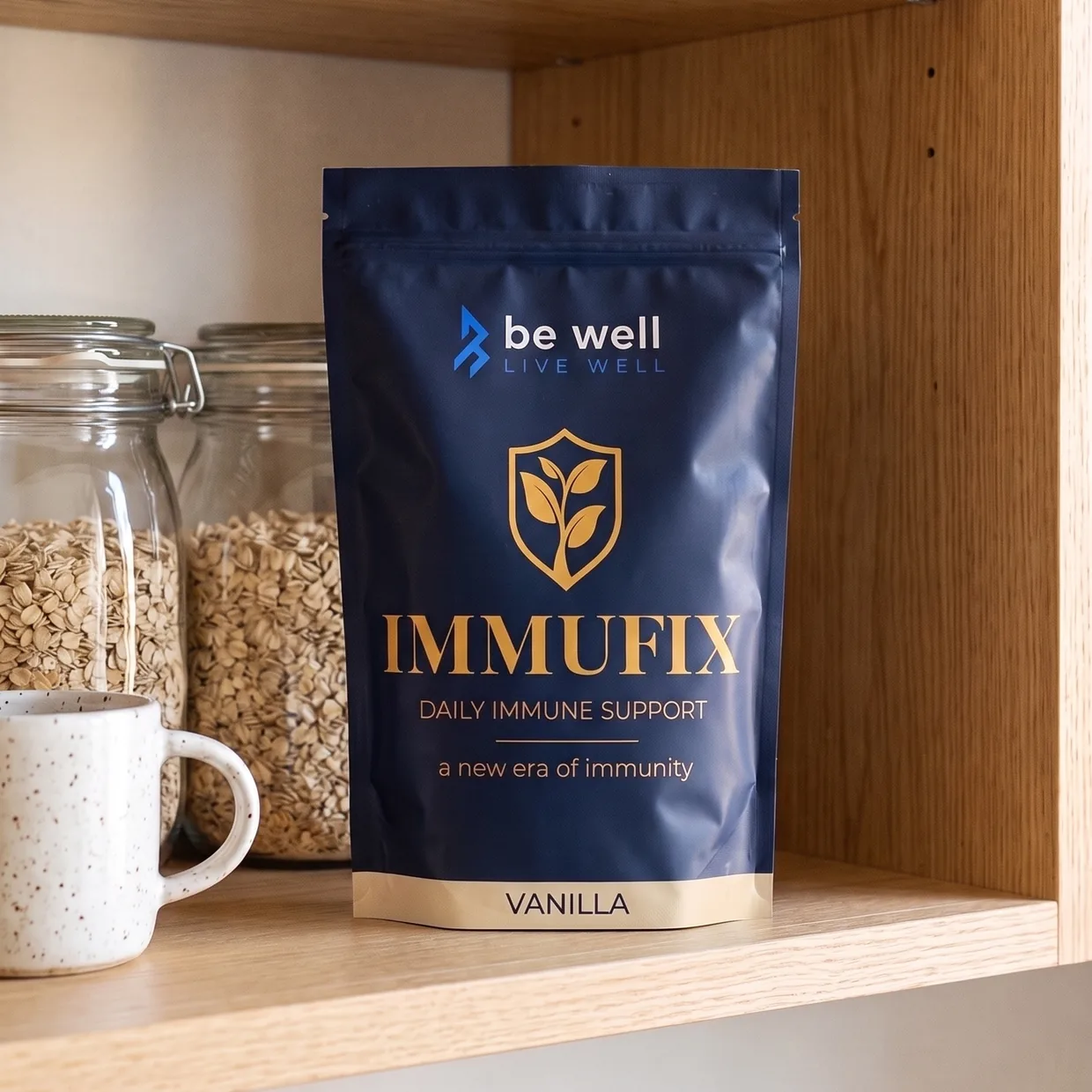
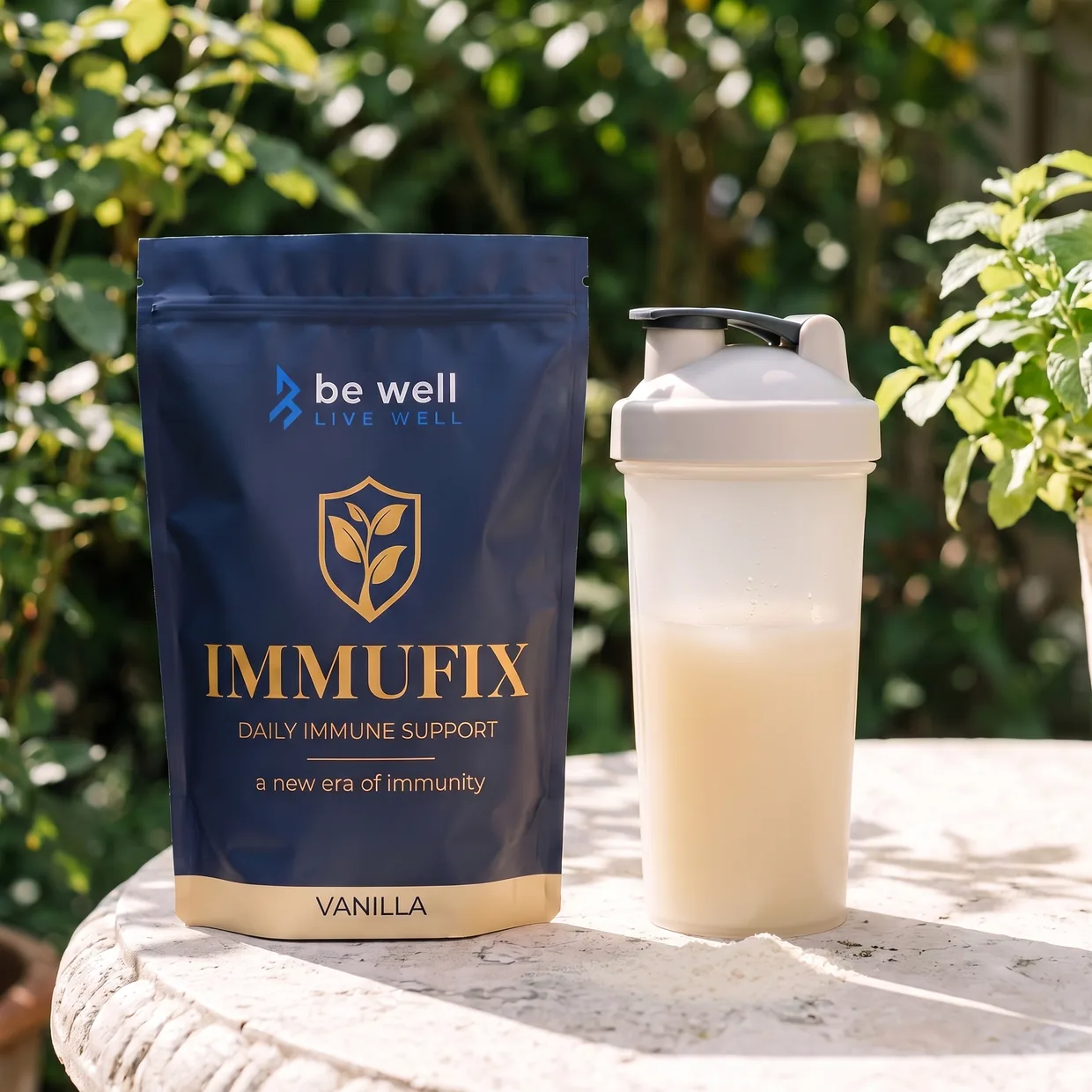
Immufix is a multi-nutrient powder: one 25g scoop in around 200ml of water, once a day, taken alongside a varied diet. Vitamin C, riboflavin, niacin, pantothenic acid, vitamin B6, folic acid and magnesium contribute to the reduction of tiredness and fatigue. Vitamin D contributes to the maintenance of normal bones and teeth. It contains 1.25µg of vitamin D, so it does not meet the NHS's 10µg advice on its own. Every amount and % NRV is on the science page.
The short version.
- The NHS says most people can get the nutrients they need from a varied and balanced diet. Food comes first.
- Everyone in the UK should consider 10µg of vitamin D a day in autumn and winter, and some groups all year.
- Specific advice exists for pregnancy (folic acid, no vitamin A as retinol) and for children aged 6 months to 5 years (vitamins A, C and D).
- If you take a multivitamin, read the amounts and % NRV, stick to the dose and do not double up.
- With a medical condition or medication, ask a GP or pharmacist first.
Food supplements should not be used as a substitute for a varied, balanced diet and a healthy lifestyle. If you have a medical condition, are pregnant, breastfeeding or taking medication, speak to your GP or pharmacist before taking any food supplement.

Daily Immune Support
Vitamins, minerals and plant nutrients in one daily scoop. The formula Paula Radcliffe has taken every day since 1998.
4.8 out of 5 · 89 reviewsDispatched the same day on weekday orders placed before 2pm.
Free standard UK delivery. Royal Mail 48 tracked, 2 to 3 working days. UK addresses only.
30‑day money-back guarantee. Try your first pouch of IMMUFIX for up to 30 days. If it’s not for you, we’ll refund your first qualifying pouch, less £10 shipping and handling. First purchase only. T&Cs apply.
Checkout completes securely on immufix.com
More from the journal.

Looking for an AG1 alternative? The facts side by side.
Looking for an AG1 alternative in the UK? Serving size, pack price, sugars and format from each brand's own page, checked 10 October 2026.
10 October 2026 · 5 min read
The best time to take vitamins is the one you keep.
The best time to take vitamins is the time you will keep to. What NHS guidance says about taking supplements with food, and morning versus night.
10 October 2026 · 6 min read
Does vitamin powder expire? What the date means.
Does vitamin powder expire or go off? What the best before date means under UK food law, how to store a powder, and what clumping tells you.
10 October 2026 · 6 min read