
The best time to take vitamins is the one you keep.
Morning or night, before or after food: the questions sound technical, but for most everyday vitamins the answer is practical. Some products do come with specific instructions, and those are worth following.

Quick answer. For most everyday vitamins there is no single best time of day: the best time is the one you will stick to, every day. Some supplements do come with timing advice. The NHS says vitamin D (colecalciferol) tablets and capsules should be taken with your main meal of the day, while iron tablets (ferrous sulfate) work best on an empty stomach. Always follow the directions on the label, and ask a pharmacist if you take any medicines.
What is the best time to take vitamins?
The time you will remember. The NHS guidance on supplements and medicines comes back to the same practical point again and again: take them regularly, and if you forget doses, build a reminder. On its vitamin D medicine page the NHS says: "If you forget doses often, it may help to set an alarm or make a note in your diary to remind you."
Regular intake matters more for some vitamins than others. The British Nutrition Foundation divides them into two groups:
- Water-soluble vitamins, such as vitamin C and the B vitamins: "These are not stored in the body and so they must be provided regularly by the diet."
- Fat-soluble vitamins, such as vitamins D and E: "These can be stored by the body in the liver and fat tissues."
The NHS makes the same point vitamin by vitamin. For vitamin C: "Vitamin C cannot be stored in the body, so you need it in your diet every day." Every day matters more than the exact hour.
Should I take vitamins in the morning or at night?
Either, for most everyday vitamins. The NHS pages we checked for vitamins A, B, C, D and E do not set a best hour of the day. What they do set, for some products, is a link to meals or to an empty stomach, and that decides the time for you.
In practice, most people find the morning easier:
- Breakfast is the most regular meal. It happens at roughly the same time on most days, which makes it a reliable anchor.
- Evenings vary. Late dinners, nights out and early nights make a bedtime routine easier to miss.
- A missed morning dose can still be taken later that day. A missed bedtime dose is usually noticed the next day.
If you already have a strong evening routine, there is no reason to move a general multivitamin to the morning. The best slot is the one tied to something you already do.

Should vitamins be taken with food?
It depends on the product, and the label or leaflet will say. NHS medicine pages give a clear picture of how much the advice varies.
| Product | NHS timing advice | Source |
|---|---|---|
| Vitamin D (colecalciferol) tablets and capsules | "swallow them whole with some water. Take them with your main meal of the day." | NHS colecalciferol page |
| Iron (ferrous sulfate) tablets | Best on an empty stomach, 30 minutes before or 2 hours after eating, or with food if it upsets your stomach | NHS ferrous sulfate page |
| Folic acid tablets | Swallow whole with a glass of water. You can usually eat as normal | NHS folic acid page |
| Vitamin C and B vitamins | Not stored in the body, so needed every day | NHS vitamins and minerals pages |
Iron is the clearest example of timing mattering. The NHS ferrous sulfate page says: "Ferrous sulfate works best when you take it on an empty stomach. If you can, take it 30 minutes before eating, or 2 hours after eating." It also says not to take it with tea, coffee, eggs or dairy products. That advice is for iron tablets specifically. It is a reminder to read the directions on each product rather than to apply one rule to all of them.
For a general vitamin and mineral product with no special directions, taking it with a meal is a simple, sensible default, and it ties the habit to something you do every day anyway.
What if I take more than one supplement, or medicines?
Read each label separately, because the directions can differ. The UK government's food supplements guidance says: "Always read the label and follow warnings and instructions". It also says to "check with your GP or healthcare professional before taking a food supplement if you are pregnant, breastfeeding, have any medical conditions or are taking any regular prescribed medication", because "some supplements may interact negatively with prescribed medications".
A pharmacist can tell you whether two products should be spaced apart. Two other checks are worth making yourself:
- Add up the amounts. Two products containing the same vitamin can take you past a safe level. Our guide to how much vitamin D is too much shows how.
- Never double up on a missed dose. The NHS says, for vitamin D tablets: "Never take 2 doses at the same time and do not take an extra dose to make up for a forgotten one."
How do you make it a habit?
- Anchor it. Same meal, same place, every day.
- Keep it in sight. On the worktop next to the kettle, not at the back of a cupboard.
- Set a reminder for the first few weeks, as the NHS suggests for medicines.
- Make it easy. If tablets are a struggle, a format you like taking is more likely to last. Our comparison of powder and tablets sets out the practical differences.
Where Immufix fits.
Immufix is one 25g scoop in around 200ml of cold water, once a day. Most people take it first thing in the morning, with breakfast, so the habit sticks. We make no claim that any time of day changes what you get from it: the best time to take it is the time you will keep. Vitamin C, riboflavin, niacin, pantothenic acid, vitamin B6, folic acid and magnesium contribute to the reduction of tiredness and fatigue. Every amount and % NRV is on the science page.
The short version.
- For most everyday vitamins, the best time is the time you will keep to every day.
- Vitamin C and the B vitamins are not stored in the body, so regular, daily intake matters more than the hour.
- Some products have specific advice: the NHS says vitamin D tablets go with your main meal, and iron tablets work best on an empty stomach.
- Morning suits most people because breakfast is the most regular meal. Evening is fine if that is your routine.
- Follow each label, never double up on a missed dose, and ask a pharmacist if you take medicines.
Food supplements should not be used as a substitute for a varied, balanced diet and a healthy lifestyle. If you have a medical condition, are pregnant, breastfeeding or taking medication, speak to your GP or pharmacist before taking any food supplement.

Daily Immune Support
Vitamins, minerals and plant nutrients in one daily scoop. The formula Paula Radcliffe has taken every day since 1998.
4.8 out of 5 · 89 reviewsDispatched the same day on weekday orders placed before 2pm.
Free standard UK delivery. Royal Mail 48 tracked, 2 to 3 working days. UK addresses only.
30‑day money-back guarantee. Try your first pouch of IMMUFIX for up to 30 days. If it’s not for you, we’ll refund your first qualifying pouch, less £10 shipping and handling. First purchase only. T&Cs apply.
Checkout completes securely on immufix.com
More from the journal.

Looking for an AG1 alternative? The facts side by side.
Looking for an AG1 alternative in the UK? Serving size, pack price, sugars and format from each brand's own page, checked 10 October 2026.
10 October 2026 · 5 min read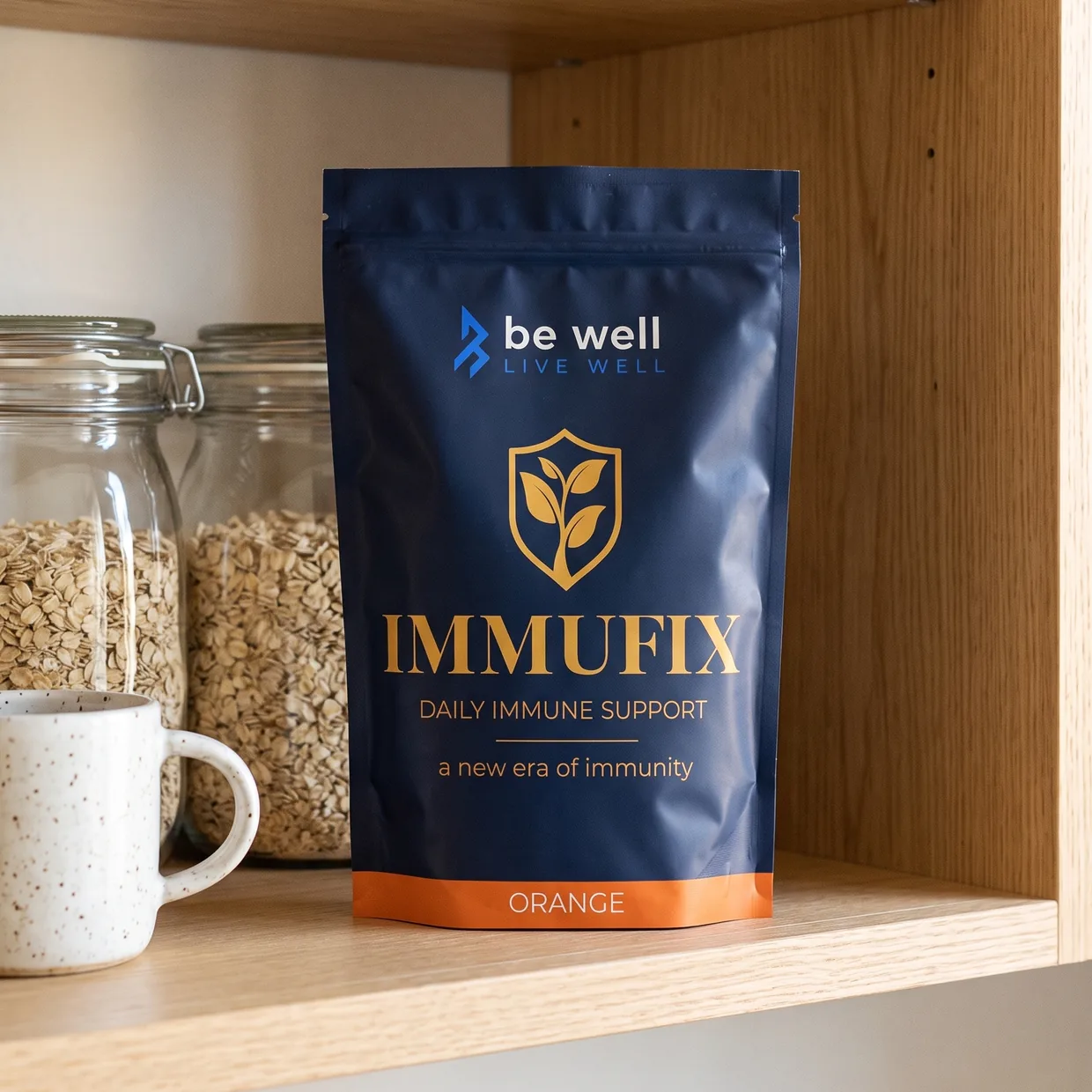
Does vitamin powder expire? What the date means.
Does vitamin powder expire or go off? What the best before date means under UK food law, how to store a powder, and what clumping tells you.
10 October 2026 · 6 min read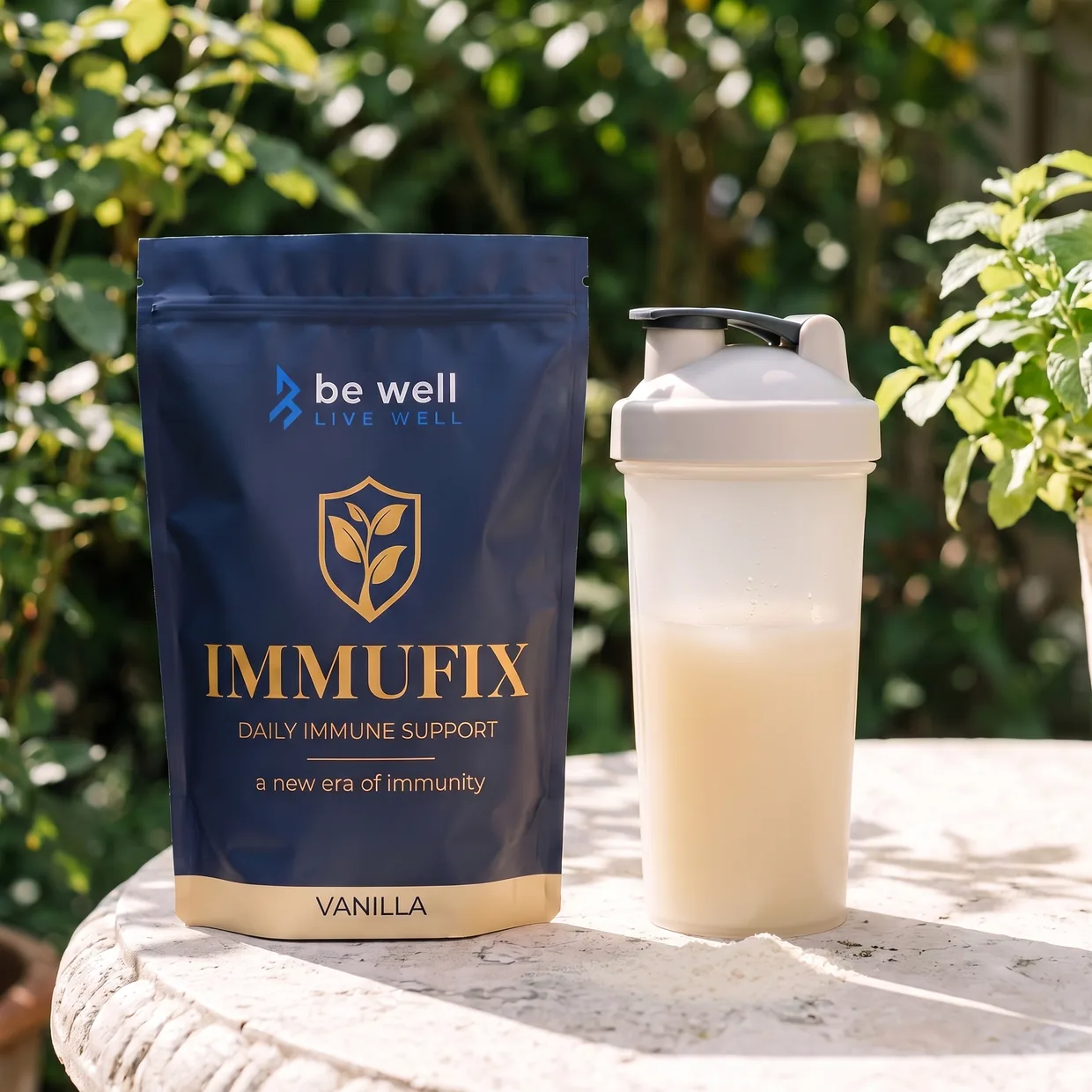
Greens powder or vitamin powder: what is the difference?
Are powder greens worth it, and do you need one? What a greens powder is, how it differs from a vitamin-and-mineral powder, and what the NHS advises.
10 October 2026 · 6 min read