
How much vitamin D is too much.
The NHS advises 10 micrograms of vitamin D a day in autumn and winter, and draws a firm line at 100 micrograms. Here are the limits by age, how to read micrograms and IU, and how to add up everything you take.
Quick answer. The NHS says adults, including pregnant and breastfeeding women and older people, and children aged 11 to 17, should not take more than 100 micrograms (4,000 IU) of vitamin D a day "as it could be harmful". Children aged 1 to 10 should not have more than 50 micrograms (2,000 IU) a day, and babies under 12 months no more than 25 micrograms (1,000 IU). For most people 10 micrograms (400 IU) a day is enough, and anything higher than the NHS limits should only be taken on a doctor's advice.
How much vitamin D is too much?
The NHS vitamin D page sets out the limits by age. In its words: "Do not take more than 100 micrograms (4,000 IU) of vitamin D a day as it could be harmful. This applies to adults, including pregnant and breastfeeding women and the elderly, and children aged 11 to 17 years."
It continues: "Children aged 1 to 10 years should not have more than 50 micrograms (2,000 IU) a day. Infants under 12 months should not have more than 25 micrograms (1,000 IU) a day."
The same page explains why the line exists. "Taking too many vitamin D supplements over a long period of time can cause too much calcium to build up in the body." It also notes that "Some people have medical conditions that mean they may not be able to safely take as much. If in doubt, you should consult your doctor."
The everyday figure is much lower. The NHS says "If you choose to take vitamin D supplements, 10 micrograms a day will be enough for most people." That is the amount it advises everyone to consider in autumn and winter, explained in our guide to vitamin D in a UK winter.
What does the NHS say about high dose vitamin D?
High doses are a prescription matter. The NHS medicines page for colecalciferol (vitamin D3) describes a loading dose as a high-strength course of vitamin D, usually taken for a few weeks, that is prescribed "to raise low levels of vitamin D quickly". Those courses come from a doctor.
Two NHS lines cover the difference between that and buying vitamin D yourself:
- "If your doctor has recommended you take a different amount of vitamin D, you should follow their advice."
- The medicines page also says to contact NHS 111 for advice if you have taken more than 4,000 IU of colecalciferol in 1 day (2,000 IU for a child aged 1 to 10, 1,000 IU for a baby under 12 months).
In short, a high dose is something a doctor prescribes for a reason. It is not a stronger version of the winter advice.
How do you convert micrograms to IU?
Labels give vitamin D in micrograms (µg or mcg), in international units (IU), or both. The NHS says "1 microgram of vitamin D is equal to 40 IU." To turn IU into micrograms, divide by 40.
| Amount | In IU | What it is |
|---|---|---|
| 1.25µg | 50 IU | One 25g scoop of Immufix |
| 5µg | 200 IU | The NRV used for % NRV on labels |
| 10µg | 400 IU | NHS daily amount for most people |
| 25µg | 1,000 IU | NHS limit, babies under 12 months |
| 50µg | 2,000 IU | NHS limit, children aged 1 to 10 |
| 100µg | 4,000 IU | NHS limit, adults and ages 11 to 17 |
IU figures are calculated with the NHS conversion of 40 IU per microgram.
A high % NRV on a label is not the same as too much. The NRV for vitamin D is 5µg, so a 25µg product shows 500% NRV and a 100µg product 2,000% (calculated). The percentage compares the product with a labelling yardstick, not with a safe limit. Our article on what NRV means explains the difference.
How do you add up vitamin D from different products?
Check every product you take for vitamin D, and add the amounts per day. Vitamin D turns up in more places than a single vitamin D tablet: multivitamins, fish liver oils, drink powders and some fortified foods.
A worked example, calculated from the labels:
- A 10µg vitamin D supplement: 10µg.
- One scoop of Immufix: 1.25µg.
- Total: 11.25µg (450 IU), about 11% of the NHS 100µg adult limit.
Fish liver oils are worth checking with care. The government's CoFID 2021 data lists cod liver oil at 210µg of vitamin D per 100g, far more than any ordinary food. The amount per daily dose on the label is the number to add.
The British Dietetic Association keeps it simple: "Taking 10 micrograms daily of vitamin D meets the needs of most people. Much larger amounts are unnecessary and can be harmful." It adds that when taking a vitamin D supplement "you can still eat food sources of vitamin D", but advises against taking other supplements that also contain vitamin D, such as cod liver oil or multivitamins. If you do take more than one product with vitamin D, add them up, and ask a pharmacist to check the combination.
Can you get too much vitamin D from sunlight or food?
Not from sunlight. The NHS says "You cannot overdose on vitamin D through exposure to sunlight." It still advises covering up or protecting your skin if you are out in the sun for long periods. Our guide to how much sunlight you need for vitamin D covers the balance.
Ordinary food is unlikely to get near the limit, because few foods contain much vitamin D. In CoFID, grilled mackerel has 8.5µg per 100g and a boiled egg 3.2µg per 100g. The NHS limit sits in its advice on supplements, and the BDA says you can keep eating vitamin D foods while taking one.
Where Immufix fits.
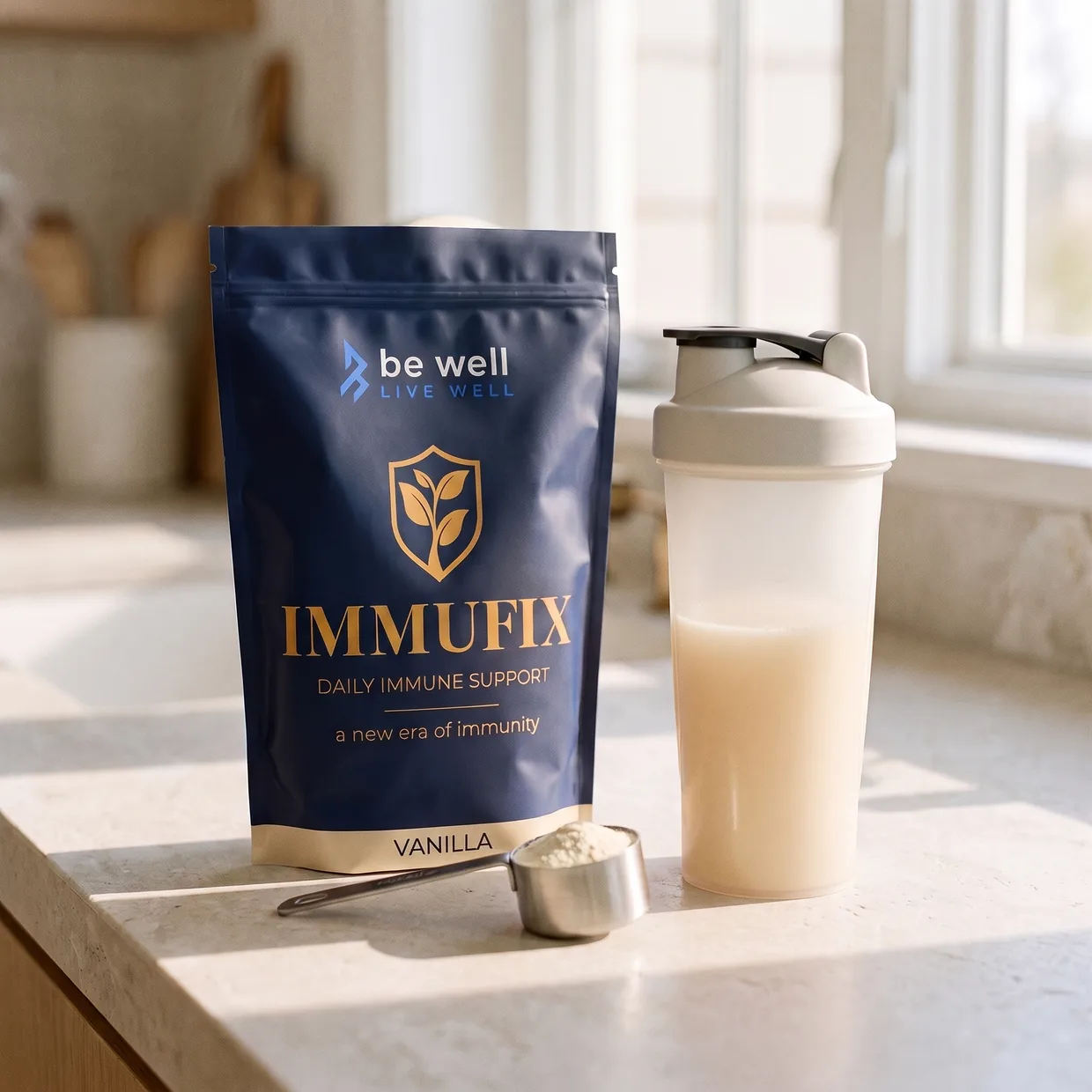
Immufix is one scoop (25g) in around 200ml of water, once a day. That scoop provides 1.25 micrograms (50 IU) of vitamin D3, which is 25% of the NRV, 12.5% of the NHS's 10 micrograms and 1.25% of the 100 microgram adult limit (calculated). It is not a vitamin D supplement and it does not cover the NHS autumn and winter advice on its own. If you take it alongside a vitamin D supplement, count both. Vitamin D contributes to the maintenance of normal bones and teeth and to normal muscle function. Every amount in a scoop is listed on the science page.
The short version.
- The NHS says adults and children aged 11 to 17 should not take more than 100 micrograms (4,000 IU) of vitamin D a day.
- The limit is 50 micrograms (2,000 IU) for children aged 1 to 10, and 25 micrograms (1,000 IU) for babies under 12 months.
- 10 micrograms (400 IU) a day is enough for most people. Higher doses are for a doctor to prescribe.
- 1 microgram is 40 IU. Add up the vitamin D in every product you take.
- You cannot overdose on vitamin D from sunlight, according to the NHS.
Food supplements should not be used as a substitute for a varied, balanced diet and a healthy lifestyle. If you have a medical condition, are pregnant, breastfeeding or taking medication, speak to your GP or pharmacist before taking any food supplement.

Daily Immune Support
Vitamins, minerals and plant nutrients in one daily scoop. The formula Paula Radcliffe has taken every day since 1998.
4.8 out of 5 · 89 reviewsDispatched the same day on weekday orders placed before 2pm.
Free standard UK delivery. Royal Mail 48 tracked, 2 to 3 working days. UK addresses only.
30‑day money-back guarantee. Try your first pouch of IMMUFIX for up to 30 days. If it’s not for you, we’ll refund your first qualifying pouch, less £10 shipping and handling. First purchase only. T&Cs apply.
Checkout completes securely on immufix.com
More from the journal.
What antioxidants are, in plain English.
What antioxidants are, what oxidative stress means in plain English, which nutrients hold the authorised claim, and the UK foods that provide them.
10 October 2026 · 7 min read
Biotin, what it does and where it is.
Biotin (vitamin B7) foods per 100g from UK government data, what the NHS says about biotin, its authorised claims and the NHS 0.9mg supplement guide.
10 October 2026 · 5 min read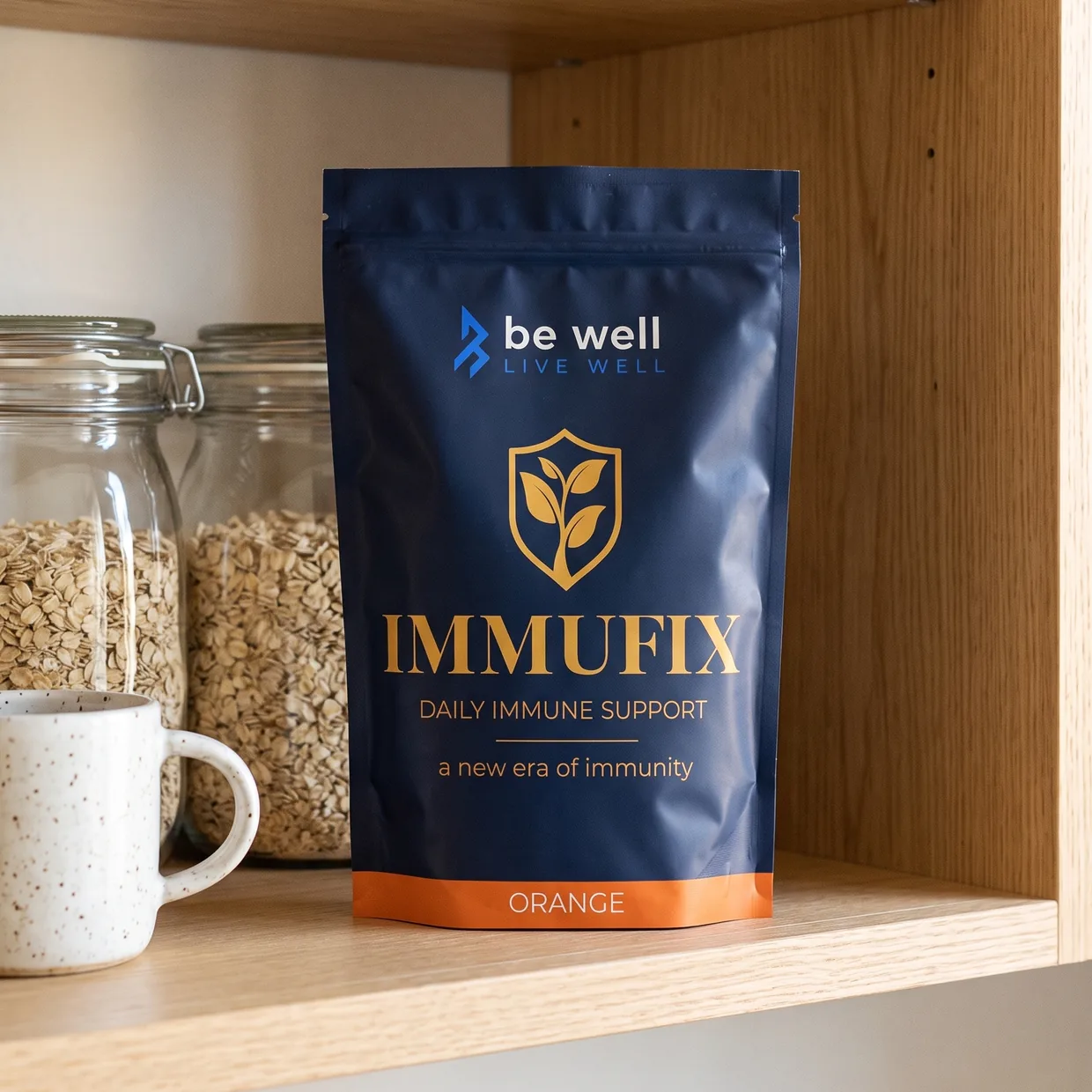
What chromium is, and where you find it.
What chromium is, which foods contain it, how much the NHS says adults need, and the one authorised health claim chromium holds in Great Britain.
10 October 2026 · 6 min read