
How much sunlight you need for vitamin D.
From late March to September, short spells outdoors are enough for most people in the UK to make their vitamin D. From October to March, no amount of time outside will do it. Here is what the NHS and NICE say about both halves of the year.
Quick answer. From about late March or early April to the end of September, most people in the UK can make all the vitamin D they need from short periods of sun on uncovered skin, such as the forearms, hands or lower legs, around the middle of the day; one NHS page suggests 15 minutes without sunscreen 2 or 3 times a week, and more often for people with brown or black skin. You should never let your skin burn. Between October and March the UK sun is not strong enough, and NICE says "It is not possible to get enough vitamin D from sunlight between October and March in the UK", which is why the NHS advises everyone to consider a 10 microgram supplement a day in autumn and winter.
How much sunlight do you need for vitamin D in the UK?
Less than most people think. The body makes vitamin D from direct sunlight on the skin, and the official guidance stresses short spells, not long ones.
NICE, which advises the NHS, says "Most people can make sufficient vitamin D by going out for short periods and leaving only areas of skin that are often exposed uncovered (such as forearms, hands or lower legs)" between 11am and 3pm (NICE NG34). It adds: "Longer periods may be needed for those with darker skin."
The NHS also gives a rough figure: "try to get outside in the sun without wearing sunscreen for 15 minutes 2 or 3 times a week between late March and September". It adds that "this may be more often if you have brown or black skin".
NICE also points out that more is not better. People who expose their skin to strong sunlight to raise their vitamin D "should be aware that prolonged exposure (for example, leading to burning or tanning) is unlikely to provide additional benefit."
Can you get vitamin D in winter in the UK?
Not from the sun. The NHS says "between October and early March we do not make enough vitamin D from sunlight" (NHS), and that during the autumn and winter "you need to get vitamin D from your diet because the sun is not strong enough for the body to make vitamin D."
NICE explains the timing. It says "from March to October UVB rays help people produce vitamin D", and it lists time of year, time of day, cloud and how far you are from the equator among the things that change the strength of sunlight. The UK is far enough north that the winter sun stays low and its UVB is too weak. A bright, clear day in January does not change that.
So in winter the NHS turns to food and supplements: "everyone (including pregnant and breastfeeding women) should consider taking a daily supplement containing 10 micrograms of vitamin D during the autumn and winter." Food helps, but few foods carry much (see vitamin D foods in the UK). The full winter advice is in our guide to vitamin D in a UK winter.
What time of day is best for vitamin D from the sun?
The middle of the day. NICE says "In the UK, sunlight is strongest between 11am and 3pm between March and October." That is when skin makes vitamin D fastest, and also when it burns fastest.
Outside those hours, NICE says, "it takes longer to synthesise sufficient vitamin D" and "the risk of sunburn is less." A walk at lunchtime with your sleeves rolled up does more for vitamin D in the summer months than the same walk at 8am.
Does skin tone change how much sun you need?
Yes. NICE says people with naturally very light skin, fair or red hair or freckles "do not need much time in the sun (less than the time it takes them to burn) to produce vitamin D", and burn more quickly. People with darker skin "may need more time in sunlight to produce the same amount of vitamin D as people with lighter skin", but should still never reach the point of burning.
The NHS goes further for darker skin. It says people with an African, African-Caribbean or south Asian background may not make enough vitamin D from sunlight, and should consider a daily 10 microgram supplement all year round, not only in winter. The same all-year advice applies to people who are not often outdoors, people in care homes, and people who usually cover most of their skin outside.
Can you make vitamin D through a window?
No. NICE says "the vitamin D-inducing UVB does not penetrate glass", and that "It is not possible to get enough vitamin D by sitting next to a closed sunny window." A sunny desk by the window, a conservatory or a car journey on a bright day does not count. Skin has to be outdoors.
Sunscreen is a balance. The NHS 15-minute suggestion is for time outside without sunscreen, and NICE advises protecting skin when you are out in strong sunlight for more than a short period. The short spell is the point: long enough for vitamin D, short of any redness.
How do you get vitamin D from the sun without burning?
The NHS sun safety page says "You can burn in the UK, even when it's cloudy", and that you should aim "to strike a balance between protecting yourself from the sun and getting enough vitamin D from sunlight." Its main rules:
- Never burn. The NHS also says "There's no safe or healthy way to get a tan."
- Use shade from 11am to 3pm, March to October, once you have had your short spell.
- Check the UV index. "If it's 3 or higher, consider protecting your skin."
- Cover up with clothing, a hat and sunglasses, and use at least factor 30 sunscreen with 4-star UVA protection for longer spells.
- Take extra care with children, and keep babies under 6 months out of direct sunlight.
- Skip sunbeds. The British Dietetic Association lists "don't use sun/tanning beds" among its sun safety tips.
The NHS also says "You cannot overdose on vitamin D through exposure to sunlight." The limit on sun is your skin, not your vitamin D.
Where Immufix fits.
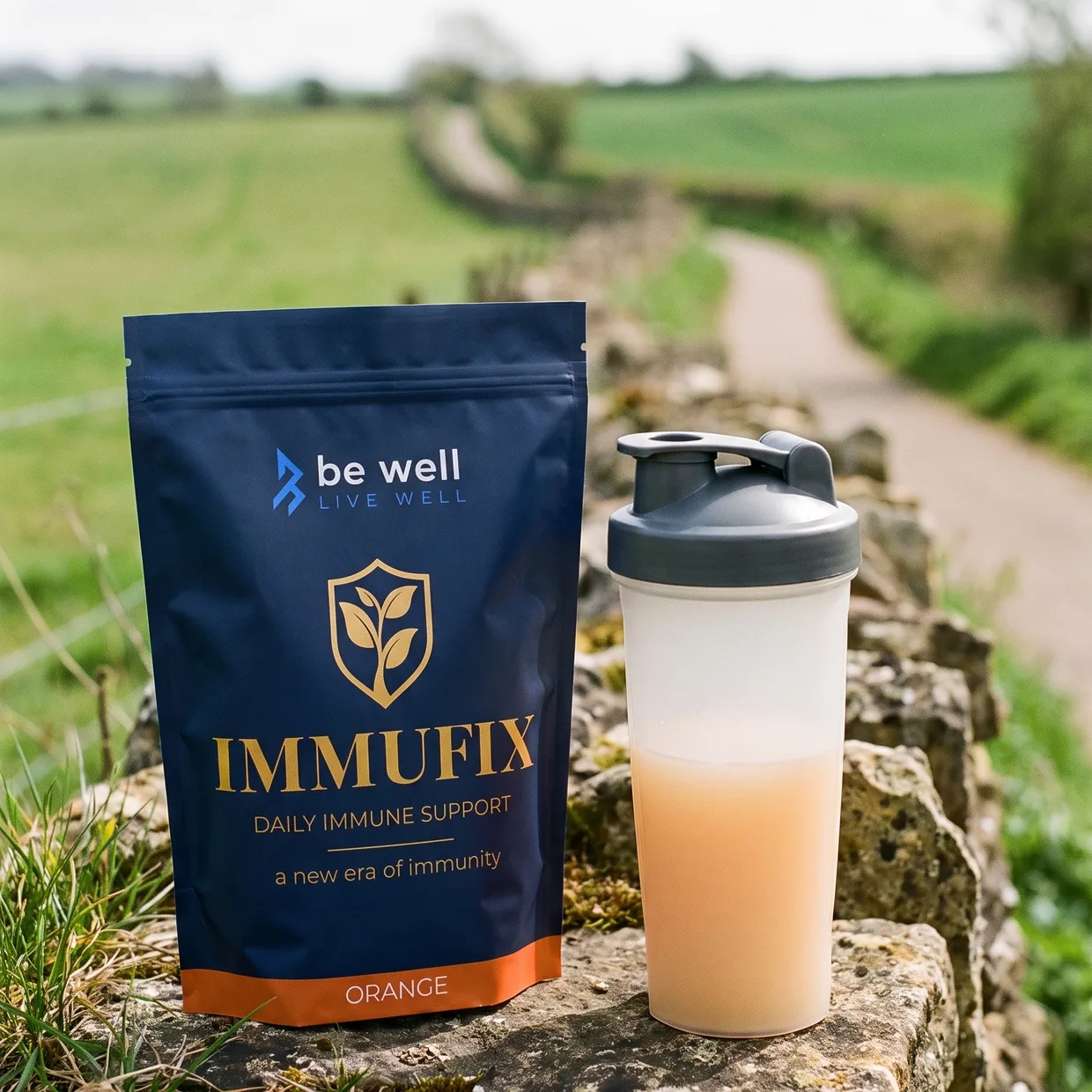
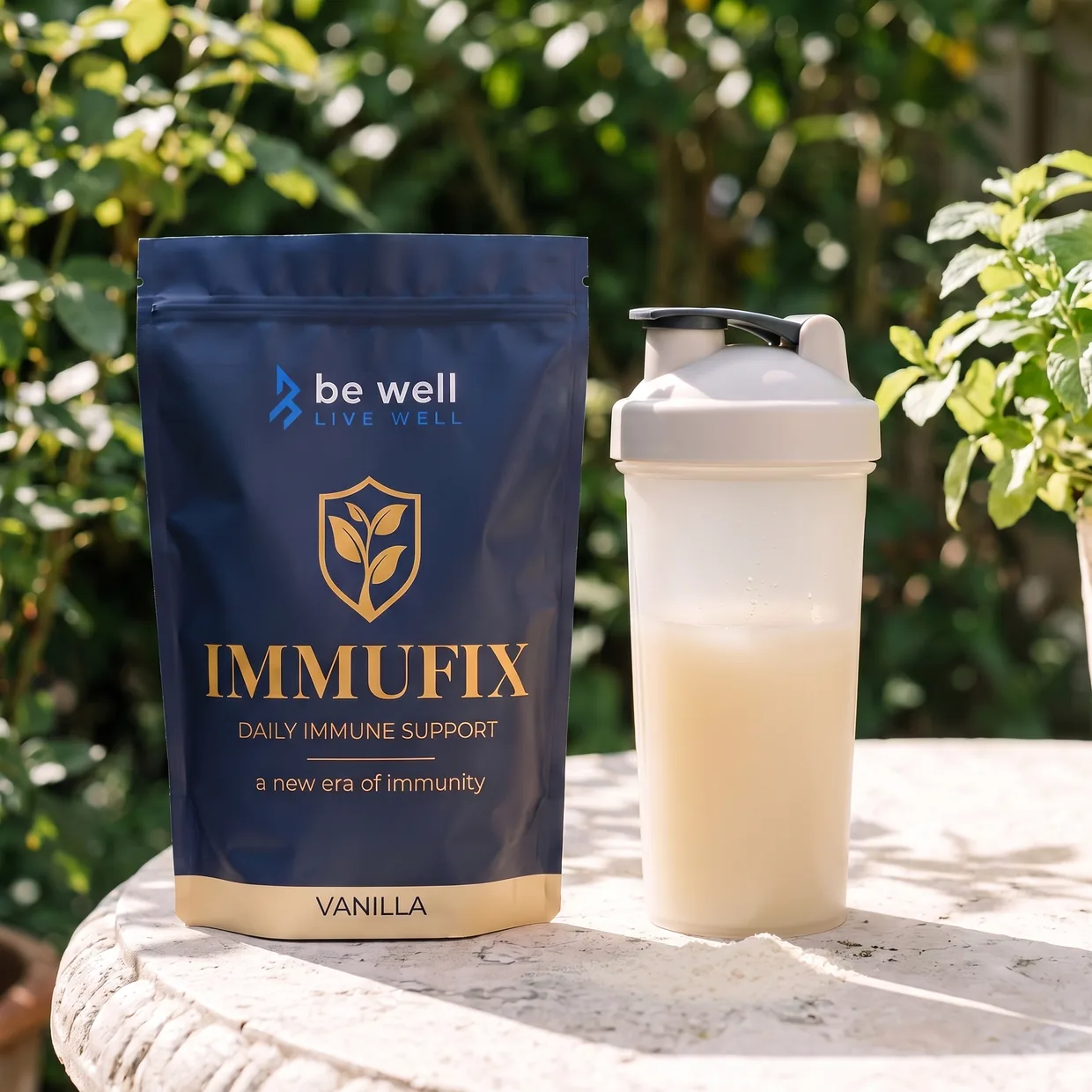
Immufix does not replace sunlight in summer or a vitamin D supplement in winter. One scoop (25g) in around 200ml of water, once a day, provides 1.25 micrograms of vitamin D3, which is 25% of the nutrient reference value and well short of the 10 micrograms the NHS advises from October to March. If you follow that advice, take a dedicated vitamin D supplement and count the 1.25 micrograms in your total. Vitamin D contributes to the maintenance of normal bones and teeth, to normal muscle function and to normal absorption and utilisation of calcium and phosphorus. Every amount is listed on the science page.
The short version.
- From late March or early April to the end of September, short spells of midday sun on forearms, hands or lower legs are enough for most people in the UK.
- One NHS page suggests 15 minutes without sunscreen 2 or 3 times a week, more often for brown or black skin. Never burn.
- From October to March the UK sun is too weak to make enough vitamin D, however long you are outside.
- Sunlight through a window does not count, because UVB does not pass through glass.
- In autumn and winter the NHS advises everyone to consider a 10 microgram vitamin D supplement a day.
Food supplements should not be used as a substitute for a varied, balanced diet and a healthy lifestyle. If you have a medical condition, are pregnant, breastfeeding or taking medication, speak to your GP or pharmacist before taking any food supplement.

Daily Immune Support
Vitamins, minerals and plant nutrients in one daily scoop. The formula Paula Radcliffe has taken every day since 1998.
4.8 out of 5 · 89 reviewsDispatched the same day on weekday orders placed before 2pm.
Free standard UK delivery. Royal Mail 48 tracked, 2 to 3 working days. UK addresses only.
30‑day money-back guarantee. Try your first pouch of IMMUFIX for up to 30 days. If it’s not for you, we’ll refund your first qualifying pouch, less £10 shipping and handling. First purchase only. T&Cs apply.
Checkout completes securely on immufix.com
More from the journal.
What antioxidants are, in plain English.
What antioxidants are, what oxidative stress means in plain English, which nutrients hold the authorised claim, and the UK foods that provide them.
10 October 2026 · 7 min read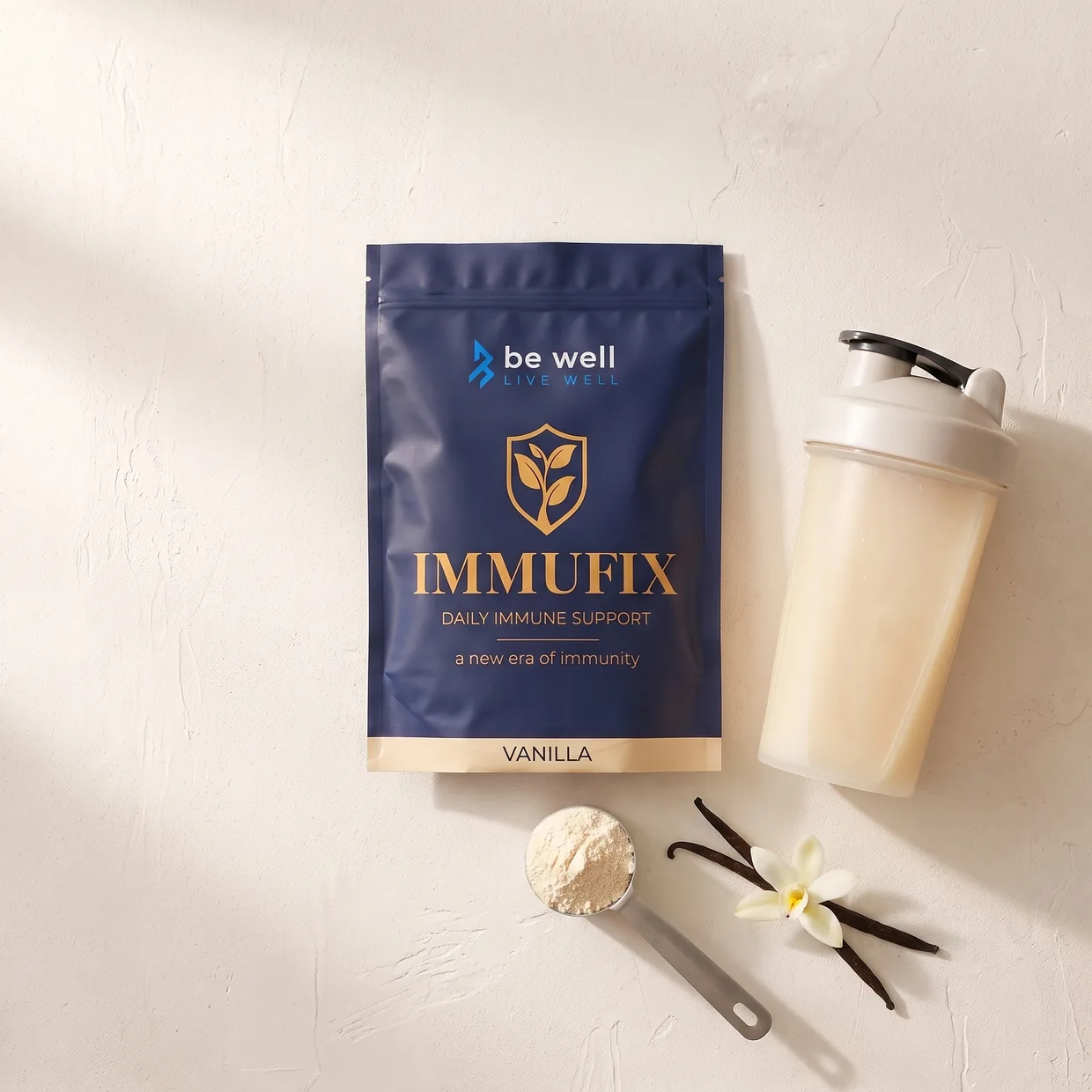
Biotin, what it does and where it is.
Biotin (vitamin B7) foods per 100g from UK government data, what the NHS says about biotin, its authorised claims and the NHS 0.9mg supplement guide.
10 October 2026 · 5 min read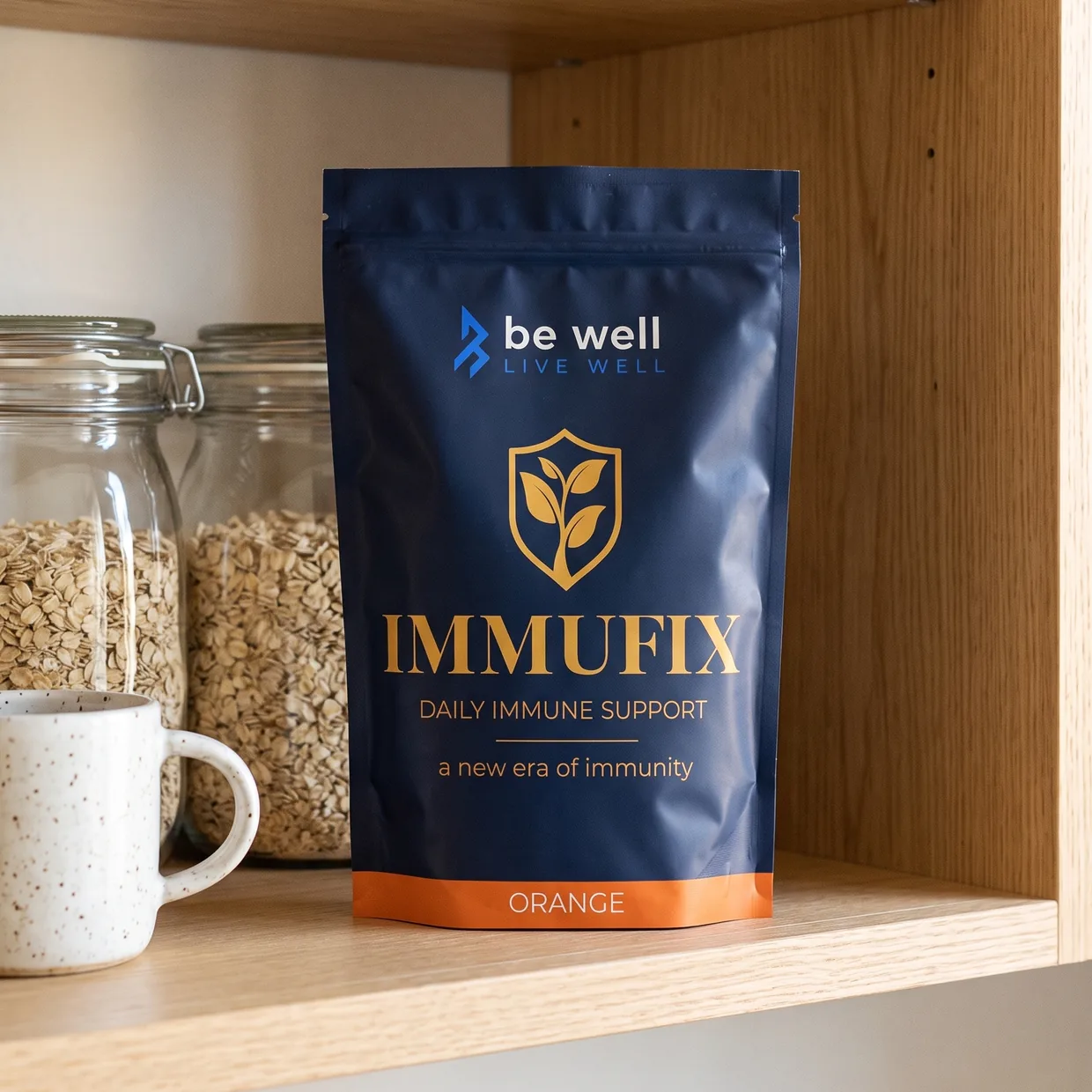
What chromium is, and where you find it.
What chromium is, which foods contain it, how much the NHS says adults need, and the one authorised health claim chromium holds in Great Britain.
10 October 2026 · 6 min read