
Vitamin C, D and zinc, taken together.
Vitamin C, vitamin D and zinc often appear on the same label, and plenty of people take all three. Here is what the NHS says about each one, how much is enough, and how to fit them into one daily routine.

Quick answer. Yes, you can take vitamin C, vitamin D and zinc together. The NHS pages on all three carry no warning against combining them, and what matters is the total from everything you take. The NHS says less than 1,000mg of vitamin C supplements a day is unlikely to cause harm, adults should not take more than 100 micrograms of vitamin D a day, and no more than 25mg of zinc supplements a day unless a doctor advises it. There is no NHS rule on the time of day for vitamin C or zinc, so follow each label and take them at the same time every day.
Can you take vitamin C, D and zinc together?
Yes. The NHS pages on vitamin C, vitamin D and zinc each set out how much you need and how much is too much, and none warns against taking them with the other two. We make Immufix, which contains all three, so we are not a neutral party.
The three work in different ways in the diet:
- Vitamin C comes from fruit and vegetables. The NHS says "Vitamin C cannot be stored in the body, so you need it in your diet every day."
- Vitamin D is made in the skin from direct sunlight, and is also found in a small number of foods. The NHS says that between October and early March "we do not make enough vitamin D from sunlight".
- Zinc comes from foods such as meat, shellfish, cheese and bread. The NHS says "You should be able to get all the zinc you need from your daily diet."
All three hold the same authorised claim in Great Britain: each contributes to the normal function of the immune system. Beyond that they differ. Vitamin C contributes to the reduction of tiredness and fatigue. Vitamin D contributes to the maintenance of normal bones and teeth and to normal muscle function. Zinc contributes to normal cognitive function and to the maintenance of normal hair, nails and skin.
Can you take vitamin D and zinc together?
Yes. Neither NHS page warns against the pairing. The warnings the NHS gives are about the amount of each one.
For vitamin D, the NHS says: "Do not take more than 100 micrograms (4,000 IU) of vitamin D a day as it could be harmful." That limit applies to adults, including pregnant and breastfeeding women and older people. Labels sometimes give vitamin D in IU, and the NHS explains that "1 microgram of vitamin D is equal to 40 IU". Our guide to how much vitamin D is too much covers the limits for children.
For zinc, the NHS warning is about copper: "Taking high doses of zinc reduces the amount of copper the body can absorb." It says not to take more than 25mg of zinc supplements a day unless advised to by a doctor.

What is in a vitamin C, D and zinc supplement?
A vitamin C, D and zinc supplement lists the amount of each per serving, in milligrams or micrograms and as a percentage of the nutrient reference value (NRV). UK labelling law sets the NRV at 80mg for vitamin C, 5 micrograms for vitamin D and 10mg for zinc. The NHS figures for daily need and for supplements are different again. This table sets them out, with one scoop of Immufix for comparison.
| Nutrient | NHS daily need, adults | Label NRV | NHS line on the upper amount | Immufix per 25g scoop |
|---|---|---|---|---|
| Vitamin C | 40mg (aged 19 to 64) | 80mg | Less than 1,000mg of supplements a day is unlikely to cause any harm | 100mg · 125% NRV |
| Vitamin D | 10 micrograms | 5 micrograms | No more than 100 micrograms (4,000 IU) a day | 1.25µg · 25% NRV |
| Zinc | About 9.5mg for men (19 to 64), 7mg for women | 10mg | No more than 25mg of supplements a day unless advised by a doctor | 3.75mg · 38% NRV |
Add up every label you take. A multivitamin, a separate vitamin D tablet and a powder can each contain some of all three. GOV.UK's food supplements guidance says "Always read the label and follow warnings and instructions", and "Do not take more than the recommended dose".
What is the best time to take vitamin C, D and zinc?
The NHS pages on vitamin C, vitamin D and zinc do not give a time of day for taking them. The one specific instruction we found is for colecalciferol, the form of vitamin D sold as a medicine. For capsules and tablets, the NHS says to "swallow them whole with some water. Take them with your main meal of the day."
For food supplements, three habits keep it simple:
- Follow each label. The directions on the pack say how much to take and how, whether with water, with food or at a set time.
- Pick a time you will keep. Tying supplements to breakfast or another meal makes them hard to forget.
- Keep it daily. Vitamin C is not stored in the body, so a steady daily routine matters more than the exact hour.
Our guide to the best time to take vitamins goes through the common supplements one by one.
Where Immufix fits.
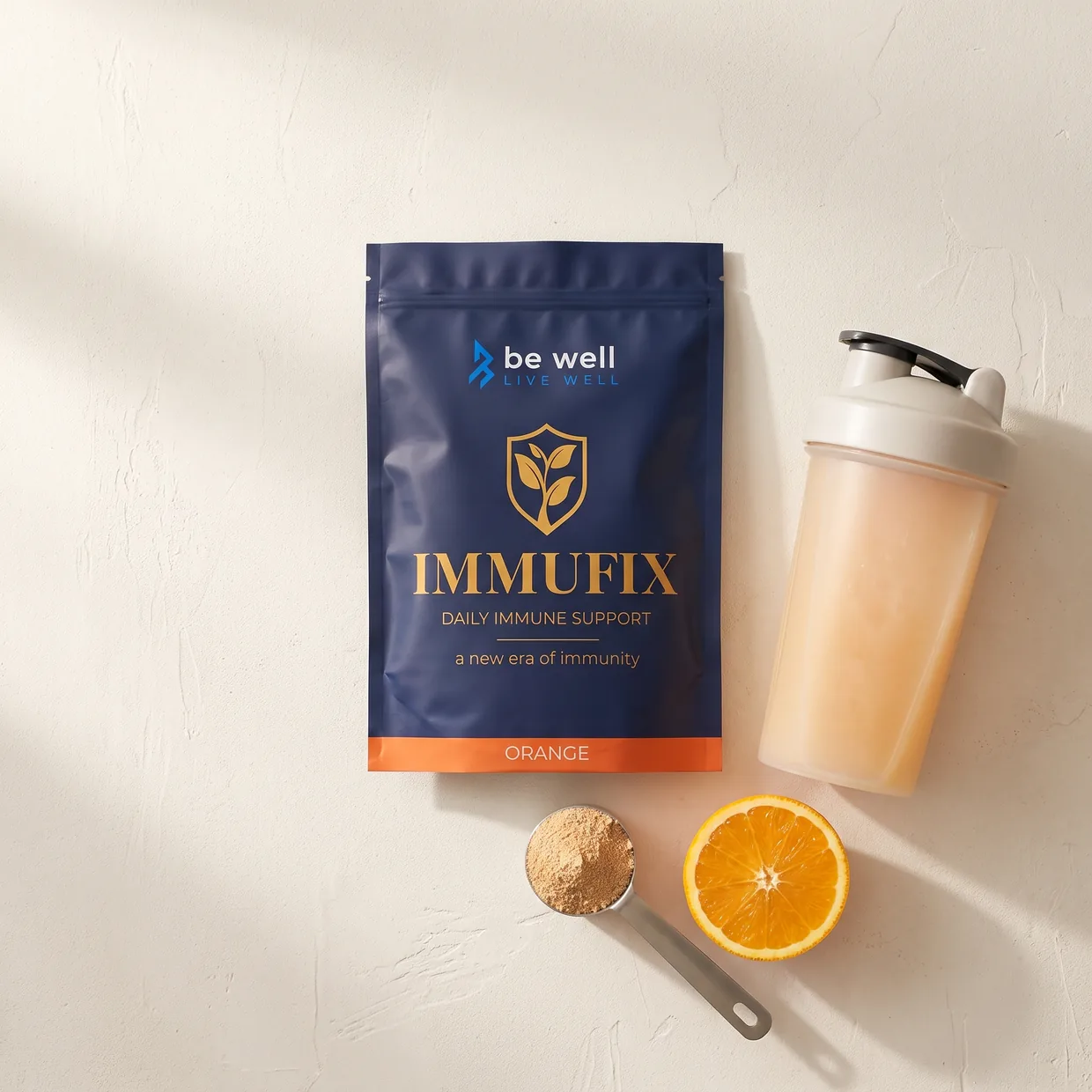
Immufix contains vitamin C, vitamin D3 and zinc in one powder. One 25g scoop in around 200ml of water, once a day, gives 100mg of vitamin C (125% NRV), 1.25 micrograms of vitamin D3 (25% NRV) and 3.75mg of zinc (38% NRV), with other vitamins, minerals and plant nutrients. Vitamin C, vitamin D and zinc each contribute to the normal function of the immune system. The full label is on the science page.
Immufix is not a vitamin D supplement and does not replace one. Its 1.25 micrograms is 12.5% of the 10 micrograms a day the NHS suggests from a vitamin D supplement (calculated). If you follow the NHS advice, take a vitamin D supplement as well and count both in your total.
The short version.
- You can take vitamin C, vitamin D and zinc together. The NHS gives no warning against combining them.
- Watch the totals: under 1,000mg of vitamin C supplements, no more than 100 micrograms of vitamin D and no more than 25mg of zinc supplements a day.
- High-dose zinc reduces the copper the body can absorb.
- There is no NHS time-of-day rule for vitamin C or zinc. Follow each label and take them at the same time every day.
- All three contribute to the normal function of the immune system.
Food supplements should not be used as a substitute for a varied, balanced diet and a healthy lifestyle. If you have a medical condition, are pregnant, breastfeeding or taking medication, speak to your GP or pharmacist before taking any food supplement.


Daily Immune Support
Vitamins, minerals and plant nutrients in one daily scoop. The formula Paula Radcliffe has taken every day since 1998.
4.8 out of 5 · 89 reviewsMonthly subscription. £52.00 is charged every month until you cancel. Minimum three payments, then cancel any time. Subscription terms
New here? 20% off your first order with code TRYIMMUFIX. Apply it
Dispatched the same day on weekday orders placed before 2pm.
Free standard UK delivery. Royal Mail 48 tracked, 2 to 3 working days. UK addresses only.
30‑day money-back guarantee. Try your first pouch of IMMUFIX for up to 30 days. If it’s not for you, we’ll refund your first qualifying pouch, less £10 shipping and handling. First purchase only. T&Cs apply.
Checkout completes securely on immufix.com
More from the journal.
Vitamin C and zinc, in one glass.
What a vitamin C and zinc powder drink gives you, how much of each adults need a day in the UK, the NHS upper limits, and taking them together.
17 November 2026 · 6 min read
How much magnesium you need each day.
How much magnesium per day: the NHS says 300mg for men and 270mg for women. Daily intake by age, how much to take as a supplement, and the 400mg line.
10 October 2026 · 7 min read
How much vitamin C you need each day.
The daily vitamin C dosage for UK adults is 40mg, says the NHS. The daily requirement by age, why labels use 80mg, and whether 1,000mg a day is too much.
10 October 2026 · 6 min read