
How much magnesium you need each day.
The NHS figure is 300mg of magnesium a day for men and 270mg for women, and a varied diet covers it for most people. For supplements, the NHS says 400mg or less a day is unlikely to cause any harm.
Quick answer. The NHS says the amount of magnesium you need is "300mg a day for men (19 to 64 years)" and "270mg a day for women (19 to 64 years)", and the UK Government Dietary Recommendations keep the same figures at 65 and over. Children need between 85mg and 300mg a day, depending on age. For supplements, the NHS says: "Having 400mg or less a day of magnesium from supplements is unlikely to cause any harm."
How much magnesium per day do adults need in the UK?
The NHS page on other vitamins and minerals gives two figures:
- "300mg a day for men (19 to 64 years)"
- "270mg a day for women (19 to 64 years)"
The UK Government Dietary Recommendations, published by Public Health England in August 2016, give the same 300mg and 270mg for adults aged 65 to 74 and 75 and over. Its mineral figures, in its own words, "were obtained from Dietary Reference Values for Food Energy and Nutrients for the United Kingdom (1991)."
How much magnesium do children and teenagers need?
The government tables set a figure for every age band. These are the daily amounts, in milligrams:
| Age | Males, per day | Females, per day |
|---|---|---|
| 1 to 3 years | 85mg | 85mg |
| 4 to 6 years | 120mg | 120mg |
| 7 to 10 years | 200mg | 200mg |
| 11 to 14 years | 280mg | 280mg |
| 15 to 18 years | 300mg | 300mg |
| 19 to 64 years | 300mg | 270mg |
| 65 to 74 years | 300mg | 270mg |
| 75 years and over | 300mg | 270mg |
One detail is easy to miss. Girls aged 15 to 18 have a higher figure, 300mg, than adult women, 270mg. Boys and girls share the same amount at every age up to 18, and the figures only split at 19. The document notes that its recommendations "relate to the general population", and that anyone with a medical condition looking for dietary advice should see their GP or a registered dietitian.
Why do labels say 375mg of magnesium?
Because labels use a different measure. The 300mg and 270mg are government dietary recommendations. The 375mg is the nutrient reference value (NRV) for magnesium, set in food labelling law so that every pack uses the same yardstick.
Two things follow, by our calculation. A product at 100% NRV provides 375mg, which is more than the NHS figure for men or women. And 375mg sits just under the NHS's 400mg line for supplements, so one product at 100% NRV plus a second containing magnesium can pass it. Our guide to what NRV means explains the percentages.
Can you get enough magnesium from food?
For most people, yes. The Department of Health and Social Care advice on the NHS page is: "You should be able to get all the magnesium you need by eating a varied and balanced diet." The NHS names spinach, nuts and wholemeal bread as sources.
The UK government's food composition data, CoFID 2021, gives these amounts per 100g:
- Brazil nuts: 410mg.
- Sunflower seeds: 390mg.
- Pumpkin seeds, almonds and plain cashews: 270mg each.
- Porridge oats, dry: 114mg.
- Wholemeal bread: 66mg, against 22mg for average white bread.
Our guide to magnesium-rich foods has the full table and the wholegrain swaps that add the most.
How much magnesium is too much?
The NHS guidance on taking too much is about supplements. In its words: "Taking high doses of magnesium (more than 400mg) for a short time can cause diarrhoea." It adds: "There's not enough evidence to say what the effects might be of taking high doses of magnesium for a long time."
The Department of Health and Social Care advice on the same page is:
- "If you take magnesium supplements, do not take too much as this could be harmful."
- "Having 400mg or less a day of magnesium from supplements is unlikely to cause any harm."
The 400mg line is about magnesium from supplements. It is not a target, and food is counted separately.
How do you add up magnesium from more than one product?
Magnesium appears in multivitamins, powders, drinks and single-mineral products, so it is easy to take it from more than one place. To check your total:
- Find the magnesium line on each label. It is in the nutrition table, in milligrams, usually with a % NRV beside it.
- Check the serving. The amount is per daily serving as the pack describes it, which may be more than one tablet or scoop.
- Add the figures together. For example, 70mg from one product and 250mg from another is 320mg.
- Compare the total with 400mg. If it is over, or you are unsure, ask a pharmacist or your GP.
Our guide to reading a supplement label covers the rest of the table.
What does magnesium do?
Magnesium holds these authorised health claims in Great Britain, in their set wording:
- Magnesium contributes to the reduction of tiredness and fatigue.
- Magnesium contributes to normal energy-yielding metabolism.
- Magnesium contributes to normal muscle function.
- Magnesium contributes to electrolyte balance.
- Magnesium contributes to normal psychological function.
Where Immufix fits.
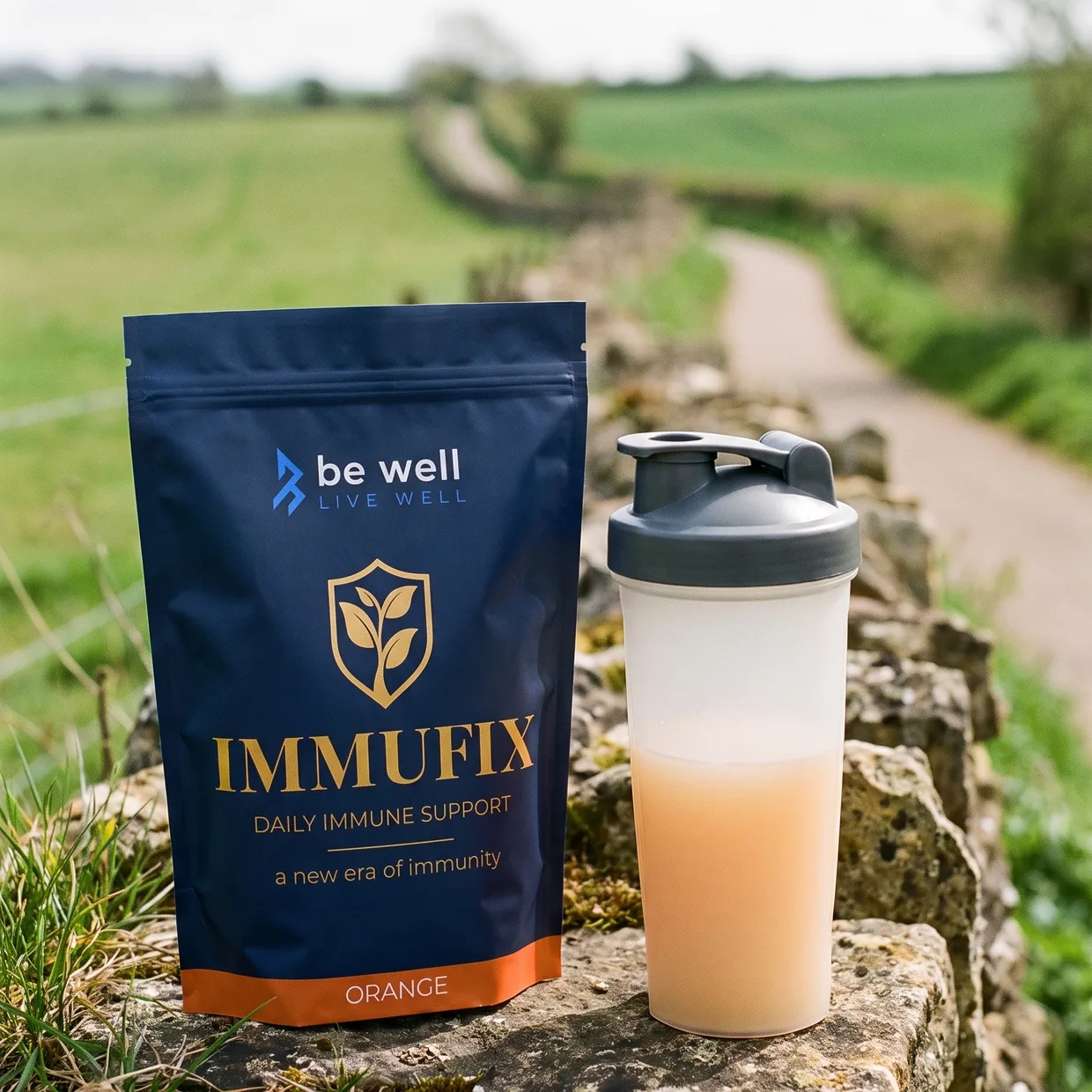
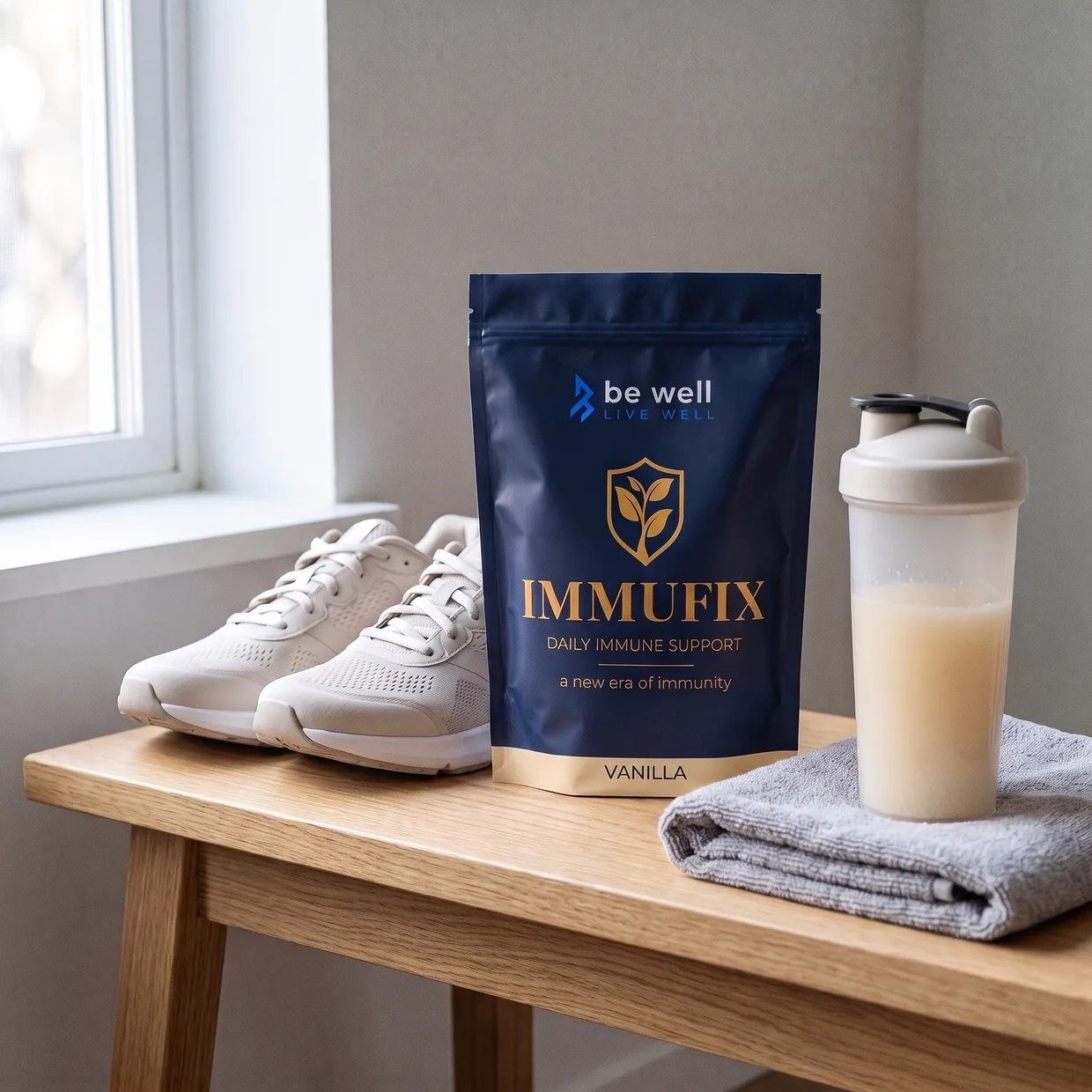
Food comes first, and wholegrains, nuts and seeds do most of the work. Immufix is one scoop (25g) in around 200ml of water, once a day. Each scoop provides 70mg of magnesium, 19% of the NRV. By our calculation that is about a quarter of the NHS figure for women, just under a quarter of the figure for men, and under a fifth of the NHS's 400mg line for supplements. Magnesium contributes to the reduction of tiredness and fatigue and to normal muscle function. Every amount in the formula is on the science page.
The short version.
- The NHS says men need 300mg of magnesium a day and women 270mg. The figures stay the same over 65.
- Children need 85mg to 280mg a day up to 14, and 300mg from 15 to 18.
- Labels use a separate yardstick, the NRV of 375mg.
- Most people can get all the magnesium they need from a varied diet.
- The NHS says 400mg or less a day from supplements is unlikely to cause any harm. Add up every product you take.
Food supplements should not be used as a substitute for a varied, balanced diet and a healthy lifestyle. If you have a medical condition, are pregnant, breastfeeding or taking medication, speak to your GP or pharmacist before taking any food supplement.

Daily Immune Support
Vitamins, minerals and plant nutrients in one daily scoop. The formula Paula Radcliffe has taken every day since 1998.
4.8 out of 5 · 89 reviewsDispatched the same day on weekday orders placed before 2pm.
Free standard UK delivery. Royal Mail 48 tracked, 2 to 3 working days. UK addresses only.
30‑day money-back guarantee. Try your first pouch of IMMUFIX for up to 30 days. If it’s not for you, we’ll refund your first qualifying pouch, less £10 shipping and handling. First purchase only. T&Cs apply.
Checkout completes securely on immufix.com
More from the journal.

What antioxidants are, in plain English.
What antioxidants are, what oxidative stress means in plain English, which nutrients hold the authorised claim, and the UK foods that provide them.
10 October 2026 · 7 min read
Biotin, what it does and where it is.
Biotin (vitamin B7) foods per 100g from UK government data, what the NHS says about biotin, its authorised claims and the NHS 0.9mg supplement guide.
10 October 2026 · 5 min read
What chromium is, and where you find it.
What chromium is, which foods contain it, how much the NHS says adults need, and the one authorised health claim chromium holds in Great Britain.
10 October 2026 · 6 min read