
Magnesium-rich foods, and how to eat more of them.
Nuts, seeds, wholegrains, pulses and leafy greens carry most of the magnesium in a UK diet. A few ordinary swaps, such as brown rice for white, add more than any single food does.
Quick answer. The NHS names spinach, nuts and wholemeal bread as sources of magnesium, and says men need 300mg a day and women 270mg. In UK government food data (CoFID 2021), Brazil nuts (410mg per 100g), sunflower seeds (390mg), sesame seeds (370mg), and pumpkin seeds, almonds and cashews (270mg each) are the richest everyday foods. Swapping white bread, rice and pasta for wholegrain versions raises magnesium per 100g by two to almost ten times.
Which foods are high in magnesium?
The NHS page on other vitamins and minerals says "Magnesium is found in a wide variety of foods", and gives three examples: spinach, nuts and wholemeal bread.
The figures come from the Composition of Foods Integrated Dataset (CoFID), the UK government's food composition tables. All values below are from its 2021 release, per 100g of food as described.
| Food (as eaten) | Magnesium per 100g | Group |
|---|---|---|
| Brazil nuts | 410mg | Nuts |
| Sunflower seeds | 390mg | Seeds |
| Sesame seeds | 370mg | Seeds |
| Pumpkin seeds | 270mg | Seeds |
| Almonds | 270mg | Nuts |
| Cashew nuts, plain | 270mg | Nuts |
| Peanuts, plain | 210mg | Nuts |
| Peanut butter, smooth | 180mg | Nuts |
| Porridge oats, dry | 114mg | Wholegrain |
| Baby spinach, boiled | 112mg | Leafy greens |
| Plain chocolate, 36 to 50% cocoa | 89mg | Other |
| Wholemeal bread | 66mg | Wholegrain |
| Houmous | 62mg | Pulses |
| Brown rice, boiled | 48mg | Wholegrain |
| Wholewheat spaghetti, boiled | 46mg | Wholegrain |
| Chickpeas, canned, drained | 44mg | Pulses |
| Red kidney beans, boiled | 40mg | Pulses |
| Bananas | 27mg | Fruit |
Nuts and seeds top the table per 100g, but they are eaten by the handful rather than the 100g. Wholegrains, pulses and greens matter as much in practice, because people eat them in larger amounts and more often.
How much magnesium do you need a day?
The NHS says the amount you need is:
- "300mg a day for men (19 to 64 years)"
- "270mg a day for women (19 to 64 years)"
The UK Government Dietary Recommendations keep the same 300mg and 270mg for adults aged 65 to 74 and 75 and over.
Food labels use the nutrient reference value (NRV) instead, which for magnesium is 375mg. It is a fixed yardstick for labels, not a daily target.
Why wholemeal bread is on the NHS list.
Per 100g, wholemeal bread (66mg) is far below nuts and seeds. It earns its place because bread is a daily staple for many people, eaten at more than one meal. A food you eat twice a day can add more over a week than one you eat twice a month. The same logic applies to oats, rice and pasta, which is why the wholegrain swaps below matter.
What about milk and fruit?
Both are modest sources. CoFID lists semi-skimmed milk at 11mg per 100g and bananas at 27mg. They add a little, often, rather than a lot at once.
How can I get enough magnesium naturally?
The NHS view is that "You should be able to get all the magnesium you need by eating a varied and balanced diet." The quickest gains come from swapping white staples for wholegrain ones. These are CoFID figures per 100g as eaten, with the multiples calculated:
- Rice: boiled white long grain 5mg, boiled brown rice 48mg. Almost ten times as much.
- Bread: average white 22mg, wholemeal 66mg. Three times as much.
- Pasta: boiled white spaghetti 21mg, boiled wholewheat spaghetti 46mg. More than twice as much.
After the swaps, a few habits add up:
- Start with oats. Porridge oats carry 114mg per 100g dry, and a spoon of seeds on top adds more.
- Snack on nuts. Almonds, cashews and Brazil nuts all sit above 250mg per 100g.
- Add pulses. Chickpeas, kidney beans and houmous each bring 40mg to 62mg per 100g.
- Wilt some spinach. Baby spinach measured 112mg per 100g boiled. Mature spinach measured less, 34mg boiled, so the type you buy matters.
Can you have too much magnesium?
The NHS guidance on taking too much is about supplements. In its words: "Taking high doses of magnesium (more than 400mg) for a short time can cause diarrhoea." It adds: "There's not enough evidence to say what the effects might be of taking high doses of magnesium for a long time."
The Department of Health and Social Care advice on the same page is: "Having 400mg or less a day of magnesium from supplements is unlikely to cause any harm." If you take more than one supplement, add the magnesium up across all of them. A pharmacist can check them for you.
What does magnesium do?
Magnesium holds these authorised health claims in Great Britain:
- Magnesium contributes to the reduction of tiredness and fatigue.
- Magnesium contributes to normal energy-yielding metabolism.
- Magnesium contributes to normal muscle function.
- Magnesium contributes to electrolyte balance.
- Magnesium contributes to normal psychological function.
Several foods in the table are good sources of other minerals too. Our guide to zinc-rich foods shows the same seeds, oats and wholemeal bread near the top for zinc.
Where Immufix fits.
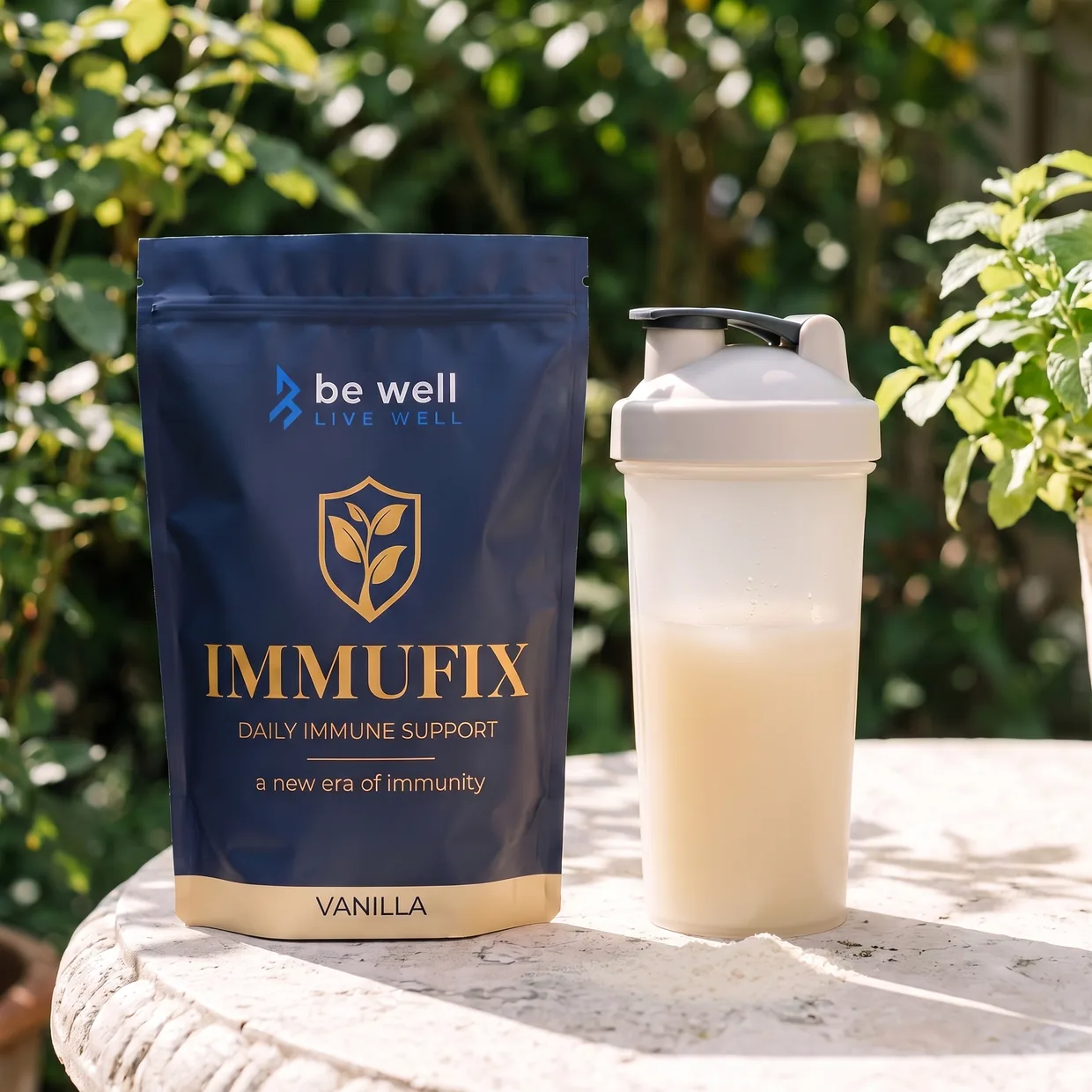
Food comes first, and the swaps above do most of the work. Immufix is one scoop (25g) in around 200ml of water, once a day. Each scoop provides 70mg of magnesium, 19% of the NRV, which by our calculation is about a quarter of the NHS daily amount for women and just under a quarter for men. Magnesium contributes to the reduction of tiredness and fatigue, to normal muscle function and to electrolyte balance. The full formula is on the science page.
The short version.
- The NHS says men need 300mg of magnesium a day and women 270mg.
- Per 100g, Brazil nuts, sunflower, sesame and pumpkin seeds, almonds and cashews lead the UK data.
- Wholegrain swaps add the most: brown rice has almost ten times the magnesium of white.
- Oats, pulses and baby spinach are easy daily sources.
- The NHS says 400mg or less a day from supplements is unlikely to cause any harm.
Food supplements should not be used as a substitute for a varied, balanced diet and a healthy lifestyle. If you have a medical condition, are pregnant, breastfeeding or taking medication, speak to your GP or pharmacist before taking any food supplement.

Daily Immune Support
Vitamins, minerals and plant nutrients in one daily scoop. The formula Paula Radcliffe has taken every day since 1998.
4.8 out of 5 · 89 reviewsDispatched the same day on weekday orders placed before 2pm.
Free standard UK delivery. Royal Mail 48 tracked, 2 to 3 working days. UK addresses only.
30‑day money-back guarantee. Try your first pouch of IMMUFIX for up to 30 days. If it’s not for you, we’ll refund your first qualifying pouch, less £10 shipping and handling. First purchase only. T&Cs apply.
Checkout completes securely on immufix.com
More from the journal.
What antioxidants are, in plain English.
What antioxidants are, what oxidative stress means in plain English, which nutrients hold the authorised claim, and the UK foods that provide them.
10 October 2026 · 7 min read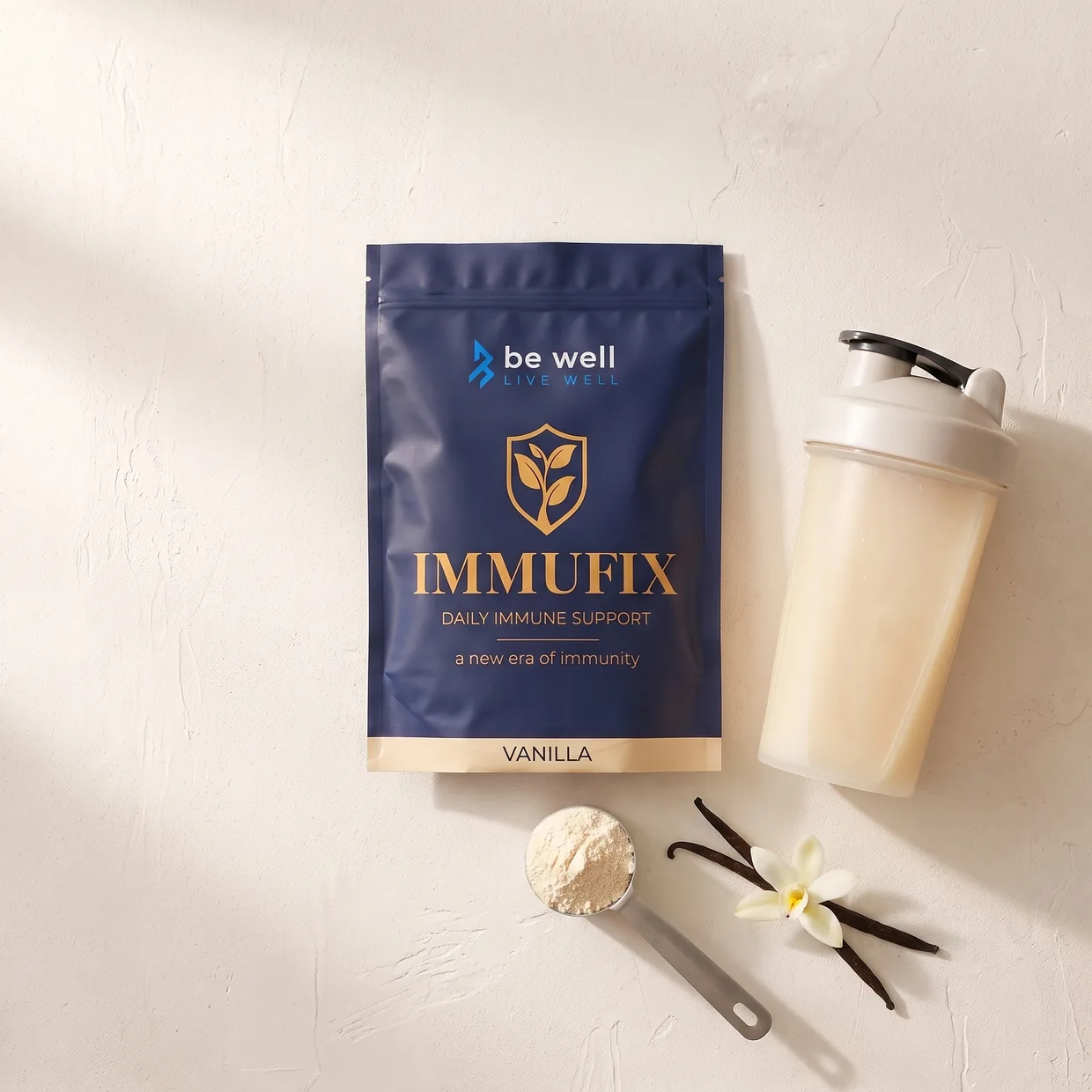
Biotin, what it does and where it is.
Biotin (vitamin B7) foods per 100g from UK government data, what the NHS says about biotin, its authorised claims and the NHS 0.9mg supplement guide.
10 October 2026 · 5 min read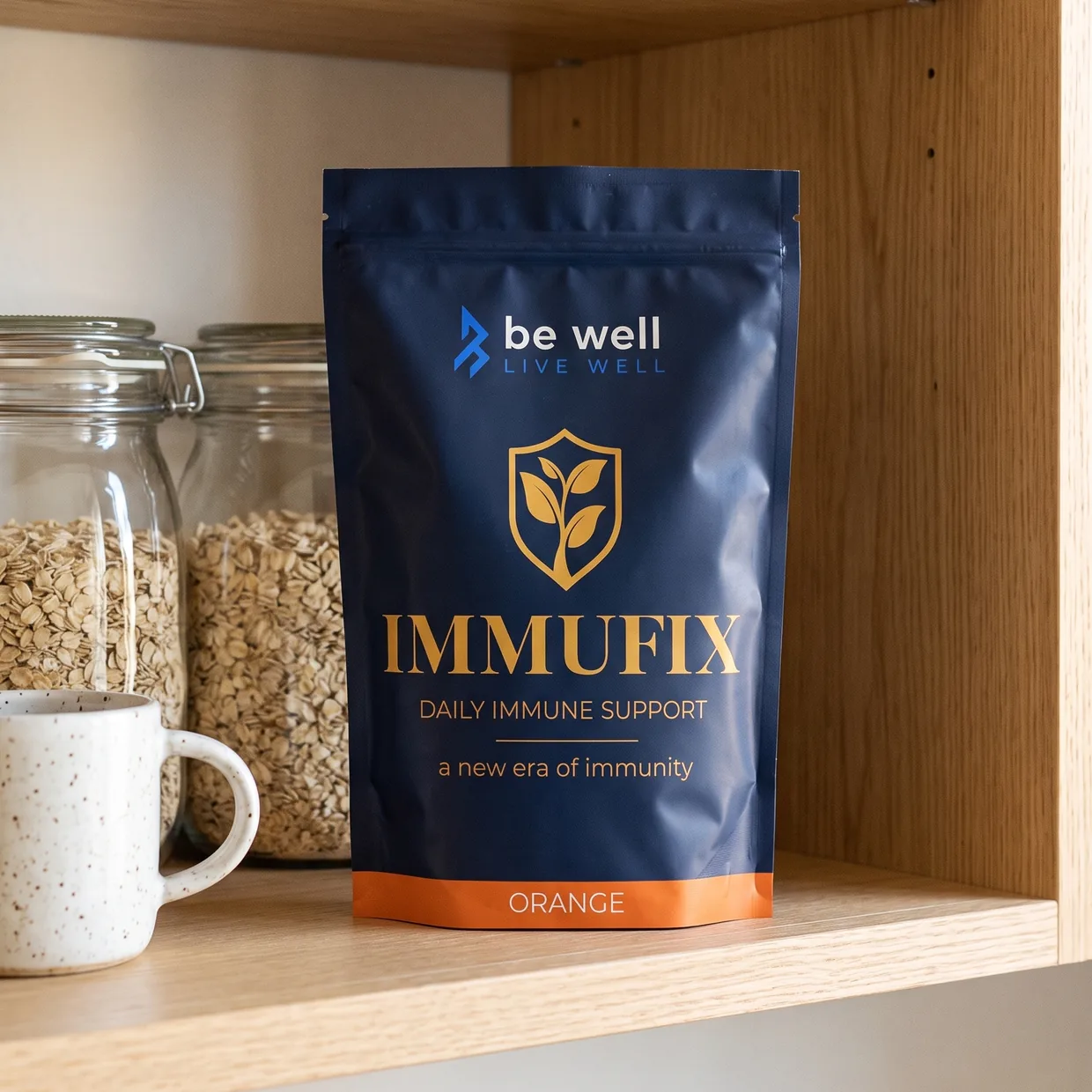
What chromium is, and where you find it.
What chromium is, which foods contain it, how much the NHS says adults need, and the one authorised health claim chromium holds in Great Britain.
10 October 2026 · 6 min read