
Vitamin C and zinc, in one glass.
Vitamin C and zinc are often sold together, in powders and in fizzing tablets. Here is what each one contributes to, how much adults need a day, and the limits the NHS sets for supplements.
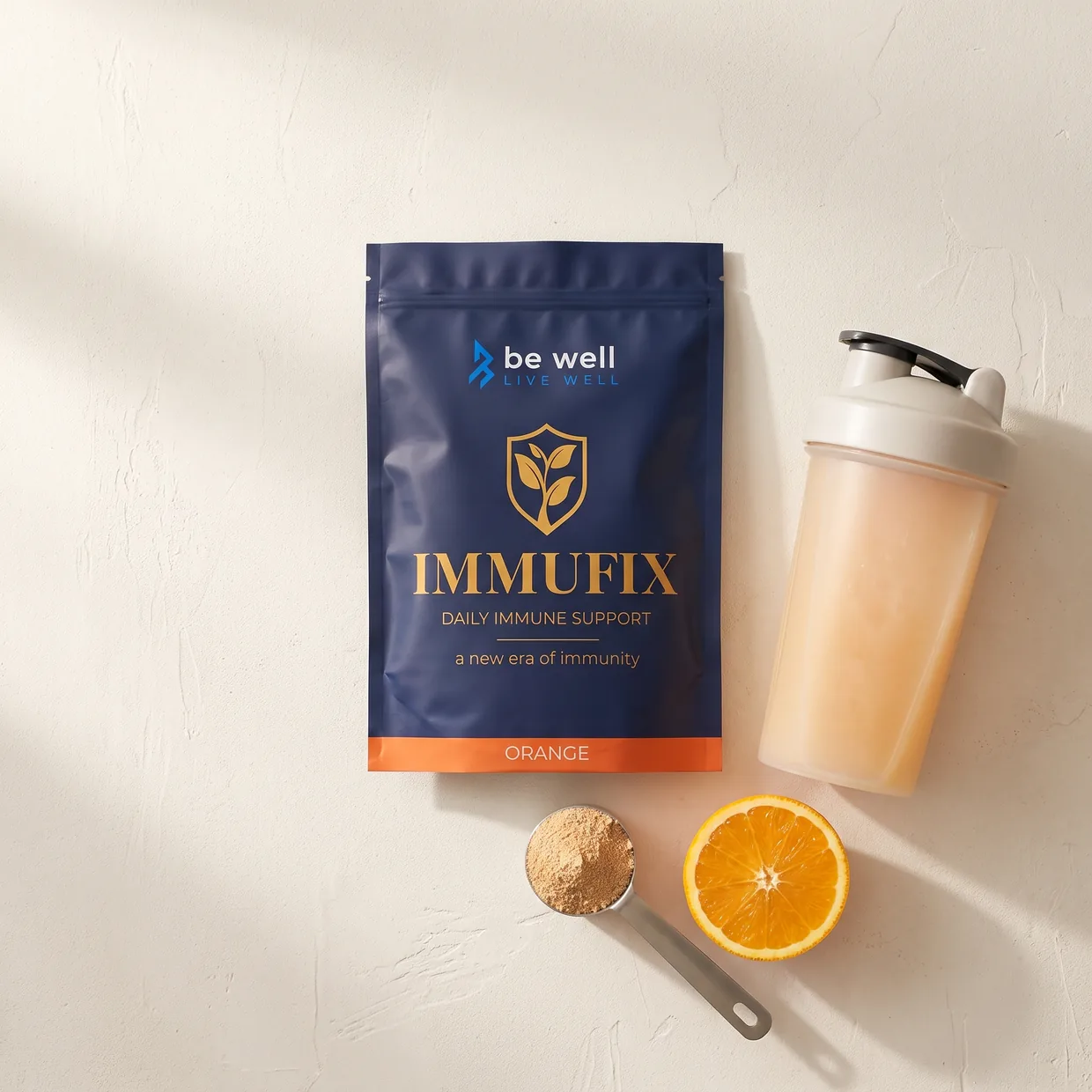
Quick answer. A vitamin C and zinc powder drink is a measured scoop that contains both nutrients, mixed into water. The NHS says adults aged 19 to 64 need 40mg of vitamin C a day, and about 9.5mg of zinc a day for men and 7mg for women. It says less than 1,000mg of vitamin C supplements a day is unlikely to cause harm, and advises no more than 25mg of zinc supplements a day unless a doctor says otherwise. Vitamin C and zinc both contribute to the normal function of the immune system, and the NHS pages on them carry no warning against taking the two together.
What is a vitamin C and zinc powder drink?
It is a food supplement in powder form. You measure a scoop or empty a sachet into water, stir or shake it, and drink it. The label lists how much vitamin C and zinc each serving contains, in milligrams and as a percentage of the nutrient reference value (NRV).
The NRV is the daily amount used on UK food labels. UK food labelling law sets it at 80mg for vitamin C and 10mg for zinc. A label that says 100% NRV for zinc means 10mg per serving. Our guide to what NRV means explains how the figure is used.
Powder is one of several formats, and the same pairing is also sold as fizzing tablets. The nutrients are the same whatever the format. What changes is the amount per serving, what else is in it, and how you take it.
Can you take zinc and vitamin C together?
Yes. The NHS pages on vitamin C and zinc carry no warning against taking them together. The warning the NHS does give for zinc concerns copper: "Taking high doses of zinc reduces the amount of copper the body can absorb."
Many products already combine the two. We make Immufix, so we are not a neutral party, and these figures come from each brand's own product page, checked on 17 November 2026:
- Berocca Orange effervescent tablets list 500mg of vitamin C and 10mg of zinc per tablet, taken once a day (Berocca).
- Vitabiotics Ultra Vitamin C Fizz lists 1,000mg of vitamin C and 5mg of zinc per tablet (Vitabiotics).
- Immufix lists 100mg of vitamin C and 3.75mg of zinc per 25g scoop, alongside other vitamins and minerals.
The two nutrients share some authorised claims and not others. Both contribute to the normal function of the immune system and to the protection of cells from oxidative stress. Vitamin C also contributes to the reduction of tiredness and fatigue and to normal energy-yielding metabolism. Zinc also contributes to normal cognitive function, to normal macronutrient metabolism and to the maintenance of normal hair, nails and skin.

How much vitamin C and zinc a day?
The NHS gives a daily need for adults and a separate line for supplements. The label NRV is a third figure. This table puts them side by side, with the amount in one scoop of Immufix for comparison.
| Nutrient | NHS daily need, adults 19 to 64 | Label NRV | NHS line on supplements | Immufix per 25g scoop |
|---|---|---|---|---|
| Vitamin C | 40mg | 80mg | Less than 1,000mg a day is unlikely to cause any harm | 100mg · 125% NRV |
| Zinc | About 9.5mg for men, 7mg for women | 10mg | No more than 25mg a day unless advised by a doctor | 3.75mg · 38% NRV |
The NHS says "Vitamin C cannot be stored in the body, so you need it in your diet every day." For both nutrients it says you should be able to get all you need from your daily diet. Taking large amounts of vitamin C, more than 1,000mg a day, can cause stomach pain, diarrhoea and flatulence, according to the NHS. For zinc, it says: "Do not take more than 25mg of zinc supplements a day unless advised to by a doctor."
Those supplement lines cover everything you take, not one product. A fizzing tablet, a multivitamin and a powder can each contain vitamin C and zinc, so add the amounts on every label together. Our guides to how much zinc you need a day and how much vitamin C you need go into each nutrient in more detail.
What to check in a vitamin C and zinc supplement in the UK.
- The amount of each. Look at the milligrams and the %NRV for both nutrients, then at your total from all supplements.
- The claims. GB health claims must appear on the GB nutrition and health claims register. The authorised wording uses the word "normal", as in "contributes to the normal function of the immune system".
- What else is in it. Other vitamins and minerals, sugars, sweeteners and allergens are all on the label.
- The format. Powder needs a shaker or a spoon. Fizzing tablets need a glass of water and time to dissolve. Tablets and capsules need swallowing.
- The directions. GOV.UK's food supplements guidance says "Do not take more than the recommended dose".
Food comes first. The NHS lists meat, shellfish, dairy foods such as cheese, bread, and cereal products such as wheatgerm as good sources of zinc. For vitamin C it lists citrus fruit, peppers, strawberries, blackcurrants, broccoli, brussels sprouts and potatoes.

Where Immufix fits.
Immufix is a vitamin C and zinc powder drink with a wider label. One 25g scoop in around 200ml of water, once a day, gives 100mg of vitamin C (125% NRV) and 3.75mg of zinc (38% NRV), together with vitamin D, selenium, B vitamins and other vitamins, minerals and plant nutrients. Vitamin C, vitamin D, zinc and selenium each contribute to the normal function of the immune system. The full label is on the science page.
A scoop gives 3.75mg of zinc, well inside the NHS 25mg line for supplements. If you take a separate zinc product too, add the two together.
The short version.
- A vitamin C and zinc powder drink is a measured scoop of both nutrients, mixed into water.
- Adults aged 19 to 64 need 40mg of vitamin C a day, and about 9.5mg (men) or 7mg (women) of zinc.
- The NHS says under 1,000mg of vitamin C supplements a day is unlikely to cause harm, and no more than 25mg of zinc supplements a day unless a doctor advises.
- The NHS carries no warning against taking them together. High-dose zinc reduces the copper the body can absorb.
- Both contribute to the normal function of the immune system. Add up every label you take.
Food supplements should not be used as a substitute for a varied, balanced diet and a healthy lifestyle. If you have a medical condition, are pregnant, breastfeeding or taking medication, speak to your GP or pharmacist before taking any food supplement.

Daily Immune Support
Vitamins, minerals and plant nutrients in one daily scoop. The formula Paula Radcliffe has taken every day since 1998.
4.8 out of 5 · 89 reviewsMonthly subscription. £52.00 is charged every month until you cancel. Minimum three payments, then cancel any time. Subscription terms
New here? 20% off your first order with code TRYIMMUFIX. Apply it
Dispatched the same day on weekday orders placed before 2pm.
Free standard UK delivery. Royal Mail 48 tracked, 2 to 3 working days. UK addresses only.
30‑day money-back guarantee. Try your first pouch of IMMUFIX for up to 30 days. If it’s not for you, we’ll refund your first qualifying pouch, less £10 shipping and handling. First purchase only. T&Cs apply.
Checkout completes securely on immufix.com
More from the journal.
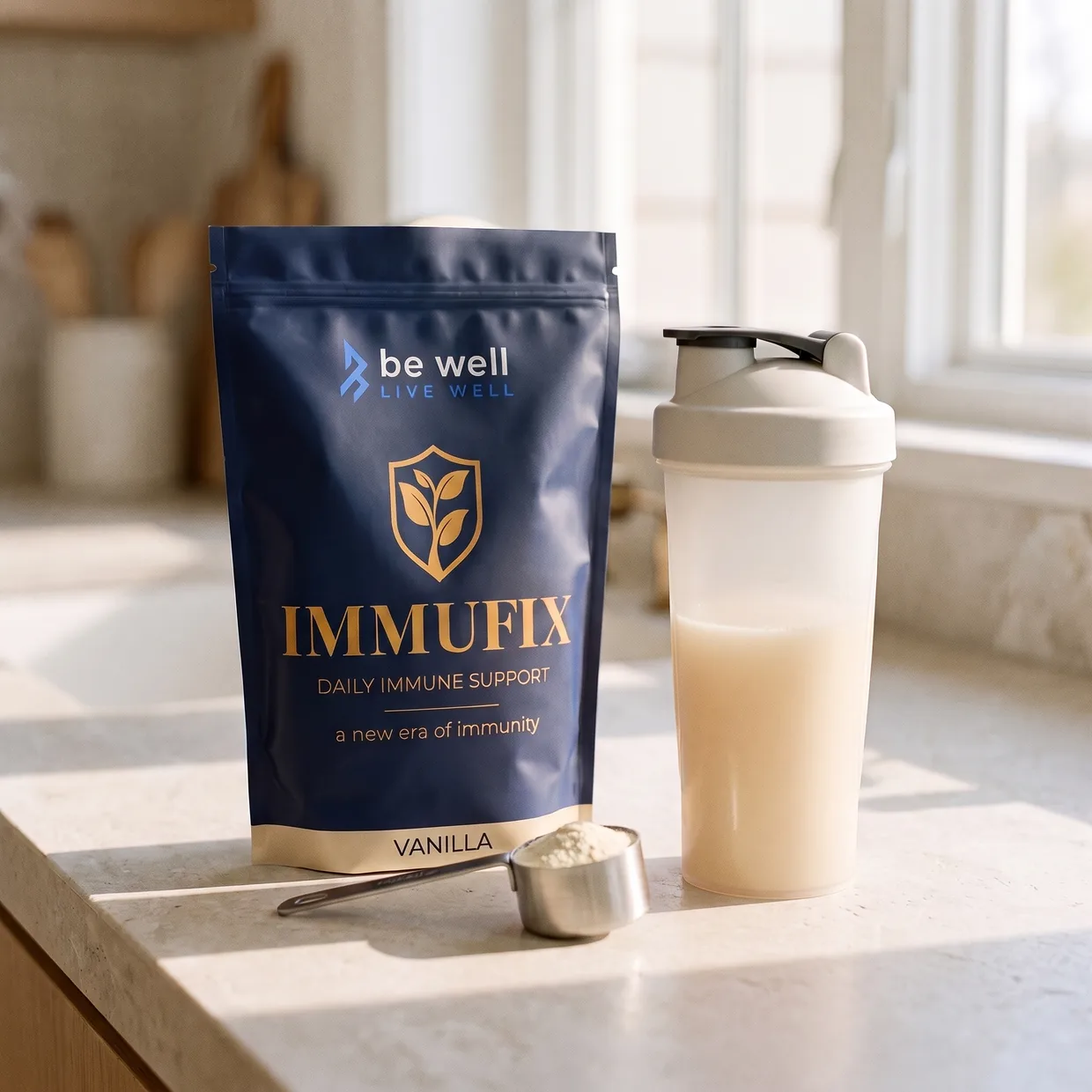
Vitamin C, D and zinc, taken together.
Yes. What the NHS says about vitamin C, vitamin D and zinc, the daily amounts and upper limits for each, and the best time of day to take them.
17 November 2026 · 6 min read
How much vitamin B12 you need each day.
The NHS says adults need about 1.5 micrograms of vitamin B12 a day. UK figures by age, the best foods, vegan sources and the 2mg supplement line.
7 November 2026 · 6 min read
Vitamin C drinks in the UK, label by label.
Vitamin C drinks in the UK compared by label: juice, squash, fizzy tablets and powder, the NHS 40mg a day, and the sugars in each serving.
17 November 2026 · 7 min read