
Greens powder or vitamin powder: what is the difference?
Both come as a scoop in a glass of water, and both sit on the same shelf. They are built around different things, and the label shows which is which.
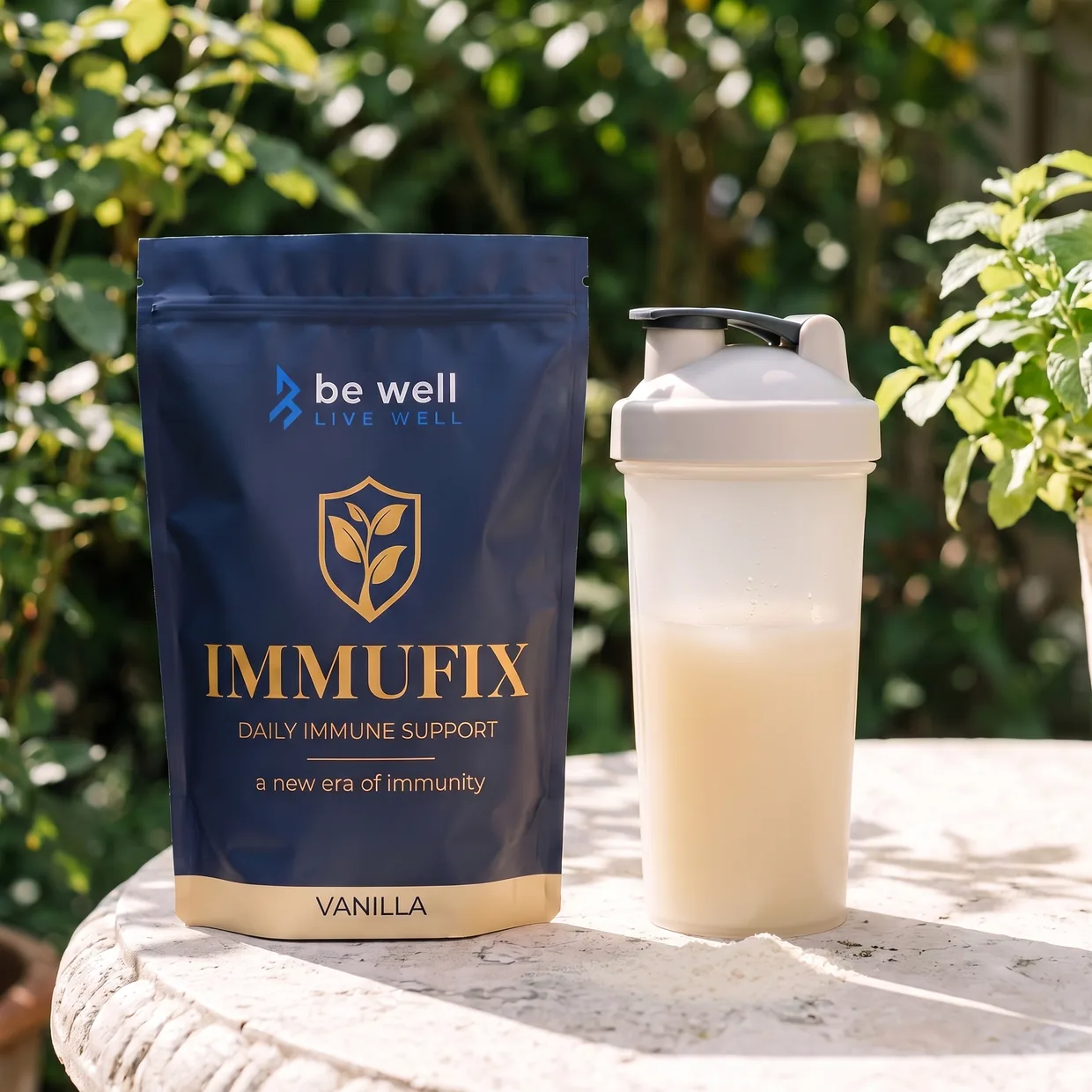
Quick answer. Whether a greens powder is worth it depends on what you want it for, and we make no claims about greens. What can be said is this: the NHS says most people get the nutrients they need from a varied and balanced diet, and the supplements the government recommends in certain circumstances are vitamin D and folic acid, not greens. A greens powder is built around powdered plants; a vitamin-and-mineral powder is built around declared amounts of vitamins and minerals, each with a % NRV. We make Immufix, which is a vitamin-and-mineral powder.
Are powder greens worth it?
There is no single answer, because it depends on the product, the price and what you are hoping it will do. We make a different kind of powder, so this guide makes no claims about what greens powders do or do not do. It explains what they are, how they differ from a vitamin-and-mineral powder, and what UK advice says about supplements in general.
The starting point is the UK government's food supplements guidance for consumers: "Most people should get the nutrients they need by eating a healthy balanced diet. However, some food supplements are recommended in certain circumstances, such as vitamin D during the autumn and winter, and folic acid when trying for a baby and during the first 12 weeks of pregnancy." The same guidance says "food supplements are not intended to replace a varied and balanced diet."
So the useful question is narrower: what do you want from a daily powder, and which kind of label shows it?
What is a greens powder?
"Greens powder" is a product description, not a legal category. The government guidance lists the common types of supplements as vitamins and minerals, sports and fitness supplements, specialty supplements such as fish oils, and botanical supplements, which it describes as "usually concentrated forms of those foods, often processed into powders." Greens powders are not named on that list.
In practice the name describes the ingredients list: dried and powdered leaves, grasses, vegetables and algae, often alongside other ingredients. One example is AG1, whose UK ingredients list, checked on 10 October 2026, includes spirulina, chlorella, wheatgrass, alfalfa leaf, barley leaf, broccoli and spinach powders. Products differ widely, so read each label to see which plants are in it and how much.
Greens powder vs vitamin powder: what differs?
The clearest difference is what the product is built around, and so what the label leads with.
| Question | Greens powder | Vitamin-and-mineral powder |
|---|---|---|
| Built around | Powdered plants: leaves, grasses, vegetables, algae | Set amounts of vitamins and minerals |
| What the label leads with | The plant ingredients, often by weight | Each vitamin and mineral, by amount and % NRV |
| Vitamins and minerals | Varies; some products add them, some do not | The point of the product |
| Health claims | Only authorised claims on the GB register | Only authorised claims on the GB register |
| Sugars and calories | Varies; read the nutrition panel | Varies; read the nutrition panel |
Some products are a bit of both. The label tells you which. If a powder is sold as a food supplement, the Food Supplements (England) Regulations 2003 require it to show "the amount of any vitamin or mineral or other substance with a nutritional or physiological effect which is present in the product", per daily dose, with vitamins and minerals also given as a percentage of their reference value. Our guide to what NRV means shows how to read those percentages.
Claims follow the same rules for both. The Great Britain nutrition and health claims register states that "only authorised claims in the Great Britain NHC register may be used in Great Britain." For vitamins and minerals, a claim generally needs the nutrient to be present at 15% or more of its NRV per daily dose.
Do I need a greens powder?
The government guidance quoted above names vitamin D and folic acid as the supplements recommended in certain circumstances. It does not name greens powders, and it does not say most people need a vitamin-and-mineral powder either. The NHS vitamins and minerals guide says "most people should get all the nutrients they need by having a varied and balanced diet, although some people may need to take extra supplements."
If you are asking because vegetables are hard to fit in, the NHS 5 A Day guide is worth a look before you buy anything. It says "80g of fresh, canned or frozen fruit and vegetables counts as 1 portion of your 5 A Day", and that "fruit and vegetables cooked in dishes such as soups, stews or pasta" count too. A bag of frozen peas or a tin of tomatoes is on that list.
If you are asking about vitamin D, the NHS vitamin D page says everyone "should consider taking a daily supplement containing 10 micrograms of vitamin D during the autumn and winter." Check how much vitamin D any powder contains before you rely on it for that.
Can I take a greens powder and a vitamin powder together?
If you do, add up what you get from both. Many products contain some of the same vitamins and minerals, and two can together go over the amounts the NHS says not to exceed, such as "100 micrograms (4,000 IU) of vitamin D a day" for adults. The government guidance says "do not take more than the recommended dose, as this can potentially lead to side effects such as nausea and headaches." Check sugars and calories across both as well. If you have a medical condition, take medication, or are pregnant or breastfeeding, ask a GP or pharmacist first.
Where Immufix fits.
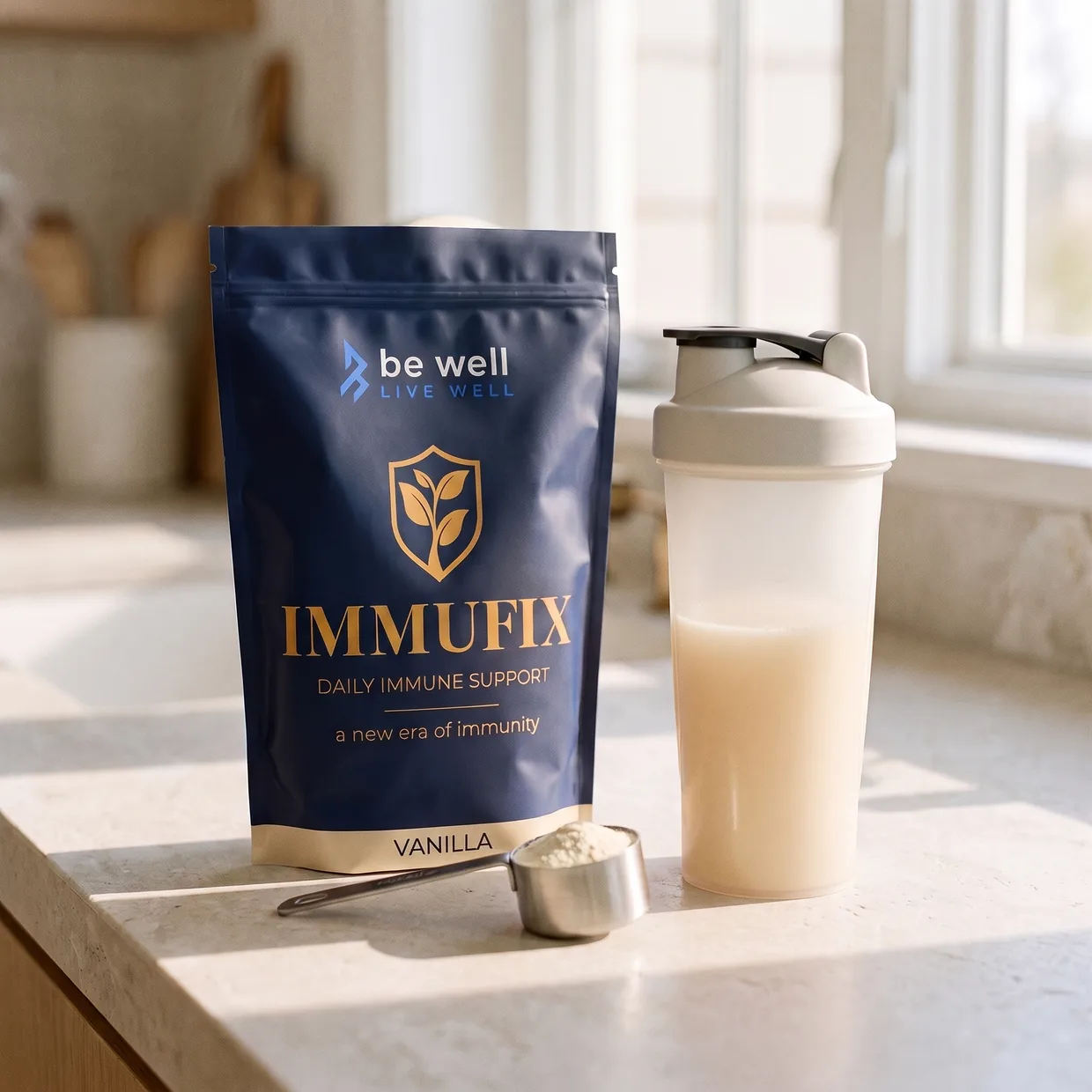
Immufix is a vitamin-and-mineral powder with plant nutrients such as citrus bioflavonoids and soya isoflavones. It is not sold as a greens powder, and it is our product. One 25g scoop goes into around 200ml of water once a day. Vitamin C, riboflavin, niacin, pantothenic acid, vitamin B6, folic acid and magnesium contribute to the reduction of tiredness and fatigue. Vitamin C, vitamin D, zinc and selenium contribute to the normal function of the immune system. Each serving has 75 kcal and 9.9g of sugars. Our guide to vitamin powder vs tablets covers the format, and every amount and % NRV is on the science page.
The short version.
- Whether a greens powder is worth it depends on the product and what you want it for. We make no claims about greens.
- A greens powder is built around powdered plants. A vitamin-and-mineral powder is built around declared vitamins and minerals with a % NRV.
- The NHS says most people get the nutrients they need from a varied diet. The government's general supplement advice is vitamin D in autumn and winter, and folic acid around pregnancy.
- Frozen, tinned and cooked fruit and vegetables all count towards your 5 A Day.
- If you take two powders, add up the nutrients and do not exceed either dose.
Food supplements should not be used as a substitute for a varied, balanced diet and a healthy lifestyle. If you have a medical condition, are pregnant, breastfeeding or taking medication, speak to your GP or pharmacist before taking any food supplement.

Daily Immune Support
Vitamins, minerals and plant nutrients in one daily scoop. The formula Paula Radcliffe has taken every day since 1998.
4.8 out of 5 · 89 reviewsDispatched the same day on weekday orders placed before 2pm.
Free standard UK delivery. Royal Mail 48 tracked, 2 to 3 working days. UK addresses only.
30‑day money-back guarantee. Try your first pouch of IMMUFIX for up to 30 days. If it’s not for you, we’ll refund your first qualifying pouch, less £10 shipping and handling. First purchase only. T&Cs apply.
Checkout completes securely on immufix.com
More from the journal.
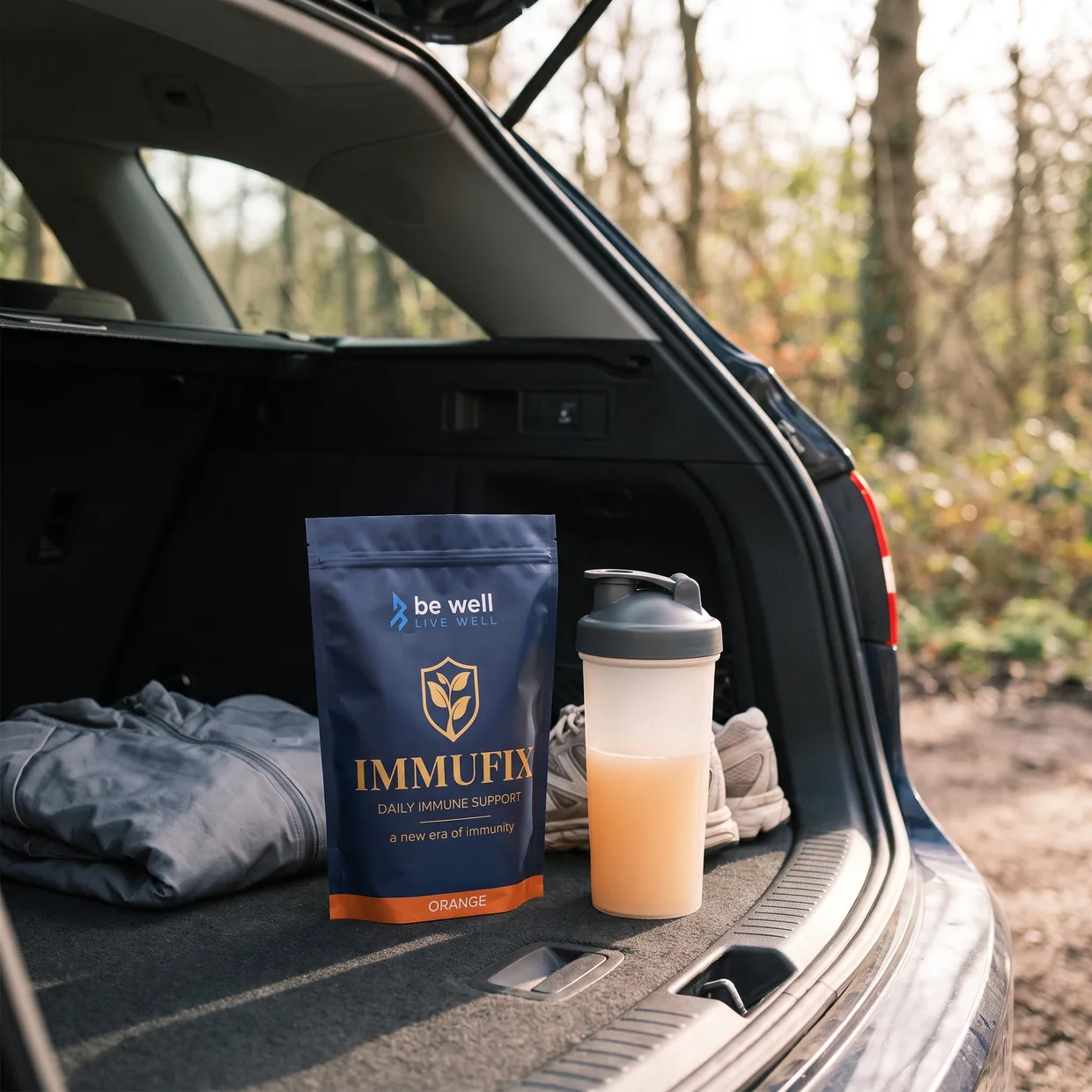
Looking for an AG1 alternative? The facts side by side.
Looking for an AG1 alternative in the UK? Serving size, pack price, sugars and format from each brand's own page, checked 10 October 2026.
10 October 2026 · 5 min read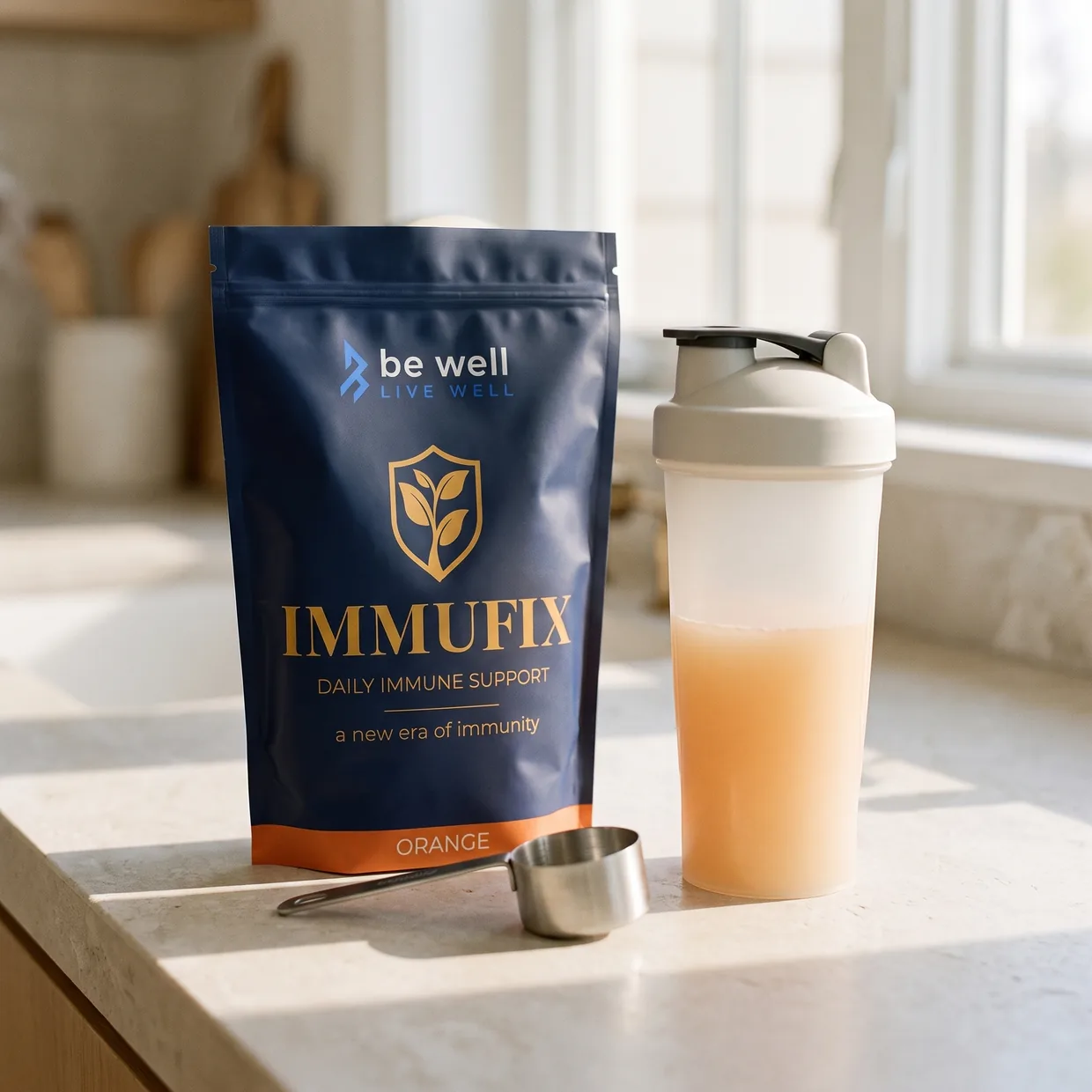
The best time to take vitamins is the one you keep.
The best time to take vitamins is the time you will keep to. What NHS guidance says about taking supplements with food, and morning versus night.
10 October 2026 · 6 min read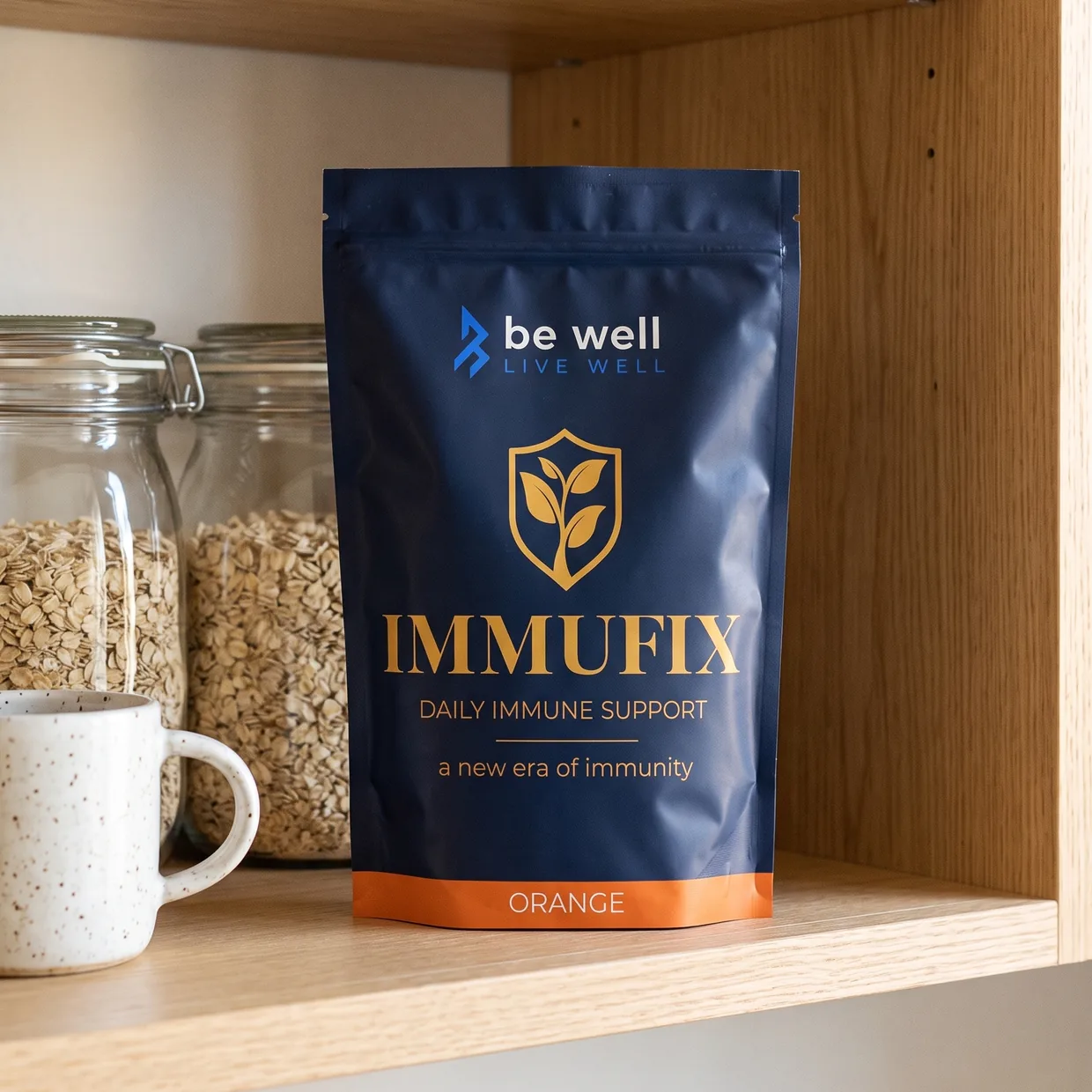
Does vitamin powder expire? What the date means.
Does vitamin powder expire or go off? What the best before date means under UK food law, how to store a powder, and what clumping tells you.
10 October 2026 · 6 min read