
Powder or tablets: what actually differs.
In UK law a scoop of powder and a tablet are the same kind of thing: a food supplement sold in a measured dose. The differences are practical, and they are worth knowing before you choose.
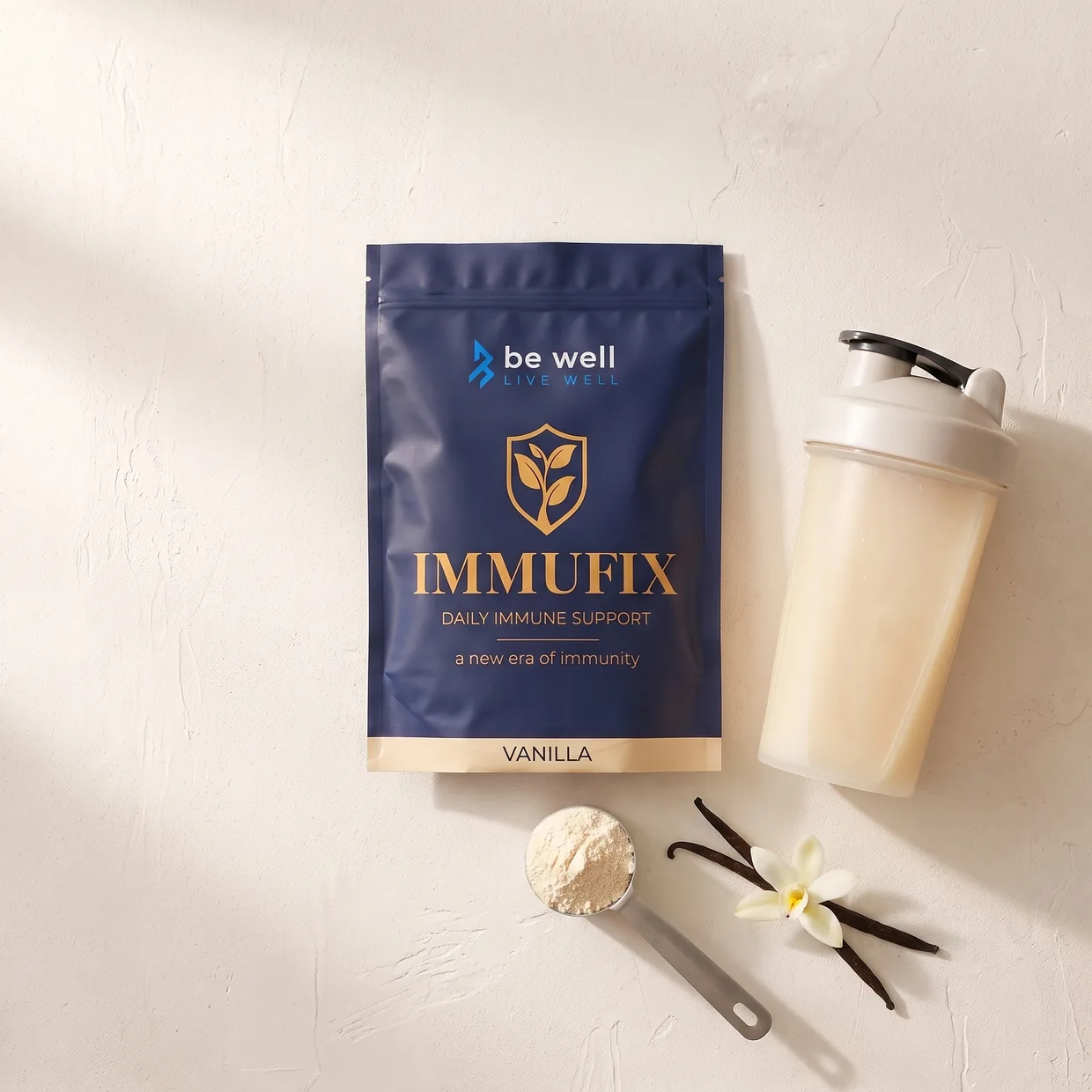
Quick answer. A vitamin powder is not automatically better or worse than a tablet. In UK law both are food supplements sold in "dose form", and what you get from either depends on what is in it and how much, which the label shows as an amount and a % NRV. The real differences are practical: serving size, swallowing, taste, what else comes with the vitamins, and price per serving. Immufix is a powder and we make it, so read this guide with that in mind.
Are powdered vitamins better than pills?
Not by virtue of being a powder. The Food Supplements (England) Regulations 2003 define a food supplement as a concentrated source of nutrients "sold in dose form". The same regulation lists the forms side by side: "capsules, pastilles, tablets, pills, and other similar forms", then "sachets of powder, ampoules of liquids, drop dispensing bottles". A powder and a tablet sit under the same rules, carry the same compulsory label wording and are held to the same limits on what they can claim.
What a product can say about a nutrient depends on the nutrient and the amount, not the format. A vitamin or mineral generally has to be present at 15% or more of its nutrient reference value (NRV) per daily dose before an authorised health claim can be made about it. Our guide to what NRV means shows how that is worked out.
Immufix makes no claim that a powder is used by the body differently from a tablet. If a brand tells you its format alone gives you more, ask what that is based on.
Do vitamin powders work?
A powder provides the nutrients listed on its label, in the amounts listed, in the same way a tablet does. The useful question is what a particular product contains. Two powders can be very different, and so can two tablets.
On a UK label every vitamin and mineral is shown as an amount per daily dose and as a % NRV. In a 25g scoop of Immufix, for example, vitamin C is 100mg, which is 125% of its NRV, so it carries authorised claims. Vitamin B12 is 0.25µg, which is 10% of its NRV, so it carries none. The format is the same for both; the amount is what differs.
The UK government's food supplements guidance for consumers is plain on the bigger point: "Food supplements are not intended to replace a varied and balanced diet."
Powder vs tablets: the practical differences.
| Question | Powder | Tablet or capsule |
|---|---|---|
| Serving size | Grams (Immufix: 25g) | Usually one or a few units |
| Swallowing | Drunk, mixed into water | Swallowed whole |
| Taste | Has to taste acceptable | Little or no taste |
| Preparation | Scoop, water, shaker or glass | None |
| Travel | Bulkier pouch or tub | Small and easy to carry |
| What else is in it | Room for gram amounts of other ingredients | Limited by the size of the tablet |
Dose size.
A powder serving is weighed in grams. The vitamins and minerals inside it are weighed in milligrams and micrograms. Add up every vitamin and mineral declared on the Immufix label and the total is about 185mg, under 1% of the 25g scoop (calculated). The rest is the base the nutrients come in: 13.2g of carbohydrate, of which 9.9g is sugars, 6.9g of prebiotic FOS, 2.1g of protein, and amino acids including 1g of L-glutamine. Ingredients measured in whole grams are the clearest practical difference between a powder like this and a tablet.
Swallowing.
Plenty of people find tablets hard to get down. In a survey of 1,051 patients in 11 German general practices, published in 2013, "37.4 % reported having had difficulties in swallowing tablets and capsules." A powder mixed into water removes the tablet altogether.
Taste and sugar.
A tablet has no taste to get right. A powder that is drunk every day has to be pleasant enough to keep drinking, which usually means flavourings and often some sugar. Read the nutrition panel. A 25g serving of Immufix has 75 kcal and 9.9g of sugars, which is worth knowing if you are watching either.
Routine.
A tablet takes seconds and goes anywhere. A powder needs water and a scoop, and most people make it part of breakfast. The water counts: the NHS Eatwell Guide says "the government recommends 6 to 8 cups or glasses a day", and a powder mixed into around 200ml is one of them.
Price per serving.
Comparing pack prices tells you little, because packs hold different numbers of servings and different amounts. Divide the pack price by the number of servings at the recommended daily dose, then compare what each serving actually contains. For reference, a 750g pouch of Immufix holds 30 servings and costs £65, or £52 a month on subscription.
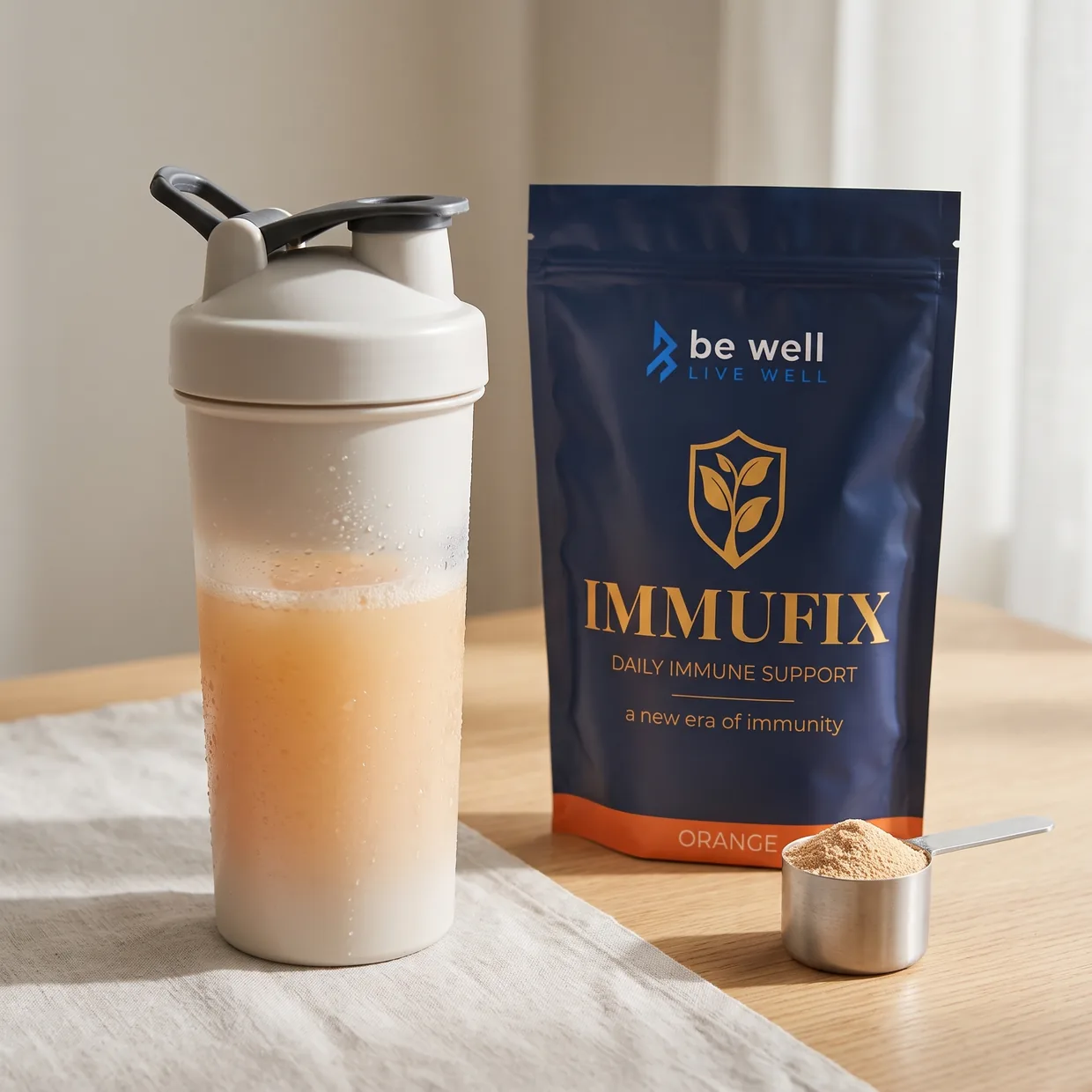
Which suits whom?
Neither format is the right answer for everyone. These are the practical reasons people pick one or the other.
- A powder may suit you if you dislike swallowing tablets, already have a morning drink routine, or want a product with ingredients measured in grams alongside the vitamins and minerals.
- A tablet may suit you if you want no calories or sugar from your supplement, travel a lot, or want a single nutrient at a specific amount.
- For vitamin D in particular, the NHS advises 10 micrograms a day for everyone in autumn and winter. Immufix contains 1.25µg, so it does not cover that advice on its own. Our vitamin D guide explains the advice in full.
Whichever you choose, check you are not doubling up on the same nutrients from two products, and never take more than the recommended daily dose on the label.
Where Immufix fits.
Immufix is a powder: one 25g scoop in around 200ml of water, once a day. Alongside its vitamins and minerals, each serving includes ingredients measured in grams, such as 6.9g of prebiotic FOS. Vitamin C, riboflavin, niacin, pantothenic acid, vitamin B6, folic acid and magnesium contribute to the reduction of tiredness and fatigue. Every amount and % NRV is listed on the science page.
The short version.
- UK law makes no distinction between powders and tablets: both are food supplements sold in dose form.
- What you get depends on the amounts on the label, not the format. Look for the amount and the % NRV.
- Powders suit people who dislike tablets or want gram amounts of other ingredients. Tablets suit people who want no calories, no preparation and easy travel.
- Compare price per serving and what each serving contains, not pack price.
- Immufix is a powder and we make it. It makes no claim that a powder works better than a tablet.
Food supplements should not be used as a substitute for a varied, balanced diet and a healthy lifestyle. If you have a medical condition, are pregnant, breastfeeding or taking medication, speak to your GP or pharmacist before taking any food supplement.

Daily Immune Support
Vitamins, minerals and plant nutrients in one daily scoop. The formula Paula Radcliffe has taken every day since 1998.
4.8 out of 5 · 89 reviewsDispatched the same day on weekday orders placed before 2pm.
Free standard UK delivery. Royal Mail 48 tracked, 2 to 3 working days. UK addresses only.
30‑day money-back guarantee. Try your first pouch of IMMUFIX for up to 30 days. If it’s not for you, we’ll refund your first qualifying pouch, less £10 shipping and handling. First purchase only. T&Cs apply.
Checkout completes securely on immufix.com
More from the journal.
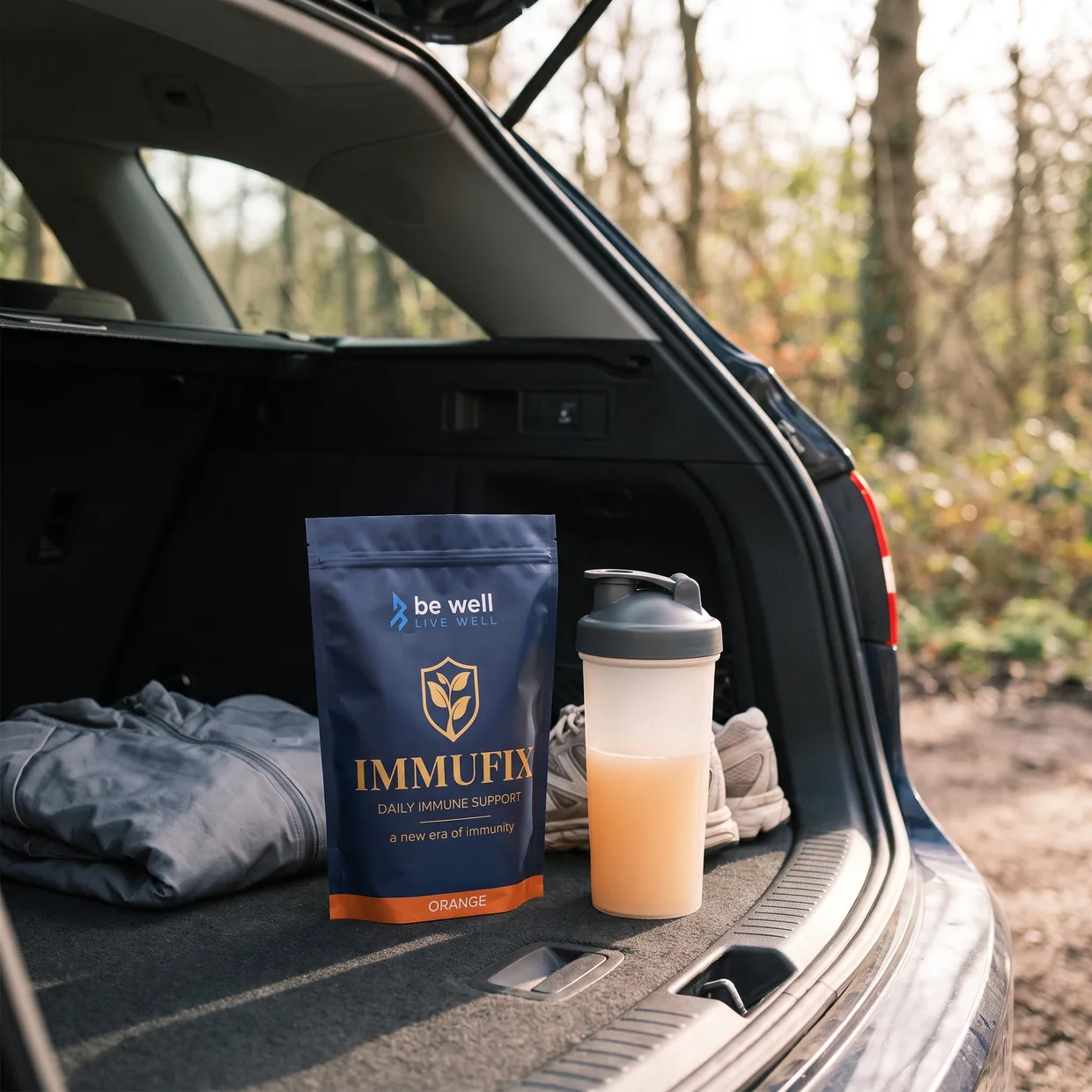
Looking for an AG1 alternative? The facts side by side.
Looking for an AG1 alternative in the UK? Serving size, pack price, sugars and format from each brand's own page, checked 10 October 2026.
10 October 2026 · 5 min read
The best time to take vitamins is the one you keep.
The best time to take vitamins is the time you will keep to. What NHS guidance says about taking supplements with food, and morning versus night.
10 October 2026 · 6 min read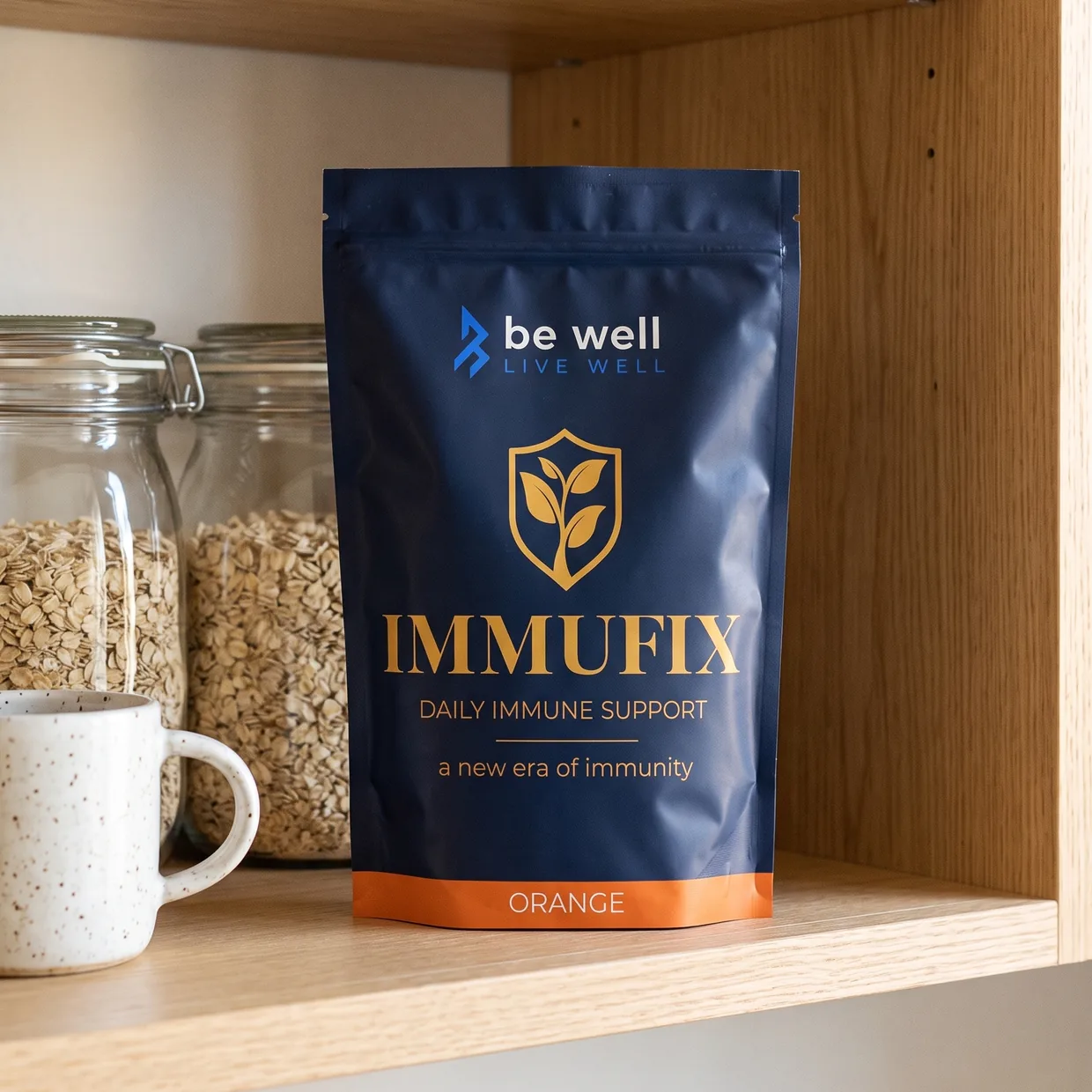
Does vitamin powder expire? What the date means.
Does vitamin powder expire or go off? What the best before date means under UK food law, how to store a powder, and what clumping tells you.
10 October 2026 · 6 min read