
Does vitamin powder expire? What the date means.
Vitamin powders carry a best before date, not a use-by date. The difference is written into UK food law, and it changes what you should do with a pouch that is past its date.
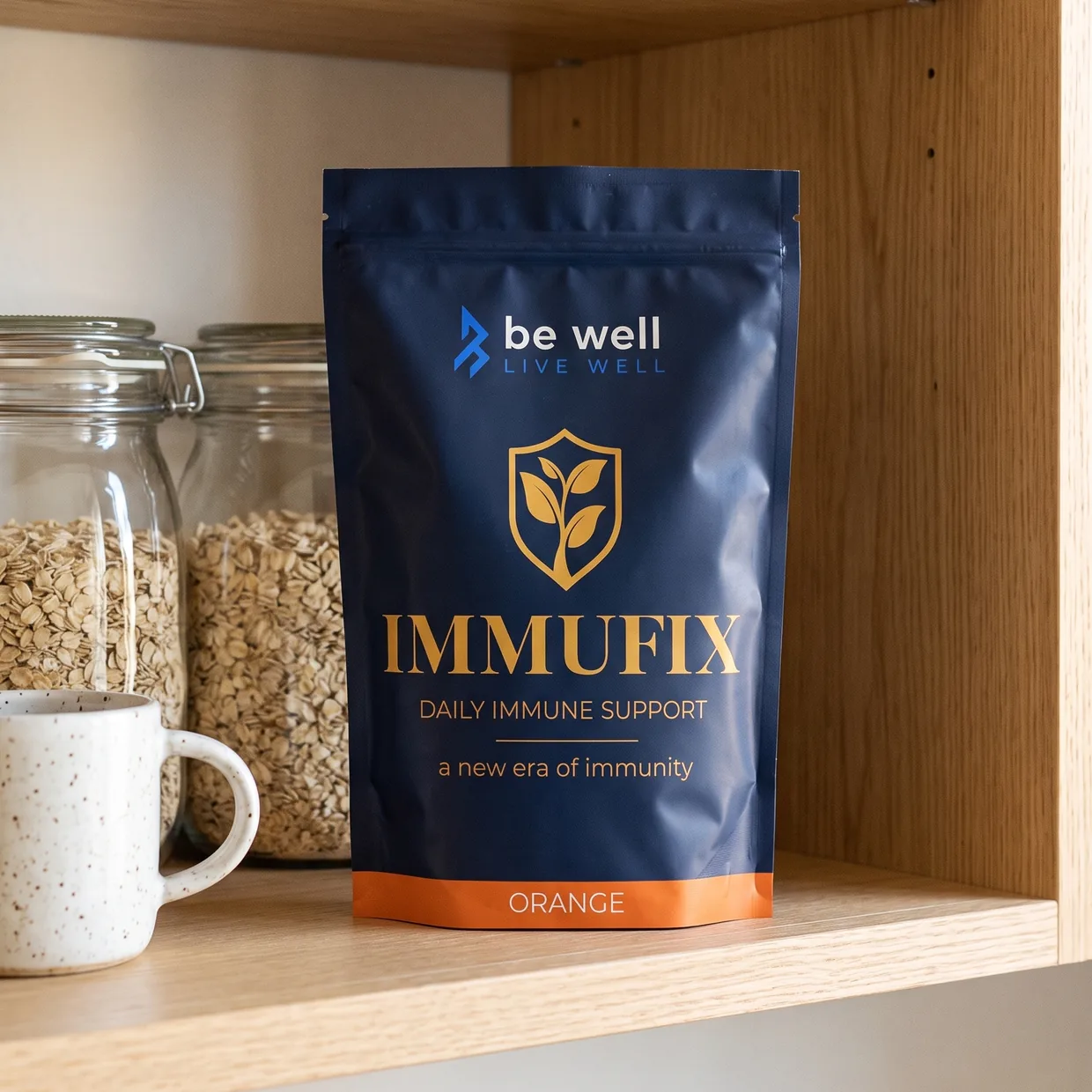
Quick answer. Yes, vitamin powder has a date, but it is normally a best before date, which is about quality, not a use-by date, which is about safety. GOV.UK says that after the best before date food "is usually safe to eat but may not be of the same quality". In law the date marks how long the product keeps its specific properties when properly stored, so for a supplement the amounts on the label should not be relied on after it. Keep the pouch sealed, cool and dry, and use it before the date printed on the pack.
Does vitamin powder expire?
A food supplement is a food in UK law. The government's food supplements guidance defines it as "any food, the purpose of which is to supplement the normal diet". Like other packaged food, it must carry a date mark.
There are two kinds. GOV.UK's guide to best before and use-by dates explains the difference in one line: "Use-by dates relate to the safety of food, whereas best before dates relate to quality." Use-by dates go on foods that go off quickly, such as meat products and ready-to-eat salads. Best before dates go on foods that keep, and GOV.UK lists "dried foods (for example pasta and rice)" among them. A dry vitamin powder sits in that group.
So the honest answer is that vitamin powder does not "expire" the way fresh chicken does on its use-by date. It has a date after which the maker no longer stands behind its quality.
| Date mark | What it is about | After the date |
|---|---|---|
| Use by | Safety. Foods that go off quickly, such as meat products and ready-to-eat salads | Do not eat it, unless it was cooked or frozen on or before the date |
| Best before | Quality. Frozen, dried and tinned foods, and cheese | Usually safe, but may not be of the same quality |
What does best before mean for a supplement?
The legal definition is precise. Article 2 of Regulation (EU) No 1169/2011, which still applies in Great Britain, defines the date of minimum durability, the best before date, as "the date until which the food retains its specific properties when properly stored".
For most foods, those properties are flavour, colour and texture. For a supplement, the properties that matter most are the amounts in the nutrient table. Up to the best before date, and stored as the label says, the product should match its label. After it, the maker no longer gives that assurance. That is the practical reason to use a supplement within its date, even though the powder is not likely to be unsafe the day after.
On the pack, Annex X of the same regulation sets the wording: "Best before" when the date includes a day, "Best before end" when it gives only a month or year.
Does vitamin powder go off?
Not usually in the sense of becoming unsafe, but it can lose quality, and faster if it is stored badly. Food Standards Scotland describes what a best before date covers: after it, a food "may not be at its best in terms of quality, for example, it may lose flavour, become discoloured or have a different texture." Its position on date labels notes that storage instructions on the label may include "where to store it such as in an airtight container".
GOV.UK also warns that the date only holds if you follow those instructions: "If you do not store food properly, it could reduce in quality before the best before date."
Throw a powder away, whatever the date, if you see any of these:
- visible mould, or wet patches inside the pack
- a sour, musty or otherwise wrong smell
- a clear change of colour through the powder
- a solid block that does not break up when pressed
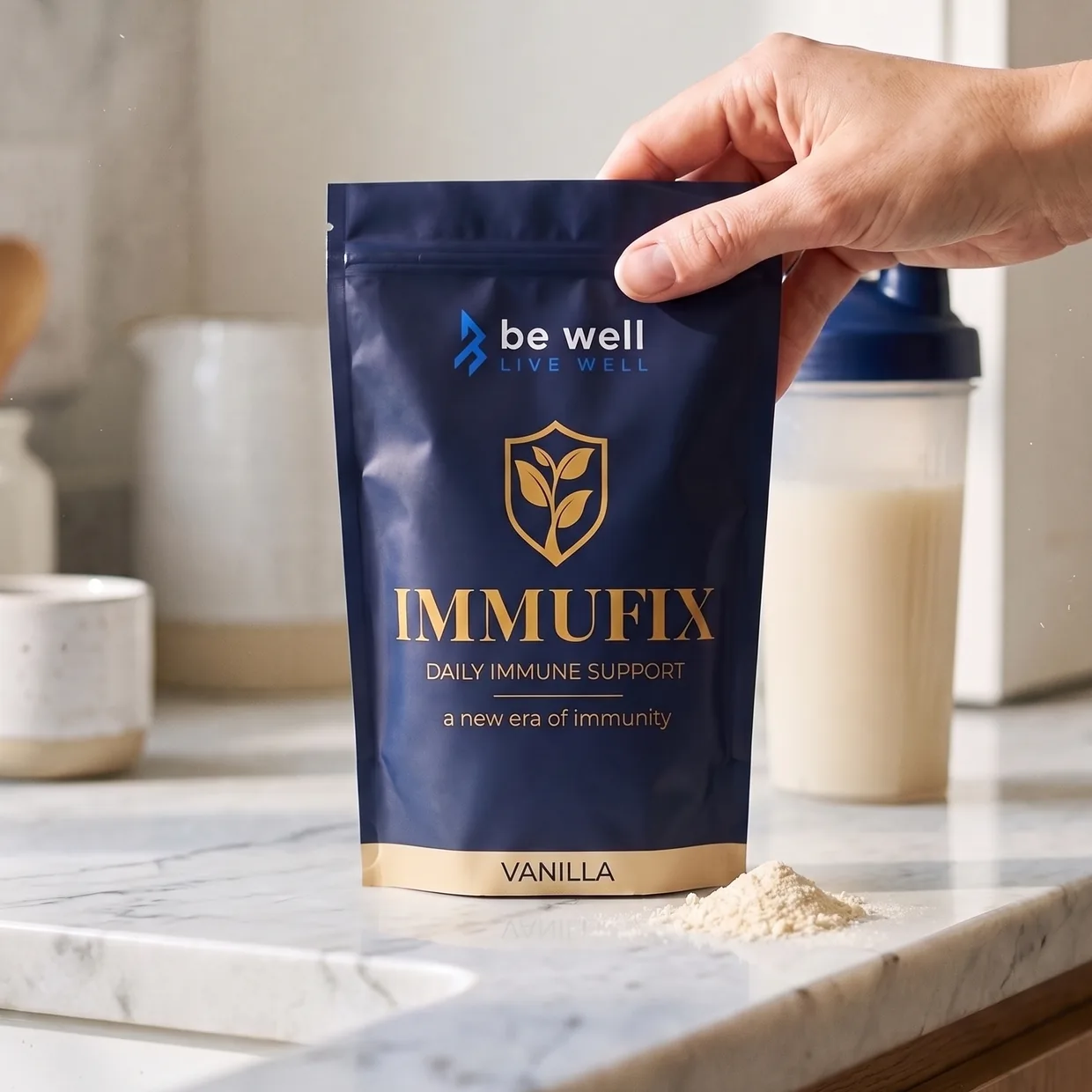
Why does vitamin powder clump?
Almost always because of moisture. Dry powders take up water from the air, and from anything wet that touches them. The usual causes are:
- A wet scoop. Putting a damp scoop back into the pouch leaves wet powder behind.
- An open pouch. A pouch left unsealed in a steamy kitchen takes in humid air every day.
- Warm, damp storage. Above the kettle, beside the hob, or near the dishwasher vent.
Soft clumps that break up between your fingers or in the shaker are a storage issue, and the powder mixes as normal. Hard, wet or discoloured lumps are a sign the powder has taken in too much moisture, and it is better thrown away. Our guide to mixing vitamin powder without lumps covers the drink itself.
How should you store vitamin powder?
- Follow the label first. Any special storage conditions have to be printed on the pack.
- Seal it every time. Press the air out and close the pouch fully.
- Cool and dry. A cupboard or pantry shelf away from the kettle, hob and windows in direct sun.
- Dry scoop. Keep it dry, or store it outside the pouch.
- Out of reach of young children. Every UK supplement label carries this instruction.
Check the best before date when a new pack arrives, and use the older pack first if you have two. Our guide to reading a supplement label shows where the date and storage line sit.
Where Immufix fits.
Every Immufix pouch carries its own best before date. That printed date is the one to go by, so we do not quote a general shelf life here. A 750g pouch holds 30 servings, so at one 25g scoop a day in around 200ml of water it lasts about a month (calculated). Vitamin C, riboflavin, niacin, pantothenic acid, vitamin B6, folic acid and magnesium contribute to the reduction of tiredness and fatigue. Every amount and % NRV is on the science page.
The short version.
- Vitamin powders carry a best before date, which is about quality. Use-by dates are about safety.
- In law, best before is the date until which a food keeps its specific properties when properly stored. For a supplement, that includes the amounts on the label.
- After the date a powder is usually safe but may not match its label. Use it within the date.
- Clumping comes from moisture. Soft clumps are fine; hard, wet, discoloured or smelly powder goes in the bin.
- Store it sealed, cool and dry, with a dry scoop, and follow any storage line on the pack.
Food supplements should not be used as a substitute for a varied, balanced diet and a healthy lifestyle. If you have a medical condition, are pregnant, breastfeeding or taking medication, speak to your GP or pharmacist before taking any food supplement.

Daily Immune Support
Vitamins, minerals and plant nutrients in one daily scoop. The formula Paula Radcliffe has taken every day since 1998.
4.8 out of 5 · 89 reviewsDispatched the same day on weekday orders placed before 2pm.
Free standard UK delivery. Royal Mail 48 tracked, 2 to 3 working days. UK addresses only.
30‑day money-back guarantee. Try your first pouch of IMMUFIX for up to 30 days. If it’s not for you, we’ll refund your first qualifying pouch, less £10 shipping and handling. First purchase only. T&Cs apply.
Checkout completes securely on immufix.com
More from the journal.
Looking for an AG1 alternative? The facts side by side.
Looking for an AG1 alternative in the UK? Serving size, pack price, sugars and format from each brand's own page, checked 10 October 2026.
10 October 2026 · 5 min read
The best time to take vitamins is the one you keep.
The best time to take vitamins is the time you will keep to. What NHS guidance says about taking supplements with food, and morning versus night.
10 October 2026 · 6 min read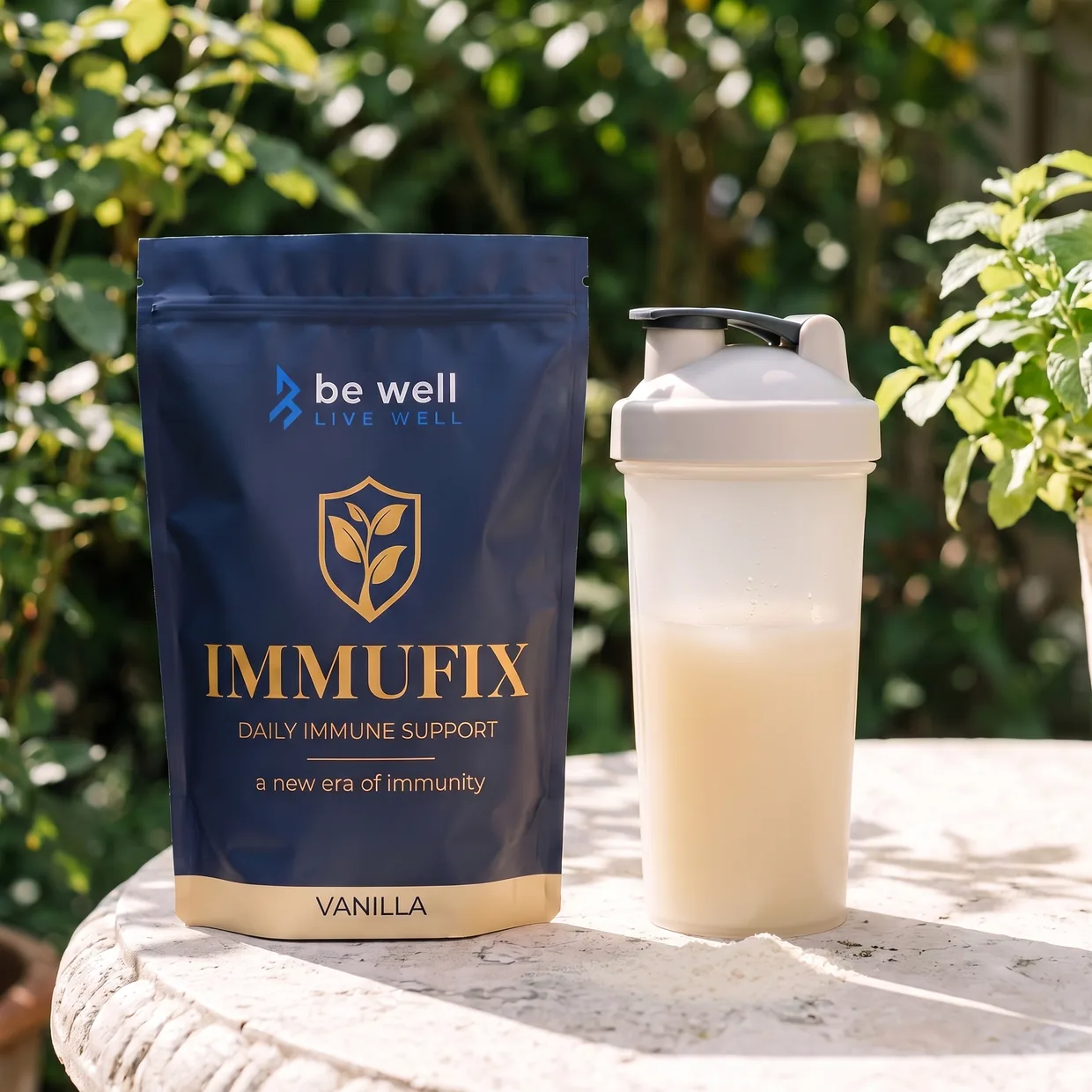
Greens powder or vitamin powder: what is the difference?
Are powder greens worth it, and do you need one? What a greens powder is, how it differs from a vitamin-and-mineral powder, and what the NHS advises.
10 October 2026 · 6 min read