
Calories in a Christmas dinner, item by item.
A typical plate of roast turkey with all the trimmings comes to about 1,100 kcal, and a portion of Christmas pudding adds close to 300 more. Here is how that total is built from UK government food data, and what else the plate gives you.
Quick answer. The calories in a Christmas dinner come to about 1,120 kcal for a typical UK main plate, calculated from UK government CoFID 2021 figures for 150g of roast turkey, 200g of roast potatoes, roast parsnips, sprouts, carrots, three pigs in blankets, stuffing, gravy and cranberry sauce. A 100g portion of shop-bought Christmas pudding adds 285 kcal, taking the meal to about 1,400 kcal before brandy butter or cream. The NHS says "an average man needs 2,500kcal a day" and "an average woman needs 2,000kcal a day", so the whole meal is 56% to 70% of a day's average (calculated).
How many calories are in a Christmas dinner?
There is no official Christmas dinner, so the figure depends on what goes on the plate and how much of it. To give a number you can check, we built one typical plate. The calories per 100g come from CoFID 2021, the UK government's food composition dataset. The portion sizes are our own choices for a generous adult plate. Each line is the weight multiplied by the calories per 100g, and the total is the sum (calculated).
| On the plate | Portion | kcal per 100g | kcal on the plate |
|---|---|---|---|
| Turkey, roasted | 150g | 166 | 249 |
| Roast potatoes | 200g | 161 | 322 |
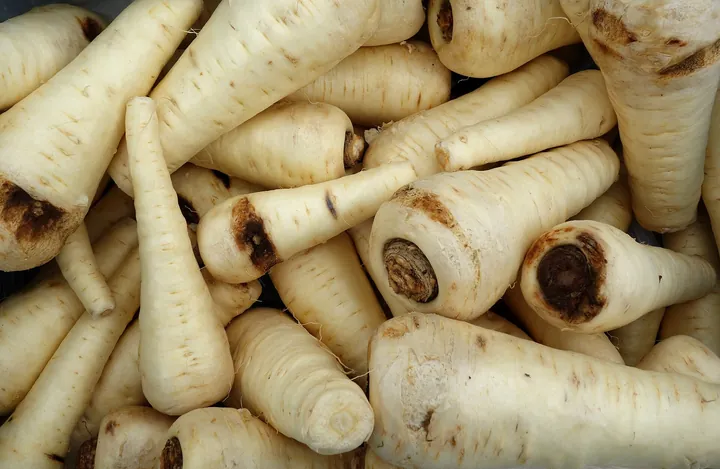
| Parsnips, roasted | 80g | 158 | 126 |
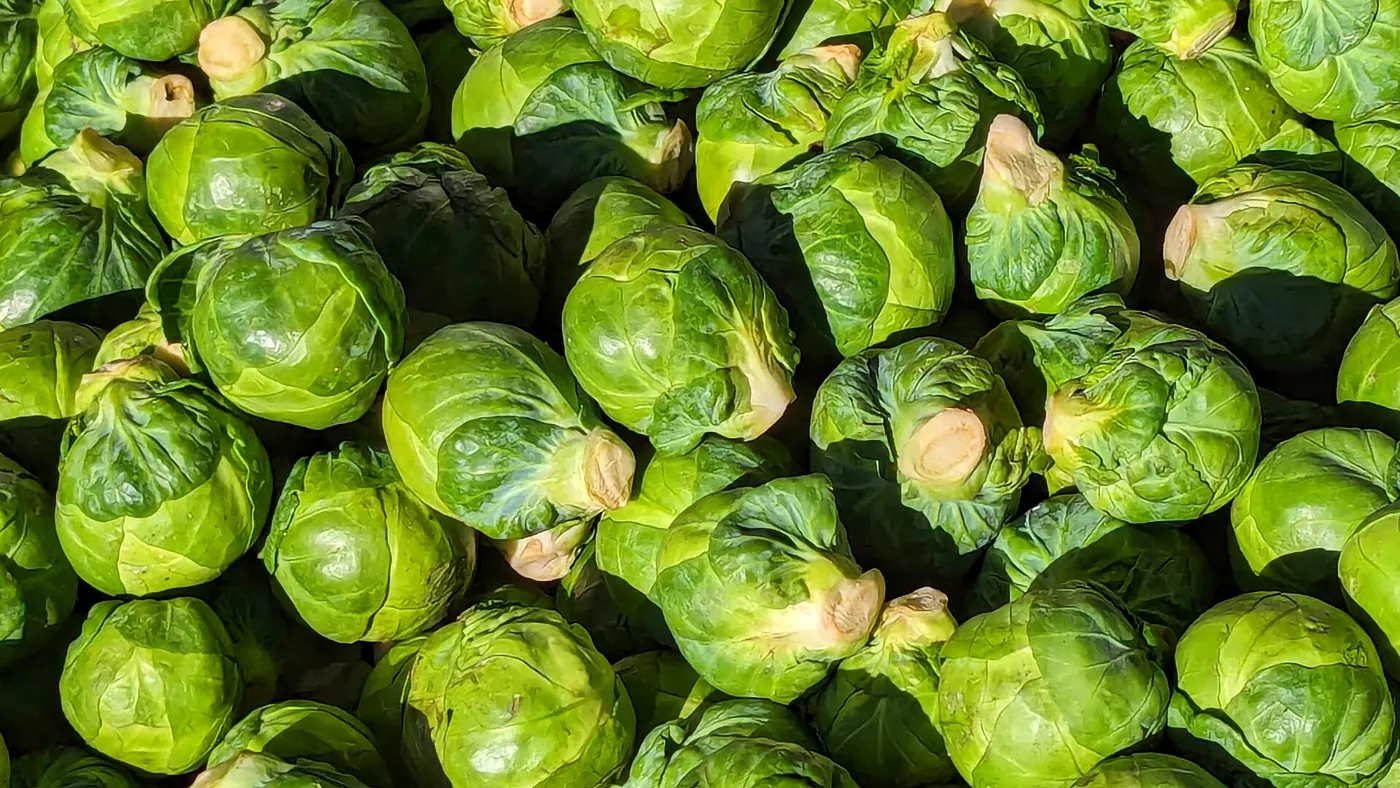
| Brussels sprouts, boiled | 80g | 32 | 26 |
| Carrots, boiled | 80g | 29 | 23 |
| Pigs in blankets (3): pork sausage, grilled | 45g | 294 | 132 |
| Pigs in blankets (3): streaky bacon, grilled | 15g | 337 | 51 |
| Sage and onion stuffing | 50g | 253 | 127 |
| Gravy, made from granules | 100g | 30 | 30 |
| Cranberry sauce | 20g | 151 | 30 |
| Main plate | 820g | 1,116 | |
| Christmas pudding, shop-bought | 100g | 285 | 285 |
| Whole meal | 1,401 |
The three pigs in blankets are worked out as 45g of grilled pork sausage wrapped in 15g of grilled streaky bacon. Gravy is CoFID record 17-725 (instant granules made up with water). Cranberry sauce is CoFID record 17-296, from the older foods file published on the same GOV.UK page. Brandy butter, cream, drinks and anything eaten before or after the meal are not included.
Which parts of a Christmas dinner have the most calories?
On this plate, roast potatoes are the biggest single item at 322 kcal, about 29% of the main plate (calculated). That comes from portion size and the oil they are roasted in: CoFID gives roast potatoes 161 kcal per 100g, and boiled potatoes 74 kcal per 100g. Parsnips follow the same pattern, at 158 kcal per 100g once roasted.
Turkey is the next largest at 249 kcal for 150g. Which part you eat changes the figure a little: CoFID gives 153 kcal per 100g for roast light meat, 166 for average roast meat and 190 for roast turkey with its skin. The three pigs in blankets add 183 kcal between them (calculated), and 50g of stuffing adds 127 kcal.
The boiled vegetables barely move the total. Sprouts and carrots together come to 49 kcal for 160g of food (calculated). They take up a lot of room on the plate and add colour, fibre and vitamins for very few calories.
How many calories are in Christmas pudding?
CoFID gives shop-bought Christmas pudding 285 kcal per 100g and a homemade one 316 kcal per 100g. A 100g portion is roughly a generous wedge from a family pudding. Most of its energy is sugar from the dried fruit: shop-bought pudding has 46.2g of sugars per 100g in CoFID, which is high on a UK traffic-light label. Brandy butter, custard or cream go on top of these figures.
What is the nutrition in a Christmas dinner besides calories?
A Christmas dinner is more than a calorie count, and much of what is on the plate is useful food.
- Protein. Roast turkey has 31.2g of protein per 100g in CoFID, so a 150g portion gives about 47g (calculated).
- Vegetables. The NHS says "An adult portion of fruit or vegetables is 80g." So 80g each of sprouts, carrots and parsnips counts as three of your 5 A Day. The same page is clear that "Potatoes don't count towards your 5 A Day."
- Vitamin C. Boiled Brussels sprouts have 40mg of vitamin C per 100g, so an 80g portion gives 32mg, which is 40% of the 80mg NRV (calculated).
- Potassium. The NHS lists vegetables "such as broccoli, parsnips and brussels sprouts" among sources of potassium, along with turkey.
Salt is the figure most people do not think about. The NHS says "Adults should have no more than 6g of salt a day (around 1 level teaspoon)." Using CoFID sodium values, this plate has about 3.1g of salt (calculated). Most of it comes from two items: about 1g from the gravy and about 1.4g from the pigs in blankets. Vegetables boiled in salted water would add more.
For more on vegetables in the darker months, see our guide to five a day in winter. Sprouts and parsnips are both in season in December, and our guide to what fruit and veg is in season in winter lists the rest.
How does Christmas dinner fit into the rest of the day?
The NHS figures of 2,000 and 2,500 kcal are averages. Real needs vary with body size, age and how active you are, so use the percentages above as a rough guide rather than a target. Christmas dinner is one meal on one day, and it is meant to be enjoyed.
A few things make the day feel easier without changing what you eat at the main meal:
- Have a normal breakfast. Arriving at the table very hungry tends to make the plate bigger than you meant.
- Fill half the plate with vegetables first, then add the rest. It still looks like a proper Christmas dinner.
- Drink water alongside other drinks through the day.
- Get outside for a walk after lunch, for the daylight and the company.
Our guide to staying on routine over Christmas covers sleep, activity and drinks across the whole holiday.
Where Immufix fits.
Immufix is a daily powder: one 25g scoop in around 200ml of water, once a day. A serving has 75 kcal and 9.9g of sugars, so it is worth knowing if you are counting. Each scoop has 100mg of vitamin C (125% NRV), and vitamin C contributes to the reduction of tiredness and fatigue and to normal energy-yielding metabolism. It also has 70mg of magnesium (19% NRV), which contributes to normal muscle function. A scoop sits alongside the vegetables on your plate, never in place of them. Every amount is listed on the science page.
The short version.
- A typical UK Christmas dinner main plate has about 1,120 kcal, calculated from CoFID 2021 figures.
- A 100g portion of shop-bought Christmas pudding adds 285 kcal, for about 1,400 kcal in total.
- Roast potatoes (322 kcal) and turkey (249 kcal) are the biggest items. Sprouts and carrots add 49 kcal together.
- Three 80g portions of vegetables count as three of your 5 A Day. The plate also has about 3.1g of salt, half the NHS daily maximum.
- It is one meal on one day. Enjoy it.
Food supplements should not be used as a substitute for a varied, balanced diet and a healthy lifestyle. If you have a medical condition, are pregnant, breastfeeding or taking medication, speak to your GP or pharmacist before taking any food supplement.


Daily Immune Support
Vitamins, minerals and plant nutrients in one daily scoop. The formula Paula Radcliffe has taken every day since 1998.
4.8 out of 5 · 89 reviewsMonthly subscription. £52.00 is charged every month until you cancel. Minimum three payments, then cancel any time. Subscription terms
New here? 20% off your first order with code TRYIMMUFIX. Apply it
Dispatched the same day on weekday orders placed before 2pm.
Free standard UK delivery. Royal Mail 48 tracked, 2 to 3 working days. UK addresses only.
30‑day money-back guarantee. Try your first pouch of IMMUFIX for up to 30 days. If it’s not for you, we’ll refund your first qualifying pouch, less £10 shipping and handling. First purchase only. T&Cs apply.
Checkout completes securely on immufix.com
More from the journal.
Where UK iodine comes from, milk and fish first.
The best iodine foods in the UK, from white fish to milk and eggs, with per-100g figures from government data and the NHS daily amount for adults.
10 October 2026 · 6 min read
Magnesium-rich foods, and how to eat more of them.
Magnesium rich foods in the UK, from Brazil nuts and seeds to oats, wholegrains and pulses, with CoFID figures per 100g and per portion and NHS daily amounts.
10 October 2026 · 7 min read
Electrolytes, explained simply.
Electrolytes are minerals that carry an electric charge in body fluids. Sodium, potassium, chloride and magnesium explained, with UK foods and running advice.
7 November 2026 · 6 min read