
Fruit and veg in season in a UK winter.
A British winter is not short of vegetables. It is the season of roots, brassicas and leeks, with forced rhubarb in January and citrus from southern Europe at its best.
Quick answer. In a UK winter, from December to February, the vegetables in season are mainly roots and brassicas: parsnips, swede, celeriac, beetroot, Jerusalem artichokes, leeks, kale, Brussels sprouts and cauliflower, with purple sprouting broccoli arriving in February. For fruit, apples and pears run into winter, forced rhubarb appears in January, and imported citrus such as clementines, satsumas, oranges and blood oranges is at its best. These lists come from the seasonal food guide Eat the Seasons, checked against BBC Good Food's seasonal calendar.
What fruit and veg is in season in winter in the UK?
The lists below are taken from Eat the Seasons, a UK seasonal food guide that publishes "a rough list of foods that should be at their best" each month. We have kept the fruit and vegetables and left out the meat, fish and nuts.
| Month | Vegetables at their best | Fruit at its best |
|---|---|---|
| December | Beetroot, Brussels sprouts, butternut squash, cauliflower, celeriac, celery, chicory, Jerusalem artichoke, kale, leeks, parsnips, maincrop potatoes, swede, turnips | Apples, pears, clementines, satsumas, tangerines, pomegranate, passion fruit, pineapple |
| January | Beetroot, Brussels sprouts, butternut squash, cauliflower, celeriac, chicory, Jerusalem artichoke, kale, leeks, parsnips, maincrop potatoes, swede | Rhubarb, clementines, satsumas, oranges, blood oranges, lemons, grapefruit, kiwi fruit, pomegranate, passion fruit, pineapple |
| February | Cauliflower, celeriac, chicory, Jerusalem artichoke, kale, leeks, parsnips, maincrop potatoes, purple sprouting broccoli, swede | Rhubarb, oranges, blood oranges, lemons, grapefruit, kiwi fruit, bananas, pomegranate, passion fruit, pineapple |
Calendars differ a little at the edges. BBC Good Food's seasonal calendar agrees on the core of the list, with parsnips, swede, kale, leeks, celeriac, Brussels sprouts and Jerusalem artichokes marked for all of December to February. It also marks cabbage, onions and turnips through the whole winter, and lists apples into February and pears into January.
Which winter fruit and veg is grown in the UK?
Most of the vegetables. The fruit list is a different story. Eat the Seasons explains in its ethos that "80% of the foods featured are produced in the UK", but that it also highlights "fruit from southern Europe". It names "bananas, pomegranates and passion fruit" as the few fruits from outside Europe it includes.
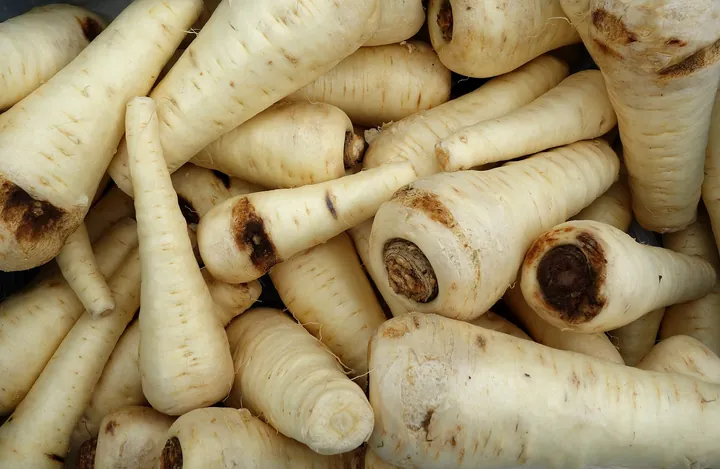
- Grown here in winter: the roots (parsnips, swede, turnips, celeriac, beetroot, Jerusalem artichokes), the brassicas (kale, Brussels sprouts, cabbage, cauliflower, purple sprouting broccoli), leeks, apples, pears and forced rhubarb.
- Imported, but at their best now: citrus fruit, kiwi fruit, pineapple, pomegranate and passion fruit. Eat the Seasons' oranges page notes that in winter, "oranges supplied to the UK from southern Europe (particularly Spain) are high in quality and low in price."
Two British winter foods stand out. Kale, in Eat the Seasons' words, is "one of the few green vegetables that is more abundant and flavourful during the coldest months of the year." And forced rhubarb, "grown in the dark", has yellowish leaves and "usually appears in January", ahead of the field-grown crop in spring.
What nutrients are in winter fruit and veg?
A lot of winter produce is a useful source of vitamin C and fibre. The figures below are from the UK government's food composition dataset, CoFID 2021, converted from per 100g to an 80g portion, which is one of your 5 A Day.
| Food (CoFID entry) | Vitamin C per 80g | Fibre per 80g |
|---|---|---|
| Green cabbage, boiled | 36mg | 1.8g |
| Brussels sprouts, boiled | 32mg | 2.6g |
| Cauliflower, boiled | 24mg | 1.5g |
| Curly kale, boiled | 20mg | 2.8g |
| Swede, boiled | 12mg | 2.4g |
| Parsnip, boiled | 8mg | 2.1g |
| Kiwi fruit, flesh | 57mg | 2.2g |
| Oranges, flesh | 42mg | 1.0g |
| Easy peelers (clementines, satsumas), flesh | 34mg | 1.2g |
| Pears, raw with skin | 2mg | 2.2g |
Fibre figures are CoFID's AOAC fibre values. For reference, the NRV for vitamin C, the daily amount used on food labels, is 80mg. How you cook matters too: CoFID lists raw Brussels sprouts at 115mg of vitamin C per 100g, against 40mg once boiled. For more sources, see our guides to vitamin C foods and high-fibre foods.
Simple ways to eat winter vegetables and fruit.
One tray of roots.
Parsnips, swede, beetroot and celeriac cut to the same size roast together in about the same time. Make a large tray and use the rest in lunches.
Sprouts, shredded.
Finely sliced Brussels sprouts stir-fry in a few minutes, or go raw into a slaw with apple. Raw sprouts have nearly three times the vitamin C of boiled ones in CoFID.
Kale in everything.
Strip the leaves and stir them into soups, stews and pasta sauces for the last five minutes.
Leek and potato soup, with something extra.
Potatoes do not count towards your 5 A Day, according to the NHS, because they are a starchy food. The leeks do, so add a second vegetable, such as celeriac or cauliflower, to the pan.
Rhubarb with breakfast.
Forced rhubarb, gently stewed, goes on porridge or yoghurt from January.
Citrus in the fruit bowl.
Two satsumas make one portion on the NHS's guide, and they are the easiest fruit to eat on the move.
Does seasonal veg count towards your 5 A Day?
Yes. Almost all fruit and vegetables count, fresh, frozen or tinned, and the NHS page 5 A Day: what counts? confirms that "sweet potatoes, parsnips, swedes and turnips do count towards your 5 A Day because they're usually eaten in addition to the starchy food part of the meal." Maincrop potatoes are on every winter list, but they do not count. Our guide to getting your 5 A Day in winter sets out the portion sizes.
Where Immufix fits.
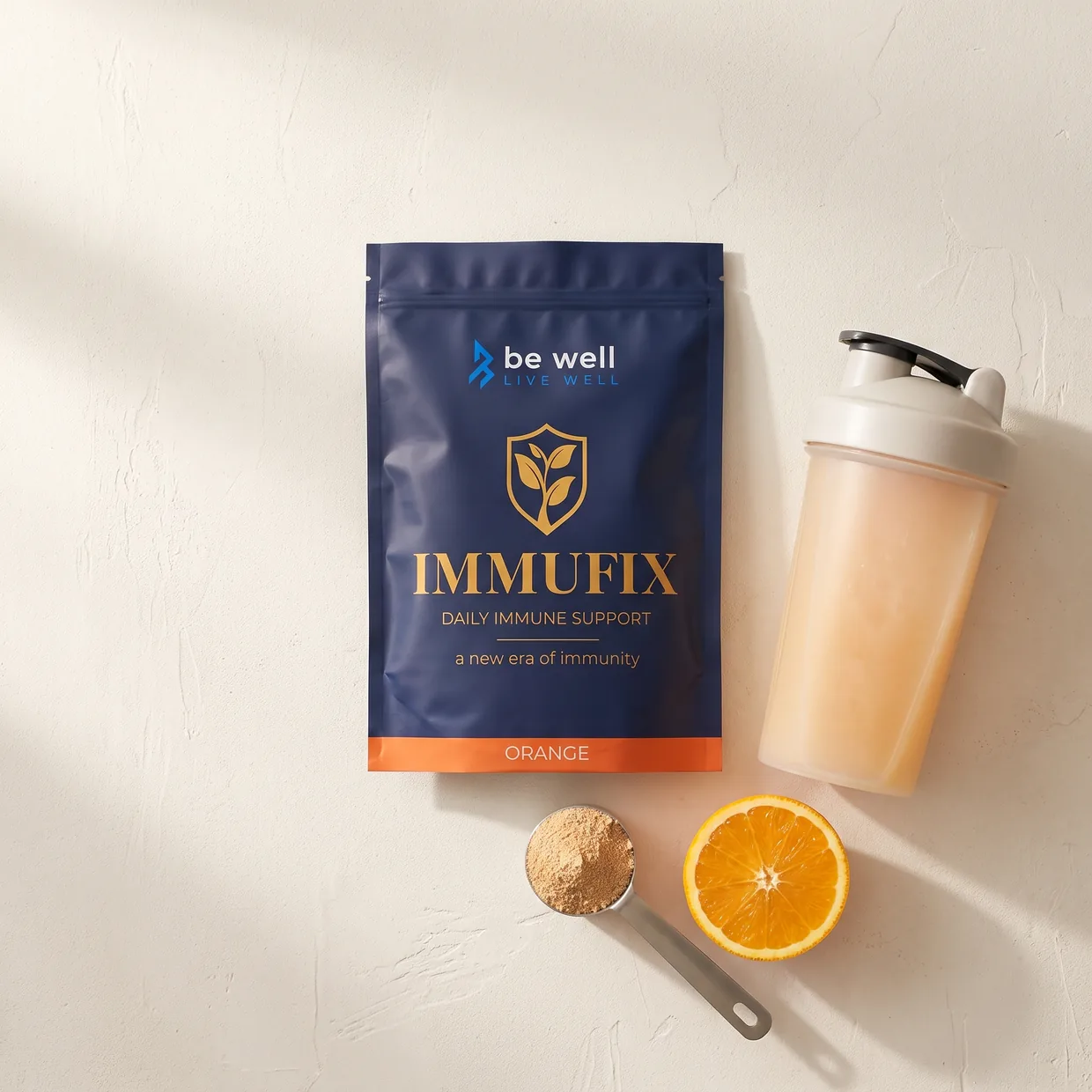
Seasonal fruit and vegetables come first, and nothing in a scoop replaces them. Immufix is one 25g scoop in around 200ml of water, once a day, and it contains 100mg of vitamin C (125% NRV). Vitamin C contributes to the reduction of tiredness and fatigue, and to normal collagen formation for the normal function of skin. Folic acid contributes to the reduction of tiredness and fatigue. Every ingredient and amount is on the science page.
The short version.
- UK winter vegetables are mainly roots, brassicas and leeks: parsnips, swede, celeriac, kale, Brussels sprouts, cabbage, cauliflower and leeks.
- Forced rhubarb appears in January and purple sprouting broccoli in February.
- Citrus, kiwi, pomegranate and pineapple are imported but at their best in winter.
- Per 80g, boiled green cabbage has 36mg of vitamin C and boiled Brussels sprouts 32mg, from CoFID.
- Parsnips, swede and turnips count towards your 5 A Day. Potatoes do not.
Food supplements should not be used as a substitute for a varied, balanced diet and a healthy lifestyle. If you have a medical condition, are pregnant, breastfeeding or taking medication, speak to your GP or pharmacist before taking any food supplement.

Daily Immune Support
Vitamins, minerals and plant nutrients in one daily scoop. The formula Paula Radcliffe has taken every day since 1998.
4.8 out of 5 · 89 reviewsDispatched the same day on weekday orders placed before 2pm.
Free standard UK delivery. Royal Mail 48 tracked, 2 to 3 working days. UK addresses only.
30‑day money-back guarantee. Try your first pouch of IMMUFIX for up to 30 days. If it’s not for you, we’ll refund your first qualifying pouch, less £10 shipping and handling. First purchase only. T&Cs apply.
Checkout completes securely on immufix.com
More from the journal.
The clocks go forward on Sunday 28 March 2027.
The UK clocks go forward at 1am on Sunday 28 March 2027. What changes, how much lighter the evenings get city by city, and how to handle the lost hour.
10 October 2026 · 6 min read
Your 5 A Day in the winter months.
NHS 5 A Day portion sizes explained: 80g of fruit or veg, 30g dried, 150ml juice. What counts in winter, including frozen, tinned and soup, and a sample day.
10 October 2026 · 6 min read
A new year routine that lasts past January.
How to build a new year routine that lasts past January: small goals tied to a daily cue, what UK guidelines suggest, and how long a habit really takes.
10 October 2026 · 7 min read