
The clocks go forward on Sunday 28 March 2027.
At 1am on Sunday 28 March 2027 the clocks in the UK jump to 2am and British Summer Time begins. You lose an hour in bed, and sunset moves an hour later overnight.

Quick answer. In 2027 the clocks go forward at 1am on Sunday 28 March, when British Summer Time starts. GOV.UK says the clocks "go forward 1 hour at 1am on the last Sunday in March". Sunset in London moves from 18:25 on the Saturday to 19:27 on the Sunday, and sunrise from 05:48 to 06:46 (calculated).
When do the clocks go forward in 2027?
Sunday 28 March 2027, at 1am. At that moment the time becomes 2am, so the night is an hour shorter. The clocks stay on British Summer Time until they go back at 2am on Sunday 31 October 2027 (GOV.UK).
Phones, laptops and most connected devices change on their own. Ovens, car clocks, older watches and some heating timers do not, so it is worth a quick walk round the house on Sunday morning.
When do the clocks go forward in the UK?
Always on the last Sunday in March. GOV.UK puts the rule simply: "In the UK the clocks go forward 1 hour at 1am on the last Sunday in March, and back 1 hour at 2am on the last Sunday in October." The period in between is British Summer Time (BST), and the rest of the year is Greenwich Mean Time (GMT).
- 2026: forward 29 March, back 25 October.
- 2027: forward 28 March, back 31 October.
- 2028: forward 26 March, back 29 October.
Dates from GOV.UK. The last change was the clocks going back on 25 October 2026, which we covered in our piece on dark mornings after the clocks go back.
Do you lose an hour of sleep when the clocks go forward?
Yes, if you get up at your usual time on the Sunday. Sunday 28 March is only 23 hours long, and the missing hour comes out of the night. The NHS's sleep advice is to keep a regular routine, because "going to bed and getting up at similar times each day helps your body know when it's time to sleep" (NHS Every Mind Matters).
A few practical steps make the change easier:
- Go to bed a little earlier on the Friday and Saturday, rather than losing the whole hour in one night.
- Keep Sunday's wake-up time close to normal, so Monday is not the first early start on the new time.
- Get outside on Sunday morning. Sunrise is now around 06:45 to 07:10 across the UK, so a morning walk is in daylight.
- Keep breakfast at the usual clock time, which helps the rest of the day fall into place.
How much lighter are the evenings after the clocks go forward?
An hour lighter overnight. Sunrise and sunset both jump an hour later by the clock. These are the times either side of the change, calculated for each city with the NOAA solar position method.
| March 2027 | Sunset Sat 27 | Sunset Sun 28 | Sunrise Sun 28 |
|---|---|---|---|
| London | 18:25 | 19:27 | 06:46 |
| Cardiff | 18:37 | 19:39 | 06:58 |
| Birmingham | 18:33 | 19:34 | 06:52 |
| Manchester | 18:35 | 19:36 | 06:53 |
| Newcastle | 18:33 | 19:35 | 06:49 |
| Belfast | 18:50 | 19:52 | 07:07 |
| Edinburgh | 18:40 | 19:42 | 06:55 |
| Aberdeen | 18:37 | 19:39 | 06:49 |
Calculated, rounded to the nearest minute. Sunset gains about a minute or two a day on top of the hour, which is why the jump is slightly more than 60 minutes.
For anyone leaving work at 5.30pm, the difference is large. In London there are about 53 minutes of daylight left after 17:30 on Friday 26 March, and about 1 hour 58 minutes on Monday 29 March. In Edinburgh it goes from about 68 minutes to 2 hours 14 minutes (calculated).
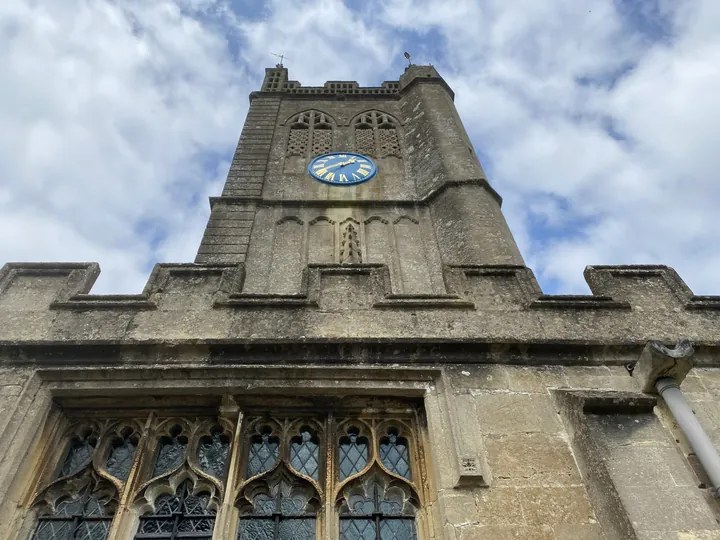
When will it stay light until 8pm and 9pm?
After the change, the evenings keep stretching by one or two minutes a day. Places further north and west get there first: the days lengthen faster further north, and the sun sets later by the clock further west. All dates are calculated for 2027.
- Sunset after 8pm: from 2 April in Belfast, 6 April in Edinburgh, 10 April in Manchester and 17 April in London.
- Sunset after 9pm: from 3 May in Belfast, 6 May in Edinburgh, 14 May in Manchester and 26 May in London.
- Longest day: 21 June, with sunset at about 21:22 in London and 22:03 in Edinburgh.
Mornings are darker for a while. Sunrise in London does not get back before 6am until 18 April.
Is it spring when the clocks go forward?
By the astronomical definition, it already is. Royal Museums Greenwich says "In 2027 the spring equinox falls on 20 March" (Royal Museums Greenwich), and the US Naval Observatory times it at 20:25 Universal Time (USNO). By the clocks change on 28 March, London already has about 12 hours 41 minutes of daylight (calculated).
The higher sun matters for vitamin D too. The NHS says "From about late March or early April to the end of September, most people should be able to make all the vitamin D they need from sunlight" (NHS). Our guide to how much sunlight you need for vitamin D covers how long, what time of day, and how to avoid burning.
Where Immufix fits.
A clocks change is easier when the morning routine does not move. Immufix is one scoop (25g) in around 200ml of water, once a day, and most people take it with breakfast at the same clock time all year. B vitamins and magnesium contribute to normal energy-yielding metabolism and to the reduction of tiredness and fatigue. Vitamin D contributes to normal muscle function. A scoop contains 1.25 micrograms of vitamin D3, 25% of the nutrient reference value, against the 10 micrograms the NHS advises considering in autumn and winter. Every amount is on the science page.
The short version.
- The clocks go forward at 1am on Sunday 28 March 2027, the last Sunday in March. 1am becomes 2am.
- They go back at 2am on Sunday 31 October 2027.
- London's sunset moves from 18:25 to 19:27 overnight, and sunrise from 05:48 to 06:46 (calculated).
- Sunset passes 8pm in London on 17 April and 9pm on 26 May.
- Go to bed a little earlier that weekend and keep your usual wake-up time.
Food supplements should not be used as a substitute for a varied, balanced diet and a healthy lifestyle. If you have a medical condition, are pregnant, breastfeeding or taking medication, speak to your GP or pharmacist before taking any food supplement.

Daily Immune Support
Vitamins, minerals and plant nutrients in one daily scoop. The formula Paula Radcliffe has taken every day since 1998.
4.8 out of 5 · 89 reviewsDispatched the same day on weekday orders placed before 2pm.
Free standard UK delivery. Royal Mail 48 tracked, 2 to 3 working days. UK addresses only.
30‑day money-back guarantee. Try your first pouch of IMMUFIX for up to 30 days. If it’s not for you, we’ll refund your first qualifying pouch, less £10 shipping and handling. First purchase only. T&Cs apply.
Checkout completes securely on immufix.com
More from the journal.

Your 5 A Day in the winter months.
NHS 5 A Day portion sizes explained: 80g of fruit or veg, 30g dried, 150ml juice. What counts in winter, including frozen, tinned and soup, and a sample day.
10 October 2026 · 6 min read
A new year routine that lasts past January.
How to build a new year routine that lasts past January: small goals tied to a daily cue, what UK guidelines suggest, and how long a habit really takes.
10 October 2026 · 7 min read
Fruit and veg in season in a UK winter.
What fruit and veg is in season in a UK winter, month by month from December to February, which of it is grown here, what it contains and simple ways to eat it.
10 October 2026 · 6 min read