
The darkest mornings come after the shortest day.
London's latest sunrise is 08:06 on Wednesday 30 December 2026, nine days after the winter solstice. The mornings start getting lighter from New Year's Eve, slowly at first: sunrise is 10 minutes earlier by 19 January.
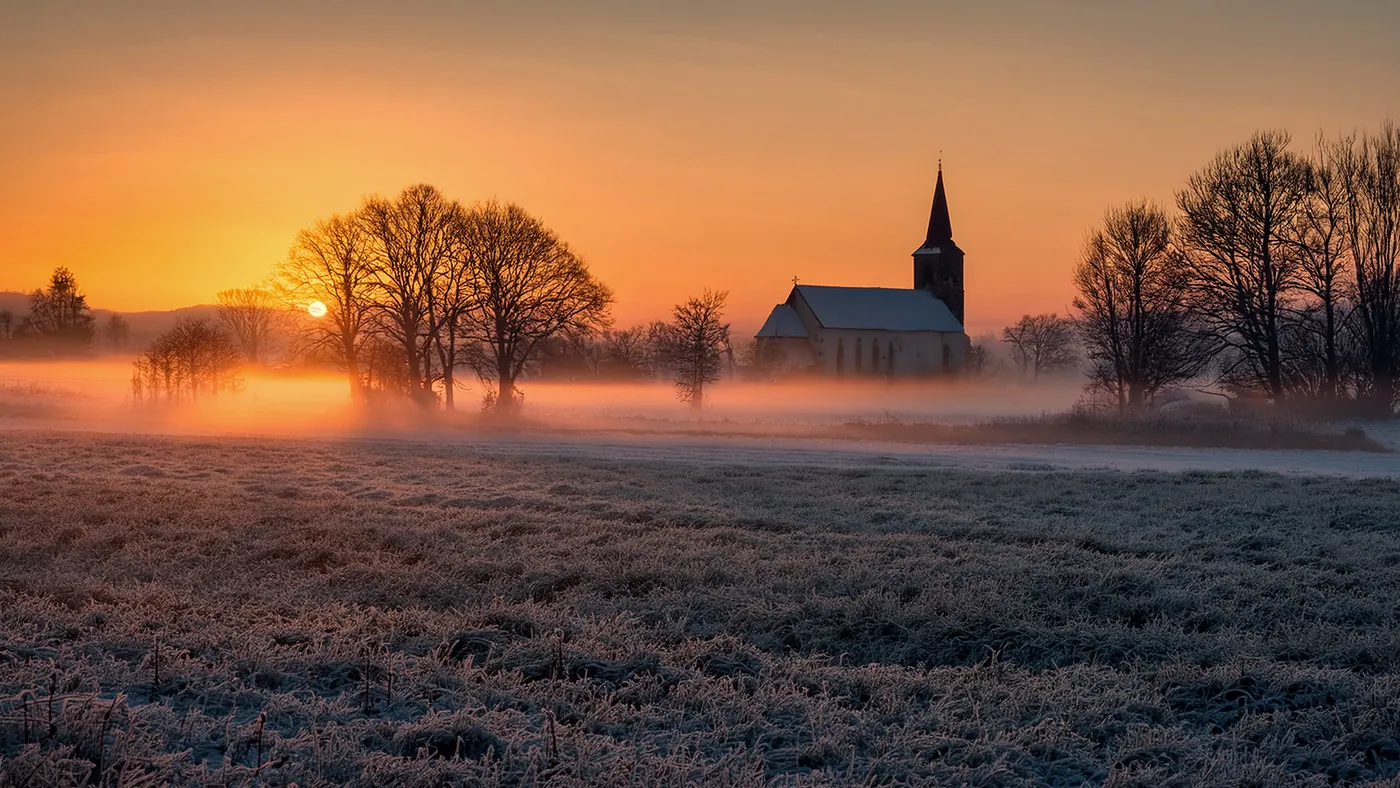
Quick answer. The latest sunrise of the year in the UK falls on 29 or 30 December, just over a week after the shortest day. In 2026 London's latest sunrise is 08:06 GMT and Cardiff's 08:18 on Wednesday 30 December, while Edinburgh's is 08:44 and Belfast's 08:46 on Tuesday 29 December (calculated). The darkest mornings run from about Christmas to the first days of January, and London's sunrise is 10 minutes earlier than its latest by 19 January.
When is the latest sunrise of the year in the UK?
The latest sunrise comes in the last days of December, after the winter solstice. The Royal Observatory Greenwich confirms that "In 2026 the winter solstice will occur on Monday 21 December." The mornings keep getting darker for another eight or nine days after that. Our guide to the shortest day of 2026 gives the solstice time and the daylight for 12 UK cities.
The times below are calculated with the NOAA solar algorithm for each city centre and checked against the US Naval Observatory tables, which agree to within a minute. They are GMT, UK clock time in winter.
| City | Latest sunrise | Date | Sunrise on 21 Dec |
|---|---|---|---|
| London | 08:06 | Wed 30 Dec | 08:04 |
| Cardiff | 08:18 | Wed 30 Dec | 08:16 |
| Manchester | 08:25 | Wed 30 Dec | 08:23 |
| Edinburgh | 08:44 | Tue 29 Dec | 08:42 |
| Belfast | 08:46 | Tue 29 Dec | 08:44 |
| Glasgow | 08:48 | Tue 29 Dec | 08:46 |
Like the earliest sunset, the latest sunrise is a plateau rather than a peak. London's sun rises within a minute of 08:06 every day from 25 December to 5 January. Edinburgh's rises within a minute of 08:44 from 24 December to 2 January. On the shortest day itself, sunrise is about 2.5 minutes earlier than the latest in London and 2 minutes earlier in Edinburgh.
When are the darkest mornings in the UK?
By the clock, the darkest mornings of the year are the two weeks around New Year. The further north and west you live, the later the sunrise and the longer the stretch of late mornings (calculated):
- London: the sun rises after 08:00 from 17 December to 13 January, 28 days. It rises after 07:30 from 23 November to 6 February.
- Cardiff: after 08:00 from 5 December to 25 January, 52 days.
- Edinburgh: after 08:30 from 9 December to 17 January, and after 08:00 from 21 November to 4 February.
- Belfast: after 08:30 from 7 December to 20 January, and after 08:00 from 19 November to 7 February.
The sky starts to brighten before sunrise, at the start of civil twilight, when NOAA says the sun is "6° below the horizon" (NOAA glossary). That first light is at its latest at 07:26 in London on 1 January, 07:38 in Cardiff, 07:57 in Edinburgh and 08:02 in Belfast on 30 December (calculated). So a 07:00 alarm in Belfast goes off an hour before first light.
Why is the latest sunrise after the shortest day?
Sunrise is solar noon minus half the length of the day. Solar noon, which NOAA defines as "the time when the sun crosses the meridian of the observer's location", is not fixed at 12:00. In London it falls at 11:58 on 21 December and 12:03 on 30 December (calculated), about 29 seconds later each day.
After the solstice the day lengthens, but only by seconds at first. London gains 1 second of daylight on 22 December, 20 seconds on 25 December, 40 seconds on 28 December and 65 seconds on 1 January. Half of each gain goes to the morning. Until the end of December that is less than the 29 seconds by which noon moves later, so sunrise keeps getting later. London's sunrise was moving 39 seconds later a day on 19 December, 17 seconds later on 26 December, and is moving 7 seconds earlier a day by 2 January.
The drift in solar noon is the equation of time, the gap between sundial time and clock time, which comes from the tilt of the Earth's axis and its elliptical orbit. The same drift makes the evenings start drawing out before the solstice, which is why the earliest sunset falls around 12 to 14 December. Put together, the earliest sunset and the latest sunrise sit either side of the shortest day, about 18 days apart in London.
When do mornings start getting lighter in the UK?
The mornings start getting lighter from 31 December in London and Cardiff, and from 30 December in Edinburgh and Belfast. For the first week the change is only seconds a day. These are the dates on which sunrise is a set amount earlier than its latest (calculated):
Further north the change comes sooner and faster. Edinburgh's sunrise is 10 minutes earlier by 15 January, 30 minutes by 29 January and an hour by 13 February. Belfast's reaches the same steps on 17 January, 31 January and 15 February. Cardiff matches London's dates.
Mornings recover more slowly than evenings. From 21 December to 31 January, London's sunrise moves 23 minutes earlier while its sunset moves 54 minutes later. In Edinburgh the figures are 32 and 64 minutes. That is why January evenings feel noticeably lighter while the walk to work is still dark.
Sunrise by date, GMT until the clocks change (calculated):
- 15 January: London 08:00, Cardiff 08:12, Edinburgh 08:34, Belfast 08:38.
- 31 January: London 07:41, Cardiff 07:53, Edinburgh 08:10, Belfast 08:15.
- 15 February: London 07:15, Cardiff 07:27, Edinburgh 07:39, Belfast 07:46.
- 1 March: London 06:46, Cardiff 06:58, Edinburgh 07:05, Belfast 07:14.
Then the clocks go forward. GOV.UK lists 28 March for 2027: "the clocks go forward 1 hour at 1am on the last Sunday in March". London's sunrise moves from 05:48 GMT on Saturday 27 March to 06:46 BST on Sunday 28 March, and Belfast's from 06:09 to 07:07. Our clocks go forward 2027 guide covers that week.
How do you get through the darkest mornings?
For two or three weeks around New Year, most people get up and leave home before sunrise. The aim is a morning that runs the same way whether or not the sun is up:
- Turn the lights on as soon as you get up. A bright kitchen makes a 07:00 start feel less like the middle of the night.
- Keep the same getting-up time. Including the days between Christmas and New Year, when routines tend to slip.
- Catch the first daylight. In London the sun is up by 08:06 at the latest, so a walk, a run or a coffee outside after 08:15 meets it.
- Fix breakfast at a set time. A regular first meal anchors the rest of the day.
Our guide to waking up on dark mornings goes further on alarms and light. On vitamin D, the NHS says "between October and early March we do not make enough vitamin D from sunlight", and advises considering "a daily supplement containing 10 micrograms of vitamin D during the autumn and winter."

Where Immufix fits.
Immufix is a daily food supplement: one scoop (25g) in around 200ml of water, once a day, which many people take at breakfast. It contains 1.25 micrograms of vitamin D3, 25% of the NRV and well below the NHS's 10 micrograms, so if you follow the NHS advice take a dedicated vitamin D supplement and count the 1.25 micrograms in your total. Vitamin D contributes to normal muscle function and the maintenance of normal bones. Riboflavin, niacin, pantothenic acid, vitamin B6 and magnesium contribute to normal energy-yielding metabolism and to the reduction of tiredness and fatigue. Amounts for every nutrient are on the science page.
The short version.
- The UK's latest sunrise in 2026 is 08:06 in London and 08:18 in Cardiff on 30 December, and 08:44 in Edinburgh and 08:46 in Belfast on 29 December (calculated).
- It comes after the shortest day because solar noon moves about 29 seconds later each day, more than the morning gains in late December.
- The darkest mornings run from about Christmas to early January, with first light as late as 07:26 in London and 08:02 in Belfast.
- London's sunrise is 10 minutes earlier than its latest by 19 January, 30 minutes by 3 February and an hour by 20 February.
- Keep the same getting-up time, light the kitchen early and meet the first daylight outside.
Food supplements should not be used as a substitute for a varied, balanced diet and a healthy lifestyle. If you have a medical condition, are pregnant, breastfeeding or taking medication, speak to your GP or pharmacist before taking any food supplement.


Daily Immune Support
Vitamins, minerals and plant nutrients in one daily scoop. The formula Paula Radcliffe has taken every day since 1998.
4.8 out of 5 · 89 reviewsMonthly subscription. £52.00 is charged every month until you cancel. Minimum three payments, then cancel any time. Subscription terms
New here? 20% off your first order with code TRYIMMUFIX. Apply it
Dispatched the same day on weekday orders placed before 2pm.
Free standard UK delivery. Royal Mail 48 tracked, 2 to 3 working days. UK addresses only.
30‑day money-back guarantee. Try your first pouch of IMMUFIX for up to 30 days. If it’s not for you, we’ll refund your first qualifying pouch, less £10 shipping and handling. First purchase only. T&Cs apply.
Checkout completes securely on immufix.com
More from the journal.
The earliest sunset comes before the shortest day.
The UK's earliest sunset comes before the shortest day: 15:51 in London on 12 December 2026 and 15:38 in Edinburgh on 14 December. Here is why.
7 November 2026 · 7 min read
The days start getting longer on 22 December.
The days start getting longer on 22 December 2026, the day after the solstice. How much lighter each day gets in London, Edinburgh, Cardiff and Belfast.
7 November 2026 · 7 min read
The longest day of 2027 is Monday 21 June.
The longest day of 2027 in the UK is Monday 21 June, with the summer solstice at 3.11pm BST. Sunrise, sunset and daylight for 12 UK cities.
7 November 2026 · 7 min read