
Getting up when it is still dark outside.
From late November most of the UK gets up before sunrise on a working day. The body clock takes its timing from light, so the answer is mostly light and routine, not willpower.
Quick answer. Keep the same wake-up time every day, turn on bright light as soon as the alarm goes, and get outside in daylight early in the day. At night, keep a regular bedtime, put screens away for the last hour and keep the bedroom dark and cool. This winter the sun rises after 07:30 in London from 22 November to 6 February (calculated), so a dark start is normal and the routine has to do the work.
Why is it so hard to wake up when it's dark?
Your body runs on an internal clock, and light is what sets it. In a study from the University of Colorado, researchers found that after a week of camping with only natural light, "the internal circadian clock synchronizes to solar time". The internal night ended "just after sunrise" (Wright and colleagues, 2013).
Modern life pulls the other way. The same researchers found that electric light and life indoors meant less sunlight during the day, more light after sunset and a later body clock. A follow-up study found that, under natural light, the body's night grew longer in winter than in summer (Stothard and colleagues, 2017).
Put those together and a 7am alarm in December asks you to get up while the room, and possibly your body clock, still says night. Most people also feel groggy for a while after any waking. Researchers call it sleep inertia, and it is normal.
How dark are UK mornings this winter?
Darker than the clocks going back suggests. These figures are calculated for winter 2026 to 2027 and can differ by a minute from published tables.
- London: the sun rises after 07:30 from 22 November to 6 February, and after 08:00 from 16 December to 14 January.
- Edinburgh: the sun rises after 08:00 from 21 November to 5 February.
- Further north and west it is later still. Belfast's latest sunrise is about 08:46 and Glasgow's about 08:48.
- Between the clocks going back and going forward (25 October 2026 to 27 March 2027), there are 78 weekdays in London when the sun rises after 07:00. In Manchester there are 88, and in Edinburgh 92.
Our guide to the clocks going back explains why the latest sunrises come around New Year rather than on the shortest day.
How to wake up when it's dark: what helps.
Keep the same wake-up time, every day.
This is the first of the NHS's sleep tips: "Keep a regular sleep routine". It explains that "going to bed and getting up at similar times each day helps your body know when it's time to sleep", and adds: "Try to keep your routine the same when you can, even on days when you're not working" (NHS Every Mind Matters). A two-hour lie-in on Saturday makes Monday's dark alarm harder.
Bring the light in early.
Turn on a bright main light as soon as you are up, not a bedside lamp. Some people use a lamp or alarm clock that brightens gradually before the alarm. In a small study of 8 people who found mornings difficult, light that rose over the last 30 minutes of sleep led to higher alertness ratings and faster reaction times after waking (Thompson and colleagues, 2014). It is one small study, so it is worth trying rather than a sure thing.
Get outside in daylight as early as you can.
Walk part of the commute, take the dog out after sunrise, or get outside at lunchtime. The Colorado researchers found that even a summer weekend of natural light moved people's body clocks earlier, achieving about 69% of the shift they saw after a full week.
Be sensible with the snooze button.
Snoozing is not as bad as its reputation. In a Swedish laboratory study of 31 regular snoozers, 30 minutes of snoozing cost about 6 minutes of sleep and either improved or did not affect thinking tests straight after getting up (Sundelin and colleagues, 2023). It only tested people who already snooze and fall back to sleep easily. If snoozing works for you, set the first alarm earlier and keep the snooze to a short, fixed window. If it does not, put the alarm across the room.
Make the first ten minutes automatic.
Dark mornings are when decisions get skipped. Lay out clothes, fill the kettle and set breakfast up the night before, so getting up leads straight into a routine.
What to do the night before.
An easier morning starts the evening before. The NHS's advice, in short:
- Screens off. "Try not to use phones, tablets or computers for an hour before bed."
- A dark, cool room. The NHS suggests a room that is "quiet, dark and cool", with curtains fully closed and clocks out of view.
- Caffeine early. Its effects "can last up to 7 hours", so the NHS suggests avoiding it in the evening if you have trouble sleeping (NHS: self-help tips to fight tiredness).
- Alcohol and nicotine. Avoid both for 1 to 2 hours before bed.
- Exercise earlier. If late workouts keep you awake, the NHS suggests "being active earlier in the day."
If you often struggle to sleep, or have felt tired for a few weeks without knowing why, speak to a GP. For more on what winter does to energy levels, see does cold weather make you tired.
Where Immufix fits.
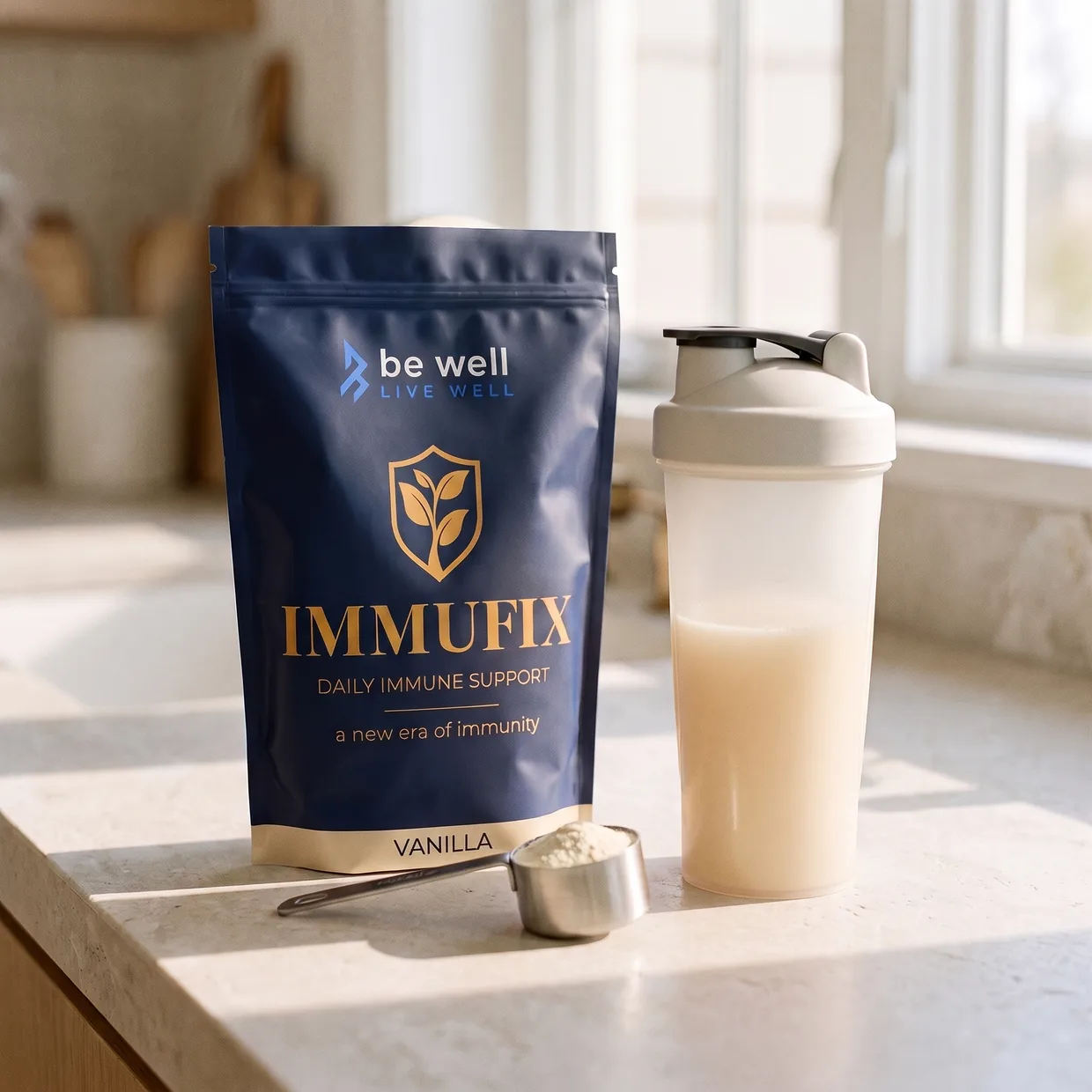
Immufix is one 25g scoop in around 200ml of water, once a day. Kept on the counter next to the kettle, it becomes part of the routine that runs whatever time the sun comes up. Riboflavin, niacin, pantothenic acid, vitamin B6 and magnesium contribute to normal energy-yielding metabolism and to the reduction of tiredness and fatigue. Every amount is listed on the science page.
The short version.
- Light sets the body clock, and from late November most UK alarms go off before sunrise.
- Keep the same wake-up time all week, including weekends.
- Bright light straight away, and daylight outside as early as you can manage.
- Screens away an hour before bed, caffeine early, bedroom dark and cool.
- Set up the morning the night before so the first ten minutes need no decisions.
Food supplements should not be used as a substitute for a varied, balanced diet and a healthy lifestyle. If you have a medical condition, are pregnant, breastfeeding or taking medication, speak to your GP or pharmacist before taking any food supplement.

Daily Immune Support
Vitamins, minerals and plant nutrients in one daily scoop. The formula Paula Radcliffe has taken every day since 1998.
4.8 out of 5 · 89 reviewsDispatched the same day on weekday orders placed before 2pm.
Free standard UK delivery. Royal Mail 48 tracked, 2 to 3 working days. UK addresses only.
30‑day money-back guarantee. Try your first pouch of IMMUFIX for up to 30 days. If it’s not for you, we’ll refund your first qualifying pouch, less £10 shipping and handling. First purchase only. T&Cs apply.
Checkout completes securely on immufix.com
More from the journal.
The clocks go back. Here's what changes.
The clocks go back at 2am on Sunday 25 October 2026. What really happens to UK mornings and evenings, when the darkest days are, and a routine that copes.
10 October 2026 · 4 min read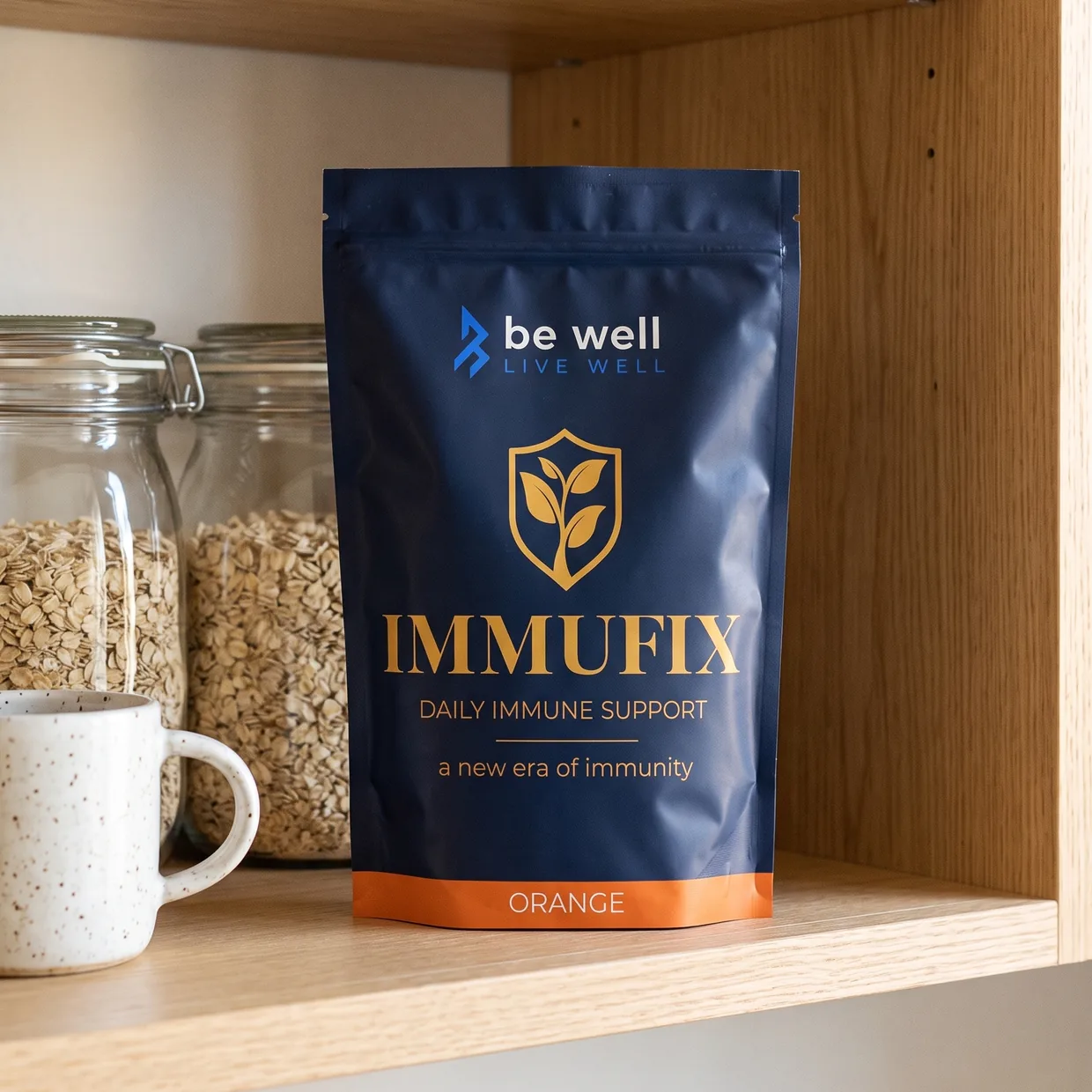
Healthy breakfasts, quick enough for a weekday.
Healthy breakfast ideas from the NHS's own recipes, compared by time, protein, fibre and salt, plus quick breakfasts and how to pick a cereal by its label.
10 October 2026 · 6 min read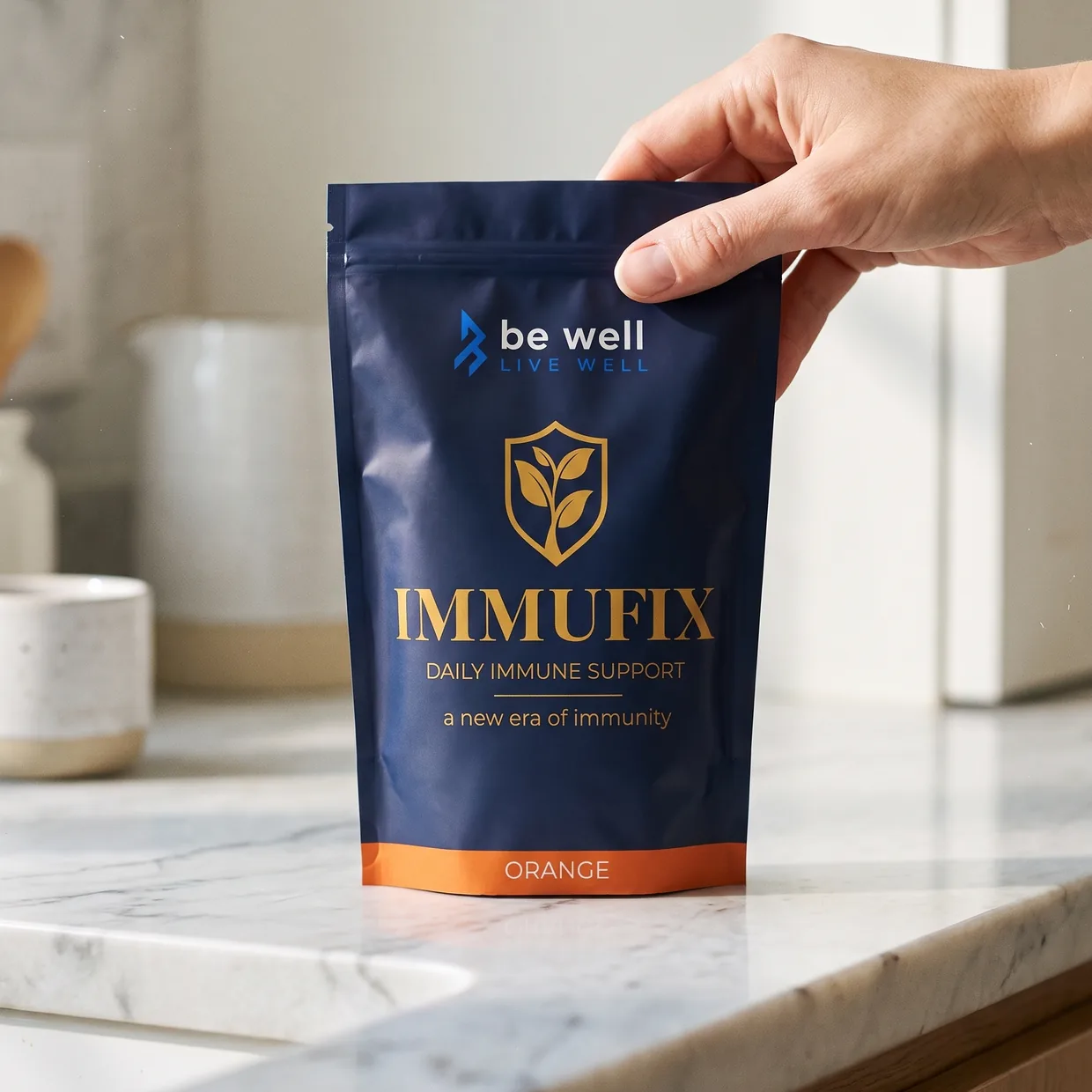
How to build a habit that actually sticks.
How to build a habit, from UCL research: pick one action, tie it to a daily cue and repeat it. It took 18 to 254 days in the study, about 66 on average.
10 October 2026 · 6 min read