
The lunchtime walk, and the daylight that comes with it.
A brisk walk at lunch counts towards the UK activity target, breaks up a morning at a desk and, from late October, is often the only daylight a working day offers. Here is how long, how fast, and how much light there is.

Quick answer. A brisk lunchtime walk counts towards the 150 minutes of moderate activity the UK guidelines recommend each week, and breaks up a long spell of sitting. The NHS says "A brisk 10-minute daily walk has lots of health benefits", and that "Even a single 15-minute walk can give you an energy boost." In winter it is also the brightest part of the working day: on 21 December in London the sun rises at 08:04 and sets at 15:53 (calculated), so for many office workers lunchtime is the only daylight in the working day.
What are the benefits of a lunchtime walk?
Four, and they add up.
- It counts as exercise. Brisk walking is the first example the NHS gives of moderate activity, and adults should aim for "at least 150 minutes of moderate intensity activity a week" (NHS physical activity guidelines). A 20-minute walk on five working days is 100 minutes, two thirds of the target.
- It breaks up the sitting. The UK Chief Medical Officers say adults "should aim to minimise the amount of time spent being sedentary and when physically possible should break up long periods of inactivity with at least light physical activity" (UK CMO guidelines). A walk at lunch splits a desk day in two.
- It can leave you less tired. The NHS's tips to fight tiredness say "regular exercise will make you feel less tired in the long run, so you'll have more energy", and that "Even a single 15-minute walk can give you an energy boost" (NHS: self-help tips to fight tiredness).
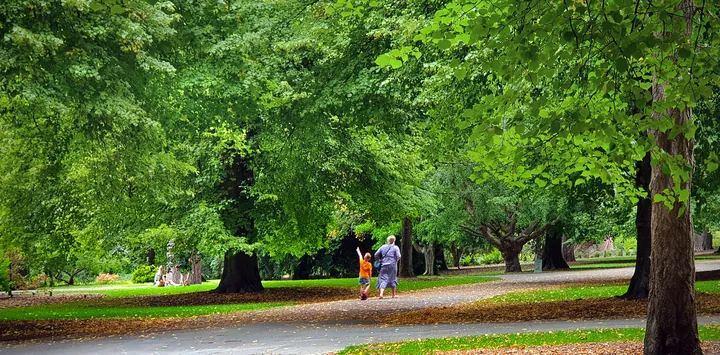
- It gets you into daylight. From late October, London's sun sets before 17:00 on most weekdays (calculated), so many people finish work after dark. The middle of the day is when the light is strongest.
How long and how fast should a lunchtime walk be?
Ten minutes is enough to count, and brisk is the pace that matters. The NHS says a brisk 10-minute daily walk "counts towards your 150 minutes of weekly exercise" (NHS: walking for health). It defines brisk like this:
- Speed: "A brisk walk is about 3 miles an hour, which is faster than a stroll."
- The talk test: "You can tell you're walking briskly if you can still talk but cannot sing the words to a song."
At 3 miles an hour, 10 minutes covers about half a mile and 20 minutes about a mile (calculated). The CMOs add that the weekly 150 minutes "can be accumulated in bouts of any length", and that "Any activity is better than none". If you only have a quarter of an hour, a 15-minute brisk loop still counts. For the full weekly targets, including strength work, see how much exercise you need a week.
Walking in daylight in winter: how much light is there?
Not much, and most of it falls in working hours. These figures are calculated for the shortest day, 21 December 2026, and can differ by a minute from published tables. Sun height is the angle of the sun above the horizon at 12:30.
| City | Sunrise | Sunset | Daylight | Sun height at 12:30 |
|---|---|---|---|---|
| London | 08:04 | 15:53 | 7h 50m | 15° |
| Cardiff | 08:16 | 16:06 | 7h 50m | 15° |
| Manchester | 08:23 | 15:51 | 7h 28m | 13° |
| Belfast | 08:44 | 15:59 | 7h 15m | 12° |
| Edinburgh | 08:42 | 15:40 | 6h 58m | 11° |
| Glasgow | 08:46 | 15:44 | 6h 59m | 11° |
Calculated with the NOAA solar position method for each city centre, UK time. For comparison, at 12:30 on 21 June 2027 the sun stands at about 61° over London and 56° over Edinburgh.
Between the clocks going back on 25 October 2026 and going forward on 28 March 2027, there are 110 weekdays. On 75 of them, London's sunset is before 17:00 (calculated), so anyone finishing at 5pm walks home in the dark from late October until early February. Manchester, Edinburgh and Glasgow also have 75. A walk at lunch is the simplest way to see the sun on those days.
Why does daylight matter?
Light is what sets the body clock. In a study from the University of Colorado, people who spent a week living by natural light alone found that "the internal circadian clock synchronizes to solar time", with their biological night ending "just after sunrise". Living with electric light was "associated with reduced exposure to sunlight during the day, increased light exposure after sunset, and a delayed timing of the circadian clock" (Wright and colleagues, Current Biology, 2013).
A follow-up study repeated the test in winter and found the body clock "adapts to seasonal changes in the natural light-dark cycle" and is "timed later in the modern environment in both winter and summer" (Stothard and colleagues, Current Biology, 2017). Neither study tested lunchtime walks. What they show is that the light people get during the day shapes the timing of their body clock, and in a UK winter, a working day indoors means very little of it.
Does a winter walk give you vitamin D?
Not in the UK. The NHS says that "between October and early March we do not make enough vitamin D from sunlight", because the sun is not strong enough. Its advice is that everyone "should consider taking a daily supplement containing 10 micrograms of vitamin D during the autumn and winter" (NHS: vitamin D). The walk is worth doing for the activity and the daylight. For vitamin D, see our guide to vitamin D in a UK autumn and winter.
How do I make a lunchtime walk a habit?
Give it a fixed slot and a fixed route. The NHS says "The easiest way to walk more is to make walking a habit", and suggests building it into the day, for example by walking part of the journey to work, walking to the shops or doing a regular walk with a friend. Researchers at UCL use the lunch break as their example of a good cue for a new habit, because it sits inside a routine you already have; our guide to how to build a habit covers why that works.
- Book it. Put 20 minutes in the work calendar at the same time each day.
- Keep shoes at work. The NHS says any comfortable, supportive shoes that do not cause blisters will do, and suggests changing shoes when you get to work.
- Plan for weather. A waterproof jacket by the desk removes the main excuse in a UK winter.
- Walk with someone. A regular walk with a colleague is harder to skip.
If you have a health condition or have not been active for a while, the NHS suggests speaking to a GP before starting to exercise.
Where Immufix fits.
The walk does the moving; the morning scoop is a separate, smaller habit. Immufix is one 25g scoop in around 200ml of water, once a day, and breakfast is the easy time to take it. Vitamin C, riboflavin, niacin, pantothenic acid, vitamin B6 and magnesium contribute to the reduction of tiredness and fatigue, and riboflavin, niacin, pantothenic acid, vitamin B6 and magnesium also contribute to normal energy-yielding metabolism. Every amount is on the science page.
The short version.
- A brisk lunchtime walk counts towards the 150 minutes a week, and the NHS says even 10 minutes a day counts.
- Brisk means about 3 miles an hour: you can talk, but not sing.
- On 21 December London gets 7 hours 50 minutes of daylight and Edinburgh 6 hours 58 (calculated); lunchtime is when the sun is highest.
- Daylight sets the body clock, but between October and early March UK sunlight is too weak for vitamin D.
- Make it a habit: same time, same route, shoes kept at work.
Food supplements should not be used as a substitute for a varied, balanced diet and a healthy lifestyle. If you have a medical condition, are pregnant, breastfeeding or taking medication, speak to your GP or pharmacist before taking any food supplement.

Daily Immune Support
Vitamins, minerals and plant nutrients in one daily scoop. The formula Paula Radcliffe has taken every day since 1998.
4.8 out of 5 · 89 reviewsDispatched the same day on weekday orders placed before 2pm.
Free standard UK delivery. Royal Mail 48 tracked, 2 to 3 working days. UK addresses only.
30‑day money-back guarantee. Try your first pouch of IMMUFIX for up to 30 days. If it’s not for you, we’ll refund your first qualifying pouch, less £10 shipping and handling. First purchase only. T&Cs apply.
Checkout completes securely on immufix.com
More from the journal.

The clocks go back. Here's what changes.
The clocks go back at 2am on Sunday 25 October 2026. What really happens to UK mornings and evenings, when the darkest days are, and a routine that copes.
10 October 2026 · 4 min read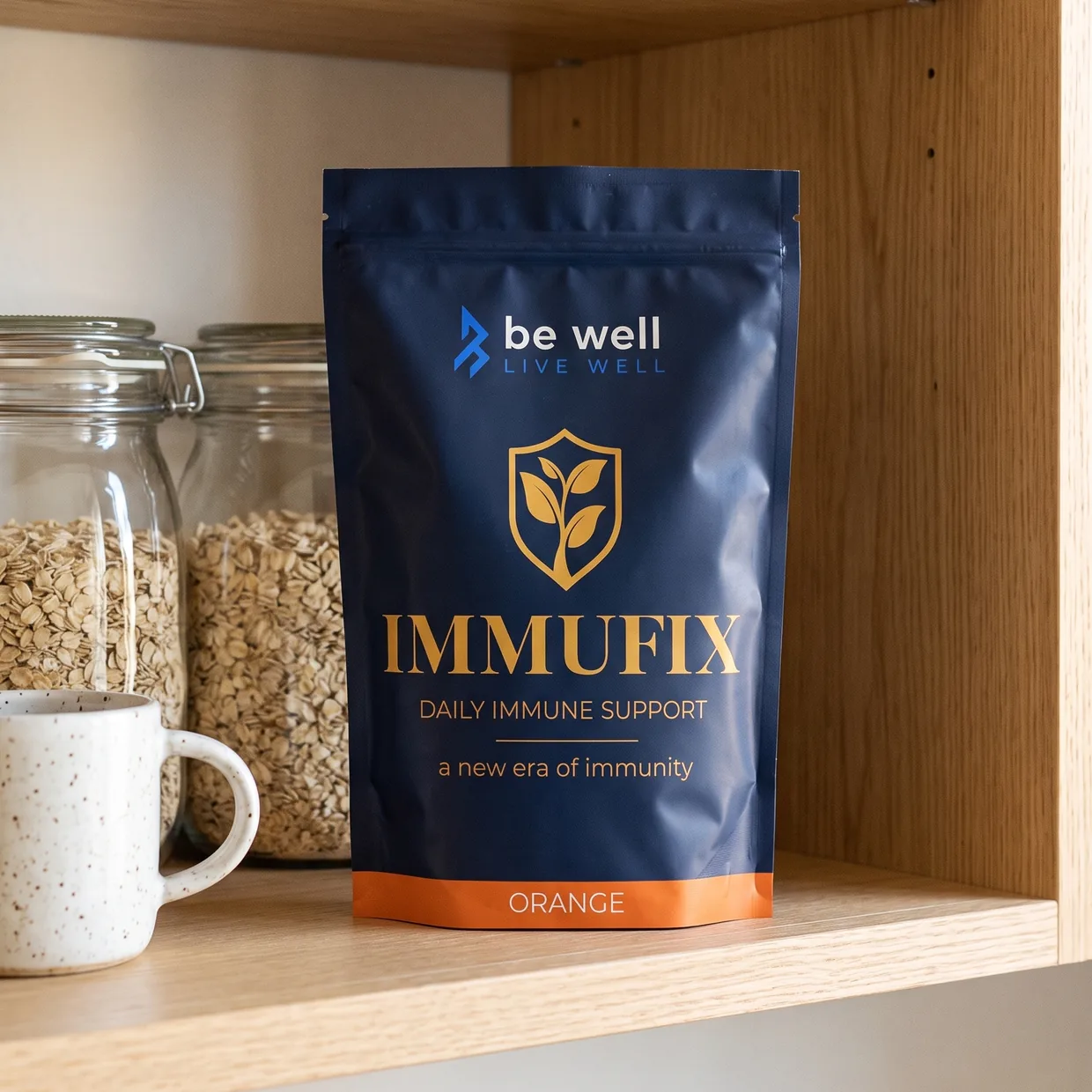
Healthy breakfasts, quick enough for a weekday.
Healthy breakfast ideas from the NHS's own recipes, compared by time, protein, fibre and salt, plus quick breakfasts and how to pick a cereal by its label.
10 October 2026 · 6 min read
How to build a habit that actually sticks.
How to build a habit, from UCL research: pick one action, tie it to a daily cue and repeat it. It took 18 to 254 days in the study, about 66 on average.
10 October 2026 · 6 min read