
Healthy breakfasts, quick enough for a weekday.
The NHS's advice on breakfast fits in one line: high in fibre, low in fat, sugar and salt. Here is what that looks like on a plate, with the NHS's own recipes compared side by side.
Quick answer. The NHS describes a healthy breakfast as one "high in fibre and low in fat, sugar and salt", for example "a wholegrain lower sugar cereal with semi-skimmed milk and fruit sliced over the top". Quick healthy breakfasts from the NHS's own recipes include porridge with yoghurt and berries (15 minutes, 207 kcal), mushrooms on wholemeal toast (15 minutes, 5.1g fibre) and scrambled eggs with tomatoes and mushrooms (15 minutes, 17g protein). Overnight oats take 10 minutes the night before and none in the morning.
What is a healthy breakfast?
The NHS's eighth tip for healthy eating is "Do not skip breakfast". It says "a healthy breakfast high in fibre and low in fat, sugar and salt can form part of a balanced diet, and can help you get the nutrients you need for good health" (NHS: 8 tips for healthy eating).
The Eatwell Guide gives the proportions for the whole day, and breakfast is an easy place to start on them:
- Starchy foods: "just over a third of the food we eat". At breakfast that means oats, wholegrain cereal or wholemeal bread. The guide says to choose "higher fibre or wholegrain varieties".
- Fruit and vegetables: also just over a third, and at least 5 portions a day. Fresh, frozen, tinned and dried all count. Berries on porridge, a banana on cereal, or tomatoes and mushrooms on toast.
- Protein: eggs, beans, fish or lean meat.
- Dairy or alternatives: milk, yoghurt or a fortified soya drink, ideally lower fat and lower sugar.
The guide adds: "You do not need to achieve this balance with every meal, but try to get the balance right over a day or even a week." A breakfast that covers two or three of the groups is a good one.
Healthy breakfast ideas UK: the NHS's recipes compared.
The NHS publishes its own breakfast recipes through Healthier Families, each with timings and nutrition per serving. Here are eight of them side by side.
| NHS recipe | Time | Energy | Protein | Fibre | Salt |
|---|---|---|---|---|---|
| Porridge with yoghurt and berries | 15 min | 207 kcal | 8.4g | 3.7g | 0.1g |
| Easy overnight oats | 10 min, night before | 294 kcal | 10g | 8g | 0.2g |
| Mushrooms on toast | 15 min | 185 kcal | 9.9g | 5.1g | 0.6g |
| Super scrambled eggs | 15 min | 255 kcal | 17g | 3g | 1g |
| Brainy beans on toast | 20 min | 247 kcal | 12g | 10.9g | 1g |
| Healthier full English breakfast | 20 min | 262 kcal | 20g | 6g | 1.7g |
| Toasted oats with yoghurt and fruit | 12 min | 479 kcal | 15.8g | 7g | 0.2g |
| Breakfast fruit salad | 10 min | 117 kcal | 6g | 1g | 0.2g |
Per serving, from each recipe page on nhs.uk. Time is prep plus cooking as listed. Each recipe serves 4.
A few things stand out. Beans on toast has the most fibre, 10.9g, because the recipe adds peppers, mushrooms and tomatoes to reduced-salt and reduced-sugar beans on wholemeal bread. The healthier full English has the most protein, 20g, and also the most salt, 1.7g; the recipe includes bacon and baked beans. The overnight oats use apple juice and dried fruit, so they carry 29g of sugars a serving; the porridge has 7.4g.
What is a quick healthy breakfast?
On a weekday, the quickest healthy breakfasts are the ones with nothing to cook, or that were made the night before.
- Cereal and fruit. A wholegrain lower sugar cereal with semi-skimmed milk. The NHS suggests you "chop a banana over your breakfast cereal" as an easy portion of fruit.
- Overnight oats, made the night before. Oats soaked in the fridge overnight with yoghurt, then topped with fresh or frozen berries.
- Yoghurt bowl. Plain low-fat yoghurt with oats and chopped fruit.
- Wholemeal toast. With a boiled or scrambled egg, or with mashed banana.
- Porridge. Made with milk or water, with fruit on top. The NHS calls plain porridge with fruit "a warming winter breakfast" (NHS: starchy foods).
Frozen fruit is the shortcut that makes most of these work: the Eatwell Guide counts fresh, frozen, tinned and dried fruit alike. For the highest fibre versions of these breakfasts, see our high fibre breakfast ideas, which rank UK cereals by grams of fibre.

How do I choose a healthy breakfast cereal?
Read the label. The NHS notes that many UK cereal products are refined, with low wholegrain content, and "can also be high in added salt and sugar". It lists "sugary breakfast cereals" among the main sources of free sugars. The per 100g column on the nutrition label tells you where a cereal sits:
| Per 100g | Low | High |
|---|---|---|
| Total sugars | 5g or less | More than 22.5g |
| Salt | 0.3g or less | More than 1.5g |
| Fat | 3g or less | More than 17.5g |
| Saturated fat | 1.5g or less | More than 5g |
From NHS: how to read food labels. Different criteria apply to drinks.
Compare cereals on the per 100g column rather than per serving, because, as the NHS puts it, "the manufacturer's idea of a portion may be different from yours". If you like a sweeter cereal, the NHS suggests you choose wholegrain cereals, "or mix some in with your favourite healthy breakfast cereals".
Is fruit juice part of a healthy breakfast?
In small amounts. A 150ml glass of fruit juice, vegetable juice or smoothie counts as 1 of your 5 A Day, but it is one of the portions that only count once in a day. The NHS adds that juices and smoothies should be had at mealtimes, so breakfast is the right place for that glass. The Eatwell Guide says to keep fruit juice and smoothies to "no more than a combined total of 150ml a day", because they contain free sugars that can damage teeth. Water, lower fat milk, tea and coffee all count towards the 6 to 8 glasses of fluid the government recommends a day.
Where Immufix fits.
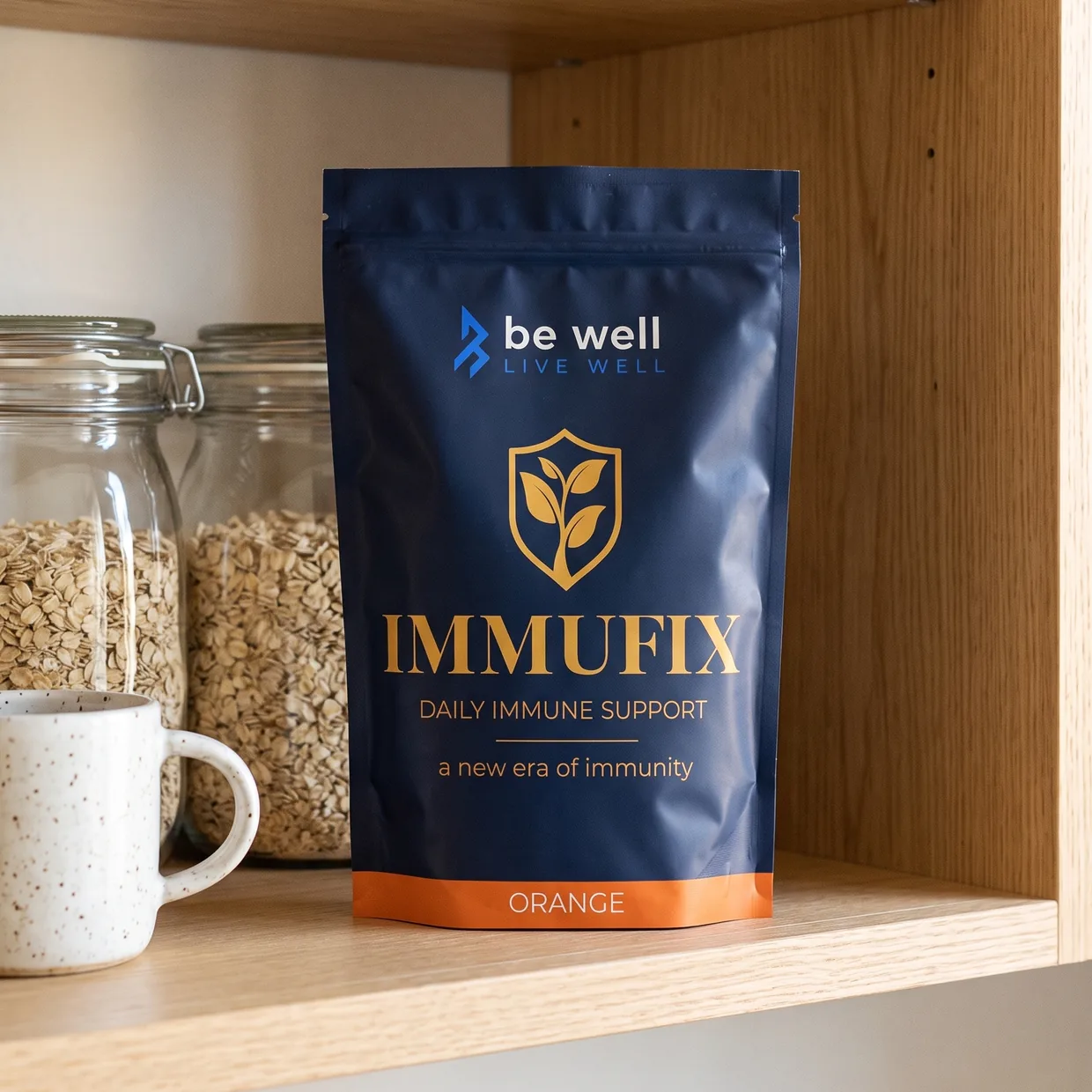
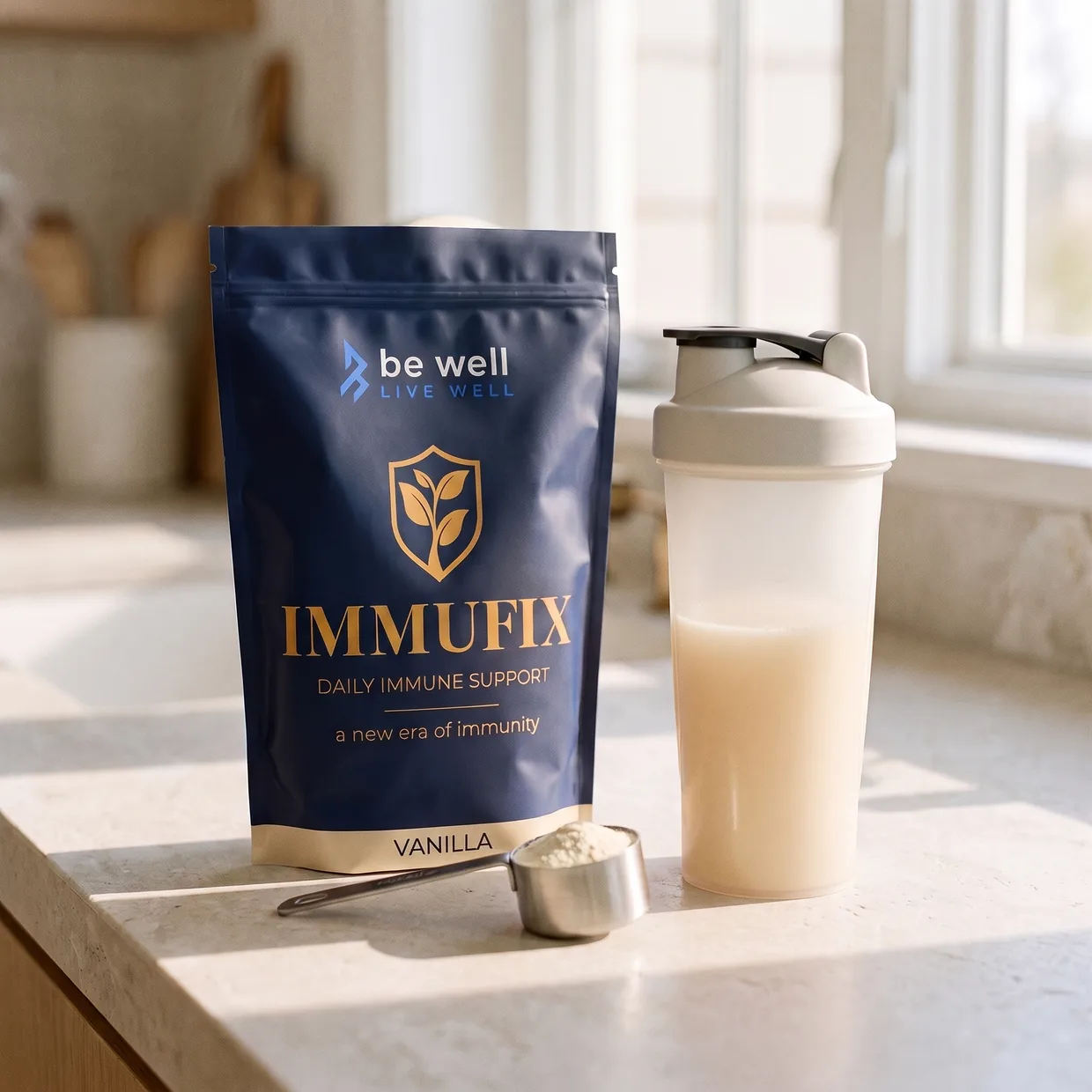
Breakfast is the easiest time to take Immufix, because it is a meal you already have every day. It sits alongside the food, not in place of it: one 25g scoop in around 200ml of water, once a day. Each scoop has 75 kcal and 9.9g of sugars, which is worth knowing if you keep an eye on sugar; our guide to sugar in supplements explains where it comes from. The scoop also provides vitamins and minerals. Vitamin C, riboflavin, niacin, pantothenic acid, vitamin B6 and magnesium contribute to the reduction of tiredness and fatigue, and riboflavin, niacin and pantothenic acid also contribute to normal energy-yielding metabolism. Every amount is on the science page.
The short version.
- The NHS says a healthy breakfast is high in fibre and low in fat, sugar and salt, and advises not to skip it.
- Build it from the Eatwell Guide: a wholegrain starchy food, fruit or veg, and protein or dairy.
- The NHS's own quick recipes take 15 minutes; beans on toast gives 10.9g of fibre, a healthier full English 20g of protein.
- On a cereal label, more than 22.5g of sugars or 1.5g of salt per 100g counts as high.
- Keep juice and smoothies to 150ml a day in total.
Food supplements should not be used as a substitute for a varied, balanced diet and a healthy lifestyle. If you have a medical condition, are pregnant, breastfeeding or taking medication, speak to your GP or pharmacist before taking any food supplement.

Daily Immune Support
Vitamins, minerals and plant nutrients in one daily scoop. The formula Paula Radcliffe has taken every day since 1998.
4.8 out of 5 · 89 reviewsDispatched the same day on weekday orders placed before 2pm.
Free standard UK delivery. Royal Mail 48 tracked, 2 to 3 working days. UK addresses only.
30‑day money-back guarantee. Try your first pouch of IMMUFIX for up to 30 days. If it’s not for you, we’ll refund your first qualifying pouch, less £10 shipping and handling. First purchase only. T&Cs apply.
Checkout completes securely on immufix.com
More from the journal.
The clocks go back. Here's what changes.
The clocks go back at 2am on Sunday 25 October 2026. What really happens to UK mornings and evenings, when the darkest days are, and a routine that copes.
10 October 2026 · 4 min read
How to build a habit that actually sticks.
How to build a habit, from UCL research: pick one action, tie it to a daily cue and repeat it. It took 18 to 254 days in the study, about 66 on average.
10 October 2026 · 6 min read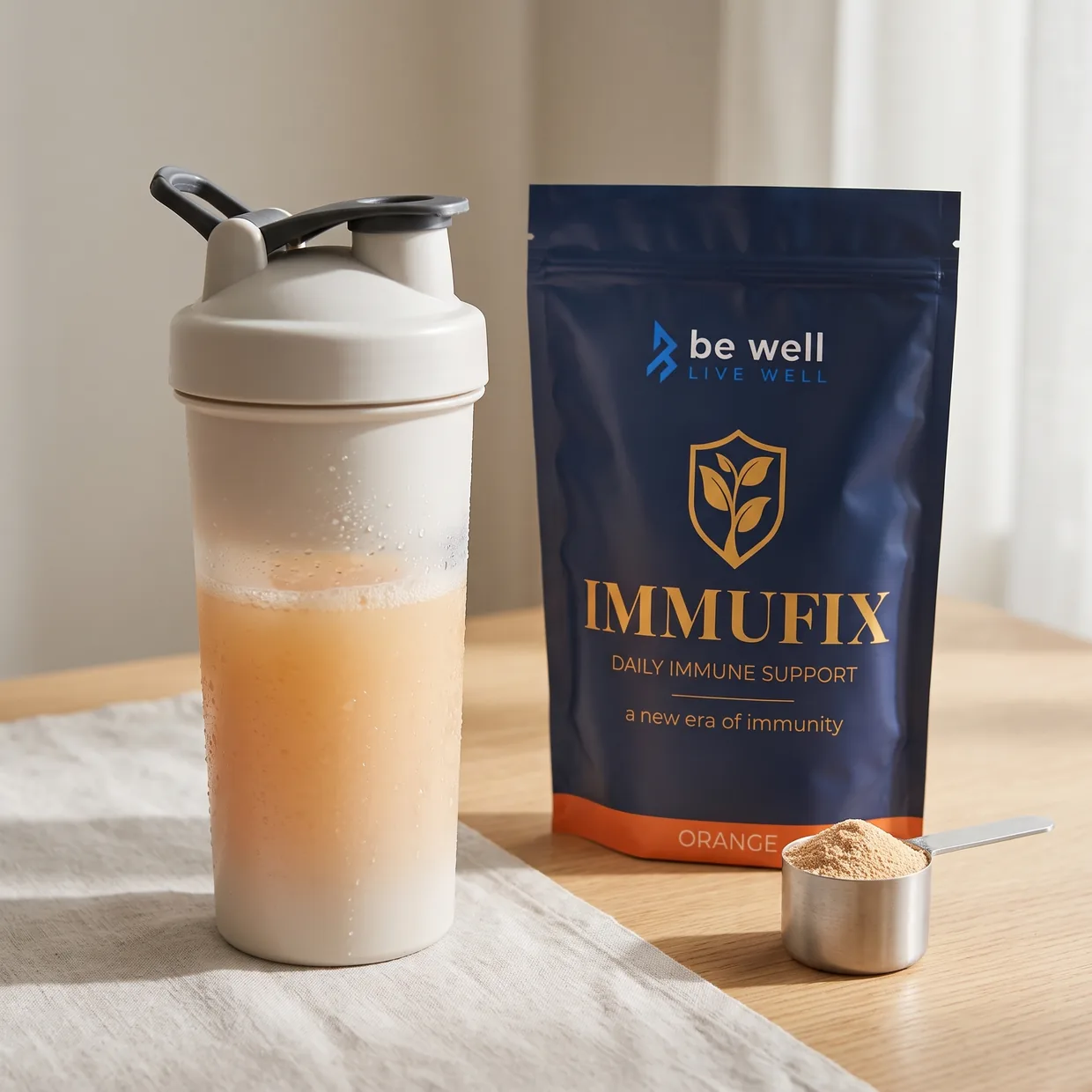
Getting up when it is still dark outside.
Practical ways to wake up on dark UK winter mornings: light, a steady routine, alarms that help and the NHS's sleep advice, with calculated sunrise times.
10 October 2026 · 6 min read