
The highest vitamin C foods, by the numbers.
Blackcurrants, peppers, kale and Brussels sprouts carry more vitamin C per 100g than oranges do. Here are the figures from the UK's own food composition data, and what cooking does to them.
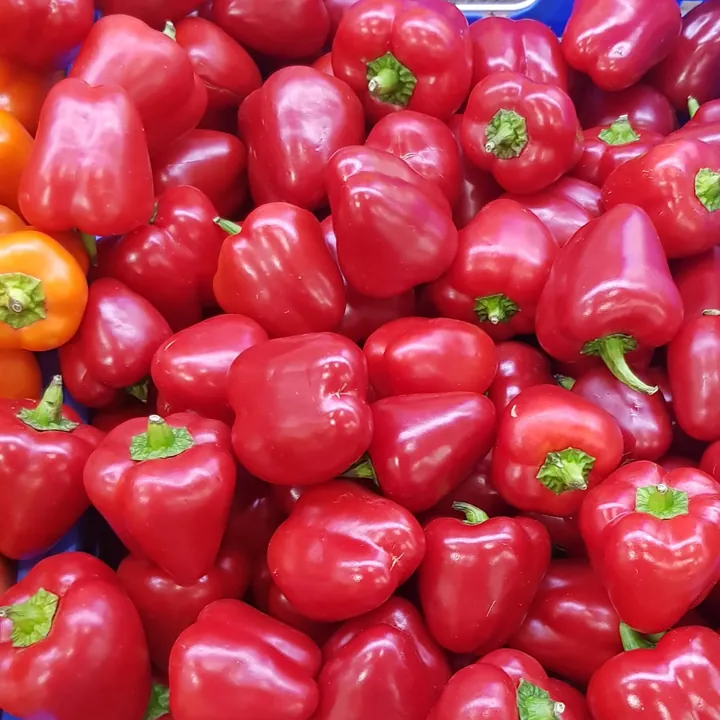
Quick answer. In the UK government's food composition data (CoFID 2021), the richest everyday sources of vitamin C per 100g are blackcurrants (200mg), raw red pepper (126mg), raw yellow pepper (121mg), raw green pepper (120mg), raw Brussels sprouts (115mg) and raw kale (110mg). Kiwi fruit (71mg), strawberries (57mg) and oranges (52mg) follow. The NHS says adults aged 19 to 64 need 40mg a day, so 100g of any food on that list covers it.
Which foods are highest in vitamin C?
The NHS keeps its list short. Its vitamin C page says "Vitamin C is found in a wide variety of fruit and vegetables" and names citrus fruit, peppers, strawberries, blackcurrants, broccoli, Brussels sprouts and potatoes as good sources.
For the numbers, the source is the Composition of Foods Integrated Dataset (CoFID), the UK government's version of McCance and Widdowson's tables. Every figure below is from its 2021 release, per 100g of the food as described.
| Food (as eaten) | Vitamin C per 100g | Share of the NHS 40mg a day |
|---|---|---|
| Blackcurrants, raw | 200mg | 500% |
| Red pepper, raw | 126mg | 315% |
| Yellow pepper, raw | 121mg | 302% |
| Green pepper, raw | 120mg | 300% |
| Brussels sprouts, raw | 115mg | 288% |
| Curly kale, raw | 110mg | 275% |
| Broccoli, raw | 79mg | 198% |
| Kiwi fruit, flesh | 71mg | 178% |
| Watercress, raw | 62mg | 155% |
| Strawberries, raw | 57mg | 142% |
| Cauliflower, raw | 56mg | 140% |
| Oranges, flesh | 52mg | 130% |
| Orange juice, freshly squeezed | 48mg | 120% |
| Green cabbage, raw | 48mg | 120% |
| Grapefruit, flesh | 35mg | 88% |
| Tomatoes, raw | 22mg | 55% |
The right-hand column is calculated: each CoFID figure divided by the 40mg adults need each day. Fresh parsley (190mg) and red chilli (225mg) score higher still per 100g, but most people eat them by the pinch, not the 100g.
Are oranges the best source of vitamin C?
No. Oranges are a good source, at 52mg per 100g of flesh, but they sit in the middle of the table. Per 100g, raw red pepper has more than twice as much, and blackcurrants almost four times as much. Kiwi fruit and strawberries both beat oranges too.
Oranges earn their reputation because they are easy. They are cheap, they keep, and one is a natural portion. If you prefer juice, CoFID lists freshly squeezed orange juice at 48mg per 100g and chilled shop-bought juice at 40mg.
Does cooking destroy vitamin C?
It reduces it, and boiling reduces it most. CoFID measures many vegetables both raw and cooked, and the gap is plain in the figures:
- Broccoli: 79mg raw, 60mg steamed, 44mg boiled.
- Brussels sprouts: 115mg raw, 40mg boiled.
- Curly kale: 110mg raw, 25mg boiled.
- Red pepper: 126mg raw, 89mg boiled.
- Spring greens: 180mg raw, 77mg boiled.
Three simple habits follow from that. Eat some vegetables raw, such as peppers in a salad or sticks with a dip. Steam rather than boil when you can. And cook green vegetables briefly rather than for a long time.
What about potatoes?
Potatoes are on the NHS list even though they are not high in vitamin C per 100g. CoFID gives 9mg per 100g for old potatoes boiled without their skins, and 6mg for a baked potato with its skin. They count because many people eat them often and in large amounts. A plate of potatoes alongside a green vegetable adds up.
How can I get more vitamin C from food?
The NHS says "You should be able to get all the vitamin C you need from your daily diet." Some easy ways to add more:
- Add fruit to breakfast. Strawberries, kiwi or a glass of orange juice with cereal or porridge.
- Keep berries in the freezer. A handful goes on porridge or yoghurt with no shopping trip.
- Eat peppers raw. Sliced red pepper at lunch is one of the richest sources on the table.
- Steam the greens. Broccoli, sprouts and kale keep more when steamed or cooked briefly.
- Eat it every day. The NHS points out that "Vitamin C cannot be stored in the body, so you need it in your diet every day."
For how the 40mg figure compares with the 80mg on supplement labels, and what the NHS says about taking too much, read our guide to how much vitamin C you need a day.
What does vitamin C do?
Vitamin C has several authorised health claims in Great Britain. Each one uses set wording:
- Vitamin C contributes to the normal function of the immune system.
- Vitamin C contributes to the reduction of tiredness and fatigue.
- Vitamin C contributes to normal energy-yielding metabolism.
- Vitamin C contributes to the protection of cells from oxidative stress.
- Vitamin C contributes to normal collagen formation for the normal function of skin.
- Vitamin C increases iron absorption.
The last one is a reason to put vitamin C foods on the same plate as iron foods: peppers with beans, or orange juice with a bowl of cereal.
Where Immufix fits.
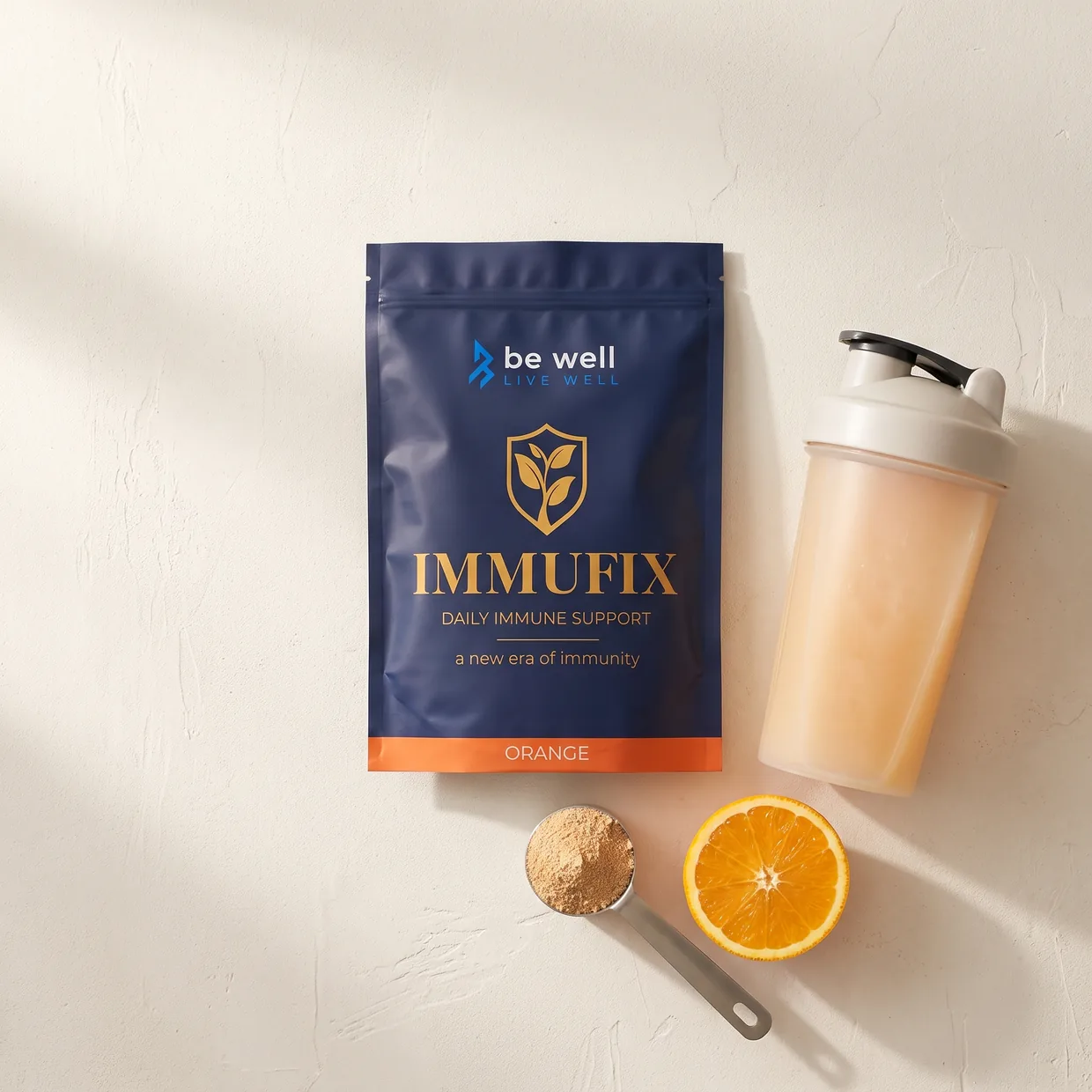
Food comes first, and the table above shows how easily it can cover vitamin C. Immufix is a daily food supplement for people who want a consistent base underneath their diet. One scoop (25g) in around 200ml of water, once a day, provides 100mg of vitamin C, which is 125% of the NRV. Vitamin C contributes to the normal function of the immune system and to the reduction of tiredness and fatigue. The full list of amounts is on the science page.
The short version.
- Per 100g, blackcurrants (200mg), raw peppers (120mg to 126mg), raw Brussels sprouts (115mg) and raw kale (110mg) lead the UK data.
- Oranges (52mg) are a good source but not the best. Kiwi and strawberries beat them.
- Boiling cuts vitamin C sharply. Eat some vegetables raw and steam the rest.
- Adults need 40mg a day, according to the NHS, and the body cannot store it.
- Most people can get enough from a varied diet.
Food supplements should not be used as a substitute for a varied, balanced diet and a healthy lifestyle. If you have a medical condition, are pregnant, breastfeeding or taking medication, speak to your GP or pharmacist before taking any food supplement.

Daily Immune Support
Vitamins, minerals and plant nutrients in one daily scoop. The formula Paula Radcliffe has taken every day since 1998.
4.8 out of 5 · 89 reviewsDispatched the same day on weekday orders placed before 2pm.
Free standard UK delivery. Royal Mail 48 tracked, 2 to 3 working days. UK addresses only.
30‑day money-back guarantee. Try your first pouch of IMMUFIX for up to 30 days. If it’s not for you, we’ll refund your first qualifying pouch, less £10 shipping and handling. First purchase only. T&Cs apply.
Checkout completes securely on immufix.com
More from the journal.
What antioxidants are, in plain English.
What antioxidants are, what oxidative stress means in plain English, which nutrients hold the authorised claim, and the UK foods that provide them.
10 October 2026 · 7 min read
Biotin, what it does and where it is.
Biotin (vitamin B7) foods per 100g from UK government data, what the NHS says about biotin, its authorised claims and the NHS 0.9mg supplement guide.
10 October 2026 · 5 min read
What chromium is, and where you find it.
What chromium is, which foods contain it, how much the NHS says adults need, and the one authorised health claim chromium holds in Great Britain.
10 October 2026 · 6 min read