
Where UK iodine comes from, milk and fish first.
Adults need 140 micrograms of iodine a day, and most people in the UK get much of it from a glass of milk and a piece of white fish. Here are the figures from the UK's own food composition data.
Quick answer. The NHS lists cows' milk and dairy products, eggs, sea fish and shellfish as good sources of iodine, and says adults need 140 micrograms (µg) a day. White fish is the richest everyday food: in the UK government's food composition data (CoFID 2021), poached haddock has 409µg per 100g and baked cod 161µg. Yes, there is iodine in UK milk: around 30µg per 100g, and the British Dietetic Association says milk and dairy are the main iodine sources for most people in the UK.
Which foods are high in iodine in the UK?
The NHS keeps its iodine page short. Good food sources are "cows' milk and dairy products", "eggs", "sea fish" and "shellfish". It adds that iodine is also found in plant foods such as cereals and grains, but that the levels depend on how much iodine is in the soil where they grew.
For numbers, the source is the Composition of Foods Integrated Dataset (CoFID), the UK government's version of McCance and Widdowson's tables. Every figure below is from its 2021 release, per 100g of the food as described.
| Food (as eaten) | Iodine per 100g | Share of the NHS 140µg a day |
|---|---|---|
| Haddock, poached | 409µg | 292% |
| Mussels, bought cooked | 247µg | 176% |
| Cod, baked | 161µg | 115% |
| Coley, poached | 154µg | 110% |
| Eggs, boiled | 52µg | 37% |
| Plaice, baked | 40µg | 29% |
| Yoghurt, low fat, plain | 34µg | 24% |
| Whole milk, pasteurised | 31µg | 22% |
| Semi-skimmed milk, pasteurised | 30µg | 21% |
| Cheddar cheese | 30µg | 21% |
| Salmon, farmed, baked | 14µg | 10% |
| Tuna, canned in brine | 12µg | 9% |
| King prawns, bought cooked | 12µg | 9% |
The right-hand column is calculated: each CoFID figure divided by the 140µg adults need each day. Note how far apart the fish are. White fish such as haddock, cod and coley sit at the top, while salmon and tinned tuna carry far less. The British Dietetic Association (BDA) says the same: "In general, white fish contains more iodine than oily fish."
Is there iodine in milk in the UK?
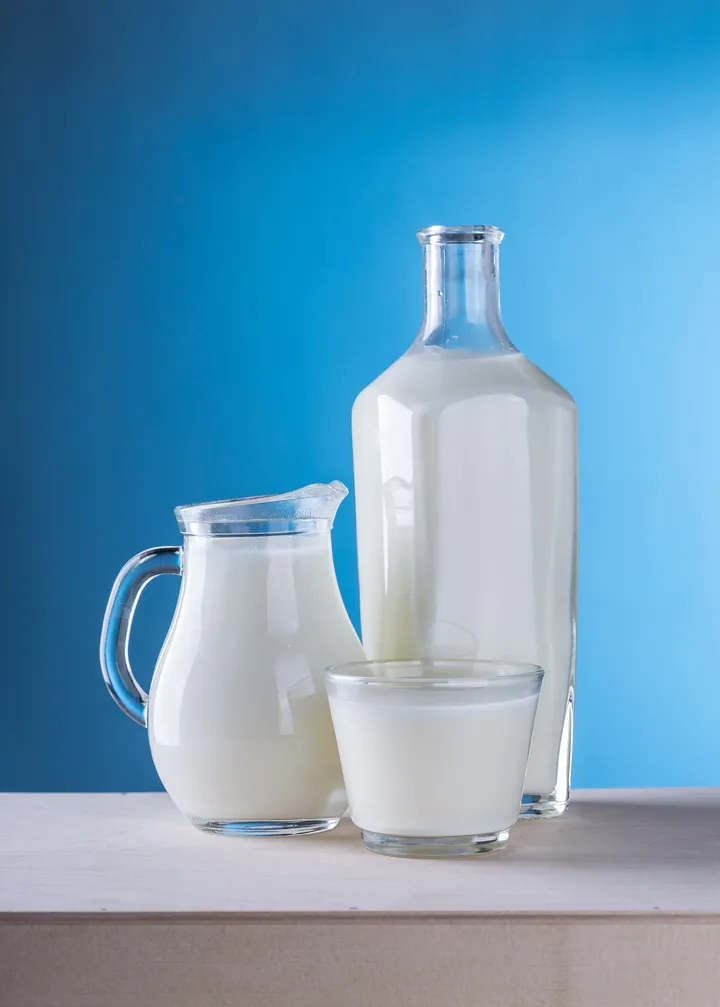
Yes, and for most people it is the biggest single source. The BDA's food fact sheet puts it plainly: "Milk and dairy products are the main sources of iodine for most people in the UK." It gives 50 to 100µg for a 200ml glass of cows' milk, and the same for a 150g pot of yoghurt.
A few details are worth knowing:
- Whole, semi-skimmed and skimmed are much the same. CoFID lists 31µg, 30µg and 30µg per 100g. So choosing a lower-fat milk makes almost no difference to iodine.
- The figure changes through the year. CoFID lists semi-skimmed milk at 41µg per 100g for winter and spring, and 20µg for summer and autumn. The BDA notes the same pattern.
- Organic and UHT milk carry less. A UK retail study by Stevenson and colleagues (2018) found organic milk was 44% lower in iodine than conventional milk, and UHT milk 27% lower.
Do plant milks contain iodine?
Only if the maker adds it. A study of 47 milk-alternative drinks on sale in the UK, by Bath and colleagues (2017), found the unfortified ones had a median of 7.3µg of iodine per kg, which was "just 1·7 % of our value for winter conventional cows' milk". More brands now add iodine than when that study was done, so the NHS advice is simple: "Check the label to see if it includes iodine."
The NHS also says that if you follow a strict vegan diet and eat no fish, eggs or dairy, you "may want to consider foods fortified with iodine or consider taking an iodine supplement", and to get advice from a healthcare professional first.
How much iodine do I need a day?
The NHS says "Adults need 140 micrograms (μg) of iodine a day", which matches the reference nutrient intake in the government's dietary recommendations for men and women aged 19 and over. Supplement labels use a slightly different figure, the nutrient reference value (NRV) of 150µg, set in Annex XIII of Regulation 1169/2011. Our guide to what NRV means explains the difference.
Using the BDA's portion figures, a 200ml glass of milk and a 150g pot of yoghurt give 100 to 200µg between them, and an egg adds around 25µg. A single 120g portion of haddock, which the BDA puts at 390µg, covers several days' worth.
Can you have too much iodine?
Yes. The NHS says taking high doses for long periods "could change the way your thyroid gland works", and that "Taking 0.5mg or less a day of iodine supplements is unlikely to cause any harm." The BDA gives a rough guide that adults should not go above 600µg a day in total.
Seaweed is the food to watch. The BDA says brown seaweeds such as kelp have "a very high iodine content", that it is not recommended to eat them more than once a week, and that kelp supplements should not be used as an iodine source. Iodised salt is not widely sold in the UK, and with advice to cut down on salt, the BDA says it "should not be relied on" for iodine. If you have a thyroid condition, speak to your GP before changing how much iodine you take.
What does iodine do?
The NHS explains that "Iodine helps make thyroid hormones". In Great Britain, iodine holds these authorised health claims, each with set wording:
- Iodine contributes to normal cognitive function.
- Iodine contributes to normal energy-yielding metabolism.
- Iodine contributes to the normal production of thyroid hormones and normal thyroid function.
For how the 15% NRV rule decides which nutrients can carry claims like these, see what an authorised health claim is.
Where Immufix fits.
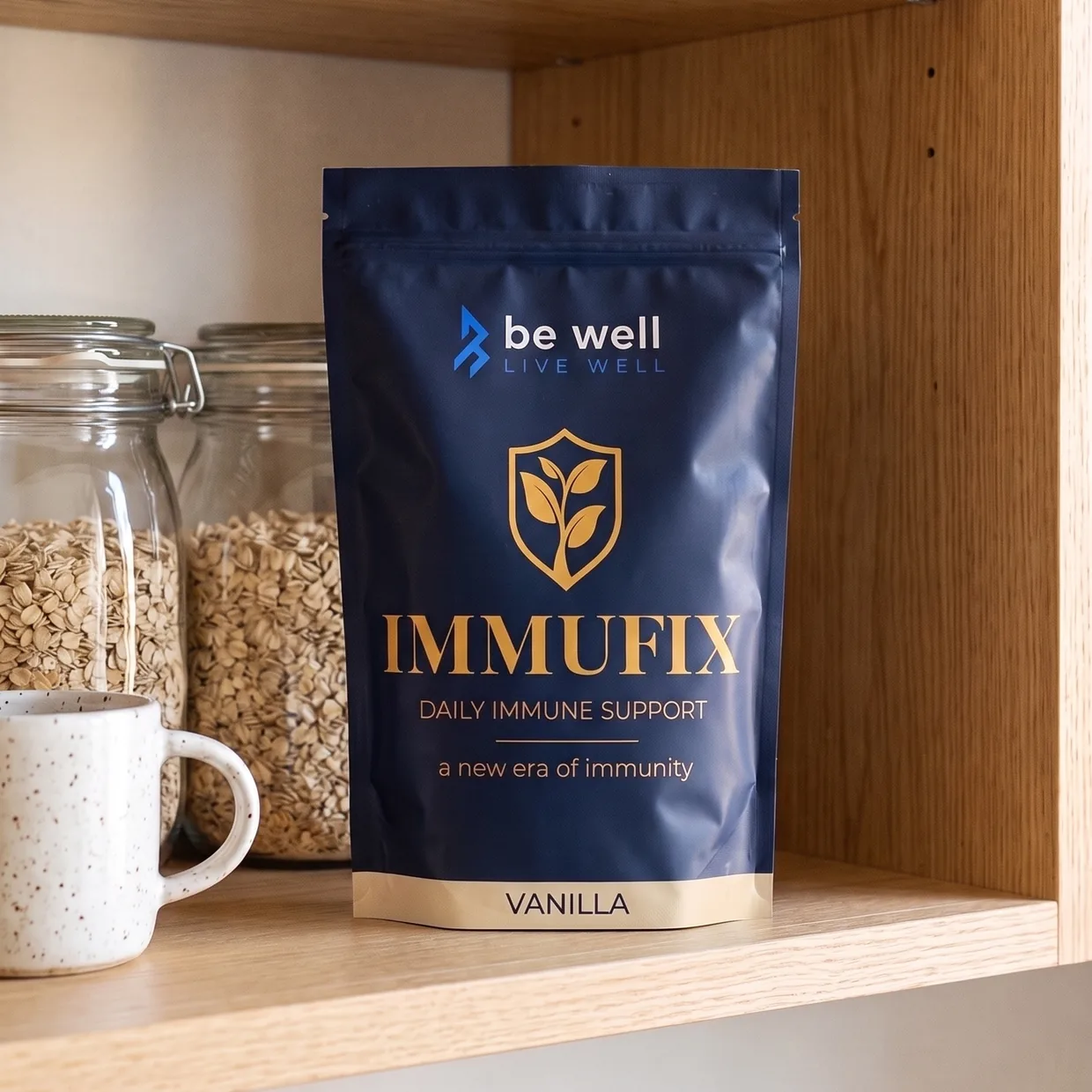
Food comes first, and for most people in the UK milk, dairy, eggs and fish cover iodine. Immufix is a daily food supplement for people who want a consistent base underneath their diet. One scoop (25g) in around 200ml of water, once a day, provides 37.5µg of iodine, which is 25% of the NRV. Iodine contributes to normal cognitive function and to the normal production of thyroid hormones and normal thyroid function. The Orange flavour is vegan. The full list of amounts is on the science page.
The short version.
- Adults need 140µg of iodine a day, according to the NHS. The label NRV is 150µg.
- White fish leads the UK data: poached haddock has 409µg per 100g, baked cod 161µg.
- UK cows' milk has around 30µg per 100g and is the main source for most people. Organic and UHT milk carry less.
- Most plant milks have very little unless iodine is added, so check the label.
- Avoid kelp and kelp supplements, and keep supplements to 0.5mg a day or less.
Food supplements should not be used as a substitute for a varied, balanced diet and a healthy lifestyle. If you have a medical condition, are pregnant, breastfeeding or taking medication, speak to your GP or pharmacist before taking any food supplement.

Daily Immune Support
Vitamins, minerals and plant nutrients in one daily scoop. The formula Paula Radcliffe has taken every day since 1998.
4.8 out of 5 · 89 reviewsDispatched the same day on weekday orders placed before 2pm.
Free standard UK delivery. Royal Mail 48 tracked, 2 to 3 working days. UK addresses only.
30‑day money-back guarantee. Try your first pouch of IMMUFIX for up to 30 days. If it’s not for you, we’ll refund your first qualifying pouch, less £10 shipping and handling. First purchase only. T&Cs apply.
Checkout completes securely on immufix.com
More from the journal.
What antioxidants are, in plain English.
What antioxidants are, what oxidative stress means in plain English, which nutrients hold the authorised claim, and the UK foods that provide them.
10 October 2026 · 7 min read
Biotin, what it does and where it is.
Biotin (vitamin B7) foods per 100g from UK government data, what the NHS says about biotin, its authorised claims and the NHS 0.9mg supplement guide.
10 October 2026 · 5 min read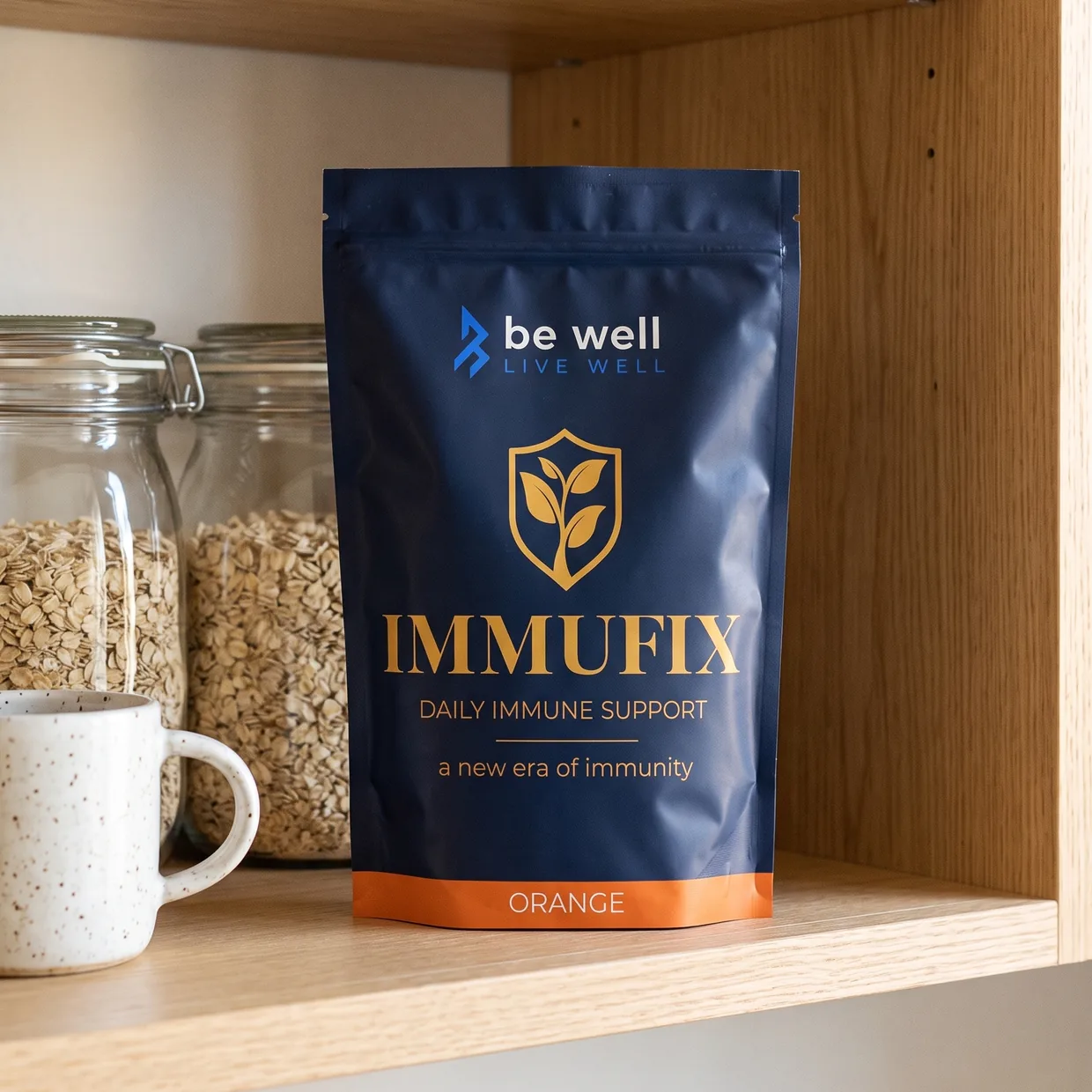
What chromium is, and where you find it.
What chromium is, which foods contain it, how much the NHS says adults need, and the one authorised health claim chromium holds in Great Britain.
10 October 2026 · 6 min read