
Winter running kit, in the right order.
You do not need a wardrobe of specialist kit to run through a UK winter. This checklist puts the essentials in priority order, shows what you probably already own, and says what to buy first when the budget is tight.
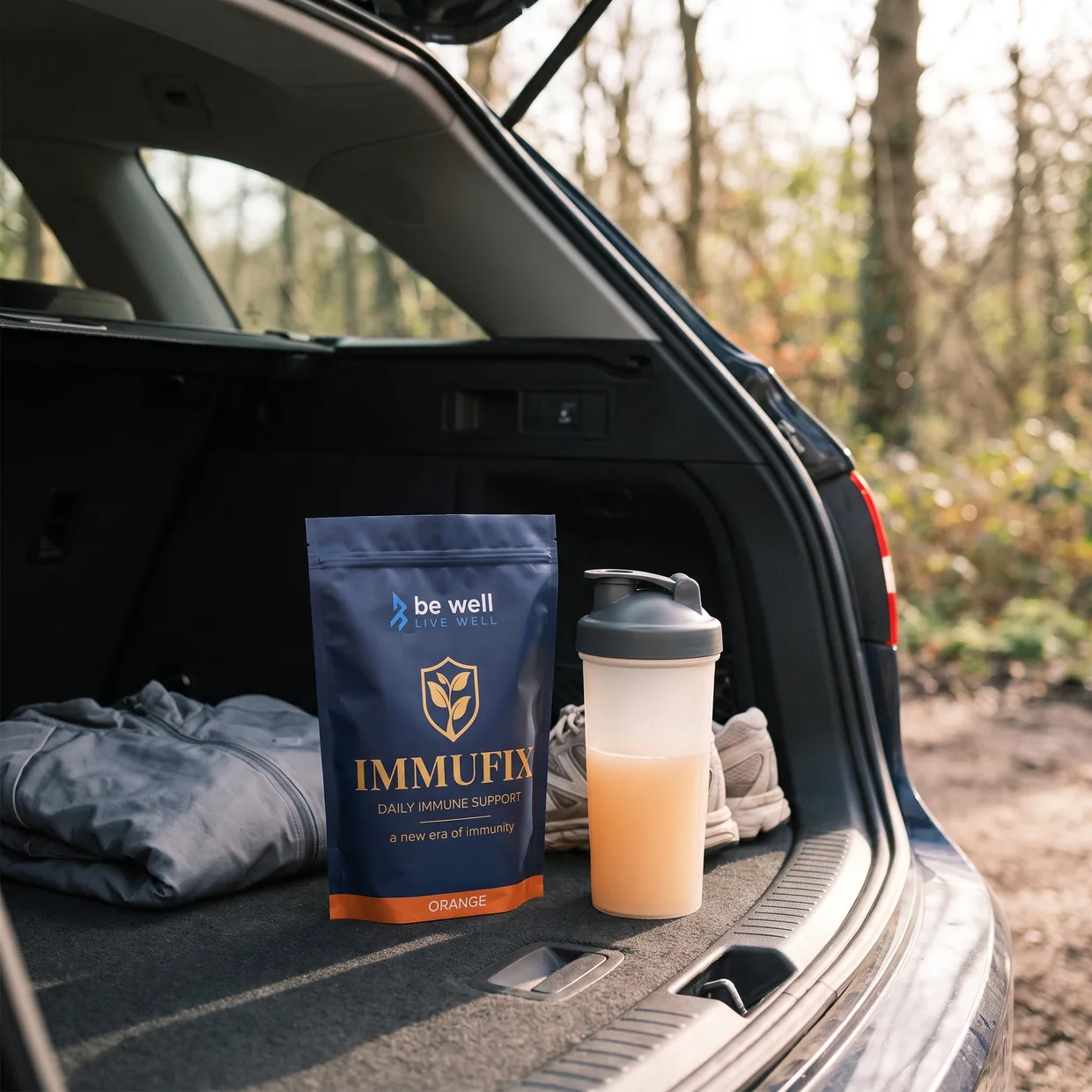
Quick answer. The winter running essentials, in priority order, are: running shoes that fit and grip; something bright or reflective, plus a light for dark routes; a long-sleeve sweat-wicking base layer; gloves and a hat or headband; a light windproof or waterproof jacket; and running tights. Asked whether new runners need "lots of expensive running gear", England Athletics answers "No", and suggests "a good pair of trainers and wearing clothes you are comfortable running in." Start with what you own and buy in the order below.
What are the winter running essentials in the UK?
Six items cover almost every UK winter run. The order below is about what makes the biggest difference first: getting around safely, being seen, then staying warm. The last column shows where most of the money goes, without prices, because what you already own changes the sums.
| Priority | Item | Why it matters in winter | Budget |
|---|---|---|---|
| 1 | Running shoes with good grip | Wet leaves, mud and frost punish worn soles | The main spend |
| 2 | Bright or reflective layer, and a light | Many winter runs start or finish in the dark | Low cost |
| 3 | Long-sleeve wicking base layer | Stays warm when damp, unlike cotton | Low cost, may already own |
| 4 | Gloves and a hat or headband | Hands and ears feel the cold first | Low cost, often already own |
| 5 | Light windproof or waterproof jacket | Wind and rain chill more than the thermometer | Middle spend |
| 6 | Running tights or leggings | Warmer than bare legs below about 5°C | Low to middle, may already own |
After those six come the extras: sweat-wicking socks, a neck tube, a head torch for unlit paths, a second set of kit for back-to-back wet days, and trail shoes if you run on grass or mud. The order is our practical guide, built on the safety and layering advice below.
What winter running gear do I actually need?
Less than the shops suggest. England Athletics, answering new runners on its RunTogether pages, says most people run in shorts, tracksuit bottoms or leggings and a T-shirt, with layers added for the weather. For winter it adds one specific point: "If you are running in the dark, high visibility and bright colours are recommended."
The NHS gives similar advice to beginners on its Couch to 5K page: "Wear whatever feels comfortable to move in, along with running shoes that support your feet, and a supportive bra if you need one." It also notes that if your kit has no pocket for your phone, "a running armband can help."
What winter changes is the fabric next to your skin and how easily you can add or remove a layer. A synthetic or wool top from another sport often does the job of a running base layer. A cotton T-shirt does not, because it soaks up sweat and rain and stays wet.
Which running shoes do I need for winter?
Shoes are the one item worth spending on first. England Athletics recommends having your gait looked at by an expert who can advise on the right type of shoe, and says: "If you're going to be running three times a week or more, gait analysis is important."
- Roads and pavements: a road shoe with tread that is not worn smooth. Check the soles before the wet months.
- Grass, mud and woodland: a trail shoe with deeper lugs grips far better on wet ground. It is a second pair, not a first one, for most runners.
- Room for socks: the American College of Sports Medicine's cold-weather guidance warns that "Restrictive footwear can decrease blood flow and increase cold injury risk." Do not squeeze thick socks into snug shoes. Thin wicking socks are usually warmer than thick cotton ones.
How do I stay visible running in winter?
Be bright in daylight and reflective in the dark. Rule 3 of the Highway Code tells pedestrians to "Wear or carry something light-coloured, bright or fluorescent in poor daylight conditions." For the dark, it advises reflective materials, which "can be seen by drivers using headlights up to three times as far away as non-reflective materials."
- Daylight and dusk: a bright or fluorescent top or bib.
- After dark: reflective strips on moving parts, such as ankles, wrists and shoes, plus a front light. A clip-on light is enough under street lights.
- Unlit paths: a head torch, so you can see the ground as well as be seen.
Our guide to running in the dark covers lights, routes and running alone in more detail.

Which layers do I need for winter running?
Two layers cover most UK winter runs: a wicking base layer and a light shell. The ACSM describes three layers for cold-weather exercise: an inner layer to absorb moisture, a middle layer that "traps body heat to create a warm air barrier", and an outer layer that is "Waterproof, windproof, breathable." Runners make so much heat that the middle layer is mainly for frosty mornings, long slow runs and exposed routes.
- Gloves and hat: the cheapest warmth you can buy, and the easiest to take off and carry. The ACSM suggests "thinner gloves under mittens for dexterity" in real cold.
- Neck tube: pulls up over the mouth and nose in an icy wind, and down again as you warm up.
- Jacket: a thin windproof is enough for most dry days. A light waterproof earns its place in steady rain. Zips that open let heat out on the climbs.
What to wear at each temperature, from above 10°C to below freezing, is in our guide to what to wear running in the cold.
How do I build winter running kit on a budget?
Spend on safety and grip first, and borrow the rest from your wardrobe. A sensible order for most new winter runners:
- Step 1, free: check what you own. Leggings, a sports top in a synthetic fabric, a woolly hat, any thin gloves and a bright jacket all work.
- Step 2, the first spend: running shoes that fit, and a cheap reflective bib or clip-on light.
- Step 3, once you run every week: a long-sleeve wicking base layer and running tights.
- Step 4, when the weather turns: a light windproof or waterproof jacket.
- Step 5, later: a head torch, trail shoes, and a second base layer so one can dry while you wear the other.
One base layer you wear three times a week is better value than three you rarely use. For the rest of the season, from warming up indoors to running on frost, see our guide to winter running in the UK.
Where Immufix fits.
Kit gets you out of the door on dark, wet mornings. A steady routine at home keeps you going out through the season. Immufix is one 25g scoop in around 200ml of water, once a day, with breakfast before or after your run. Vitamin D contributes to normal muscle function and the maintenance of normal bones. Magnesium contributes to normal muscle function, and riboflavin, niacin and vitamin B6 contribute to the reduction of tiredness and fatigue. Every amount is on the science page.
The short version.
- Priority order: shoes that grip, something bright or reflective, a wicking base layer, gloves and hat, a light jacket, tights.
- You do not need expensive gear. Start with what you own and avoid cotton next to the skin.
- Spend on shoes first, and get gait advice if you run three or more times a week.
- Be bright in daylight and reflective after dark; reflective kit can be seen up to three times as far away in headlights.
- Add the extras, such as a head torch, trail shoes and a second base layer, as the winter goes on.
Food supplements should not be used as a substitute for a varied, balanced diet and a healthy lifestyle. If you have a medical condition, are pregnant, breastfeeding or taking medication, speak to your GP or pharmacist before taking any food supplement.

Daily Immune Support
Vitamins, minerals and plant nutrients in one daily scoop. The formula Paula Radcliffe has taken every day since 1998.
4.8 out of 5 · 89 reviewsDispatched the same day on weekday orders placed before 2pm.
Free standard UK delivery. Royal Mail 48 tracked, 2 to 3 working days. UK addresses only.
30‑day money-back guarantee. Try your first pouch of IMMUFIX for up to 30 days. If it’s not for you, we’ll refund your first qualifying pouch, less £10 shipping and handling. First purchase only. T&Cs apply.
Checkout completes securely on immufix.com
More from the journal.

Carb loading for a marathon, in grams.
How many carbs to eat before a marathon: 10 to 12g per kg a day for 36 to 48 hours, 1 to 4g per kg on race morning, with a calculated UK day of meals.
10 October 2026 · 6 min read
Couch to 5K, started in winter.
Couch to 5K in winter: how the free NHS 9-week plan works, three runs a week, and how to fit it around dark mornings, short days, cold and rain.
10 October 2026 · 7 min read
A half marathon nutrition plan, from the week before.
A half marathon nutrition plan for the week before, the night before, race morning, during the run and after, with sourced carbohydrate amounts.
10 October 2026 · 6 min read