
A half marathon nutrition plan, from the week before.
A half marathon is long enough for food to matter and short enough that most of it happens before the start. Here is what to eat in the week before, on race morning, on the course and after.
Quick answer. In the week before a half marathon, keep eating normally as training eases, then raise carbohydrate for the last one to two days. A 2019 review of endurance nutrition gives at least 6g of carbohydrate per kg of body weight in the 24 hours before a race of under 90 minutes, and 10 to 12g per kg a day over 36 to 48 hours for longer races. On race morning it gives 1 to 4g per kg, 1 to 4 hours before the start. During a race of 1 to 2.5 hours it gives 30 to 60g an hour.
What is a good half marathon nutrition plan?
One that is mostly decided before you reach the start line. Carbohydrate is the fuel that matters most. The British Dietetic Association calls it "the main fuel source for exercising muscles" and notes that the body's stores of it are limited. Unless you are an elite runner, a half marathon lasts well over an hour, which is long enough to draw heavily on those stores.
The plan has five parts: the week before, the night before, race morning, the run itself and the hours after. Each step below comes with an amount from a published source.
What should I eat the week before a half marathon?
Normal meals, with carbohydrate at each one. Your training should be easing off this week, so you do not need to eat more overall. What changes is the last day or two, and it depends on how long you expect to run.
- Finishing in under 90 minutes: the 2019 review describes "topping-off" your stores with a carbohydrate-rich diet of at least 6g per kg in the 24 hours before the race. For a 70kg runner that is at least 420g (calculated).
- Taking longer than 90 minutes: the same review describes full carb loading over the 36 to 48 hours before, at 10 to 12g per kg a day. It says this may improve performance by 2 to 3% in events of that length. Our carb loading guide shows what a full day looks like.
The review also suggests that fat intake can be limited during carb loading. A review of stomach complaints in athletes states: "Fiber, fat, protein, and fructose have all been associated with a greater risk of developing gastrointestinal symptoms." So in the final day, white bread, rice and pasta are easier choices than a large bean chilli or a cooked breakfast.
What should I eat the night before a half marathon?
A familiar, carbohydrate-based meal that is not too heavy, eaten early enough to sleep well. Pasta is the classic for a reason. The BDA counts 150 to 160g of cooked pasta, rice or noodles as about 50g of carbohydrate.
An example: 300g of cooked white pasta with 150g of chopped tomatoes and 100g of grilled chicken breast gives about 117g of carbohydrate (calculated from CoFID 2021, the UK government's food composition data). Skip anything new, very spicy or very rich. Race night is not the time to try a new restaurant.
What should I eat on the morning of a half marathon?
A carbohydrate-rich breakfast that you have already tried before a long run. The BDA's general advice is a "low fat, high carbohydrate snack or a light meal two to three hours before exercise". The 2019 review gives 1 to 4g per kg in the 1 to 4 hours before the start, because liver stores fall overnight.
An example for a 70kg runner, eaten about three hours before the start:
- Two slices of white toast (70g) with 20g of jam
- One banana (120g of flesh)
- A 250ml glass of orange juice
That comes to about 99g of carbohydrate, or 1.4g per kg (calculated from CoFID 2021). If you prefer porridge, our guide to what to eat before a morning run covers timing and portions. Drink a glass or two of water too. The BDA's fluid fact sheet says urine "should be a pale straw colour" when you are well hydrated.
Do I need gels during a half marathon?
For most runners, some carbohydrate on the way round makes sense. The 2019 review gives 30 to 60g an hour for events lasting 1 to 2.5 hours, and suggests taking it little and often. A 2014 review by Asker Jeukendrup adds that for efforts of about an hour, "a mouth rinse or small amounts of carbohydrate can result in a performance benefit", and that "Carbohydrate intake advice is independent of body weight as well as training status."
In practice, a runner finishing in two hours might take a gel at about 30, 60 and 90 minutes. The BDA counts two gels as about 50g, so three gives about 75g, or roughly 37g an hour (calculated). Take them with water at the drinks stations. Practise this on long training runs first. For drinking, the BDA's rule is to "just stay ahead of thirst".
What should I eat after a half marathon?
Carbohydrate, protein and fluid, starting soon after you finish. The BDA advises that after exercise you "start replenishing glycogen stores immediately with a high carbohydrate snack or meal". The 2019 review suggests about 0.3g of protein per kg within two hours of finishing, which is around 20g for a 70kg runner (calculated). A bagel with eggs, a large milky drink with a banana, or a proper meal later all count. If you have a medical condition, check any change to your race-day eating with your GP or a registered dietitian.
Where Immufix fits.
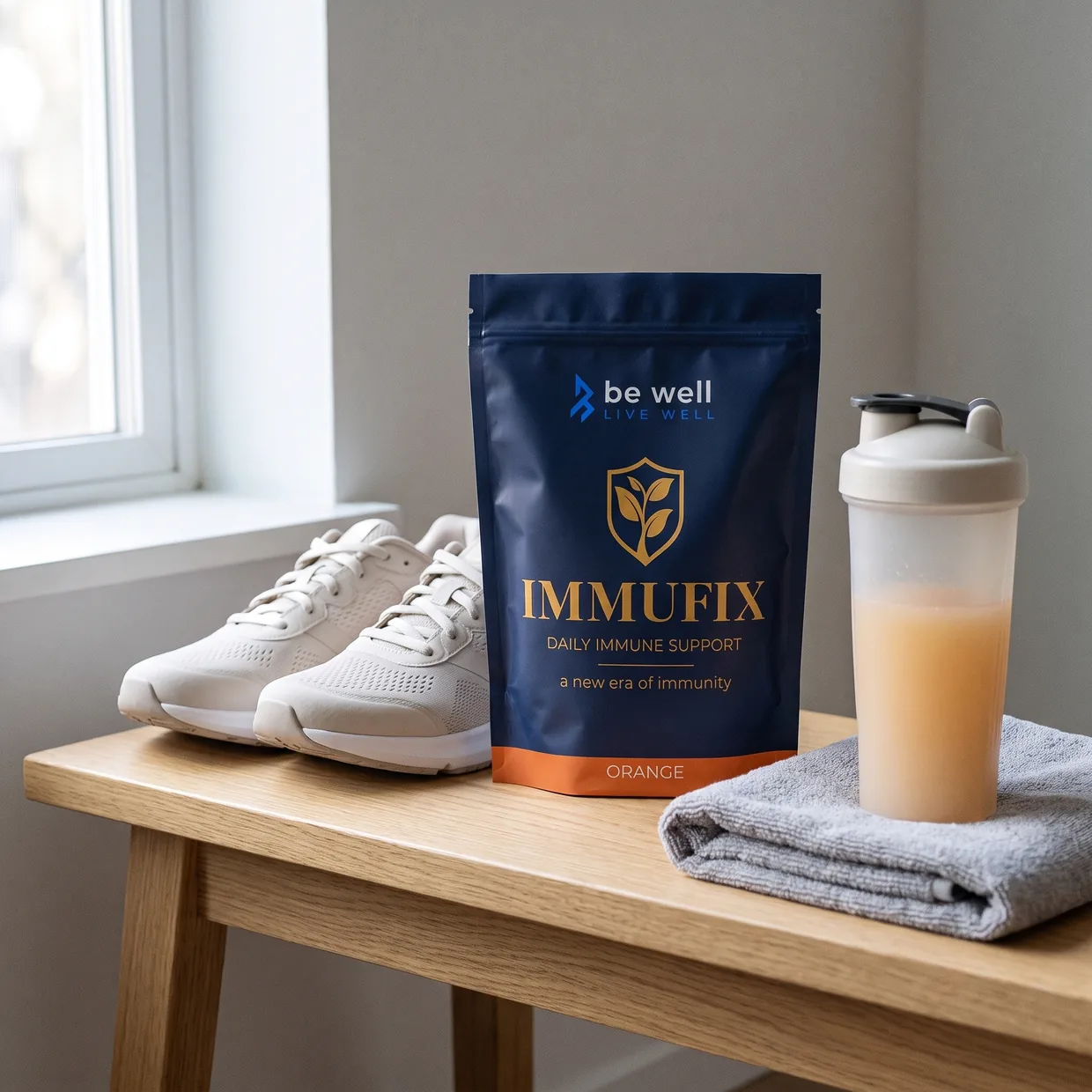
Immufix is not race fuel. One 25g scoop in around 200ml of water has 13.2g of carbohydrate and 6.9g of prebiotic fibre (FOS), so take it at your usual time in the days before, not as something new on race morning. It is one scoop a day, as part of a varied diet. Riboflavin, niacin, pantothenic acid, vitamin B6 and magnesium contribute to normal energy-yielding metabolism and to the reduction of tiredness and fatigue. Magnesium also contributes to normal muscle function. Every amount is on the science page.
The short version.
- Week before: eat normally as training eases. Raise carbohydrate in the last one to two days, to at least 6g per kg, or 10 to 12g per kg if you will run longer than 90 minutes.
- Night before: a familiar, lower-fat, lower-fibre carbohydrate meal such as pasta.
- Race morning: 1 to 4g of carbohydrate per kg, 1 to 4 hours before the start, plus water.
- During: 30 to 60g of carbohydrate an hour, practised in training first.
- After: carbohydrate soon, about 0.3g of protein per kg, and fluid.
Food supplements should not be used as a substitute for a varied, balanced diet and a healthy lifestyle. If you have a medical condition, are pregnant, breastfeeding or taking medication, speak to your GP or pharmacist before taking any food supplement.

Daily Immune Support
Vitamins, minerals and plant nutrients in one daily scoop. The formula Paula Radcliffe has taken every day since 1998.
4.8 out of 5 · 89 reviewsDispatched the same day on weekday orders placed before 2pm.
Free standard UK delivery. Royal Mail 48 tracked, 2 to 3 working days. UK addresses only.
30‑day money-back guarantee. Try your first pouch of IMMUFIX for up to 30 days. If it’s not for you, we’ll refund your first qualifying pouch, less £10 shipping and handling. First purchase only. T&Cs apply.
Checkout completes securely on immufix.com
More from the journal.
Carb loading for a marathon, in grams.
How many carbs to eat before a marathon: 10 to 12g per kg a day for 36 to 48 hours, 1 to 4g per kg on race morning, with a calculated UK day of meals.
10 October 2026 · 6 min read
Couch to 5K, started in winter.
Couch to 5K in winter: how the free NHS 9-week plan works, three runs a week, and how to fit it around dark mornings, short days, cold and rain.
10 October 2026 · 7 min read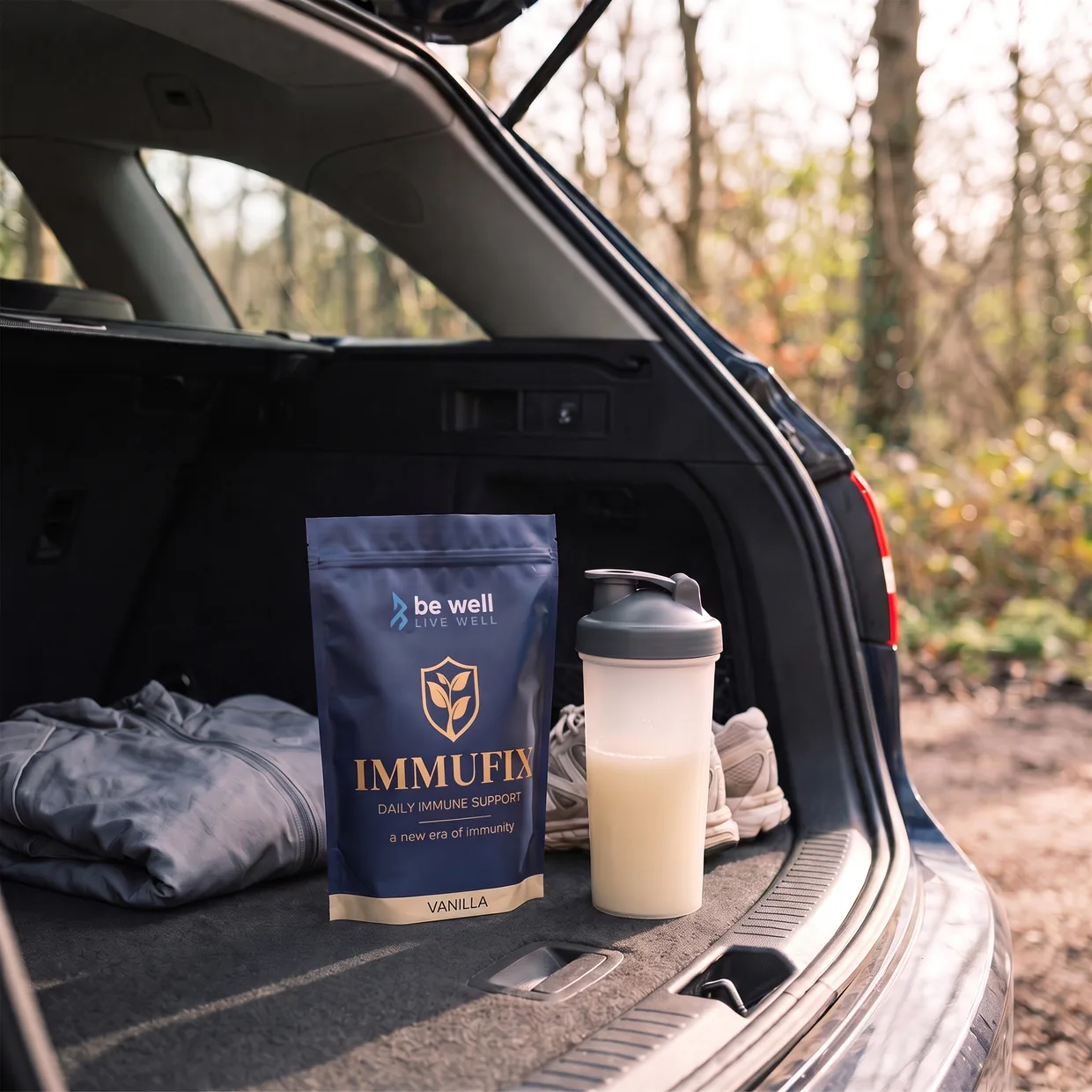
How to breathe when you run in cold air.
How to breathe when running in cold air: nose breathing at easy pace, a buff over your mouth, a proper warm-up, and what cold air does to your lungs.
10 October 2026 · 7 min read