
What to eat before a morning run.
Most morning runners have minutes, not hours, between waking up and heading out. What you eat depends on how long you have and how far you are going.
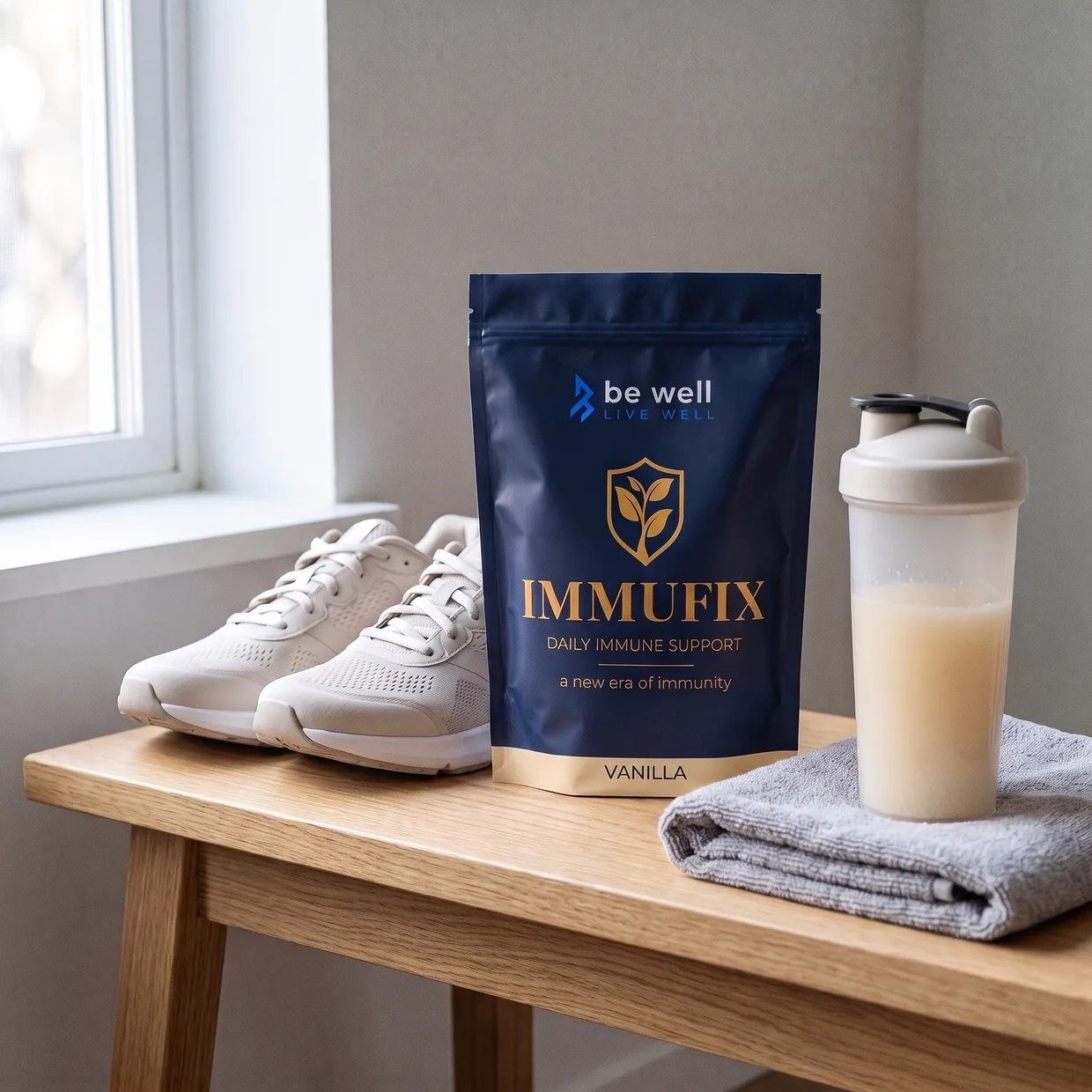
Quick answer. If you have two to three hours, the British Dietetic Association suggests "a low fat, high carbohydrate snack or a light meal", such as porridge or toast. With less time, eat something smaller and simple, such as a banana or toast with honey. For an easy run of under an hour, running before breakfast is a common choice. For long or hard runs, eat first: a 2020 review found that carbohydrate before exercise improves performance in longer sessions but not shorter ones.
How long before a morning run should I eat?
The British Dietetic Association's sport and exercise fact sheet gives the standard advice: "aim for a regular eating pattern which includes a low fat, high carbohydrate snack or a light meal two to three hours before exercise." Carbohydrate is the main fuel for working muscles, and the body stores a limited amount of it.
Two to three hours is easy before an evening run and hard before a 7am one. The good news for early runners is that the exact timing matters less than whether you eat at all. A 2020 review in the journal Nutrients looked at the studies on pre-exercise meals. When food was eaten within four hours of exercise, the time gap made little difference to how the body used its fuel. The review concluded that eating or not eating had "a far larger effect on exercise performance than the amount or timing of the meals".
So match the food to the time you have:
- Two to three hours: a light meal. Porridge, cereal with milk, or toast with jam or honey.
- About an hour: a smaller snack. A banana, a slice of toast, a crumpet with jam.
- Under 30 minutes: something small that sits easily, or just water for a short, easy run.
The first two figures come from the BDA fact sheet and the 2020 review. The third is from the BDA's list of foods that each provide about 50g of carbohydrate.
Is it OK to run on an empty stomach in the morning?
For many people, yes, as long as the run is short and easy. After a night without food the liver's carbohydrate store is lower. The 2020 review cites a fall of around 40% after an overnight fast. The same review notes that blood sugar is usually held at normal levels during exercise even so, which is one reason many people manage an easy 30 to 45 minutes before breakfast.
The review also notes that roughly one-third of endurance athletes train fasted, and that many do so to avoid stomach discomfort. The picture changes with distance and effort. Carbohydrate before exercise generally helps prolonged sessions of more than 60 minutes, and the review found little evidence that fasted training adds anything for sessions longer than 90 minutes.
A sensible rule: run easy before breakfast if it suits you, and eat first before a long run, a hard session or a race. If you have a medical condition that affects how you handle food and exercise, ask your GP before running fasted.

What to eat before a run in the morning.
Familiar, carbohydrate-rich food that you know sits well. The BDA lists foods that each provide about 50g of carbohydrate, and several of them are ordinary breakfasts:
- One large bowl (60g) of breakfast cereal
- Two slices of thick sliced bread
- One bagel
- Two crumpets with jam
- Two medium-large bananas
- 500ml of fruit juice
You do not need 50g before every run. Half a portion is plenty before an easy 5k. Before a long run, a full portion two or three hours ahead makes more sense. Porridge is the classic choice, and we look at it in detail in is porridge good before running.
What should I avoid eating before a run?
Mostly large portions of fibre, fat and protein right before you go. A review of stomach complaints in athletes states: "Fiber, fat, protein, and fructose have all been associated with a greater risk of developing gastrointestinal symptoms." The same review puts the share of athletes who have such complaints at 30 to 50%.
That does not make those foods bad. Fibre, protein and healthy fats belong in your day. It means a full cooked breakfast, a large bowl of high-fibre cereal or a big protein shake is better after the run than ten minutes before it. Try any new breakfast on an ordinary training run first, never on race morning.
What did Paula Radcliffe eat before a race?
Porridge. In a conversation on TikTok with Run With Alice, reported by Surrey Live, she said: "So my pre-run race fuel would be porridge made with water with some chopped-up bananas and some honey in there." She added: "I always had some dark chocolate before I raced and either a cup of green tea or a coffee."
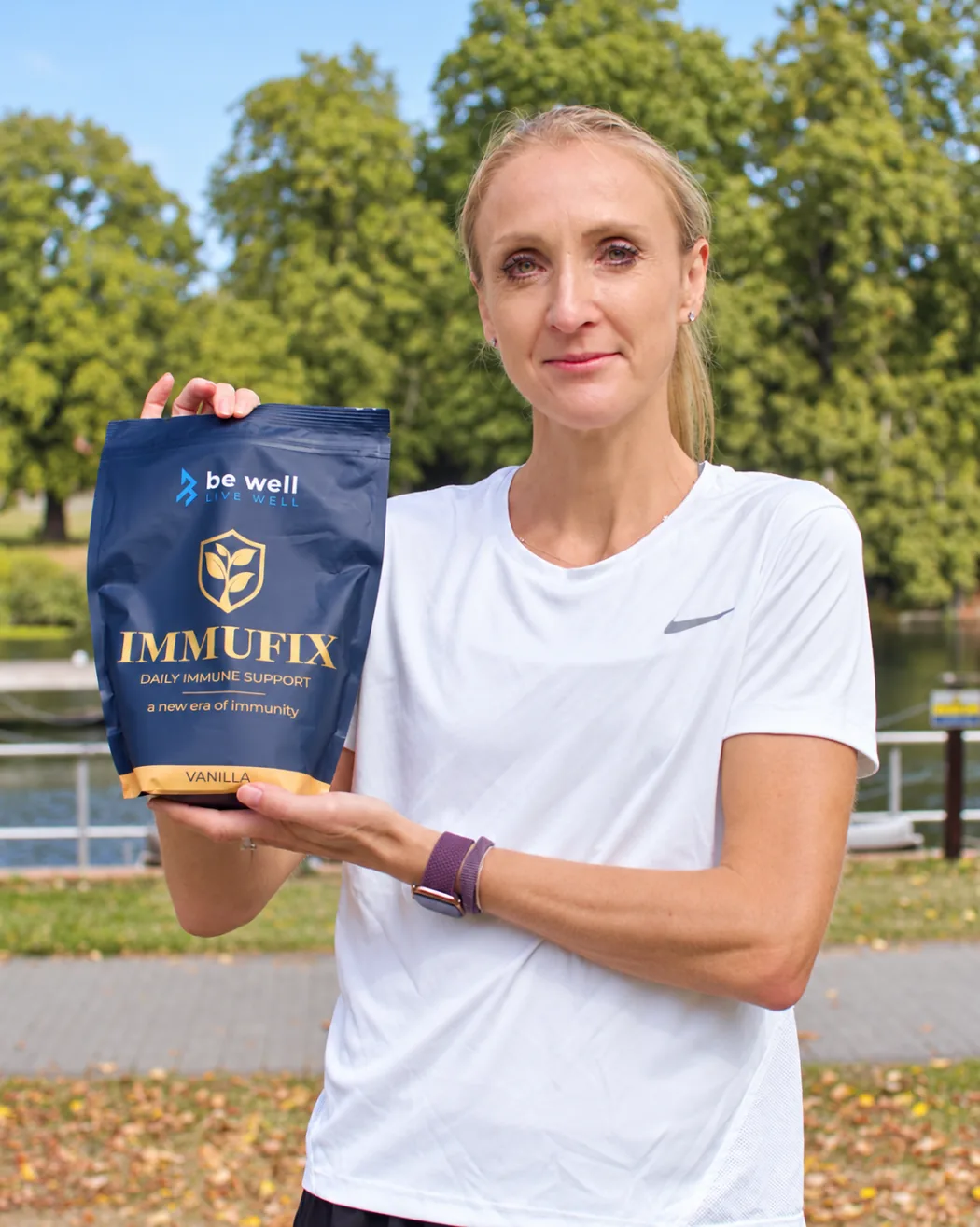
It is a useful model because it is so plain: oats, water, banana, honey. All of it is carbohydrate-rich and low in fat, and none of it is new. Paula Radcliffe has also taken the formula that became Immufix every morning since 1998. You can read her own account on Paula's journey.
Should I drink before a morning run?
Yes, a glass of water when you get up is a good start, especially in warm weather or before a long run. The BDA advises starting exercise well hydrated and offers a simple rule: drink to "just stay ahead of thirst". You do not need to force down large amounts. Coffee before a run is a personal choice; Paula Radcliffe mentions green tea or coffee as part of her own routine.
Where Immufix fits.
Immufix is not pre-run fuel. One 25g scoop in around 200ml of water has 13.2g of carbohydrate and 6.9g of prebiotic fibre (FOS), so it sits better alongside breakfast or after your run than in the minutes before you head out. Riboflavin, niacin, pantothenic acid, vitamin B6 and magnesium contribute to normal energy-yielding metabolism and to the reduction of tiredness and fatigue. Magnesium also contributes to normal muscle function. Every amount is on the science page.
The short version.
- With two to three hours, eat a light, low-fat, carbohydrate-rich meal, as the BDA suggests.
- With an hour or less, have a small snack such as a banana or toast with honey.
- Easy runs under an hour are fine before breakfast for many people. Eat first before long or hard runs.
- Keep fibre, fat and protein for after the run, and never try a new breakfast on race day.
- Paula Radcliffe's race breakfast was porridge made with water, chopped banana and honey.
Food supplements should not be used as a substitute for a varied, balanced diet and a healthy lifestyle. If you have a medical condition, are pregnant, breastfeeding or taking medication, speak to your GP or pharmacist before taking any food supplement.

Daily Immune Support
Vitamins, minerals and plant nutrients in one daily scoop. The formula Paula Radcliffe has taken every day since 1998.
4.8 out of 5 · 89 reviewsDispatched the same day on weekday orders placed before 2pm.
Free standard UK delivery. Royal Mail 48 tracked, 2 to 3 working days. UK addresses only.
30‑day money-back guarantee. Try your first pouch of IMMUFIX for up to 30 days. If it’s not for you, we’ll refund your first qualifying pouch, less £10 shipping and handling. First purchase only. T&Cs apply.
Checkout completes securely on immufix.com
More from the journal.
Carb loading for a marathon, in grams.
How many carbs to eat before a marathon: 10 to 12g per kg a day for 36 to 48 hours, 1 to 4g per kg on race morning, with a calculated UK day of meals.
10 October 2026 · 6 min read
Couch to 5K, started in winter.
Couch to 5K in winter: how the free NHS 9-week plan works, three runs a week, and how to fit it around dark mornings, short days, cold and rain.
10 October 2026 · 7 min read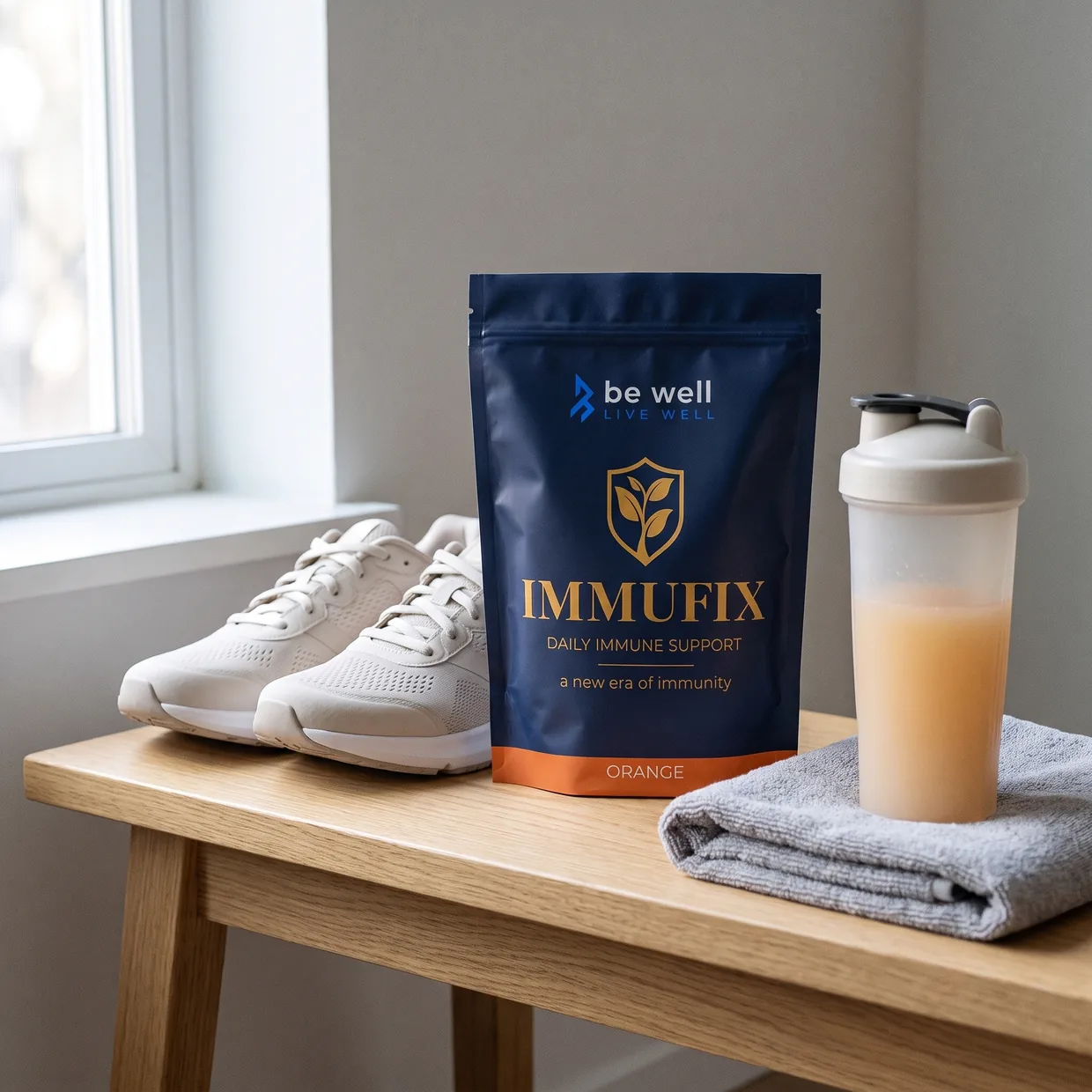
A half marathon nutrition plan, from the week before.
A half marathon nutrition plan for the week before, the night before, race morning, during the run and after, with sourced carbohydrate amounts.
10 October 2026 · 6 min read