
Couch to 5K, started in winter.
You can start running in winter, as long as you plan around the dark. This guide sets out how the free NHS Couch to 5K plan works, week by week, and how to fit it around short days, chilly mornings and wet weeks.
Quick answer. Yes, you can do Couch to 5K in winter. The free NHS Couch to 5K plan takes 9 weeks, with 3 runs a week and a rest day between each. Week 1 alternates 1 minute of running with 1 minute 30 seconds of walking, and by week 9 you run for 30 minutes without stopping. In winter, plan your runs around daylight (on 21 December the sun sets at 15:53 in London, calculated), wear something reflective, use the 5-minute warm-up walk built into every run, and remember the NHS says you can repeat a week or do runs on a treadmill.
Can you do Couch to 5K in winter?
Yes. Nothing in the plan depends on the season. The NHS describes Couch to 5K as "a simple, free running plan for absolute beginners", and says: "The plan has you running 3 times a week, with rest days in between and a fresh schedule to follow each week." It is designed to be flexible: "You can complete the program in 9 weeks or longer, depending on what works best for you."
- The app: the free NHS Couch to 5K app is on the App Store and Google Play. A trainer talks you through each run, it works with your music, and "The app's half-time bell lets you know when to turn back."
- Without the app: the NHS publishes the full Couch to 5K running plan online and as a PDF to print. You need a watch or phone timer to time the runs and walks.
- Indoors: the NHS says "If running outside isn't your thing, you can do your runs on a treadmill instead."
The NHS also gives one health check before you start: speak to a GP if "you're worried about your health before starting an exercise plan like Couch to 5K".
What does the Couch to 5K plan involve each week?
Every run starts with a 5-minute warm-up walk and ends with a 5-minute cool-down walk. In between, the running blocks get longer each week. This is the NHS plan, summarised.
| Week | Each run (after the warm-up walk) | Total time |
|---|---|---|
| 1 | Run 1 min, walk 1 min 30 s, 7 times, then a final 1 min run | 28 min 30 s |
| 2 | Run 1 min 30 s, walk 2 min, 5 times, then a final 1 min 30 s run | 29 min |
| 3 | Run 1 min 30 s, walk 1 min 30 s, run 3 min, walk 3 min, then repeat | 25 min |
| 4 | Run 3 min, walk 1 min 30 s, run 5 min, walk 2 min 30 s, then repeat | 31 min 30 s |
| 5 | Run 1: three 5 min runs. Run 2: two 8 min runs. Run 3: 20 min | 30 to 31 min |
| 6 | Run 1: 5, 8, 5 min. Run 2: two 10 min runs. Run 3: 25 min | 33 to 35 min |
| 7 | Run 25 min | 35 min |
| 8 | Run 28 min | 38 min |
| 9 | Run 30 min | 40 min |
Total times include the warm-up and cool-down walks but not the stretches. Allow about 45 minutes for each session, including getting changed.
How do I start running in winter?
Plan around the light first. Once the clocks go back on Sunday 25 October 2026, early-morning and after-work runs will often be in the dark from November to February. These are the calculated sunrise and sunset times for three UK cities on the first day of a November start, the shortest day, and the first Monday of January.
| Sunrise to sunset | Mon 2 Nov 2026 | Mon 21 Dec 2026 | Mon 4 Jan 2027 |
|---|---|---|---|
| London | 06:54 to 16:34 | 08:03 to 15:53 | 08:06 to 16:04 |
| Manchester | 07:08 to 16:37 | 08:22 to 15:51 | 08:24 to 16:02 |
| Edinburgh | 07:19 to 16:32 | 08:42 to 15:39 | 08:43 to 15:51 |
Times are calculated for each city centre in GMT and can differ by a minute or two from published tables. Three ways to fit the plan around them:
- Use the weekend for one run. Saturday and Sunday mornings are the easiest daylight runs of the week.
- Use a lunch break for a second run if you can. Week 1 takes under half an hour.
- Run the third on lit routes after dark: well-lit streets, a park with lights, or a treadmill.
Pick your start date with the calendar in mind. A start on Monday 2 November finishes week 9 on Sunday 3 January. A start on Monday 4 January finishes on Sunday 7 March, by which time London's sunset has moved to 17:39 (calculated). The NHS's first step is simple: "Pick your first run day".
What should I wear for Couch to 5K in winter?
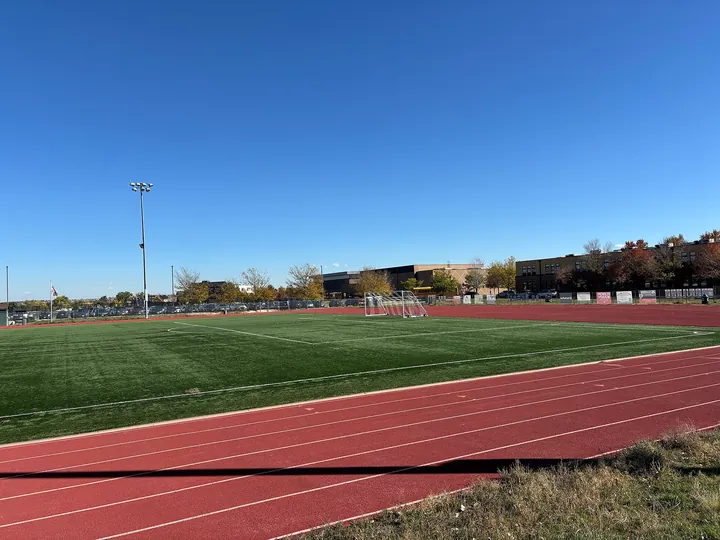
Comfortable clothes, shoes that support your feet, and something others can see. The NHS plan says: "Wear whatever feels comfortable to move in, along with running shoes that support your feet, and a supportive bra if you need one." For winter it adds: "If you're running in the dark, make sure others can see you. Wear reflective clothing and stick to well-lit routes."
The walking sections matter in the cold. You warm up while running, then cool down while walking, so a layer you can unzip works better than one thick jumper. Gloves and a hat are the easiest items to take off and carry. Our winter running kit checklist sets out what to buy first, and our guide to running in the dark covers lights and routes.
How do I warm up for running in the cold?
The plan does most of it for you. The NHS says to "take a few moments to do some stretches" first, and then "each run begins with a 5-minute warm-up walk." It explains that this "gradually raises your heart rate and warms up your muscles". On a chilly morning, do the stretches indoors and start the warm-up walk as soon as you step outside.
The finish matters too. "Each run ends with a 5-minute cool-down walk", followed by stretches. In winter, walk the cool-down towards home and do the stretches indoors, then change out of damp kit straight away.
What if the weather or the dark stops a run?
Move it, repeat it, or take it indoors. The plan is built to bend.
- Repeat a week. The NHS plan says: "If you're not quite feeling ready, it's totally okay to repeat a week." A missed run in a wet week is no reason to start again.
- Keep the rest days. The plan asks for "a rest day between each run". If you miss a Tuesday, run on Wednesday and shift the week, rather than running two days in a row.
- Find company. "Running with a friend or in a group can make your runs safer and more enjoyable."
- Walk the ice. On frost or wet leaves, slow down or walk that section. Speed is not the point: in the NHS's words, "it's not about speed, it's about building stamina."
What comes after Couch to 5K?
For many people, parkrun. The NHS plan ends by suggesting it: "Parkrun is a friendly, free weekly event where people come together to walk, run or jog 5km. There's no time limit, just go at your own pace." A November start means your first parkrun could be in early January. Our guide to parkrun in winter covers start times, cancellations and what to wear.
Where Immufix fits.
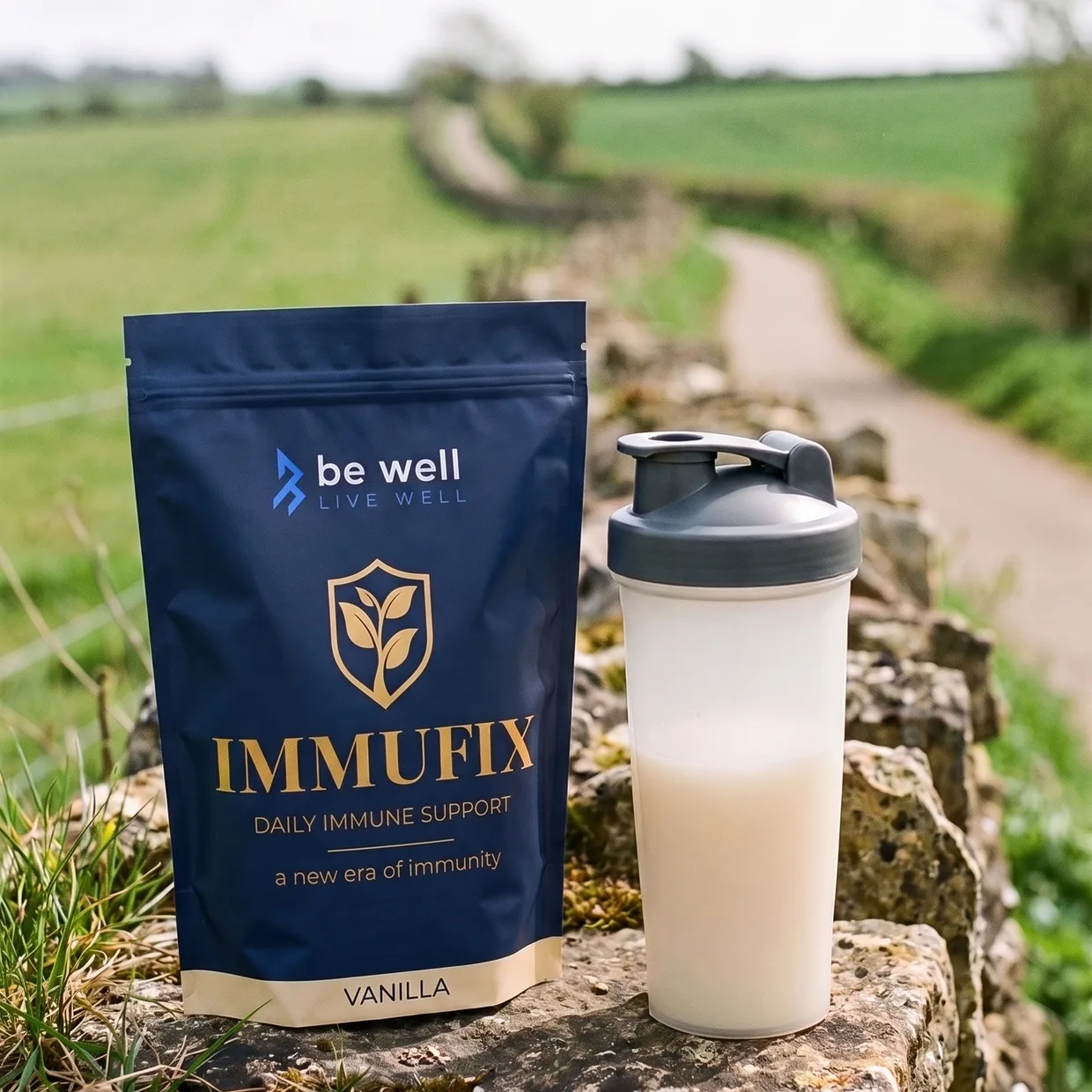
Three runs a week through the dark months is a routine, and routines are easier when the rest of the morning runs on autopilot. Immufix is one 25g scoop in around 200ml of water, once a day, with breakfast. Riboflavin, niacin, pantothenic acid and vitamin B6 contribute to normal energy-yielding metabolism and to the reduction of tiredness and fatigue. Vitamin D and magnesium contribute to normal muscle function. Every amount is on the science page.
The short version.
- The free NHS Couch to 5K plan is 9 weeks, 3 runs a week, with a rest day between runs, from 1-minute runs to 30 minutes.
- Use the free NHS app, or the plan and PDF on the NHS website, and speak to a GP first if you are worried about your health.
- Plan around daylight: on the shortest day, the sun sets before 16:00 in London, Manchester and Edinburgh (calculated).
- Wear reflective kit after dark, layers you can unzip, and gloves and a hat you can carry.
- Repeat a week, move a run or use a treadmill when the weather turns. Then try parkrun.
Food supplements should not be used as a substitute for a varied, balanced diet and a healthy lifestyle. If you have a medical condition, are pregnant, breastfeeding or taking medication, speak to your GP or pharmacist before taking any food supplement.

Daily Immune Support
Vitamins, minerals and plant nutrients in one daily scoop. The formula Paula Radcliffe has taken every day since 1998.
4.8 out of 5 · 89 reviewsDispatched the same day on weekday orders placed before 2pm.
Free standard UK delivery. Royal Mail 48 tracked, 2 to 3 working days. UK addresses only.
30‑day money-back guarantee. Try your first pouch of IMMUFIX for up to 30 days. If it’s not for you, we’ll refund your first qualifying pouch, less £10 shipping and handling. First purchase only. T&Cs apply.
Checkout completes securely on immufix.com
More from the journal.
Carb loading for a marathon, in grams.
How many carbs to eat before a marathon: 10 to 12g per kg a day for 36 to 48 hours, 1 to 4g per kg on race morning, with a calculated UK day of meals.
10 October 2026 · 6 min read
A half marathon nutrition plan, from the week before.
A half marathon nutrition plan for the week before, the night before, race morning, during the run and after, with sourced carbohydrate amounts.
10 October 2026 · 6 min read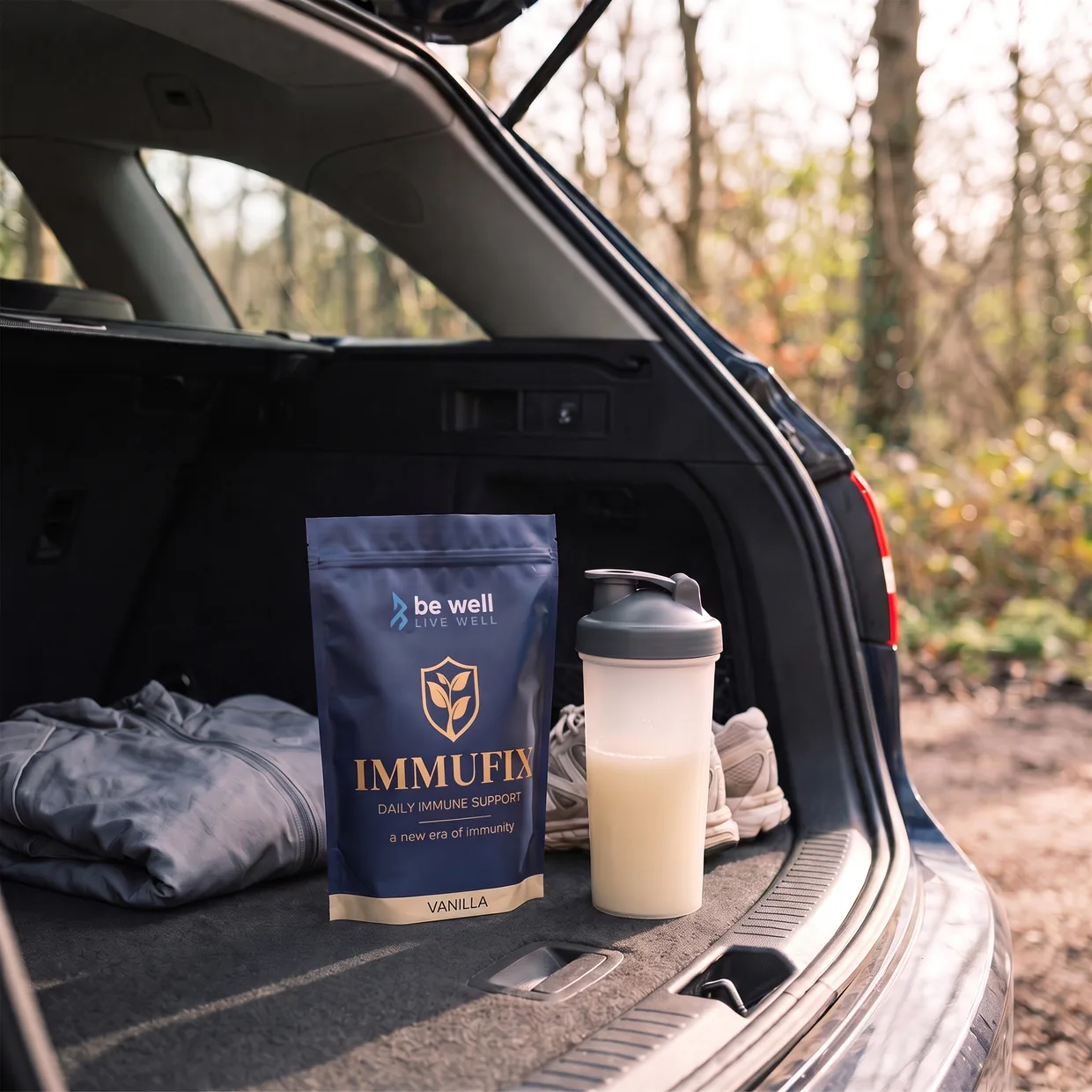
How to breathe when you run in cold air.
How to breathe when running in cold air: nose breathing at easy pace, a buff over your mouth, a proper warm-up, and what cold air does to your lungs.
10 October 2026 · 7 min read