
What to wear running in the cold.
A UK winter run usually means cold, wind or rain, and often all three. This guide covers what to wear at each temperature, and how to layer so you are comfortable at the first mile and not overheating by the last.
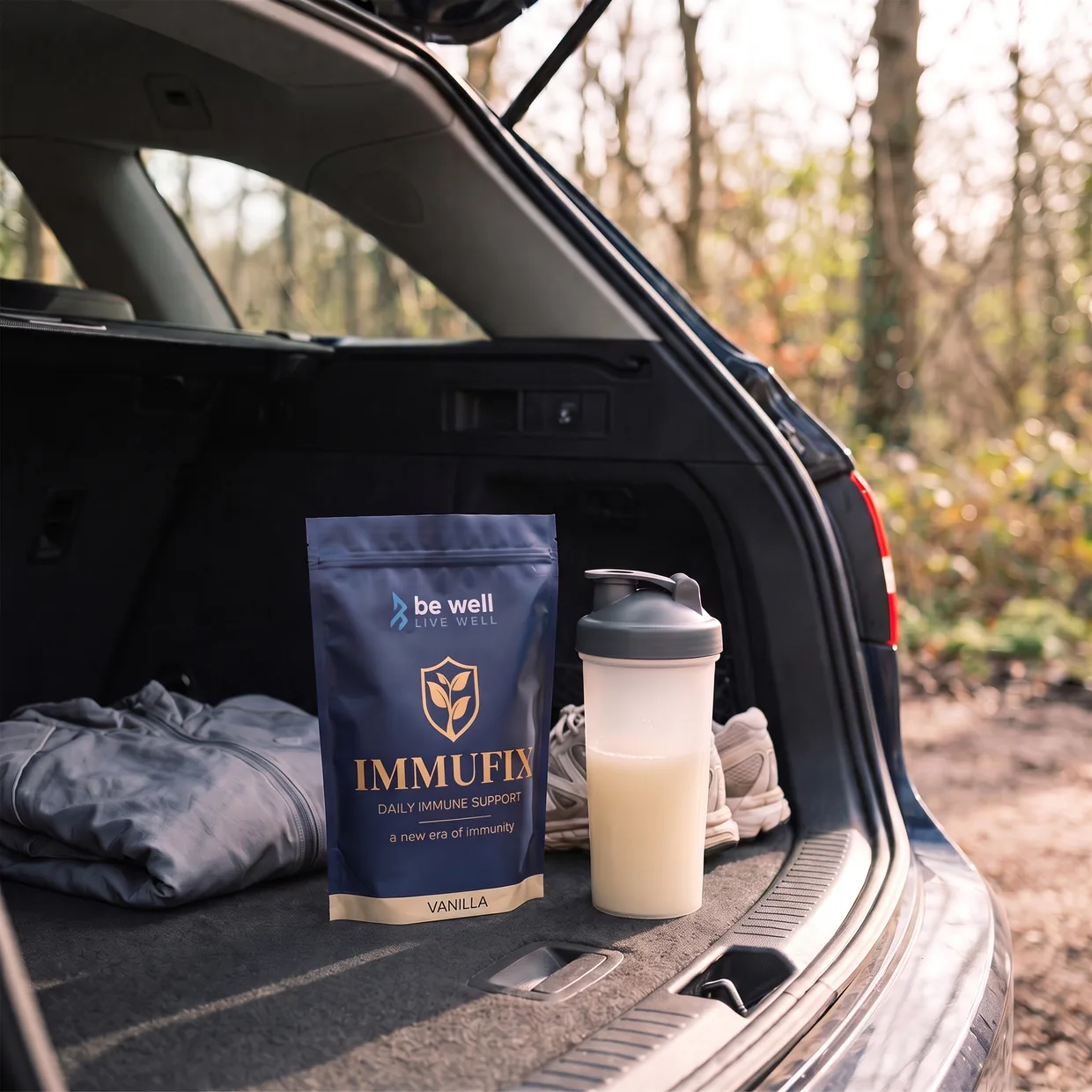
Quick answer. Dress for the "feels like" temperature on the forecast, not the air temperature, and set off feeling slightly cool, because you warm up quickly once you get going. Layer from the skin out: a moisture-wicking base layer, an insulating middle layer only when it is near or below freezing, and a windproof or waterproof outer layer, the three-layer approach described by the American College of Sports Medicine. As a starting point: a T-shirt above 10°C, long sleeves and light gloves at 5 to 10°C, tights, gloves and a hat at 0 to 5°C, and a warm middle layer with a neck cover below 0°C.
What should I wear running in winter in the UK?
Less than you think, and in thinner layers than you think. Running makes a lot of heat. The common mistake is to dress for standing at the front door, then spend the run too hot and damp with sweat, which leaves you colder once you slow down.
You do not need specialist kit to start. England Athletics, answering new runners on its RunTogether pages, says: "Most people wear shorts, tracksuit bottoms or leggings, and a t-shirt along with weather dependent layers." What matters in winter is the fabric next to your skin and how easily you can add or remove a layer.
- Next to the skin: a fabric that moves sweat away. The American College of Sports Medicine (ACSM) gives wool as an example of a moisture-wicking fabric; synthetic running tops do the same job. Cotton soaks up sweat and stays wet.
- On top: a thin layer that blocks wind, and one that keeps out rain when it is wet.
- Small items: gloves, a hat or headband, and a neck tube. They make the biggest difference for their size, and they fit in a pocket when you warm up.
This guide is about clothing. For running in the dark, warming up and dealing with frost, see our guide to running through a UK winter.
How do I layer for running in the cold?
From the skin out, in up to three layers. The ACSM describes them like this in its guide to exercising in the cold:
- Inner layer: "Direct contact with the skin to absorb moisture (think moisture wicking fabrics such as wool)."
- Middle layer: "Provides insulation and traps body heat to create a warm air barrier."
- Outer layer: "Waterproof, windproof, breathable."
The same guide notes that "clothing with zippers in arm pits or ventilation holes allow heat accumulation from exercise to release, instead of building up moisture inside your clothing or skin." A half-zip base layer or a jacket with a full zip does the same thing: open it on the climbs, close it on the descents.
Runners rarely need all three at once in a UK winter. On most days a base layer plus a light windproof shell is enough. The middle layer earns its place on frosty mornings, on long slow runs and in exposed places such as coast paths and hills.
What should I wear running at each temperature?
Use the "feels like" figure, and use this table as a starting point for an easy run. Faster sessions need a little less, and long slow runs a little more. If you run hot or feel the cold, shift a row up or down.
| Feels like | Top half | Legs | Extras |
|---|---|---|---|
| Above 10°C | T-shirt or thin long sleeve | Shorts | None needed |
| 5 to 10°C | Long-sleeve base layer, light windproof if breezy | Shorts or light tights | Light gloves |
| 0 to 5°C | Long-sleeve base layer and a windproof, or a light thermal top | Tights | Gloves, thin hat or headband |
| Below 0°C | Base layer, warm middle layer, windproof shell | Thermal tights | Warm gloves or mittens, hat, neck tube |
These bands are our practical guide, built on the layering principles above. They are not an official standard, and no two runners feel the cold the same way. A simple test: if you feel comfortably warm standing outside before you start, you are probably wearing one layer too many.
How do wind and rain change what to wear?
A lot, which is why the "feels like" figure matters more than the air temperature. The Met Office explains that its "feels like" temperature uses the air temperature, humidity and "the strength of the wind at 5 feet (human height)", along with how heat is lost from the body on cold and windy days. In the UK, it calculates wind chill from "how much heat is lost from a person's bare face at a walking speed of 3mph". A runner moves faster than that, so the wind on your face can be stronger than the forecast figure assumes.
The Met Office gives a simple example: "On a calm day, a temperature of 10°C may feel close to that value. Add a strong wind, and it can feel several degrees colder." It adds that the effect is often strongest "in exposed locations such as coastal areas, hills and open countryside, where shelter is limited."
- Windy: a thin windproof shell makes more difference than a thicker top. Run out into the wind and back with it behind you, so you are not facing it when you are sweaty and tired.
- Wet: a light waterproof with a hood or a cap with a peak. Tights stay warmer than wet shorts on chilly days, and wet cotton is the worst of all.
- Cold and still: often the easiest winter conditions. Dress by the table and leave the shell at home.

How do I keep my hands, feet and ears warm when running?
Hands, ears and feet feel the cold first. The ACSM guide lists "cold extremities (hands, face, feet especially)" among the early warning signs to watch for when exercising in the cold.
- Hands: gloves from about 10°C down for most people. The ACSM suggests "thinner gloves under mittens for dexterity" in real cold, so you can still use a phone or a zip.
- Head and ears: a thin hat or a headband over the ears. The ACSM also suggests "a brimmed hat to help shield your eyes, face, and ears", which doubles as rain protection.
- Feet: running socks that wick, not cotton. The ACSM advises: "Change socks frequently if sweaty." On wet, muddy routes, change into dry socks as soon as you are home.
- Neck: a thin neck tube can be pulled up over the mouth and nose in an icy wind, and down again when you warm up.
If your fingers or toes go numb rather than just cold, cut the run short and warm up indoors. If cold weather affects you in a way that worries you, speak to your GP or pharmacist.
How do I stop overheating on a winter run?
Plan to shed layers rather than add them. Start feeling slightly cool, then:
- Take gloves and hat off first. They are the quickest way to lose heat and the easiest to carry.
- Open zips before you sweat, not after.
- Run a loop past home on long runs, so you can drop a layer or pick one up.
- Change straight after. Damp kit cools you fast once you stop. Get into a dry top and a warm layer within minutes, especially after a race or a winter parkrun where you stand around at the finish.
Being warm is half the job in winter. Being seen is the other half, and our guide to running in the dark covers lights and reflective kit.
Where Immufix fits.
The right layers get you out of the door. A steady morning routine keeps you going out through the dark months. Immufix is one 25g scoop in around 200ml of water, once a day, with breakfast before or after a run. Vitamin D contributes to normal muscle function and the maintenance of normal bones. Magnesium contributes to normal muscle function and to electrolyte balance, and riboflavin, niacin and vitamin B6 contribute to the reduction of tiredness and fatigue. Every amount is on the science page.
The short version.
- Dress for the "feels like" temperature and start slightly cool.
- Layer from the skin out: wicking base, insulating middle only when it is near freezing, windproof or waterproof shell.
- Above 10°C a T-shirt; 5 to 10°C long sleeves and light gloves; 0 to 5°C tights, gloves and a hat; below 0°C add a warm middle layer and neck tube.
- Wind and rain matter more than the thermometer, especially on coasts and hills.
- Shed gloves and hat first, open zips early, and change into dry clothes straight after.
Food supplements should not be used as a substitute for a varied, balanced diet and a healthy lifestyle. If you have a medical condition, are pregnant, breastfeeding or taking medication, speak to your GP or pharmacist before taking any food supplement.

Daily Immune Support
Vitamins, minerals and plant nutrients in one daily scoop. The formula Paula Radcliffe has taken every day since 1998.
4.8 out of 5 · 89 reviewsDispatched the same day on weekday orders placed before 2pm.
Free standard UK delivery. Royal Mail 48 tracked, 2 to 3 working days. UK addresses only.
30‑day money-back guarantee. Try your first pouch of IMMUFIX for up to 30 days. If it’s not for you, we’ll refund your first qualifying pouch, less £10 shipping and handling. First purchase only. T&Cs apply.
Checkout completes securely on immufix.com
More from the journal.
Carb loading for a marathon, in grams.
How many carbs to eat before a marathon: 10 to 12g per kg a day for 36 to 48 hours, 1 to 4g per kg on race morning, with a calculated UK day of meals.
10 October 2026 · 6 min read
Couch to 5K, started in winter.
Couch to 5K in winter: how the free NHS 9-week plan works, three runs a week, and how to fit it around dark mornings, short days, cold and rain.
10 October 2026 · 7 min read
A half marathon nutrition plan, from the week before.
A half marathon nutrition plan for the week before, the night before, race morning, during the run and after, with sourced carbohydrate amounts.
10 October 2026 · 6 min read