
How to choose a multivitamin: a five-point check.
Search for the best multivitamin in the UK and you get rankings. A label read the right way tells you more about whether a product suits you than any list can.
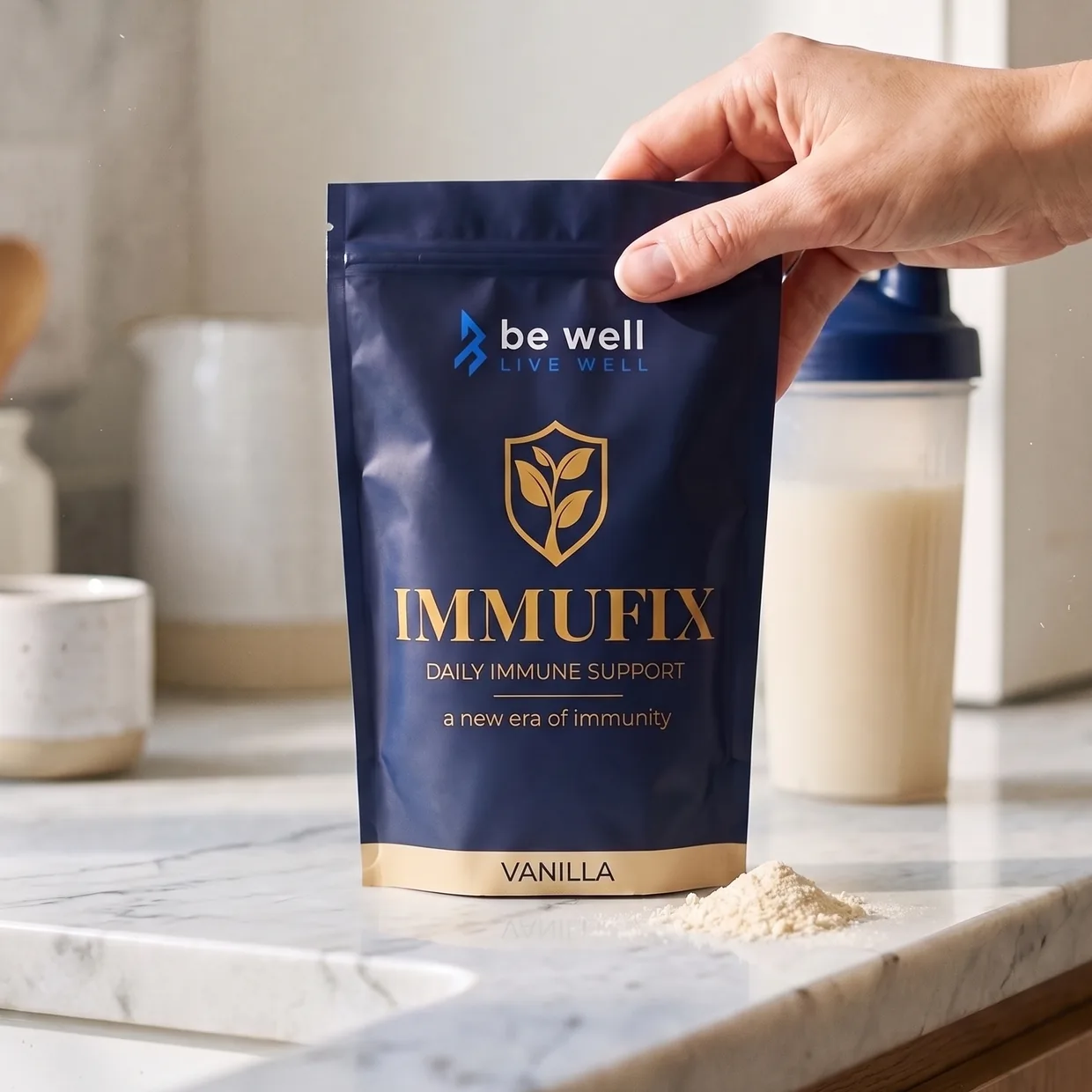
Quick answer. There is no single best multivitamin in the UK, because the right one depends on your diet, your circumstances and what the product actually contains. Five checks cover most of it: the amount and % NRV of each vitamin and mineral, whether it gives the 10 micrograms of vitamin D the NHS advises everyone to consider in autumn and winter, the format, the allergens and dietary labels, and the price per serving. We make Immufix, so this guide does not rank brands, including ours.
What is the best multivitamin in the UK?
The honest answer is the one that fits you, and that changes from person to person. The starting point is food. The UK government's food supplements guidance for consumers says "most people should get the nutrients they need by eating a healthy balanced diet", and that some supplements are recommended in certain circumstances, "such as vitamin D during the autumn and winter, and folic acid when trying for a baby and during the first 12 weeks of pregnancy."
So a multivitamin is an addition to a varied diet, not a replacement. If you have decided one is worth taking, our guide to whether a multivitamin is worth it covers who the NHS gives specific advice to. This guide is about the next step: choosing one.
Rankings tend to reward a single number, such as the most nutrients or the highest doses. Neither tells you whether a product suits your diet, your budget or your routine. The label does.
What should I look for in a daily multivitamin?
Five things, all of them on the pack or the product page. UK law makes most of them compulsory. Under the Food Supplements (England) Regulations 2003, a supplement label must show "the portion of the product recommended for daily consumption" and "the amount of any vitamin or mineral or other substance with a nutritional or physiological effect which is present in the product", with vitamins and minerals also given as a percentage of their reference value.
| Check | What to look for | Where to find it |
|---|---|---|
| 1. Amounts and % NRV | The nutrients you want, at amounts that suit you | Nutrition table, per daily dose |
| 2. Vitamin D | How many micrograms, compared with the NHS 10µg | Nutrition table |
| 3. Format | Tablet, capsule, gummy, powder or liquid | Product name and directions |
| 4. Allergens and diet | Allergens in bold; vegetarian or vegan wording | Ingredients list and pack |
| 5. Price per serving | Pack price divided by servings at the daily dose | Your own sum |
1. Amounts and % NRV.
Every vitamin and mineral on a UK label is shown per daily dose and as a % of its nutrient reference value (NRV). A high percentage is not automatically better, and a low one is not automatically a problem. What matters is how the amounts fit with what you already eat. Our guide to what NRV means explains how to read them. Health claims are tied to amounts too: a vitamin or mineral generally has to be present at 15% or more of its NRV per daily dose before a product can say what it does.
2. Vitamin D.
This is the one nutrient with advice for everyone. The NHS vitamin D page says "everyone (including pregnant and breastfeeding women) should consider taking a daily supplement containing 10 micrograms of vitamin D during the autumn and winter." Many multivitamins contain some vitamin D but not all contain 10µg, so check the number. If yours has less, a separate vitamin D supplement may be the simpler answer.
3. Format.
The government guidance lists the forms supplements come in: "tablets", "capsules", "gummies", "powders" and "liquids". None is better by default. Tablets and capsules have no taste and travel easily. Gummies and powders are easier for people who dislike swallowing tablets, and they can come with sugar and calories, so read the nutrition panel. Our guide to vitamin powder vs tablets sets out the practical differences.
4. Allergens and diet.
The Food Standards Agency's allergy advice for consumers lists the 14 regulated allergens, including soybeans, milk, eggs, fish, celery and cereals containing gluten, and says they "must be emphasised within the ingredients list of pre-packed food or drink". Check the ingredients list every time, including any capsule shell or coating. If you are vegetarian or vegan, look for that wording on the pack.
5. Price per serving.
Pack prices are hard to compare because packs hold different numbers of servings. Divide the price by the number of daily servings in the pack. As a worked example with our own product: a 750g pouch of Immufix holds 30 servings, one a day, at £65 one-off or £52 a month on subscription. Then compare what each serving contains, because two products at the same price can hold very different things.
What should I avoid when choosing a multivitamin?
- Doubling up. Add up what you take from every product. Two products with the same nutrient can push you past the NHS upper amounts, such as "100 micrograms (4,000 IU) of vitamin D a day" for adults.
- Going over the dose. The government guidance says "do not take more than the recommended dose, as this can potentially lead to side effects such as nausea and headaches."
- High doses without advice. The same guidance says people "should not take high dose supplements unless advised by their GP or healthcare specialist."
- Claims that are not on the register. The guidance says to check that health claims are authorised on the Great Britain nutrition and health claims register, which states that "only authorised claims in the Great Britain NHC register may be used in Great Britain."
- Vitamin A in pregnancy. The NHS pregnancy advice is to avoid supplements and multivitamins containing vitamin A (retinol) in pregnancy. If you are pregnant, trying or breastfeeding, ask your midwife, GP or pharmacist first.
If you have a medical condition or take medication, speak to a GP or pharmacist before choosing any supplement.
Does price tell you which multivitamin is better?
No. A higher price can reflect the format, the ingredients, the pack size, the brand or the extras included with a first order. A lower price can mean fewer nutrients, lower amounts or simply a larger pack. Work out the price per serving, then read what each serving contains, then decide whether the difference matters to you. A product you can afford to take every day is more useful than one you stop after a month.
Where Immufix fits.
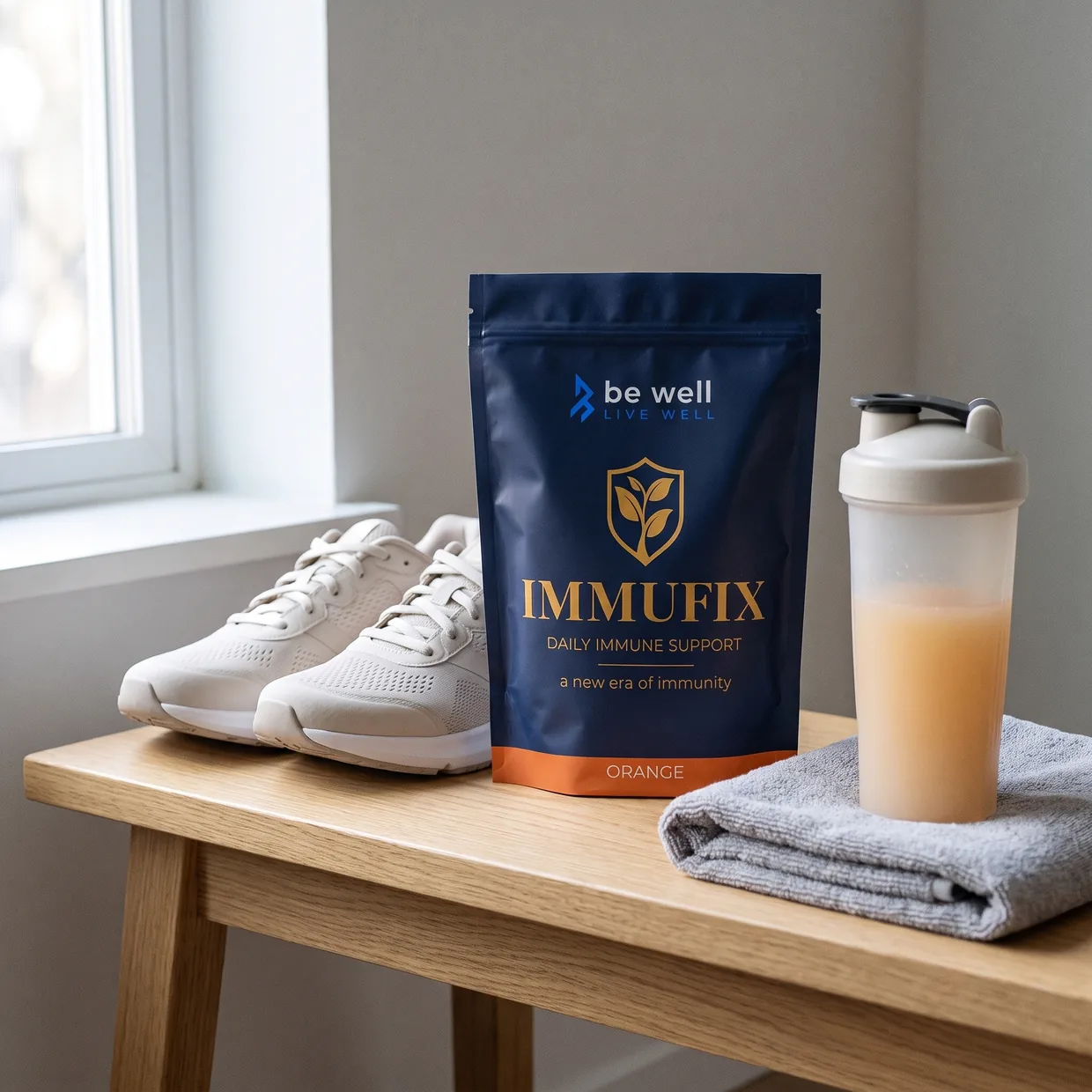
Immufix is a multi-nutrient powder, and it is our product. One 25g scoop goes into around 200ml of water once a day. Each serving has 75 kcal and 9.9g of sugars, which matters if you are comparing it with a tablet. It is vegetarian, the Orange flavour is also vegan, it is gluten free and it contains soya. It has 1.25µg of vitamin D, so it does not meet the NHS 10µg advice on its own. Vitamin C, riboflavin, niacin, pantothenic acid, vitamin B6, folic acid and magnesium contribute to the reduction of tiredness and fatigue. Every amount and % NRV is on the science page.
The short version.
- There is no single best multivitamin in the UK. The right one depends on your diet and what the label shows.
- Check five things: amounts and % NRV, vitamin D against the NHS 10µg, format, allergens and diet wording, and price per serving.
- Price per serving is pack price divided by daily servings. Compare it alongside what each serving contains.
- Do not double up, do not exceed the dose, and ask a GP or pharmacist if you are pregnant, have a condition or take medication.
- Immufix is our product: a 25g powder with 9.9g of sugars per serving, vegetarian, Orange also vegan, contains soya.
Food supplements should not be used as a substitute for a varied, balanced diet and a healthy lifestyle. If you have a medical condition, are pregnant, breastfeeding or taking medication, speak to your GP or pharmacist before taking any food supplement.

Daily Immune Support
Vitamins, minerals and plant nutrients in one daily scoop. The formula Paula Radcliffe has taken every day since 1998.
4.8 out of 5 · 89 reviewsDispatched the same day on weekday orders placed before 2pm.
Free standard UK delivery. Royal Mail 48 tracked, 2 to 3 working days. UK addresses only.
30‑day money-back guarantee. Try your first pouch of IMMUFIX for up to 30 days. If it’s not for you, we’ll refund your first qualifying pouch, less £10 shipping and handling. First purchase only. T&Cs apply.
Checkout completes securely on immufix.com
More from the journal.

Looking for an AG1 alternative? The facts side by side.
Looking for an AG1 alternative in the UK? Serving size, pack price, sugars and format from each brand's own page, checked 10 October 2026.
10 October 2026 · 5 min read
The best time to take vitamins is the one you keep.
The best time to take vitamins is the time you will keep to. What NHS guidance says about taking supplements with food, and morning versus night.
10 October 2026 · 6 min read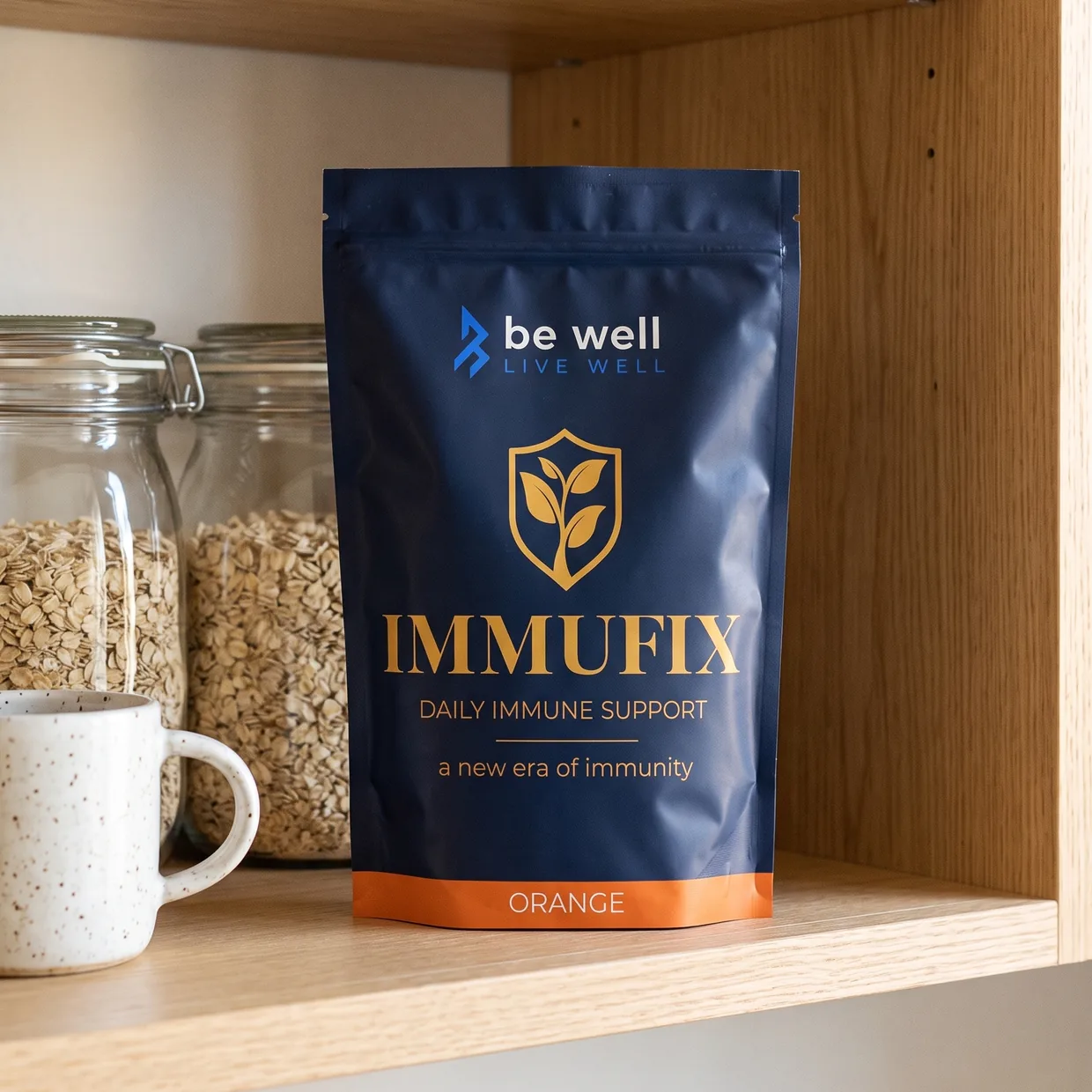
Does vitamin powder expire? What the date means.
Does vitamin powder expire or go off? What the best before date means under UK food law, how to store a powder, and what clumping tells you.
10 October 2026 · 6 min read