
Food state vitamins, what the words mean.
Food state is how Immufix's formula was built in 1998, and it is a phrase you will see on other supplement labels too. Here is what it describes, where it sits in UK law, and what it does not mean.
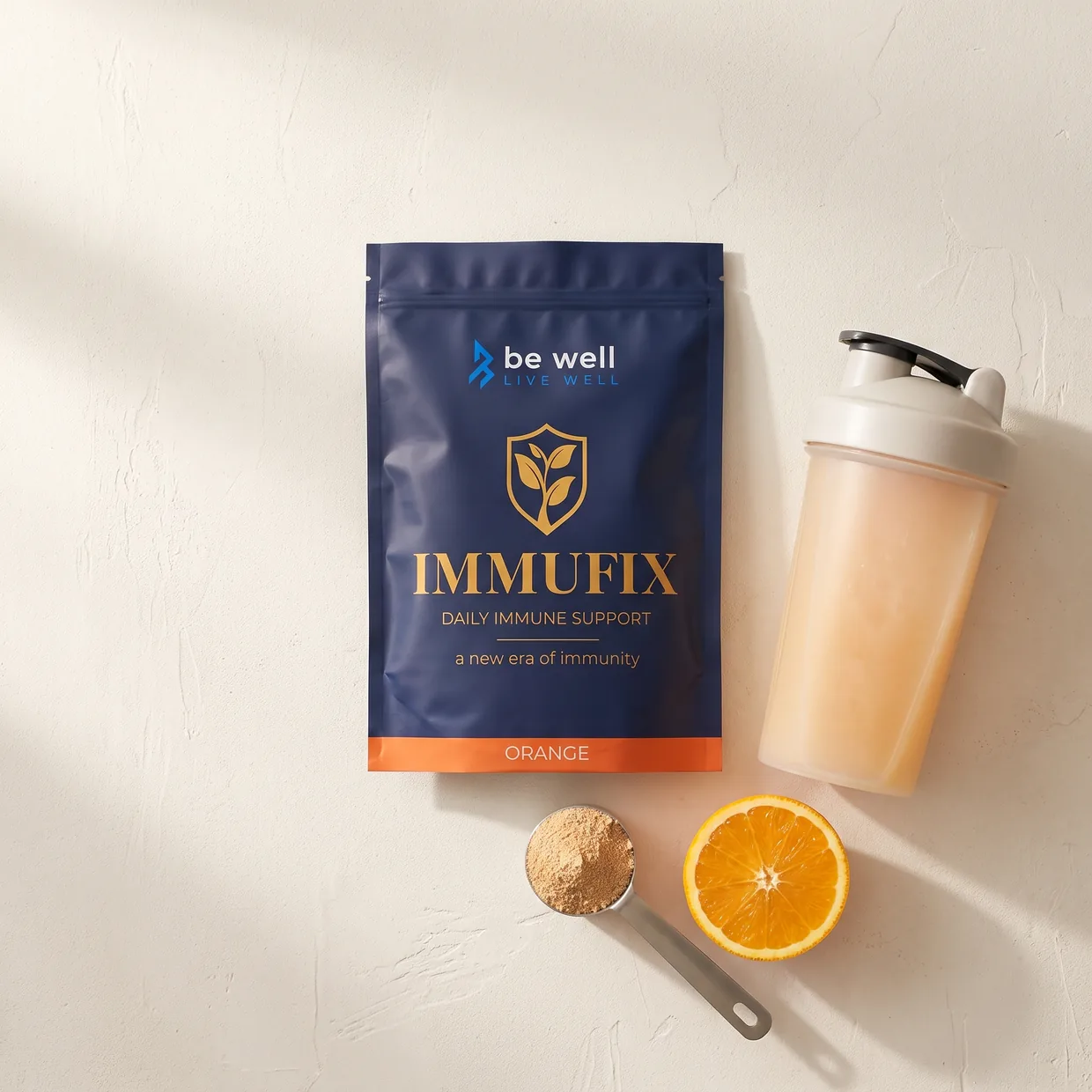
Quick answer. "Food state" and "food grown" are terms supplement makers use for vitamins and minerals that have been cultivated within a food-like matrix, such as a yeast culture, rather than added only as a single isolated compound. They describe how an ingredient is made and what it is made of. Neither is a legal category: the GB list of vitamin and mineral forms permitted in food supplements does not use either phrase, though it does list yeast-based forms of selenium and chromium. Neither carries a health claim. Immufix is a Food State formula, with minerals cultured in yeast and vitamins complexed the way they occur in food.
What are food state vitamins?
A food state vitamin or mineral is one supplied inside a food-like material, such as a yeast, instead of as a pure compound on its own. The idea is about composition: what the ingredient physically is when it goes into the product.
Most vitamins and minerals in supplements are added as defined compounds. Vitamin C is added as L-ascorbic acid or one of its salts. Zinc is added as a zinc salt, such as zinc citrate. These are the "standard" forms, and they are perfectly lawful. A food state ingredient takes a different route. The nutrient is grown into a culture, and the culture itself becomes the ingredient.
What does "food grown" mean?
"Food grown" is used in much the same sense as "food state". The nutrient is introduced to a growing food culture, the culture takes it in as it grows, and the result is harvested and dried.
UK law describes exactly this process for two minerals. The list of permitted forms in Annex II of Directive 2002/46/EC, which sets the forms allowed in food supplements in Great Britain, includes:
- Selenium enriched yeast: "Selenium-enriched yeasts produced by culture in the presence of sodium selenite as selenium source and containing, in the dried form as marketed, not more than 2,5 mg Se/g."
- Chromium enriched yeast: "Chromium-enriched yeast produced by culture of Saccharomyces cerevisiae in the presence of chromium(III) chloride as a source of chromium and containing, in the dried form as marketed, 230-300 mg of chromium/kg."
In both cases a yeast is grown with a mineral salt present, and the dried yeast, with the mineral inside it, is the ingredient. That is the "grown" in food grown.
What does UK law say about food state forms?
The rule is a list. Article 4 of the same directive says: "Only vitamins and minerals listed in Annex I, in the forms listed in Annex II, may be used for the manufacture of food supplements". Annex II is headed "Vitamin and mineral substances which may be used in the manufacture of food supplements".
That list names chemical forms, such as sodium selenite or zinc citrate, and for selenium and chromium it also names the yeast forms quoted above. It does not contain the words "food state" or "food grown". They are descriptions used by manufacturers, not legal categories, and a product described this way still has to meet the same rules as any other food supplement.
The labelling rules do not change with the form either. The Food Supplements (England) Regulations 2003 require the amount of each vitamin and mineral to "be given in numerical form" and to "be the amount per portion of the product as recommended for daily consumption". The label declares the nutrient, in micrograms or milligrams, whatever form it arrives in.
How is a food state mineral different from a standard one?
In what it is made of. Take selenium. A standard form, such as sodium selenite, is a single inorganic compound. In selenium enriched yeast, the yeast has built most of the selenium into its own compounds. Annex II sets the specification: "The predominant organic selenium species present in the yeast is selenomethionine (between 60 and 85 % of the total extracted selenium in the product)", and "Levels of inorganic selenium normally shall not exceed 1 % of total" extracted selenium.
So the selenium is the same element, measured and declared in the same way, but it sits inside a different material. That is a statement about composition. It is not, on its own, a statement about what the nutrient does, and we make no claim that the form changes it.
Do food state vitamins carry different health claims?
No. Health claims in Great Britain are made for a nutrient, at a qualifying amount, in authorised wording. The entries on the GB nutrition and health claims register are listed by nutrient, such as selenium or vitamin C, and "food state" does not appear on it. A claim depends on how much of the nutrient a daily portion provides, generally at least 15% of its nutrient reference value, not on the form it comes in.
That is why our pack makes the same authorised claims for its vitamins and minerals that any product with the same amounts could make, and no extra claim for being Food State. Our guides to authorised health claims and what NRV means explain the rules in full.
How does Immufix use food state nutrition?
Immufix was formulated in 1998 by the biochemist Brian Welsby around Food State nutrition. Our story page describes it as minerals cultured in yeast and vitamins complexed the way they occur in food. The page on why Immufix suits most people describes the formula's core as selected nutrients cultivated within a food-like cellular matrix.
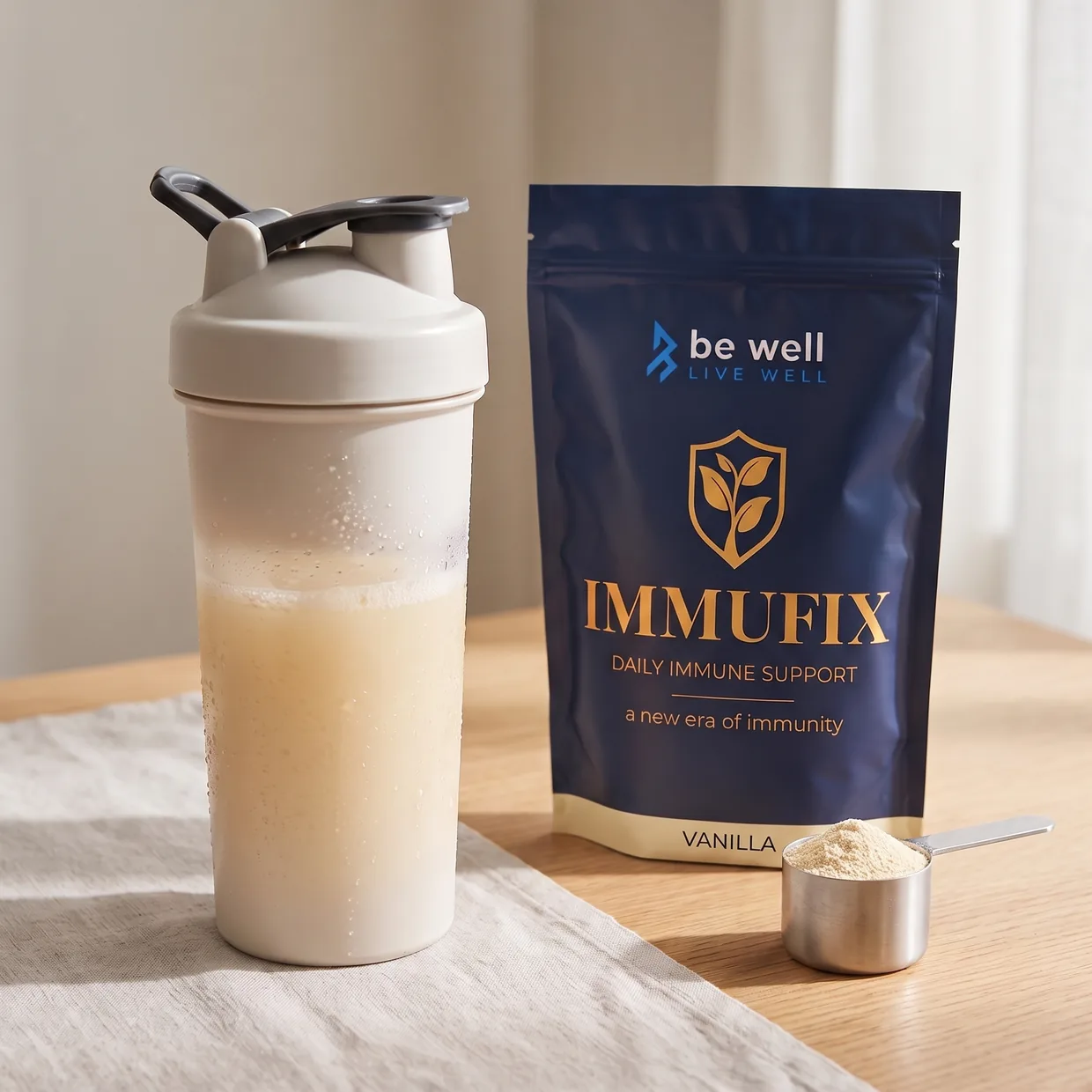
Those are statements about what the ingredients are and how they are made. Each nutrient is still declared on the label by amount per 25g scoop, and each claim on the pack belongs to a vitamin or mineral at a qualifying amount. Both flavours are vegetarian, and Orange is also vegan.
Where Immufix fits.
Immufix is one scoop (25g) in around 200ml of water, once a day. It provides 75µg of selenium (136% NRV) and 50µg of chromium (125% NRV). Selenium contributes to the maintenance of normal hair and nails. Chromium contributes to normal macronutrient metabolism. Zinc contributes to normal cognitive function. The full label, with every amount and % NRV, is on the science page.
The short version.
- "Food state" and "food grown" describe vitamins and minerals cultivated within a food-like matrix, such as yeast, rather than added only as isolated compounds.
- They are composition statements made by manufacturers. Neither phrase appears in the GB list of permitted vitamin and mineral forms.
- That list does include selenium enriched yeast and chromium enriched yeast, each defined as yeast grown in the presence of a mineral salt and then dried.
- Labels declare the amount of each nutrient whatever its form, and health claims depend on the nutrient and its amount, not the form.
- Immufix is a Food State formula, built in 1998, with minerals cultured in yeast and vitamins complexed the way they occur in food.
Food supplements should not be used as a substitute for a varied, balanced diet and a healthy lifestyle. If you have a medical condition, are pregnant, breastfeeding or taking medication, speak to your GP or pharmacist before taking any food supplement.

Daily Immune Support
Vitamins, minerals and plant nutrients in one daily scoop. The formula Paula Radcliffe has taken every day since 1998.
4.8 out of 5 · 89 reviewsDispatched the same day on weekday orders placed before 2pm.
Free standard UK delivery. Royal Mail 48 tracked, 2 to 3 working days. UK addresses only.
30‑day money-back guarantee. Try your first pouch of IMMUFIX for up to 30 days. If it’s not for you, we’ll refund your first qualifying pouch, less £10 shipping and handling. First purchase only. T&Cs apply.
Checkout completes securely on immufix.com
More from the journal.
Choline and inositol, side by side.
Choline is an essential nutrient found mainly in eggs, liver, meat and fish. Inositol is a ring-shaped compound found in grains, beans, nuts and fruit.
10 October 2026 · 6 min readCitrus bioflavonoids, explained.
Citrus bioflavonoids are the flavonoids in citrus fruit, such as hesperidin and naringin. Where they are found, how much fruit holds, and the 28mg in Immufix.
10 October 2026 · 5 min read
Soya isoflavones, food by food.
Soya isoflavones are plant compounds found mainly in soya beans. What they are, which soy foods contain the most, and the 45mg in a scoop of Immufix.
10 October 2026 · 5 min read