
Soya isoflavones, food by food.
Soya isoflavones sit on the Immufix label at 45mg a scoop. They are a group of plant compounds, and soya beans are by far the richest everyday source.
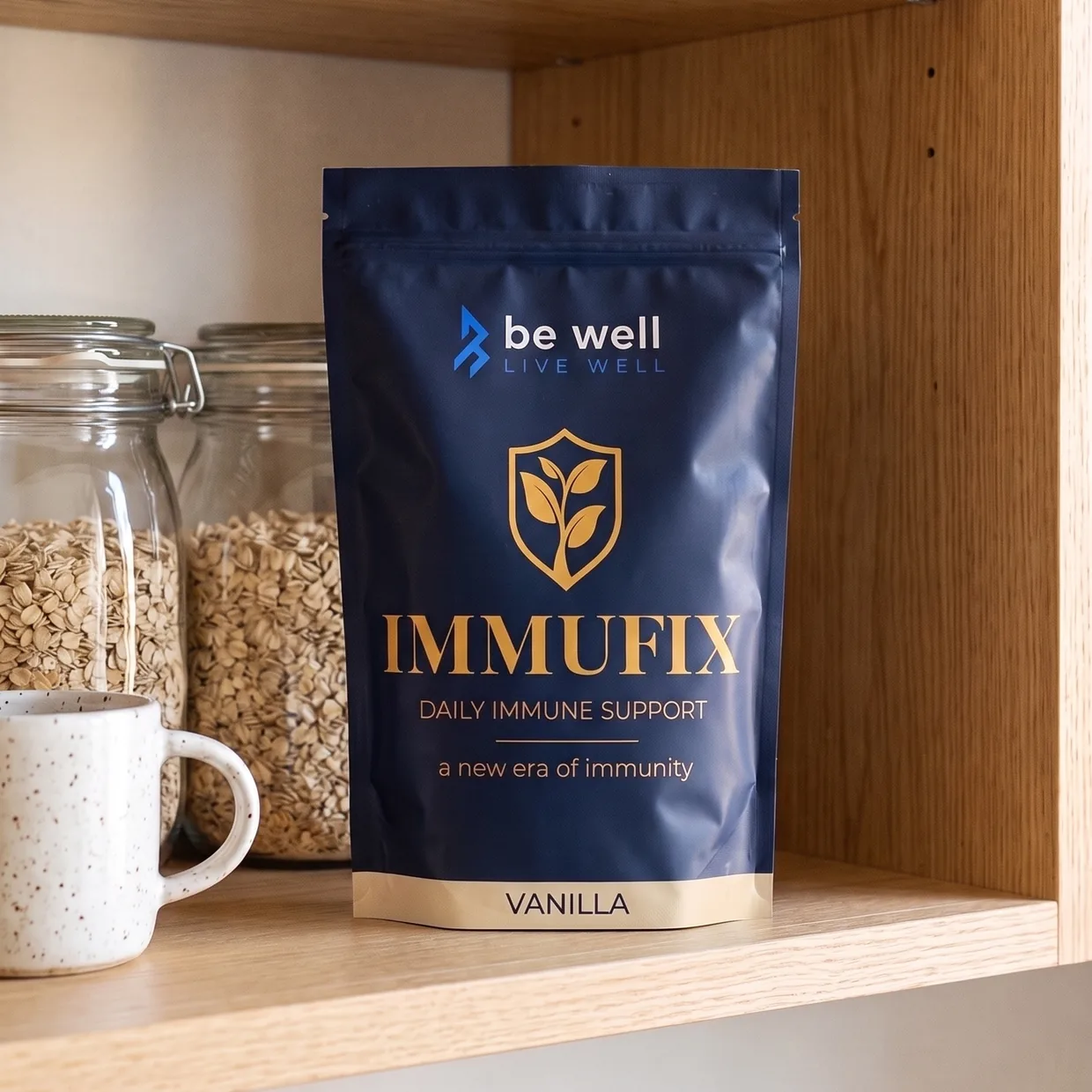
Quick answer. Soya isoflavones are plant compounds that the US Department of Agriculture describes as "a subclass of flavonoids". Three make up almost all of them: genistein, daidzein and glycitein. They occur in many plants, but a review in Nutrients notes that among commonly eaten foods "the soybean contains uniquely rich amounts". Soya beans, natto, tempeh, miso, tofu and soya milk are the main sources. Immufix contains 45mg per 25g scoop, and it contains soya.
What are soya isoflavones?
Isoflavones are a family of plant compounds. The USDA Database for the Isoflavone Content of Selected Foods calls them "a subclass of flavonoids", the large group of plant compounds that also includes the citrus bioflavonoids. "Soya isoflavones" simply means the isoflavones that come from soya beans.
There are three main ones. The Nutrients review reports that "The three isoflavones genistein, daidzein and glycitein and their respective glycosides account for approximately 50%, 40% and 10%, respectively, of the total isoflavone content of soybeans".
The word "glycosides" matters for how they are measured. In the bean, isoflavones are mostly attached to a sugar. The review says they "occur in soybeans almost exclusively as glycosides". Food tables usually report them in their sugar-free form, called the aglycone, so that different foods can be compared on the same basis. The USDA figures below are given that way.
Which soy foods contain isoflavones?
Soya beans and the foods made from them. Other beans and pulses contain only traces. These are total isoflavones per 100g of food from the USDA database (Release 2.1, 2015), rounded:
| Food | Total isoflavones | Per |
|---|---|---|
| Soya beans, mature, raw | 154.5mg | 100g |
| Natto (fermented soya beans) | 82.3mg | 100g |
| Soya beans, mature, boiled | 65.1mg | 100g |
| Tempeh | 60.6mg | 100g |
| Green soya beans (edamame), raw | 49.0mg | 100g |
| Miso | 41.5mg | 100g |
| Tofu, firm | 30.4mg | 100g |
| Green soya beans (edamame), boiled | 17.9mg | 100g |
| Soya milk, original and vanilla | 10.7mg | 100g |
| Soy sauce (shoyu) | 1.2mg | 100g |
| Peanuts, raw | 0.26mg | 100g |
| Chickpeas, boiled | 0.02mg | 100g |
Values vary widely between samples. The USDA's figure for raw soya beans is an average of many analyses, and the averages it gives for beans grown in different countries range from about 86mg to 179mg per 100g.
The Nutrients review gives a simple rule of thumb: "Each gram of soy protein in soybeans and traditional soyfoods is associated with approximately 3.5 mg of isoflavones." It adds that "one serving of a traditional soyfood, such as 100 g of tofu or 250 mL soymilk, typically provides about 25 mg isoflavones."
Does processing change the isoflavone content?
It can, a great deal. Soy sauce, made from fermented soya beans and wheat, contains about 1.2mg per 100g, against 154.5mg in raw soya beans. The Nutrients review notes that in more refined products such as isolated soy protein, "as much as 80% to 90% of the isoflavone content can be lost as a result of processing".
Fermentation can also change their form. In fermented foods such as miso, tempeh and natto, the review says a considerable share of the isoflavones occurs without the attached sugar, because bacteria split it off during fermentation.
How much soya isoflavone do people eat?
It depends heavily on where you live. The Nutrients review reports that mean adult intake is about 30 to 50mg a day in Japan, and under 3mg a day in the United States, Canada and Europe.
For comparison, 45mg is roughly the amount in 150g of firm tofu or 420ml of soya milk, using the USDA averages above (calculated).
Is soya an allergen?
Yes. Soya is one of the 14 allergens named in UK food labelling law. Annex II of Regulation (EU) No 1169/2011 lists "Soybeans and products thereof", with narrow exceptions such as fully refined soybean oil. The NHS lists soybeans among "The most common allergic foods".
Immufix contains soya. Soya is declared on the Immufix label. If you have a soya allergy, do not take Immufix. If you are unsure whether soya is safe for you, ask your GP or pharmacist first.
Do soya isoflavones have an authorised health claim?
No. Every soya isoflavone entry on the GB nutrition and health claims register has the status "Non-authorised". Isoflavones also have no nutrient reference value, so the Immufix label shows 45mg with no percentage beside it. Our guide to authorised health claims explains the rules.
So we describe soya isoflavones and say how much is in a scoop. We do not say they do anything.
Where Immufix fits.
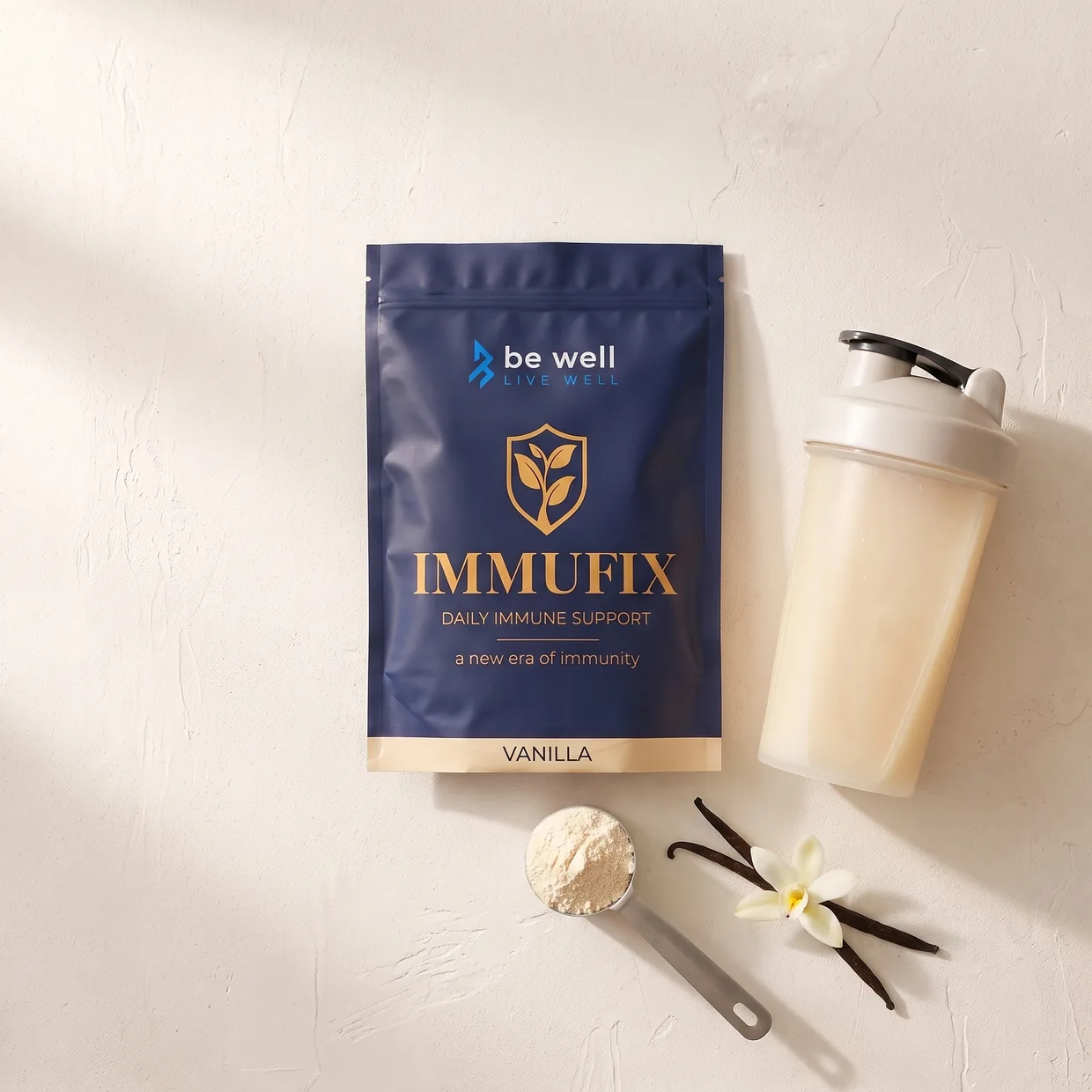
Immufix is one scoop (25g) in around 200ml of water, once a day. Each scoop contains 45mg of soya isoflavones, and the product contains soya. Both flavours are vegetarian, Orange is also vegan, and both are gluten free. The claims on our pack belong to the vitamins and minerals. Vitamin C contributes to the reduction of tiredness and fatigue. Biotin contributes to the maintenance of normal hair. The full label is on the science page, and our guide to citrus bioflavonoids covers another group of plant compounds on the label.
The short version.
- Soya isoflavones are plant compounds, a subclass of flavonoids. Genistein, daidzein and glycitein make up about 50%, 40% and 10% of the total in soya beans.
- Soya beans are the richest everyday source, at about 154mg per 100g raw. Natto, tempeh, miso, tofu and soya milk follow. Other pulses contain only traces.
- Adults in Japan average about 30 to 50mg a day; in Europe, under 3mg. A scoop of Immufix contains 45mg.
- Soya is one of the 14 allergens named in UK food labelling law, and Immufix contains soya.
- No health claim for soya isoflavones is authorised in Great Britain, and Immufix makes none.
Food supplements should not be used as a substitute for a varied, balanced diet and a healthy lifestyle. If you have a medical condition, are pregnant, breastfeeding or taking medication, speak to your GP or pharmacist before taking any food supplement.

Daily Immune Support
Vitamins, minerals and plant nutrients in one daily scoop. The formula Paula Radcliffe has taken every day since 1998.
4.8 out of 5 · 89 reviewsDispatched the same day on weekday orders placed before 2pm.
Free standard UK delivery. Royal Mail 48 tracked, 2 to 3 working days. UK addresses only.
30‑day money-back guarantee. Try your first pouch of IMMUFIX for up to 30 days. If it’s not for you, we’ll refund your first qualifying pouch, less £10 shipping and handling. First purchase only. T&Cs apply.
Checkout completes securely on immufix.com
More from the journal.
Choline and inositol, side by side.
Choline is an essential nutrient found mainly in eggs, liver, meat and fish. Inositol is a ring-shaped compound found in grains, beans, nuts and fruit.
10 October 2026 · 6 min read
Citrus bioflavonoids, explained.
Citrus bioflavonoids are the flavonoids in citrus fruit, such as hesperidin and naringin. Where they are found, how much fruit holds, and the 28mg in Immufix.
10 October 2026 · 5 min readFood state vitamins, what the words mean.
Food state and food grown describe vitamins and minerals cultivated within a food-like matrix such as yeast. What the terms mean, and what UK law says.
10 October 2026 · 6 min read