
Vitamins for runners, food first.
Running more does not mean you need a cupboard of supplements. It means eating enough, eating well, and knowing the handful of nutrients that UK dietitians and the NHS single out.
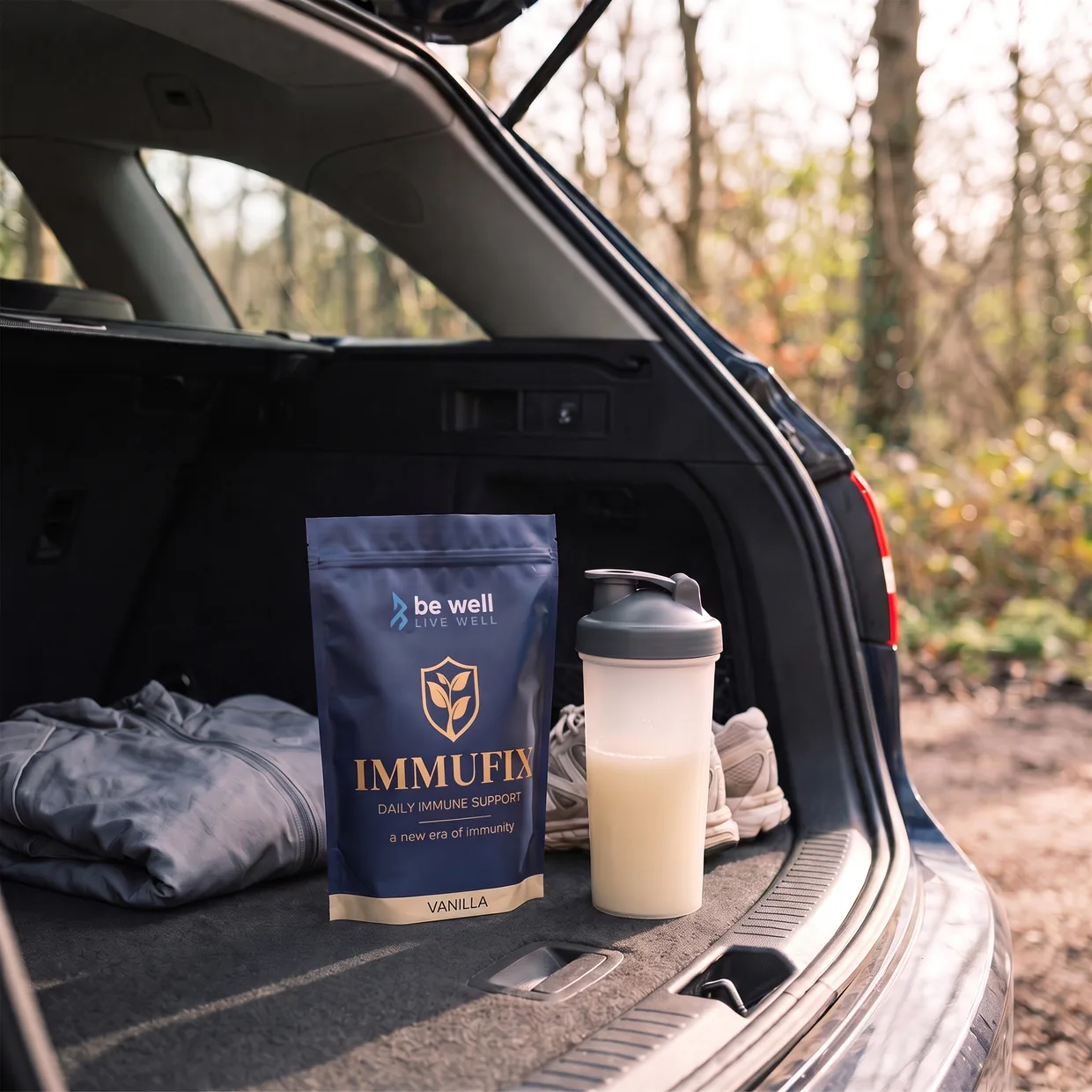
Quick answer. Most runners can get the vitamins and minerals they need from a varied, balanced diet that covers their energy needs. The British Dietetic Association says people in regular training "should be aware of their needs for calcium, iron, and vitamin D". The NHS advice to consider 10 micrograms of vitamin D a day in autumn and winter applies to runners as much as anyone. No vitamin replaces eating enough food for the miles you run.
Do runners need extra vitamins?
Usually not, provided they eat enough. The BDA's sport and exercise fact sheet puts it plainly: "If sufficient energy is consumed then vitamin and mineral intakes should be adequate." The NHS says the same for everyone: "Most people should get all the nutrients they need by having a varied and balanced diet, although some people may need to take extra supplements."
The catch for runners is the first part of that sentence. Training uses energy, and a runner who adds miles without adding food can fall short on vitamins and minerals simply because they are eating less than they need. The BDA links too little carbohydrate with a lack of energy and early fatigue during exercise. So the first step is meals that match your training, built on carbohydrate foods, with fruit, vegetables and protein at each one.
On supplements, the BDA says they "will not compensate for poor food choices but may be helpful in certain situations." The International Olympic Committee's consensus statement on supplements goes further for athletes: "A complete nutritional assessment should be undertaken before decisions regarding supplement use are made."
Is vitamin D good for runners?
Vitamin D contributes to the maintenance of normal bones and to normal muscle function, which matters to anyone who runs. In the UK, the issue is getting enough of it between October and March. According to the NHS, "between October and early March we do not make enough vitamin D from sunlight." Its advice is that everyone "should consider taking a daily supplement containing 10 micrograms of vitamin D during the autumn and winter."
That applies to runners too. Early-morning and evening runs in winter happen in the dark, and kit covers most of your skin, so running outdoors does not change the advice. Some people are advised to take vitamin D all year, including people who are not often outdoors and people with dark skin. Our guide to vitamin D in a UK winter covers the full NHS advice.
Food sources are limited: oily fish such as salmon, sardines and mackerel, red meat, egg yolks, and fortified foods such as some fat spreads and breakfast cereals.
Do runners need iron?
Iron matters, and it is one of the three nutrients the BDA asks people in regular training to keep an eye on. The NHS says adults need:
- 8.7mg a day for men aged 19 and over
- 14.8mg a day for women aged 19 to 49
- 8.7mg a day for women aged 50 and over
Good sources include red meat, beans such as kidney beans, edamame and chickpeas, nuts, dried fruit such as dried apricots, and fortified breakfast cereals. The NHS says you "should be able to get all the iron you need from your daily diet."
Do not start a high-dose iron supplement on a hunch. The NHS says that taking 17mg or less a day of iron supplements is unlikely to cause any harm, and that higher doses are for when a GP advises them. If you are worried about your iron levels, or feel unusually tired for weeks, see your GP, who can arrange a blood test.
What about calcium?
Calcium is the third nutrient on the BDA's list. The NHS says adults need 700mg a day and that you should be able to get it from your diet. Sources include milk, cheese and other dairy foods, green leafy vegetables such as curly kale, soya drinks with added calcium, bread made with fortified flour, and fish where you eat the bones, such as sardines and pilchards.

Which vitamins are linked to energy and muscle function?
In Great Britain only authorised wording can be used to describe what a nutrient does. These are the authorised claims most relevant to active people, with where the NHS says each nutrient is found and how much is in a scoop of Immufix. A nutrient has to be present at 15% of its nutrient reference value (NRV) or more before the claim can be made about it.
| Nutrient | Found in | What it contributes to | Per 25g scoop |
|---|---|---|---|
| Thiamin (B1) | Peas, bananas, oranges, nuts, wholegrain bread | Normal energy-yielding metabolism | 0.25mg · 23% NRV |
| Riboflavin (B2) | Milk, eggs, mushrooms, plain yoghurt | Normal energy-yielding metabolism; the reduction of tiredness and fatigue | 0.35mg · 25% NRV |
| Niacin (B3) | Meat, fish, wheat flour, eggs | Normal energy-yielding metabolism; the reduction of tiredness and fatigue | 4.5mg · 28% NRV |
| Pantothenic acid (B5) | Chicken, beef, eggs, mushrooms, avocado | Normal energy-yielding metabolism; the reduction of tiredness and fatigue | 1.5mg · 25% NRV |
| Vitamin B6 | Pork, poultry, peanuts, oats, bananas, milk | Normal energy-yielding metabolism; the reduction of tiredness and fatigue | 0.5mg · 36% NRV |
| Vitamin C | Oranges, peppers, strawberries, broccoli, potatoes | Normal energy-yielding metabolism; the reduction of tiredness and fatigue | 100mg · 125% NRV |
| Magnesium | Spinach, nuts, wholemeal bread | Normal muscle function; normal energy-yielding metabolism; the reduction of tiredness and fatigue | 70mg · 19% NRV |
| Vitamin D | Oily fish, egg yolks, fortified foods | Normal muscle function; the maintenance of normal bones | 1.25µg · 25% NRV |
Food sources are from the NHS pages on B vitamins, vitamin C, magnesium and vitamin D. These claims describe normal body function. None of them says a nutrient will make you run faster or further.
Where Immufix fits.
Immufix is one 25g scoop in around 200ml of water, once a day, and it fits alongside the breakfast you eat before or after a run (see what to eat before a morning run). It is not a vitamin D supplement: 1.25 micrograms is 25% of the NRV and well short of the NHS's 10 micrograms for autumn and winter, so if you follow that advice, take a dedicated vitamin D supplement as well. The iron in a scoop, 1.25mg or 9% of the NRV, is too low to carry any claim, and Immufix is not a source of calcium. What the scoop does contain is listed above and on the science page.
The short version.
- Eat enough for your training first. The BDA says vitamin and mineral intakes should be adequate when energy intake is.
- Calcium, iron and vitamin D are the three nutrients the BDA asks people in regular training to watch.
- The NHS advice to consider 10 micrograms of vitamin D a day from October to March applies to runners too.
- Get iron from food, and see your GP before taking a high-dose iron supplement.
- B vitamins, vitamin C and magnesium hold authorised claims for normal energy-yielding metabolism and the reduction of tiredness and fatigue.
Food supplements should not be used as a substitute for a varied, balanced diet and a healthy lifestyle. If you have a medical condition, are pregnant, breastfeeding or taking medication, speak to your GP or pharmacist before taking any food supplement.

Daily Immune Support
Vitamins, minerals and plant nutrients in one daily scoop. The formula Paula Radcliffe has taken every day since 1998.
4.8 out of 5 · 89 reviewsDispatched the same day on weekday orders placed before 2pm.
Free standard UK delivery. Royal Mail 48 tracked, 2 to 3 working days. UK addresses only.
30‑day money-back guarantee. Try your first pouch of IMMUFIX for up to 30 days. If it’s not for you, we’ll refund your first qualifying pouch, less £10 shipping and handling. First purchase only. T&Cs apply.
Checkout completes securely on immufix.com
More from the journal.
Carb loading for a marathon, in grams.
How many carbs to eat before a marathon: 10 to 12g per kg a day for 36 to 48 hours, 1 to 4g per kg on race morning, with a calculated UK day of meals.
10 October 2026 · 6 min read
Couch to 5K, started in winter.
Couch to 5K in winter: how the free NHS 9-week plan works, three runs a week, and how to fit it around dark mornings, short days, cold and rain.
10 October 2026 · 7 min read
A half marathon nutrition plan, from the week before.
A half marathon nutrition plan for the week before, the night before, race morning, during the run and after, with sourced carbohydrate amounts.
10 October 2026 · 6 min read