
Your first parkrun, step by step.
parkrun is a free 5k every Saturday morning in parks and open spaces across the UK. Here is everything a first-timer needs: registering, the barcode, the results, and why walking is welcome.
Quick answer. Yes, parkrun is free. You register once online, receive a personal barcode by email and bring a scannable copy to any event. There is no time limit: parkrun says "there is no time limit and no one finishes last", and a volunteer tail walker always comes in at the back. Anyone aged 4 or over can register, and results group you by gender and age, from junior groups such as JW11-14, through SM18-19 to SM30-34, to five-year groups from VW35-39 upwards.
Is parkrun free?
Yes, every time. The parkrun UK homepage describes it as "a free, community event where you can walk, jog, run, volunteer or spectate", and adds: "parkrun is free and you only need to register once whether walking, jogging, running, volunteering or a combination." There is no entry fee, no membership and no charge for results.
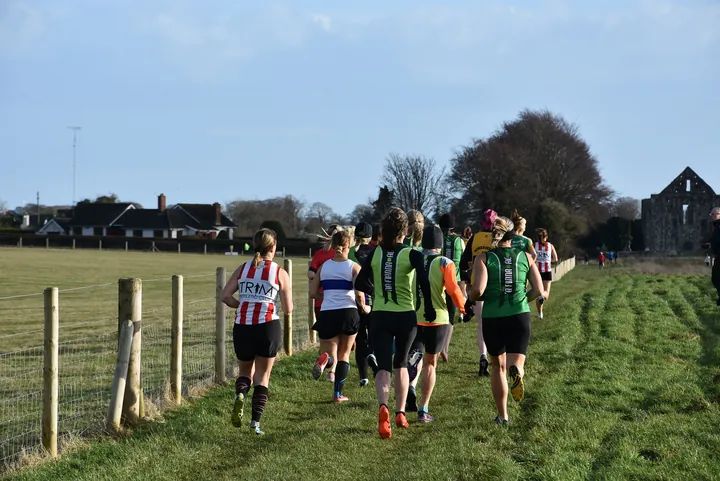
The 5k events take place every Saturday morning. In England and Wales they start at 9am, and in Scotland and Northern Ireland at 9:30am. Every event is run by volunteers. According to parkrun's accessibility pages, "more than 250,000 people walk, jog, wheel, run and volunteer at parkrun" across the UK every weekend.
The average finish time comes from the statistics panel on parkrun UK's website. Close to half an hour for 5k shows how many people walk and jog as well as run.
How do I register for parkrun and get my barcode?
Registration takes a couple of minutes, and you only ever do it once. parkrun's support site says: "Once registered, you remain registered for life."
- 1. Register online. Go to the parkrun website, choose register, and fill in the form. You pick a "home parkrun", but you can go to any event, any week.
- 2. Find your barcode. A confirmation email arrives shortly afterwards with a link to your personal barcode. If it has not arrived, check your junk folder; parkrun asks you to get in touch if nothing has come within four hours.
- 3. Bring a scannable copy. Print it, save it to your phone, or use the parkrun app, which shows it as a QR code. parkrun encourages a wristband, plastic token or printed barcode, because they carry your In Case of Emergency number.
- 4. Get it scanned after you finish. You collect a finish token at the end of the funnel, and a volunteer scans your barcode, then the token.
The barcode is not optional if you want a time. parkrun's policy is "No barcode, no time, no exception." You can still take part without one, but you will not appear in the results. Do not register a second time if you lose it: parkrun cannot merge results between two profiles, and you can sign in to your profile to print it again.
Is there a parkrun time limit?
No. The homepage says: "parkrun is positive, welcoming and inclusive, there is no time limit and no one finishes last." Every event has at least one volunteer tail walker who stays at the back and, in parkrun's words, "should be the last to go through the finish funnel, ensuring that everyone is accounted for."
Walking is fully part of it. parkrun calls walking at its events parkwalk: "Everyone starts at the same time and walks the same 5k parkrun route, alongside runners and volunteers." The tail walker wears an orange high visibility vest. At some events, volunteer parkwalkers in light blue vests walk the course with walkers to offer support.
To get a result, parkrun asks you to start at the official time, complete the whole course before the tail walker, and bring your barcode.
What are the parkrun age categories?
Your results email and the event's results page show an "Age Group" next to your name. It combines a letter for the broad band, a letter for gender, and your age range. These are the groups listed in the results for Bushy parkrun on 3 October 2026, when 1,719 people finished.
| Band | Example codes | Ages covered |
|---|---|---|
| J groups | JM10, JW11-14, JM15-17 | 10 and under, 11 to 14, 15 to 17 |
| S groups | SW18-19, SM20-24, SW25-29, SM30-34 | 18 to 34 |
| V groups | VW35-39, VM40-44, VW85-89, VM95-99 | 35 and over, in five-year bands |
| Wheelchair | MWC, WWC | By request to parkrun |
M and W show gender. The youngest group is JM10 or JW10, and the bands run in five-year steps from 35 upwards.
What is age grading?
Each result also shows an age grade percentage. parkrun's age grading page says it "takes your time and uses the world record time for your gender and age to produce a score". It allows rough comparisons between people of different ages. parkrun adds that age grades "should not be taken too seriously", because they make no allowance for weather or terrain. Using the WMA guidelines it quotes, above 60% is "Local Class Level" and above 70% is "Regional Class Level".
Can children do parkrun?
Yes, from the age of 4. At the Saturday 5k, children under 11 must be within arm's reach of a parent, guardian or designated adult the whole way round. There is also junior parkrun, a 2k event on Sunday mornings for children aged 4 to 14, which they can take part in until the day before their 15th birthday. Courses are marshalled so juniors are in sight of at least one marshal at all times. Children under 11 must be brought to and collected from junior parkrun by an adult who stays for the whole event. One registration covers both the 5k and the 2k.
Juniors earn wristbands for milestones: teal for 10 junior parkruns, peach for 25 and dark blue for 50. At the 5k, the first milestone club is the junior 10, for under-18s, followed by 25, 50, 100 and on to 1000.
How do I volunteer at parkrun?
Register first, as you would to run. parkrun counts volunteering as an equal way of taking part, and volunteer days count towards their own milestones (v25, v50 and so on). Roles include timekeeper, barcode scanner, finish tokens, marshal, tail walker and First Timers Welcome. A tail walker gets both a volunteer credit and a walk or run credit if their barcode is scanned.
To sign up, look at the Future Roster on your event's website and email the team with your full name, your parkrun ID (the number under your barcode) and the date you would like. You can also simply ask the team on the day. parkrun is clear there is no obligation: it asks "people to volunteer when they would like to".
What should I bring to my first parkrun?
- Your barcode. Printed, on a wristband or token, or in the app.
- Clothes to run in. Some events, such as Edinburgh, have no storage, so arrive ready. In the colder months, see parkrun in winter for cancellations and kit.
- Water for afterwards, and a warm layer for standing around at the finish.
- A dog, if you like, at events that allow them: one dog, on a short, handheld, non-extendable lead. Dogs are not allowed on the course at junior parkrun.
Arrive a little early and look out for the First Timers Welcome, a volunteer role that explains parkrun and the course to newcomers. For the meal either side, see what to eat before a morning run and what to eat after a run.
Where Immufix fits.
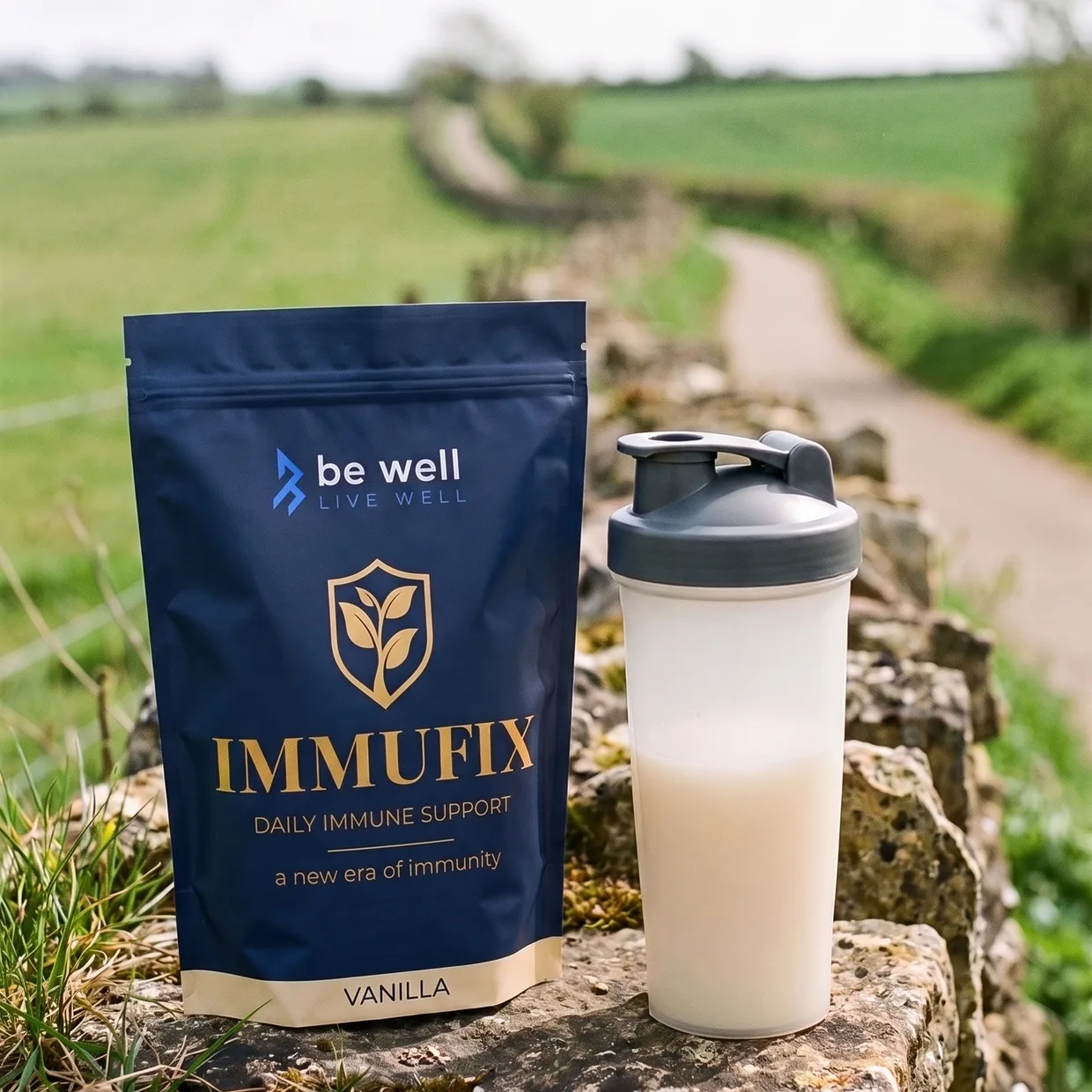
A Saturday parkrun becomes a habit faster when it is part of a fixed morning. Immufix is one 25g scoop in around 200ml of water, once a day, and sits easily with breakfast after you get home. Pantothenic acid, vitamin B6 and magnesium contribute to the reduction of tiredness and fatigue. Magnesium and vitamin D contribute to normal muscle function, and vitamin D also contributes to the maintenance of normal bones. Every amount is on the science page.
The short version.
- parkrun is free. Register once online and you stay registered for life.
- Bring a scannable barcode every week: no barcode, no time.
- There is no time limit. A volunteer tail walker always finishes last, and walking is welcome.
- Results show an age group such as SM25-29 or VW50-54, plus an age grade percentage.
- Children can take part from 4, and junior parkrun is a 2k on Sundays for 4 to 14 year olds.
Food supplements should not be used as a substitute for a varied, balanced diet and a healthy lifestyle. If you have a medical condition, are pregnant, breastfeeding or taking medication, speak to your GP or pharmacist before taking any food supplement.

Daily Immune Support
Vitamins, minerals and plant nutrients in one daily scoop. The formula Paula Radcliffe has taken every day since 1998.
4.8 out of 5 · 89 reviewsDispatched the same day on weekday orders placed before 2pm.
Free standard UK delivery. Royal Mail 48 tracked, 2 to 3 working days. UK addresses only.
30‑day money-back guarantee. Try your first pouch of IMMUFIX for up to 30 days. If it’s not for you, we’ll refund your first qualifying pouch, less £10 shipping and handling. First purchase only. T&Cs apply.
Checkout completes securely on immufix.com
More from the journal.
Carb loading for a marathon, in grams.
How many carbs to eat before a marathon: 10 to 12g per kg a day for 36 to 48 hours, 1 to 4g per kg on race morning, with a calculated UK day of meals.
10 October 2026 · 6 min readCouch to 5K, started in winter.
Couch to 5K in winter: how the free NHS 9-week plan works, three runs a week, and how to fit it around dark mornings, short days, cold and rain.
10 October 2026 · 7 min read
A half marathon nutrition plan, from the week before.
A half marathon nutrition plan for the week before, the night before, race morning, during the run and after, with sourced carbohydrate amounts.
10 October 2026 · 6 min read