
Pantothenic acid, vitamin B5 explained.
Pantothenic acid is vitamin B5, and it turns up in almost every food group. Here is what it is, the UK government's per-100g figures for the best everyday sources, and why there is no official daily amount.

Quick answer. Pantothenic acid is vitamin B5. The NHS says it is found in varying amounts in almost all vegetables, wholegrain foods and meats, and lists chicken, beef, liver and kidneys, eggs, mushrooms and avocado as good sources. In the UK government's food composition data (CoFID 2021), raw white mushrooms have 2.38mg per 100g, grilled skinless chicken breast 1.67mg and Hass avocado 1.34mg. No daily amount has been set in the UK, and food labels use a reference value of 6mg.
What foods are high in pantothenic acid?
The NHS page on B vitamins says "Pantothenic acid is found in varying amounts in almost all vegetables, wholegrain foods and meats". It names these as good sources:
- chicken
- beef
- liver and kidneys (the NHS adds: avoid liver if you are pregnant)
- eggs
- mushrooms
- avocado
It adds that "Breakfast cereals are also a good source if they have been fortified with pantothenic acid." Not all are, so check the label.
The Composition of Foods Integrated Dataset (CoFID), the UK government's food composition tables, lists it under the name pantothenate. Every figure below is from its 2021 release, per 100g of the food as described.
| Food (as eaten) | Pantothenic acid per 100g | Share of the 6mg NRV |
|---|---|---|
| Lamb's liver, fried | 8.00mg | 133% |
| Peanuts, plain, unsalted | 2.66mg | 44% |
| Wheatgerm | 2.60mg | 43% |
| Mushrooms, white, raw | 2.38mg | 40% |
| Chicken breast, grilled, no skin | 1.67mg | 28% |
| Salmon, farmed, grilled | 1.50mg | 25% |
| Avocado, Hass, flesh | 1.34mg | 22% |
| Eggs, whole, boiled | 1.25mg | 21% |
| Beef rump steak, grilled, lean | 0.91mg | 15% |
| Porridge oats, dry | 0.75mg | 13% |
| Milk, semi-skimmed | 0.68mg | 11% |
| Wholemeal bread | 0.63mg | 11% |
The right-hand column is calculated: each CoFID figure divided by 6mg, the nutrient reference value (NRV) for pantothenic acid on food labels. The spread is the point. Meat, fish, eggs, dairy, nuts, grains and vegetables all appear, which is why the NHS expects a varied diet to cover it.
What is vitamin B5?
Vitamin B5 is another name for pantothenic acid, one of the eight B vitamins on the NHS list. The NHS describes its role briefly: it "has several functions, such as helping the body to release energy from food."
Like riboflavin and niacin, it is not kept in reserve. The NHS says "Pantothenic acid cannot be stored in the body, so you need it in your diet every day." Because it is in so many foods, that rarely takes any planning.
How much vitamin B5 do I need a day?
Unlike most vitamins, pantothenic acid has no UK daily amount. The NHS says "No amount has been set in the UK for how much pantothenic acid you need." It also does not appear in the vitamin table of the government's dietary recommendations.
Food labels still need a figure to work out a percentage, so they use the NRV, which is 6mg. That is the number behind "% NRV" on a supplement. Our explainer on what NRV means covers where the label figures come from.
The NHS adds that "You should be able to get all the pantothenic acid you need from your daily diet, as it's found in many foods." From the table, 100g of boiled egg at breakfast, 100g of grilled chicken at lunch and 100g of mushrooms in the evening come to about 5.3mg (calculated).
What does pantothenic acid do?
In Great Britain, the wording a food or supplement may use about a nutrient comes from the GB nutrition and health claims register. These are the authorised claims for pantothenic acid that we use:
- Pantothenic acid contributes to normal energy-yielding metabolism.
- Pantothenic acid contributes to the reduction of tiredness and fatigue.
- Pantothenic acid contributes to normal mental performance.
The third claim is unusual. In the GB register, pantothenic acid is the only nutrient authorised to use the "normal mental performance" wording. Like every authorised claim, it describes a contribution to the body's normal function. It is not a promise of sharper thinking after a dose.
Pantothenic acid also sits among the five B vitamins that hold the tiredness claim. Our guide to which B vitamins help with tiredness compares them one by one.
Can you take too much vitamin B5?
The NHS says "There's not enough evidence to know what the effects might be of taking high daily doses of pantothenic acid supplements." Its Department of Health and Social Care advice is that "Taking 200mg or less a day of pantothenic acid in supplements is unlikely to cause any harm."
That figure applies to supplements only. If you take more than one, add up the pantothenic acid across their labels. Health questions beyond diet are for a GP or pharmacist.
Where Immufix fits.
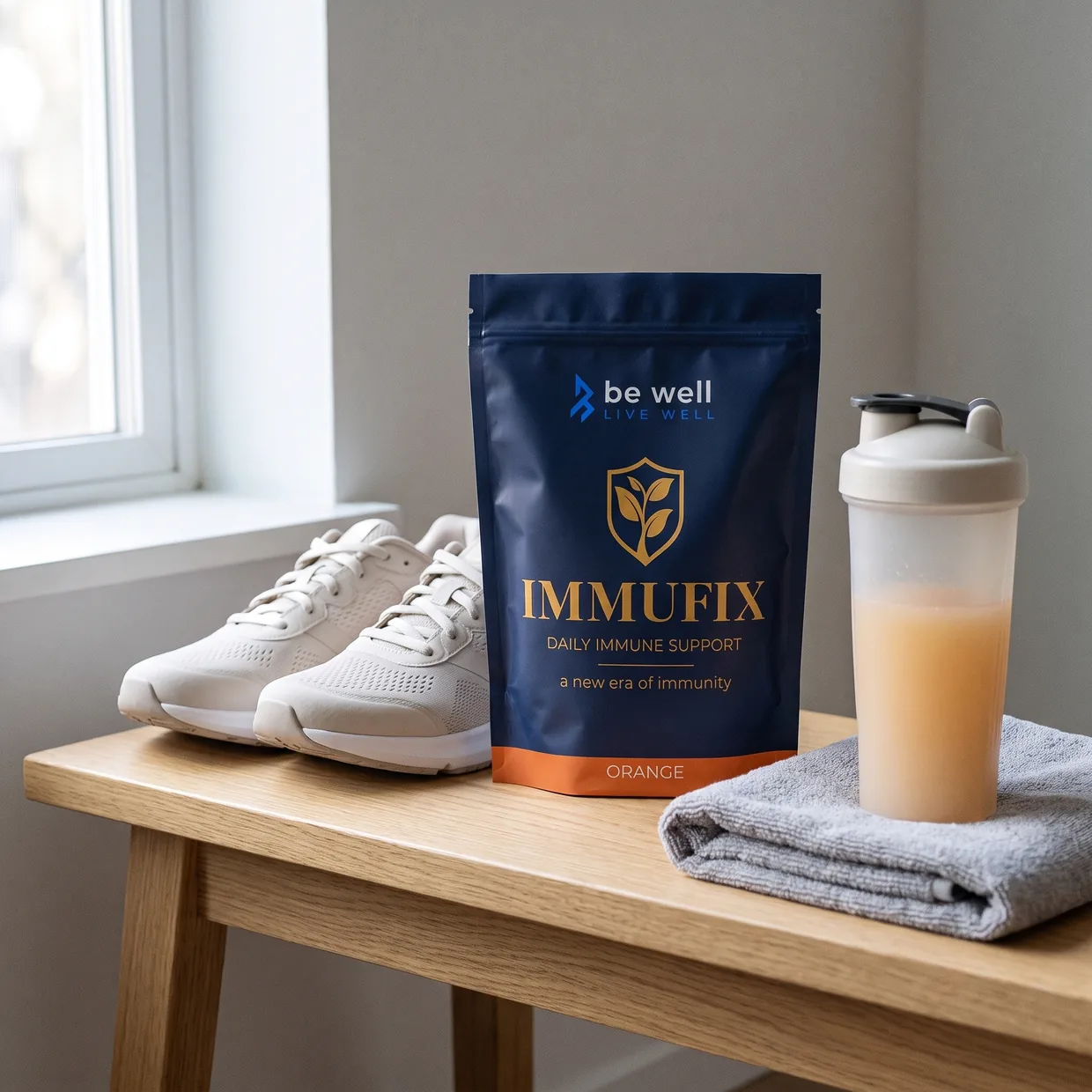
Pantothenic acid is in so many foods that most people take in a steady amount without trying. Immufix is a daily food supplement for people who want a consistent base under their diet. One scoop (25g) in around 200ml of water, once a day, provides 1.5mg of pantothenic acid, which is 25% of the NRV. Pantothenic acid contributes to the reduction of tiredness and fatigue and to normal mental performance. Every amount is listed on the science page.
The short version.
- Pantothenic acid is vitamin B5. The body cannot store it, so you need some every day.
- The NHS lists chicken, beef, liver and kidneys, eggs, mushrooms and avocado as good sources.
- Per 100g in CoFID, mushrooms have 2.38mg, grilled chicken breast 1.67mg and avocado 1.34mg.
- No daily amount is set in the UK. Labels use an NRV of 6mg.
- Pantothenic acid contributes to the reduction of tiredness and fatigue and to normal mental performance.
Food supplements should not be used as a substitute for a varied, balanced diet and a healthy lifestyle. If you have a medical condition, are pregnant, breastfeeding or taking medication, speak to your GP or pharmacist before taking any food supplement.

Daily Immune Support
Vitamins, minerals and plant nutrients in one daily scoop. The formula Paula Radcliffe has taken every day since 1998.
4.8 out of 5 · 89 reviewsDispatched the same day on weekday orders placed before 2pm.
Free standard UK delivery. Royal Mail 48 tracked, 2 to 3 working days. UK addresses only.
30‑day money-back guarantee. Try your first pouch of IMMUFIX for up to 30 days. If it’s not for you, we’ll refund your first qualifying pouch, less £10 shipping and handling. First purchase only. T&Cs apply.
Checkout completes securely on immufix.com
More from the journal.
What antioxidants are, in plain English.
What antioxidants are, what oxidative stress means in plain English, which nutrients hold the authorised claim, and the UK foods that provide them.
10 October 2026 · 7 min read
Biotin, what it does and where it is.
Biotin (vitamin B7) foods per 100g from UK government data, what the NHS says about biotin, its authorised claims and the NHS 0.9mg supplement guide.
10 October 2026 · 5 min read
What chromium is, and where you find it.
What chromium is, which foods contain it, how much the NHS says adults need, and the one authorised health claim chromium holds in Great Britain.
10 October 2026 · 6 min read