
Riboflavin, vitamin B2 explained.
Riboflavin is vitamin B2, and milk, eggs, mushrooms, yoghurt and fortified cereals supply most of it. Here is what it is, how much you need and the UK government's figures for the foods that carry it.
Quick answer. Riboflavin is vitamin B2, a B vitamin the body cannot store, so you need some in your diet every day. The NHS lists milk, eggs, fortified breakfast cereals, mushrooms and plain yoghurt as good sources. In the UK government's food composition data (CoFID 2021), boiled eggs have 0.47mg per 100g, raw white mushrooms 0.27mg and semi-skimmed milk 0.24mg. Adults aged 19 to 64 need about 1.3mg a day (men) or 1.1mg (women).
What foods are high in riboflavin?
The NHS page on B vitamins gives a short list of good sources of riboflavin: milk, eggs, fortified breakfast cereals, mushrooms and plain yoghurt.
The Composition of Foods Integrated Dataset (CoFID), the UK government's food composition tables, puts numbers on those foods and a few more. Every figure below is from its 2021 release, per 100g of the food as described.
| Food (as eaten) | Riboflavin per 100g | Share of the 1.4mg NRV |
|---|---|---|
| Cornflakes, fortified | 1.40mg | 100% |
| Wheat biscuits, fortified | 1.20mg | 86% |
| Almonds, whole | 1.14mg | 81% |
| Eggs, whole, boiled | 0.47mg | 34% |
| Cheddar cheese | 0.39mg | 28% |
| Mackerel, grilled | 0.37mg | 26% |
| Beef rump steak, grilled, lean | 0.28mg | 20% |
| Mushrooms, white, raw | 0.27mg | 19% |
| Yoghurt, whole milk, plain | 0.27mg | 19% |
| Milk, semi-skimmed | 0.24mg | 17% |
| Yoghurt, low fat, plain | 0.22mg | 16% |
The right-hand column is calculated: each CoFID figure divided by 1.4mg, the nutrient reference value (NRV) for riboflavin on food labels. Fortified cereals vary by brand, so check the pack. Almonds, cheese, mackerel and beef are not on the NHS list but carry useful amounts in the CoFID data.
Milk and eggs matter more than their per-100g figures suggest, because people eat them in larger amounts and most days. A 200ml glass of semi-skimmed milk carries about 0.48mg of riboflavin, around a third of the NRV (calculated, taking 200ml as roughly 200g).
What is riboflavin?
Riboflavin is also known as vitamin B2. It is one of the eight B vitamins on the NHS list. The NHS says riboflavin helps "the body release energy from food", and it names skin, eyes and the nervous system as the other areas where riboflavin plays a part.
Like thiamin, niacin and pantothenic acid, it is not held in reserve. The NHS puts it plainly: "Riboflavin cannot be stored in the body, so you need it in your diet every day." That is why the sources that count most are the everyday ones: milk in tea and on cereal, an egg at breakfast, yoghurt as a snack.
How much riboflavin do I need a day?
The NHS says adults aged 19 to 64 need about 1.3mg of riboflavin a day if they are men and 1.1mg if they are women. The government's dietary recommendations keep the same figures for people aged 65 and over.
Labels use one reference figure for everyone, the NRV, which is 1.4mg for riboflavin. It sits slightly above both NHS amounts. Our guide to what NRV means explains why the two sets of numbers differ.
The NHS also says "You should be able to get all the riboflavin you need from your daily diet."
Does light destroy riboflavin?
It can. The NHS notes that "UV light can destroy riboflavin, so ideally these foods should be kept out of direct sunlight."
In practice that means ordinary kitchen habits:
- Put milk back in the fridge rather than leaving it on a sunny windowsill or doorstep.
- Keep mushrooms in their bag or a paper bag in the fridge.
- Store fortified cereals in their box or a closed cupboard.
What does riboflavin do?
In Great Britain, the wording a food or supplement may use about a nutrient is fixed by the GB nutrition and health claims register. These are the authorised claims for riboflavin that we use:
- Riboflavin contributes to normal energy-yielding metabolism.
- Riboflavin contributes to the reduction of tiredness and fatigue.
- Riboflavin contributes to the maintenance of normal skin.
- Riboflavin contributes to the maintenance of normal vision.
- Riboflavin contributes to the protection of cells from oxidative stress.
- Riboflavin contributes to normal functioning of the nervous system.
Each one describes a part in the body's normal processes, which matches the NHS description of skin, eyes, the nervous system and energy from food. Riboflavin is also one of five B vitamins that hold the tiredness claim. Our guide to which B vitamins help with tiredness sets them side by side.
Can you take too much riboflavin?
The NHS says "There's not enough evidence to know what the effects might be of taking high doses of riboflavin supplements each day." Its Department of Health and Social Care advice is that "Taking 40mg or less a day of riboflavin supplements is unlikely to cause any harm."
Riboflavin from food is not part of that figure. If you take more than one supplement, add up the riboflavin across them. Questions about your own health beyond diet are for a GP or pharmacist.
Where Immufix fits.
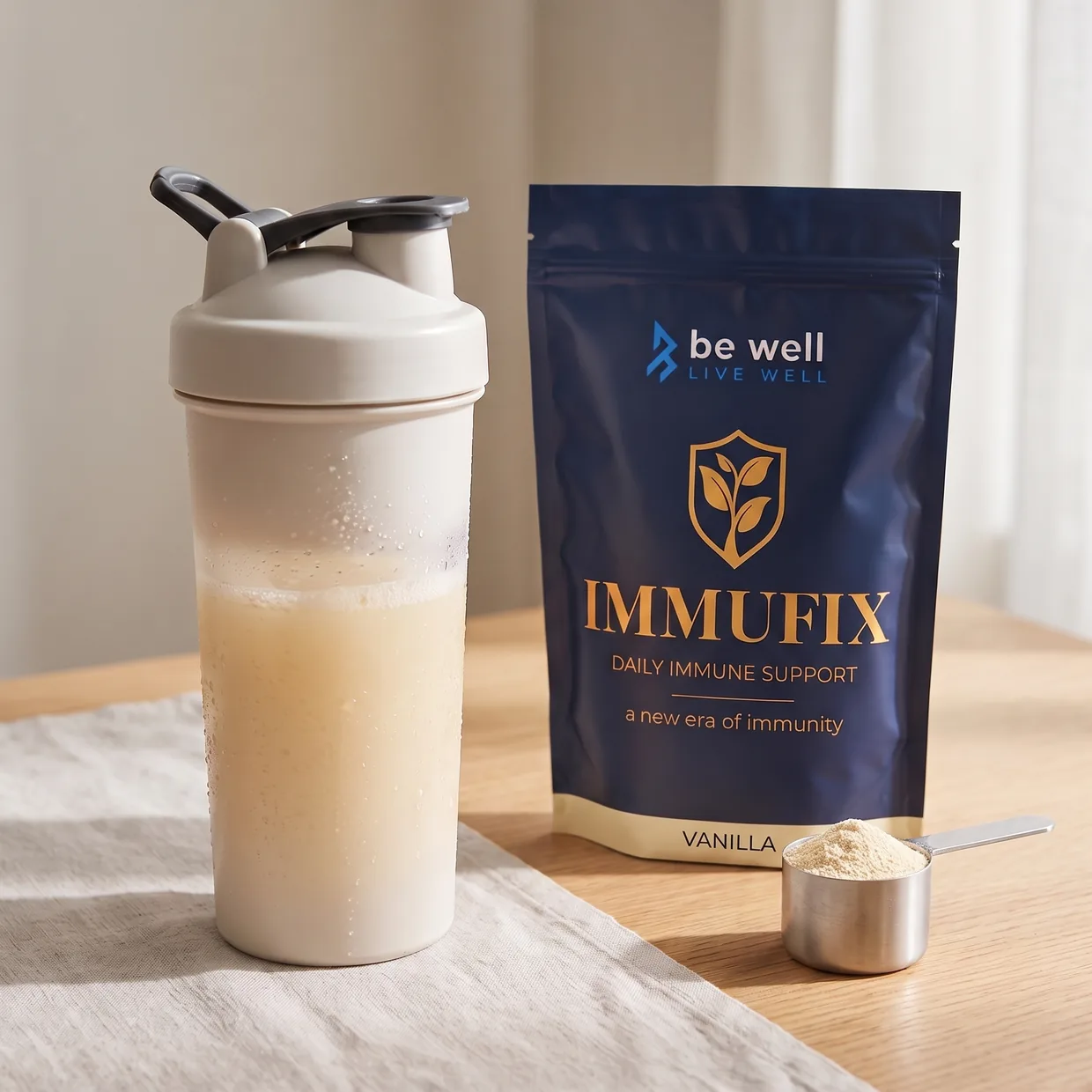
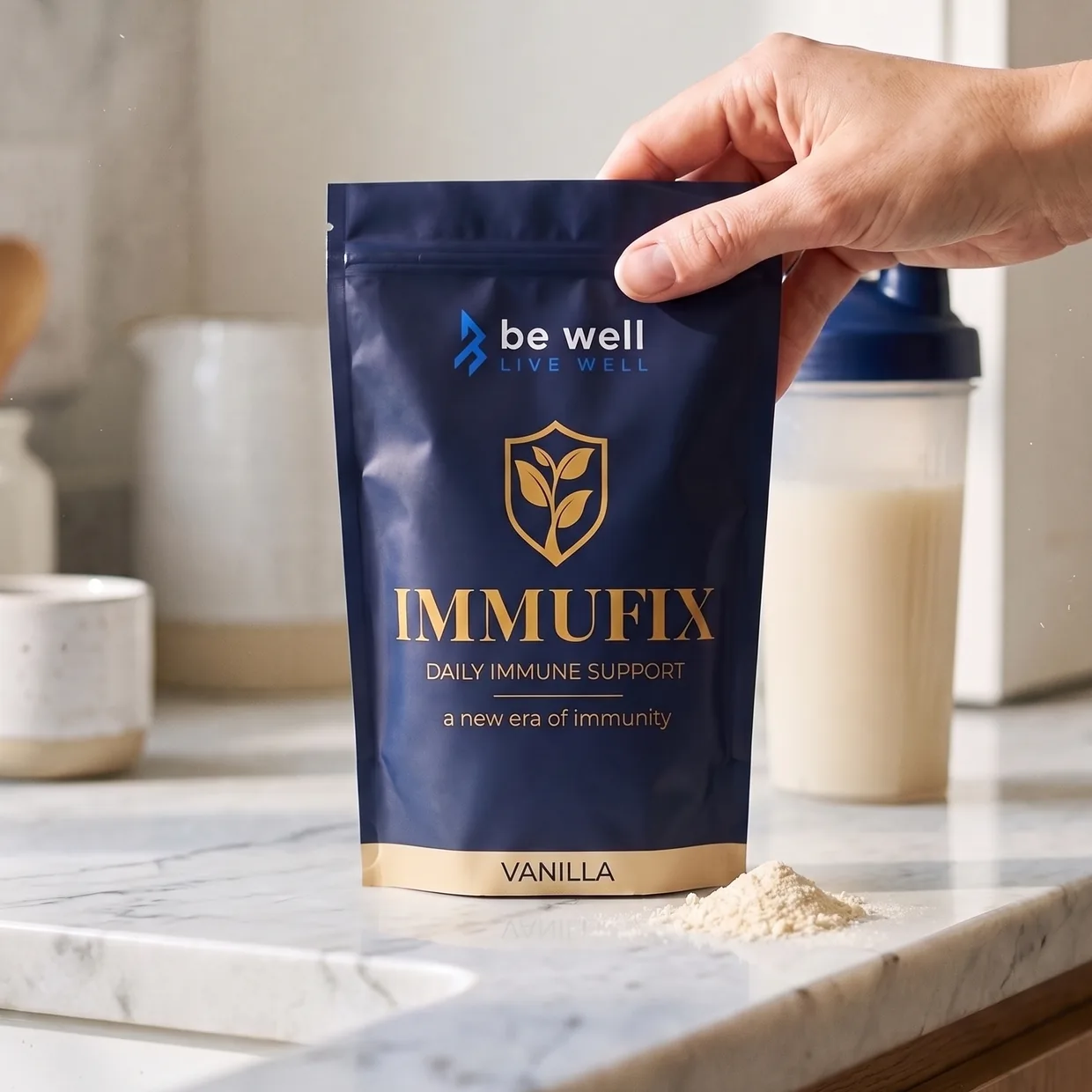
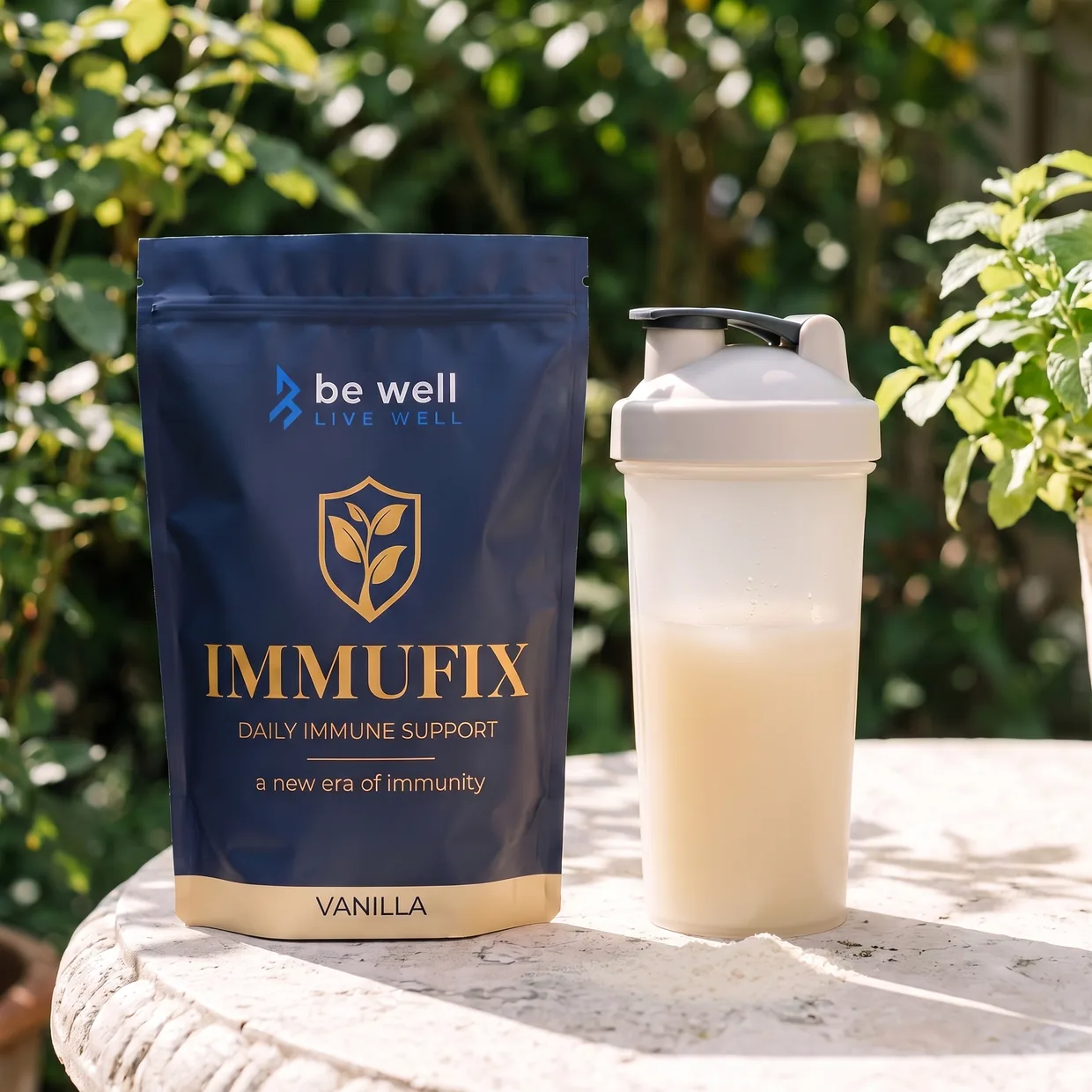
Most people can cover riboflavin from milk, eggs, yoghurt and cereals. Immufix is a daily food supplement for people who want a consistent base under that diet. One scoop (25g) in around 200ml of water, once a day, provides 0.35mg of riboflavin, which is 25% of the NRV. Riboflavin contributes to normal energy-yielding metabolism and to the reduction of tiredness and fatigue. The full list of amounts is on the science page.
The short version.
- Riboflavin is vitamin B2. The body cannot store it, so you need some every day.
- The NHS lists milk, eggs, fortified cereals, mushrooms and plain yoghurt as good sources.
- Per 100g in CoFID, boiled eggs have 0.47mg, mushrooms 0.27mg and semi-skimmed milk 0.24mg.
- Adults need about 1.3mg a day (men) or 1.1mg (women). The label NRV is 1.4mg.
- UV light can destroy riboflavin, so keep milk and mushrooms out of direct sunlight.
Food supplements should not be used as a substitute for a varied, balanced diet and a healthy lifestyle. If you have a medical condition, are pregnant, breastfeeding or taking medication, speak to your GP or pharmacist before taking any food supplement.

Daily Immune Support
Vitamins, minerals and plant nutrients in one daily scoop. The formula Paula Radcliffe has taken every day since 1998.
4.8 out of 5 · 89 reviewsDispatched the same day on weekday orders placed before 2pm.
Free standard UK delivery. Royal Mail 48 tracked, 2 to 3 working days. UK addresses only.
30‑day money-back guarantee. Try your first pouch of IMMUFIX for up to 30 days. If it’s not for you, we’ll refund your first qualifying pouch, less £10 shipping and handling. First purchase only. T&Cs apply.
Checkout completes securely on immufix.com
More from the journal.
What antioxidants are, in plain English.
What antioxidants are, what oxidative stress means in plain English, which nutrients hold the authorised claim, and the UK foods that provide them.
10 October 2026 · 7 min read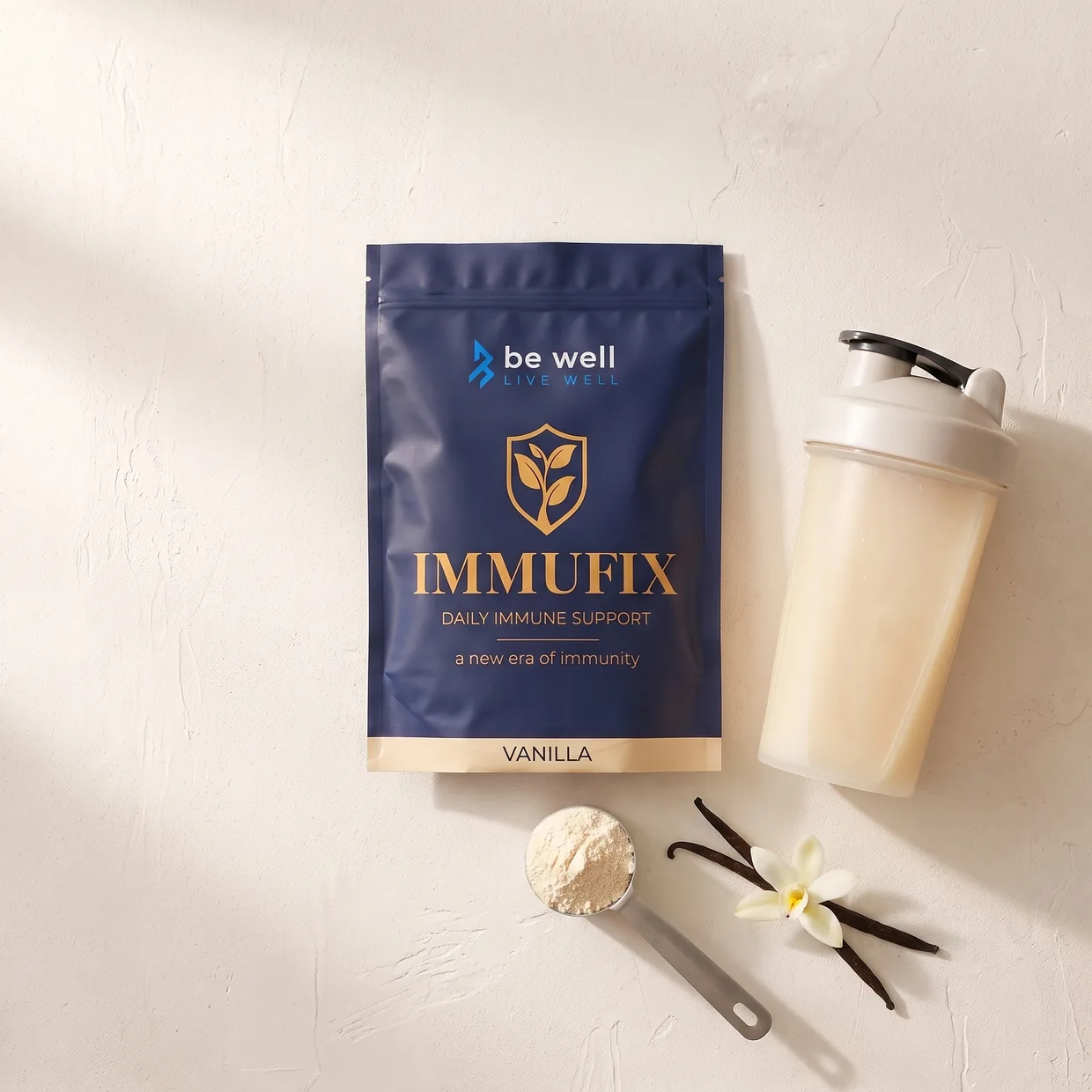
Biotin, what it does and where it is.
Biotin (vitamin B7) foods per 100g from UK government data, what the NHS says about biotin, its authorised claims and the NHS 0.9mg supplement guide.
10 October 2026 · 5 min read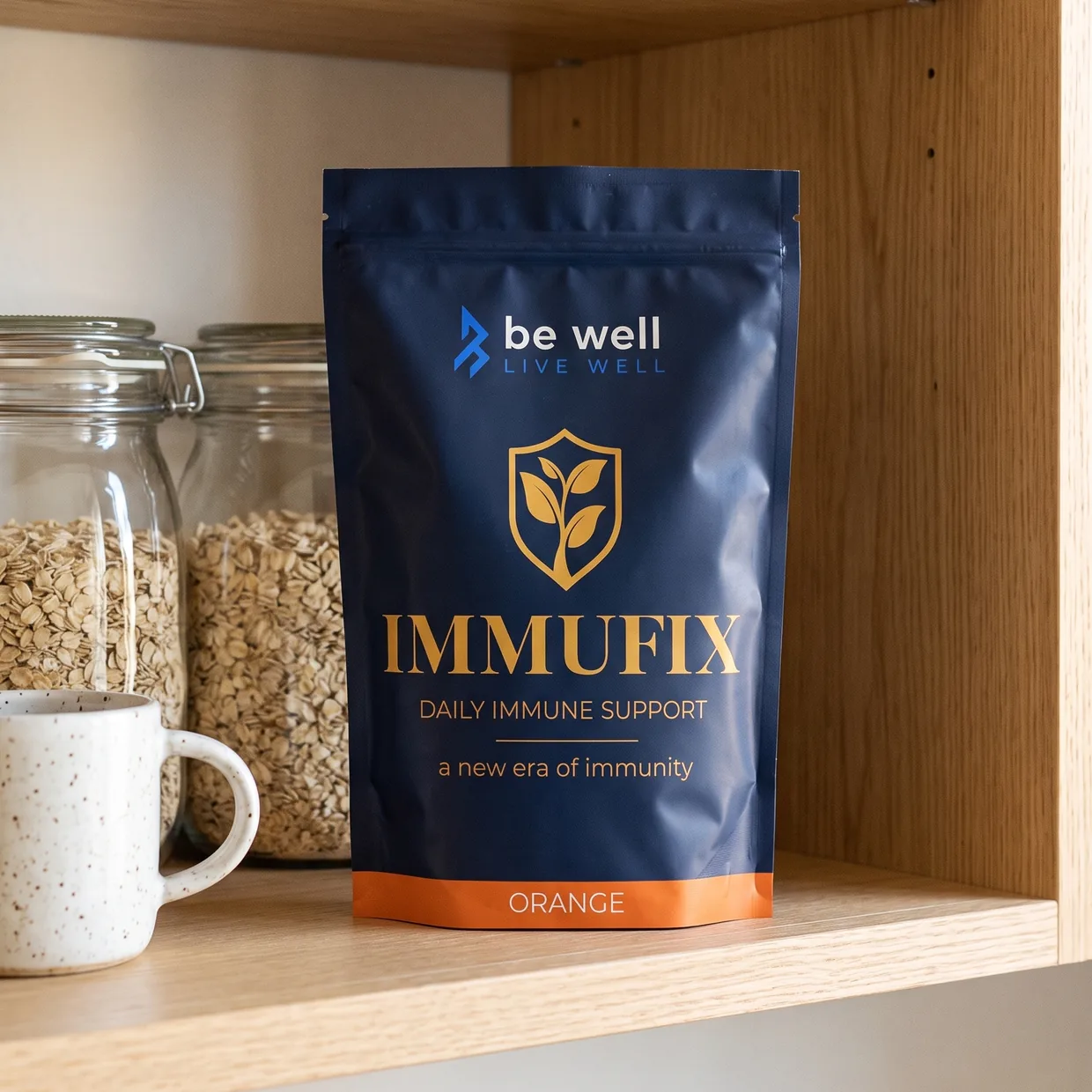
What chromium is, and where you find it.
What chromium is, which foods contain it, how much the NHS says adults need, and the one authorised health claim chromium holds in Great Britain.
10 October 2026 · 6 min read