
How much water to drink in a day.
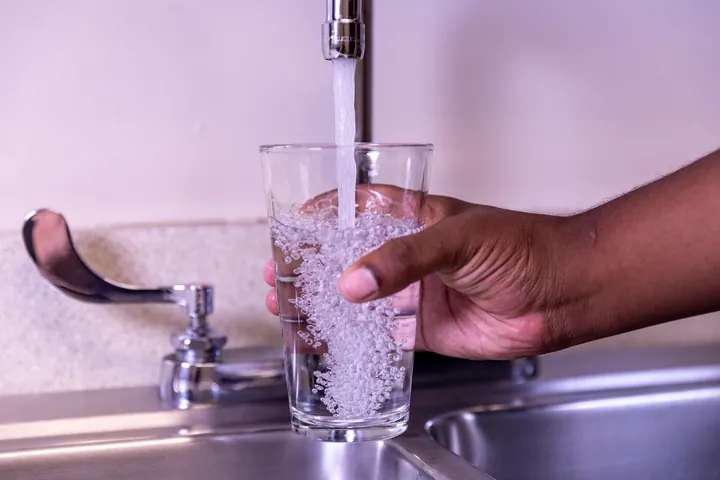
The UK guide is 6 to 8 cups or glasses of fluid a day, and it does not all have to be water. Tea, coffee and milk count, and the colour of your pee is the simplest check.
Quick answer. In the UK, the NHS Eatwell Guide says: "As a guide, the government recommends 6 to 8 cups or glasses a day." That is fluid, not only water: "Water, lower-fat milks, lower-sugar or sugar-free drinks and tea and coffee all count." The NHS adds that most people should drink enough so their pee is "a clear pale yellow colour", and that you may need more in a hot environment, when physically active for long periods, or when pregnant or breastfeeding.
How much water should I drink a day in the UK?
The official answer comes from the NHS Eatwell Guide, under the heading "Drink plenty of fluids": "As a guide, the government recommends 6 to 8 cups or glasses a day."
Two things are worth noticing. First, it says fluid, not water. Second, it says "as a guide". The NHS page on water, drinks and hydration repeats the figure and adds: "This is just a guide and you may need to drink more fluids" in some situations, covered below.
What is that in litres?
The NHS does not give a volume, so it depends on your glass. The British Dietetic Association's fluid fact sheet uses these common measures: "1 medium sized glass ~200ml", "1 mug ~250ml" and "1 cup ~200ml". By our calculation, 6 to 8 glasses of 200ml is 1.2 to 1.6 litres, and 6 to 8 mugs of 250ml is 1.5 to 2 litres.
The BDA also gives figures per person, taken from the European Food Safety Authority. They are amounts to drink, on top of the water in food.
The BDA explains that "Drinks provide around 70-80% of our water needs. The remaining 20-30% comes from foods such as soup, stews, some fruits, and vegetables which contain a lot of water." It also notes that these "are average values" and that individual needs depend on temperature, humidity and exercise.
Does tea and coffee count towards your water intake?
Yes. The NHS is clear: "Water, lower-fat milk and lower-sugar drinks, including tea and coffee, all count as part of your daily intake." Here is how the main drinks compare, according to NHS and BDA guidance:
- Water: the NHS calls it "a healthy and cheap choice to keep you hydrated". The BDA adds that it is calorie and sugar free.
- Tea and coffee: count in full. The BDA says "Caffeine has a small dehydrating effect. But the amount of water consumed in a cup or mug of tea or coffee means that overall the body benefits from the fluid consumed." The NHS still advises drinking caffeine in moderation. Our guide to how much caffeine is too much has the figures.
- Milk: counts. The NHS suggests adults choose lower-fat milk, such as semi-skimmed, 1% or skimmed, or unsweetened plant-based drinks.
- Fruit juice and smoothies: count, but the Eatwell Guide says to "limit these drinks to a combined total of 150ml a day", because their free sugars can damage teeth. The NHS suggests drinking them with a meal.
- Sugary drinks: count as fluid, but the NHS suggests swapping them for diet, sugar-free or no added sugar versions.
- Food: also counts. The NHS says "We also get some fluids from the foods we eat."
How do I know if I'm drinking enough?
Look at the colour of your pee. The NHS says "Most people should aim to drink enough during the day so their pee is a clear pale yellow colour." The BDA describes the same target as "a pale straw colour".
Thirst helps, but it is not perfect. The BDA points out that "when you drink, you stop feeling thirsty before your body is completely rehydrated", and that thirst "is not a useful measure in children and older adults".
The NHS lists the signs of not drinking enough on its dehydration page. They include:
- feeling thirsty
- dark yellow, strong-smelling pee
- peeing less often than usual
- headache and feeling light-headed
- feeling tired
- a dry mouth, lips and tongue
The NHS self-help page on tiredness makes the same link: "Sometimes you feel tired simply because you're mildly dehydrated." If you have dark pee or are peeing less than normal, feel unusually tired, or feel dizzy when you stand up and it does not go away, the NHS says to ask for an urgent GP appointment or get help from NHS 111.
When do you need to drink more water?
The NHS says you may need more fluid than the 6 to 8 guide if you are:
- pregnant or breastfeeding
- in a hot environment
- physically active for long periods
The NHS also advises drinking extra if you have been sweating from physical activity, and says "water is the best way to replace lost fluids". The BDA adds that "Warm and dry environments such as hot sunny days and air-conditioned offices" can raise the need for water, and gives extra amounts for pregnancy (300ml a day more than other adults) and breastfeeding (600 to 700ml a day more).
Babies, children and older adults are more at risk of not drinking enough, according to the NHS. The BDA advises reminding children and older adults to drink regularly rather than waiting for thirst. If you exercise, our guide to how much exercise you need a week covers the UK activity guidelines.
How to drink more water through the day.
Simple habits do most of the work. These come from the NHS and BDA advice:
- Drink little and often. The NHS says "drink regularly throughout the day". The BDA says "Keep hydrated by drinking little and often".
- Keep water in sight. The BDA suggests a bottle or jug of water on your desk or meal table.
- Tie drinks to the day's fixed points. A glass on waking, one with each of three meals and a tea or coffee mid-morning adds up to 5 drinks before the evening.
- Make water easier to like. If you do not like plain water, the NHS suggests sparkling water, no added sugar squash, or a slice of lemon or lime.
- Dilute squash well to cut the sugar, as the NHS recommends.
Where Immufix fits.
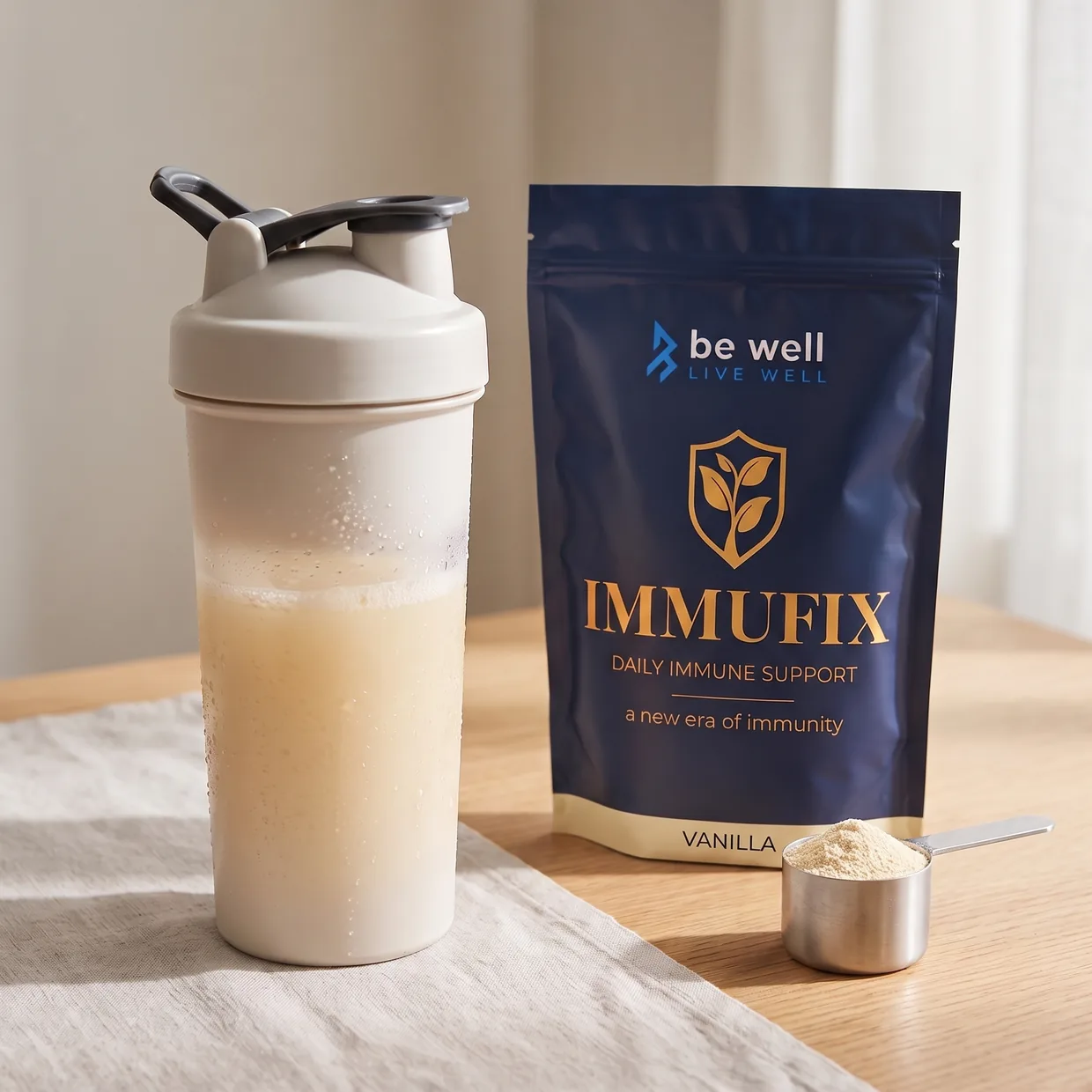
Immufix is one scoop (25g) mixed in around 200ml of water, once a day, so the drink itself counts as one glass of fluid towards the 6 to 8. It is a food supplement, not a replacement for drinking through the day. Each serving contains 9.9g of sugars, which is listed on the label. Magnesium contributes to electrolyte balance and to the reduction of tiredness and fatigue. Riboflavin, niacin and vitamin B6 contribute to normal energy-yielding metabolism. Every amount is on the science page.
The short version.
- The NHS Eatwell Guide recommends 6 to 8 cups or glasses of fluid a day, as a guide.
- Water, lower-fat milk, sugar-free drinks, tea and coffee all count. Keep juice and smoothies to 150ml a day.
- The BDA puts adult needs from drinks at about 1,600ml for women and 2,000ml for men.
- Aim for pee that is a clear pale yellow. Thirst alone can lag behind.
- Drink more in the heat, during long periods of activity, and when pregnant or breastfeeding.
Food supplements should not be used as a substitute for a varied, balanced diet and a healthy lifestyle. If you have a medical condition, are pregnant, breastfeeding or taking medication, speak to your GP or pharmacist before taking any food supplement.

Daily Immune Support
Vitamins, minerals and plant nutrients in one daily scoop. The formula Paula Radcliffe has taken every day since 1998.
4.8 out of 5 · 89 reviewsDispatched the same day on weekday orders placed before 2pm.
Free standard UK delivery. Royal Mail 48 tracked, 2 to 3 working days. UK addresses only.
30‑day money-back guarantee. Try your first pouch of IMMUFIX for up to 30 days. If it’s not for you, we’ll refund your first qualifying pouch, less £10 shipping and handling. First purchase only. T&Cs apply.
Checkout completes securely on immufix.com
More from the journal.
Cold weather, short days and feeling tired.
Does cold weather make you tired? What research shows about winter, sleep and daylight, what is still unknown, and the routine changes that help most.
10 October 2026 · 6 min read
How much caffeine is too much in a day.
UK guidance puts the limit at 400mg of caffeine a day for most adults, 200mg in pregnancy. What that means in mugs of tea and coffee, and how to cut down.
10 October 2026 · 6 min read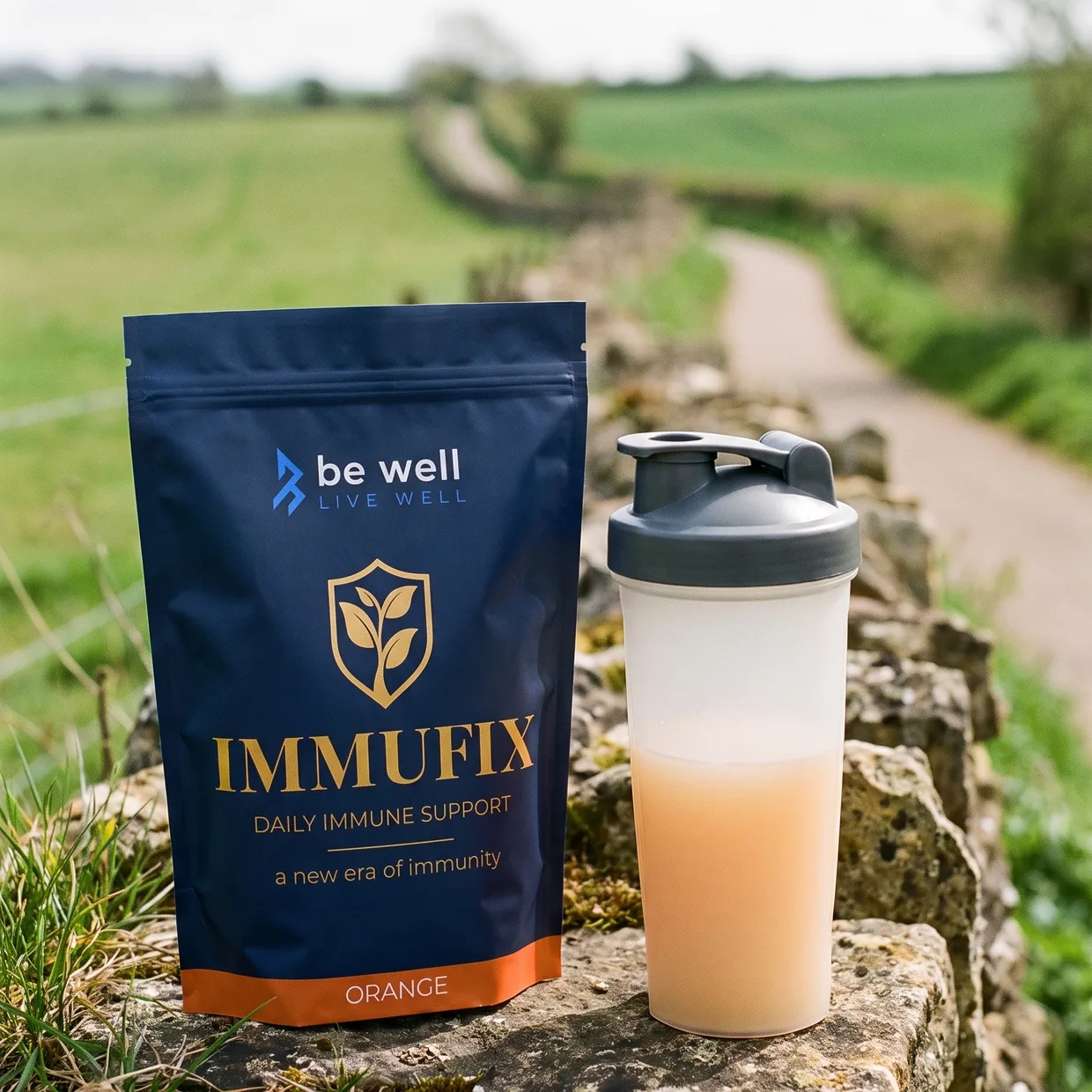
How much exercise you need each week.
The NHS and UK Chief Medical Officers say 150 minutes of moderate or 75 of vigorous activity a week, plus strength on 2 days. What counts and how to fit it in.
10 October 2026 · 6 min read