
Running in the rain, done well.
In the UK, rain is part of the running year, and most of it is fine to run in. This guide covers what to wear, which shoes grip, how to stop wet kit rubbing, when to stay in, and whether parkrun goes ahead in the rain.
Quick answer. Yes, you can run in the rain, and with the right kit it is comfortable. Wear thin, sweat-wicking layers instead of cotton, a cap with a peak, and a light waterproof or windproof shell; choose shoes with good grip; and put petroleum jelly on anywhere that rubs, as England Athletics suggests. Thunder is the exception: the Met Office says "If you hear thunder while you are outside, find a safe, enclosed shelter, such as your car." parkrun goes ahead in the rain; events are cancelled for a flooded or icy course, high winds or lightning.
What are the best tips for running in the rain?
Most of running in the rain is preparation. Get the kit right before you leave, and the run itself is often easier than a hot, still day.
- Check the forecast for thunder, not just rain. Rain is fine. Lightning is not.
- Dress for the run, not the doorstep. You will be wet either way, so aim to be warm and wet rather than cold and wet. Thin layers that wick stay warmer than thick cotton.
- Wear a cap with a peak. It keeps rain out of your eyes, which matters more than keeping your head dry.
- Protect anywhere that rubs before you start, because wet kit chafes more.
- Shorten your stride on wet leaves, painted road markings, metal covers and smooth stone.
- Be easy to see. Rain makes the light flatter and drivers' windscreens harder to see through.
- Have dry clothes ready for the moment you stop, because wet kit cools you quickly.
What should I wear running in the rain?
The same layers as any other run, with an outer layer that suits the wind and temperature. The American College of Sports Medicine's guide to exercising in the cold describes the ideal outer layer as "Waterproof, windproof, breathable", and the layer next to the skin as one that absorbs moisture, giving wool as an example of a "moisture wicking" fabric. A synthetic running top does the same job. Cotton soaks up rain and sweat and stays heavy and cold.
| Conditions | What to wear | Worth knowing |
|---|---|---|
| Light drizzle, mild | T-shirt or thin long sleeve, shorts, cap | A jacket usually ends up tied round your waist |
| Steady rain, chilly | Long-sleeve wicking top, light waterproof, tights, cap, thin gloves | Tights stay warmer than wet bare legs |
| Heavy rain and wind | Wicking base layer, waterproof with a hood, tights, gloves | Run out into the wind and home with it behind you |
| Thunder or lightning | Stay in, or run another time | Indoor or treadmill session instead |
These bands are our practical guide, not an official standard. Even the best waterproof will not keep you completely dry on a long run, because you sweat inside it. What it does is block the wind, and wind on wet skin is what makes a rainy run feel cold. For a layer-by-layer guide by temperature, see what to wear running in the cold.
Which shoes are best for running in the rain?
The shoes you already run in, as long as the grip is good. Worn soles slide on wet pavements, so check the tread before the wet months start. For grass, mud and woodland paths, a trail shoe with deeper lugs grips far better than a road shoe.
- Socks matter as much as shoes. Thin running socks that wick move water away from the skin. Cotton socks hold water against your feet for the whole run.
- Lace a little firmer. Wet shoes stretch and get heavier, and a loose shoe lets the foot slide, which is what rubs.
- Do not chase dry feet. Once your feet are wet, the puddles stop mattering. Running round every puddle on a wet path often means running on the slippery edges.
- Dry them slowly. Take out the insoles, loosen the laces and stuff the shoes with newspaper overnight, away from direct heat.
How do I stop chafing when running in the rain?
Lubricate and wear the right fabric. England Athletics answers this question directly in its RunTogether advice for runners: "Before you run, lubricate the areas which may rub with petroleum jelly." It adds that skin-tight garments help and that "Seamless and sweat-wicking fabrics are ideal."
Rain makes rubbing worse, because wet fabric is heavier and moves more against the skin. The usual places are the inner thighs, underarms, the line of a bra or waistband, and the nipples on long runs. Tights or close-fitting shorts help the thighs. A well-fitting sports bra or a top without heavy seams helps the rest. Wash the area and dry it as soon as you are home.

How do I stay safe running in the rain?
Three things change in the rain: how well you grip, how well drivers see you, and the risk of lightning in a storm.
- Underfoot. Wet leaves, painted road markings, metal drain covers and smooth paving are the slippiest surfaces. Shorten your stride, take corners slowly and walk anything that looks like ice on chilly mornings.
- Being seen. Rule 3 of the Highway Code tells pedestrians to "Wear or carry something light-coloured, bright or fluorescent in poor daylight conditions." Heavy rain counts. After dark, reflective kit and a light matter more; our guide to running in the dark covers both.
- Traffic spray and puddles. A wet windscreen makes a runner harder to spot, and not every driver slows for a puddle. Use the pavement side away from the kerb where you can.
- Lightning. The Met Office's lightning advice is to check the forecast before any outdoor activity, and "If the forecast is for thunderstorms in your area, plan your trip for another day." If thunder starts while you are out, head for a safe, enclosed shelter such as your car. The same page says: "Try not to walk or shelter close to buildings and trees."
Does parkrun happen in the rain?
Yes. Rain on its own is not one of the reasons parkrun gives for cancelling. Its support article on cancellations says event teams cancel "where participant safety is at risk or the course is unavailable." The weather reasons it lists are a course that is "flooded or too icy", or "high winds or other weather conditions" that leave parts of the course "unpassable or dangerous". Lightning is listed separately: events cancel "If lightning is present or in the vicinity of the event."
The same article asks you to "check the event website and/or their social media channels" before you go, and warns that "last minute cancellations may occur." On a wet Saturday, expect mud, a soggy barcode and a quicker trip home. For start times, cancellations and what to wear at a winter event, see our guide to parkrun in winter.
Where Immufix fits.
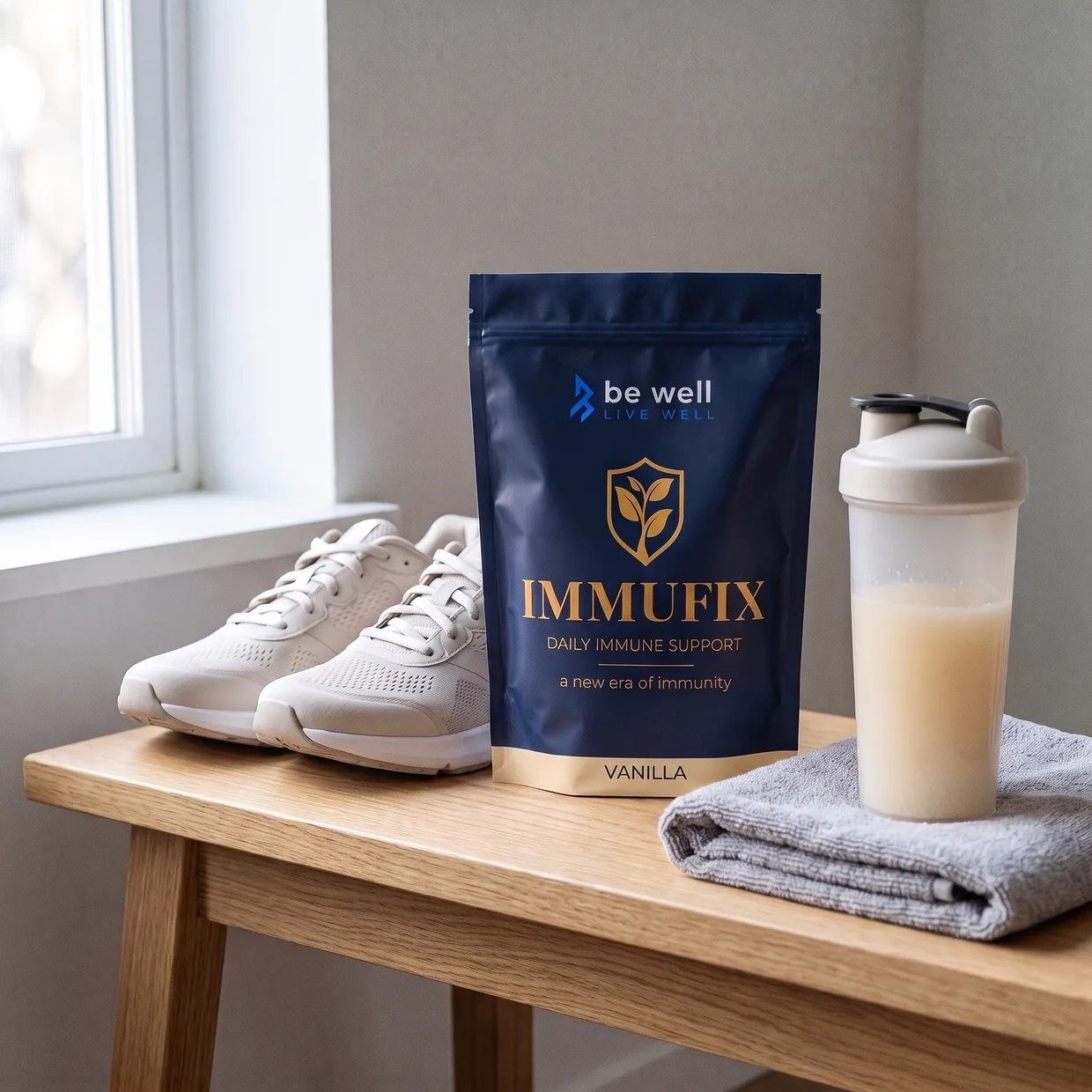
Good kit gets you out of the door when it is wet. A steady routine at home keeps you going out week after week. Immufix is one 25g scoop in around 200ml of water, once a day, with breakfast before or after your run. Magnesium contributes to normal muscle function and to electrolyte balance. Riboflavin, niacin and vitamin B6 contribute to the reduction of tiredness and fatigue. Every amount is on the science page.
The short version.
- Rain is fine to run in. Thunder is not: stay in, or find an enclosed shelter if it starts.
- Wear thin wicking layers, a peaked cap and a light waterproof or windproof shell. Avoid cotton.
- Choose shoes with good grip, wicking socks, and a trail shoe for mud.
- Put petroleum jelly where kit rubs, and wear close-fitting, seamless fabrics.
- parkrun goes ahead in the rain. Check your event's website and social media for floods, ice, high winds or lightning.
Food supplements should not be used as a substitute for a varied, balanced diet and a healthy lifestyle. If you have a medical condition, are pregnant, breastfeeding or taking medication, speak to your GP or pharmacist before taking any food supplement.

Daily Immune Support
Vitamins, minerals and plant nutrients in one daily scoop. The formula Paula Radcliffe has taken every day since 1998.
4.8 out of 5 · 89 reviewsDispatched the same day on weekday orders placed before 2pm.
Free standard UK delivery. Royal Mail 48 tracked, 2 to 3 working days. UK addresses only.
30‑day money-back guarantee. Try your first pouch of IMMUFIX for up to 30 days. If it’s not for you, we’ll refund your first qualifying pouch, less £10 shipping and handling. First purchase only. T&Cs apply.
Checkout completes securely on immufix.com
More from the journal.
Carb loading for a marathon, in grams.
How many carbs to eat before a marathon: 10 to 12g per kg a day for 36 to 48 hours, 1 to 4g per kg on race morning, with a calculated UK day of meals.
10 October 2026 · 6 min read
Couch to 5K, started in winter.
Couch to 5K in winter: how the free NHS 9-week plan works, three runs a week, and how to fit it around dark mornings, short days, cold and rain.
10 October 2026 · 7 min read
A half marathon nutrition plan, from the week before.
A half marathon nutrition plan for the week before, the night before, race morning, during the run and after, with sourced carbohydrate amounts.
10 October 2026 · 6 min read