
Winter walks, planned around the light.
A winter walk is one of the easiest ways to stay active from November to February. The two things that catch people out are the light, which goes earlier than you expect, and the ground, which is wetter and colder than it looks from the window.
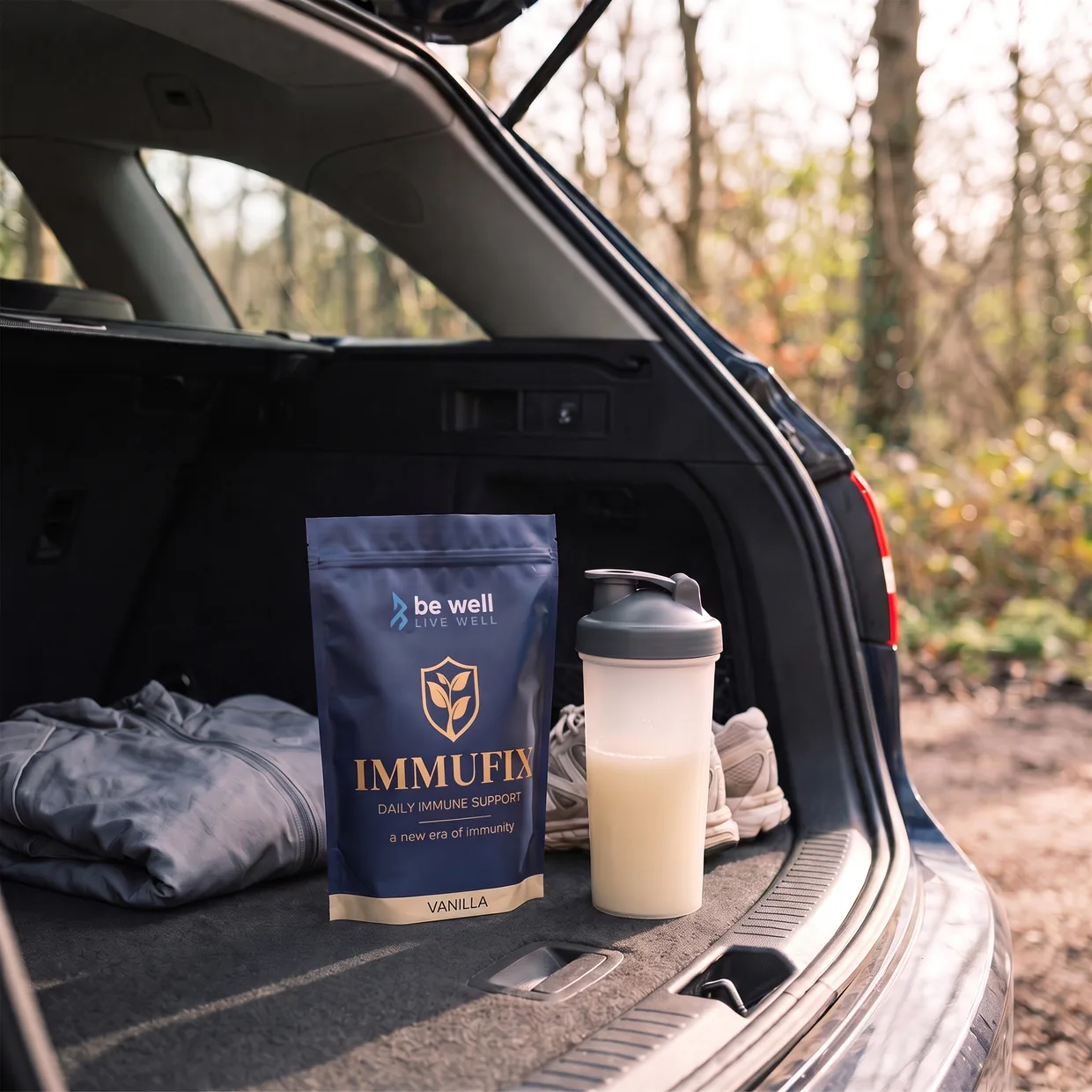
Quick answer. For a winter walk in the UK, plan around daylight first: on 21 December the sun is up for about 7 hours 50 minutes in London and under 7 hours in Edinburgh, so start in the morning or straight after lunch. Wear layers with a windproof and waterproof outer, warm hat and gloves and footwear with a firm, grippy sole. Carry a head torch, a charged phone and a spare warm layer, check the forecast, and tell someone your route. On roads in poor light, the Highway Code says to wear something bright, and reflective materials after dark.
When is the best time for a winter walk?
As early in the day as you can manage. The Met Office's winter advice for getting out and about recommends "setting off nice and early to maximise the daylight hours." The table shows why. These sunrise and sunset times are calculated for each city and can differ by a minute from published tables.
| City | 1 December | 21 December | 1 February |
|---|---|---|---|
| London | 07:44 to 15:55 | 08:04 to 15:53 (7h 50m) | 07:39 to 16:50 |
| Cardiff | 07:56 to 16:07 | 08:16 to 16:06 (7h 50m) | 07:51 to 17:02 |
| Manchester | 08:02 to 15:54 | 08:23 to 15:51 (7h 28m) | 07:54 to 16:51 |
| Belfast | 08:22 to 16:03 | 08:44 to 15:59 (7h 15m) | 08:13 to 17:02 |
| Edinburgh | 08:19 to 15:44 | 08:42 to 15:40 (6h 58m) | 08:08 to 16:45 |
Three things follow from the numbers.
- Afternoons are short. In December, a two-hour walk that starts at 2pm finishes around or after sunset in every city in the table.
- The evenings recover first. By 1 February sunset is nearly an hour later than at the solstice, while sunrise has moved by less than half an hour.
- Further north is darker. Edinburgh's shortest day is almost an hour shorter than London's.
The clocks go back at 2am on Sunday 25 October 2026, which brings sunset forward by an hour overnight. Our guide to the clocks going back covers how the light changes through the season.
What should I wear for a winter walk?
Layers, not one big coat. AdventureSmart UK, the outdoor safety campaign, publishes a winter kit list for walking on land. For lowland walks it includes:
- warm or windproof trousers or leggings, and thermal leggings or a base layer
- a thermal top and a fleece or insulating layer
- "rigid-soled footwear with appropriate socks"
- a warm hat and a buff, and gloves or mitts
- a waterproof jacket and over-trousers
The Met Office makes the same point for ordinary UK conditions: "A good set of waterproofs and adequate footwear will allow you to enjoy the outdoors in wet conditions and when temperatures drop, warm layers will keep you nice and snug." Start a little cool. You warm up within ten minutes of walking, and a sweaty base layer gets cold the moment you stop. For more on layering, our guide to what to wear in the cold was written for runners, but the principles carry over.
What should I carry on a winter walk?
AdventureSmart's list of what to carry on land is short and sensible:
- A head torch, with the batteries checked and spares if needed.
- A charged phone and a power bank. AdventureSmart suggests carrying the phone "in an interior jacket pocket close to your body", which keeps it warm and helps preserve battery life.
- A spare insulating layer for when you stop.
- A map, and the knowledge to use it. The Met Office suggests a paper map and compass as a backup, because "electronic devices may not always be reliable."
- Food and a hot drink. In AdventureSmart's words, "it's important to stay hydrated even when it's cold."
- A small first aid kit and a whistle.
Walking in winter: safety tips.
Check the forecast, and the ground.
The Met Office says to "check the forecast before you set off" and to think about what the ground will be like underfoot after bad weather. Mud, wet leaves and frozen puddles are all slippery underfoot, so slow down on them.
Be seen on roads.
Country lanes with no pavement are the most exposed part of many winter walks. The Highway Code says to keep to the right-hand side of the road where there is no pavement, so you can see oncoming traffic. Rule 3 says: "Wear or carry something light-coloured, bright or fluorescent in poor daylight conditions. When it is dark, use reflective materials (eg armbands, sashes, waistcoats, jackets, footwear)". Reflective materials can be seen by drivers using headlights "up to three times as far away as non-reflective materials."
If you will finish in the dark, know the route.
AdventureSmart's advice on walking after dark is to "choose a route you have walked in daylight before heading off in the dark", carry 2 torches and spare batteries, and "let someone know your plan and expected time of return" if you go alone. It adds: "It's OK to turn back if you feel intimidated or are getting tired."
High ground is a different walk.
Winter hills are a separate activity. The Met Office warns that on moors and mountains "heavy snowfall, ice, low temperatures, and wind chill" mean that "if you are venturing out anywhere above 300m you need to be prepared and equipped." AdventureSmart adds items such as goggles, a walking axe and crampons for anything beyond the lowlands, and the skills to use them. If that is not you yet, stay low.
How far should I walk in winter?
There is no winter rule. The adult guideline from the NHS's walking for health page applies all year: "A brisk 10-minute daily walk has lots of health benefits and counts towards your 150 minutes of weekly exercise." A brisk walk is about 3 miles an hour, and "you can still talk but cannot sing the words to a song." Four 40-minute walks a week add up to 160 minutes. Our guide to how much exercise you need a week has the full breakdown.
Where Immufix fits.
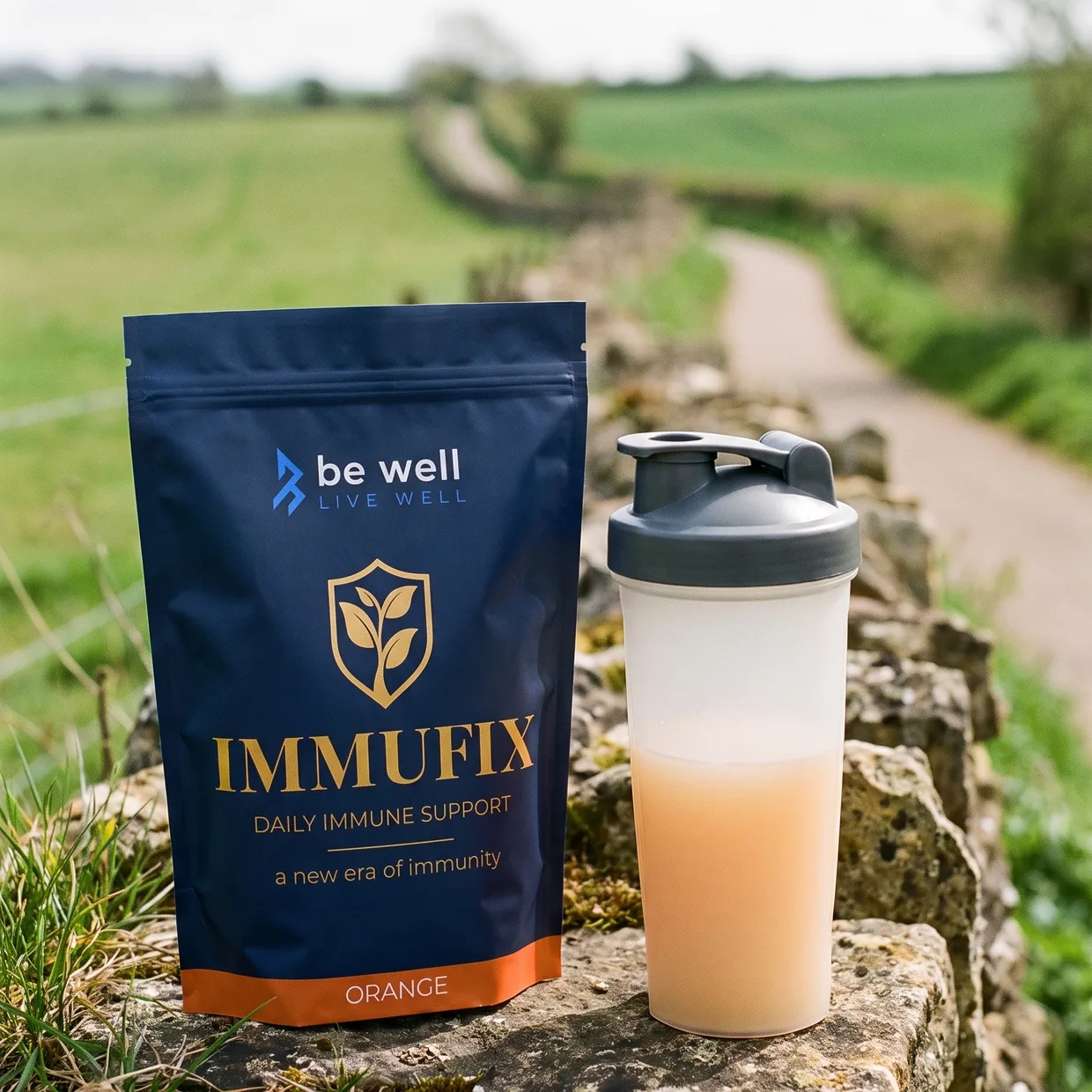
Immufix is one 25g scoop in around 200ml of water, once a day. Many people take it with breakfast before heading out, and the pouch travels in a bag or a car boot. Vitamin D contributes to normal muscle function and to the maintenance of normal bones. Magnesium contributes to normal muscle function and to the reduction of tiredness and fatigue. Every ingredient and amount is on the science page.
The short version.
- Plan around daylight: about 7 hours 50 minutes in London on 21 December, under 7 hours in Edinburgh.
- Wear layers, a waterproof jacket and over-trousers, a hat, gloves and firm-soled footwear.
- Carry a head torch, a charged phone kept warm, a spare layer, food and a hot drink.
- On roads without a pavement, walk facing traffic and wear something bright, reflective after dark.
- Above 300m in winter, you need extra kit and skills. Otherwise, stay low.
Food supplements should not be used as a substitute for a varied, balanced diet and a healthy lifestyle. If you have a medical condition, are pregnant, breastfeeding or taking medication, speak to your GP or pharmacist before taking any food supplement.

Daily Immune Support
Vitamins, minerals and plant nutrients in one daily scoop. The formula Paula Radcliffe has taken every day since 1998.
4.8 out of 5 · 89 reviewsDispatched the same day on weekday orders placed before 2pm.
Free standard UK delivery. Royal Mail 48 tracked, 2 to 3 working days. UK addresses only.
30‑day money-back guarantee. Try your first pouch of IMMUFIX for up to 30 days. If it’s not for you, we’ll refund your first qualifying pouch, less £10 shipping and handling. First purchase only. T&Cs apply.
Checkout completes securely on immufix.com
More from the journal.
The clocks go forward on Sunday 28 March 2027.
The UK clocks go forward at 1am on Sunday 28 March 2027. What changes, how much lighter the evenings get city by city, and how to handle the lost hour.
10 October 2026 · 6 min read
Your 5 A Day in the winter months.
NHS 5 A Day portion sizes explained: 80g of fruit or veg, 30g dried, 150ml juice. What counts in winter, including frozen, tinned and soup, and a sample day.
10 October 2026 · 6 min read
A new year routine that lasts past January.
How to build a new year routine that lasts past January: small goals tied to a daily cue, what UK guidelines suggest, and how long a habit really takes.
10 October 2026 · 7 min read