Tracked UK delivery, 2 to 3 working days

How many calories are in boiled chicken eggs?

31.2kcal

in a 60 g egg

52 kcal per 100 g.

Source: UK CoFID 2021, record 12-941, 12 analysed samples. Checked 5 October 2026.

7.8 gProtein

0 gFibre

15 %Daily niacin

Eggs, chicken, white, boiled

What’s in a 60 g egg

More than half of a egg is water, which is why the calories stay low. What is left is mostly protein.

  • 7.8 gProtein
  • 51.5 gWater
  • 0.7 gMinerals and the rest

Below average for eggs

Chicken eggs are 52 kcal per 100 g. The 15 eggs in this database average 206.

Chicken eggs52
Eggs average206

High in protein

Protein supplies 100 % of the calories; the UK “high protein” line is 20 %.

Protein, per egg7.8 g

Vitamins and minerals in chicken eggs

Four of the 22 reach the “source of” level, niacin first; none reaches “high in”.

15 %

Niacin (vitamin B3)

2.5 mg in a 60 g egg

6th of 15 eggs

Niacin contributes to normal energy-yielding metabolism, to normal psychological function and to the reduction of tiredness and fatigue.

Chloride98.4 mg12 %
Vitamin B120.0003 mg12 %
Selenium0.0066 mg12 %
Biotin0.00192 mg3.8 %

Only a trace

  • Manganese

None recorded

  • Vitamin A
  • Vitamin D
  • Vitamin E
  • Vitamin C
Show all 22 with amounts
Niacin (vitamin B3)2.5 mg, 15 %
Chloride98.4 mg, 12 %
Vitamin B120.0003 mg, 12 %
Selenium0.0066 mg, 12 %
Riboflavin (vitamin B2)0.12 mg, 8.6 %
Biotin0.00192 mg, 3.8 %
Potassium73.8 mg, 3.7 %
Copper0.02 mg, 2.4 %
Pantothenic acid (vitamin B5)0.13 mg, 2.2 %
Magnesium7.2 mg, 1.9 %
Thiamin (vitamin B1)0.02 mg, 1.6 %
Iodine0.0024 mg, 1.6 %
Vitamin B60.02 mg, 1.3 %
Folate0.0024 mg, 1.2 %
Phosphorus7.8 mg, 1.1 %
Calcium4.8 mg, 0.6 %
Zinc0.06 mg, 0.6 %
Iron0.03 mg, <1 %
Vitamin Anone recorded
Vitamin Dnone recorded
Vitamin Enone recorded
Vitamin Cnone recorded

Badges use the UK legal thresholds per 100 g: 15 % of the reference intake for “source of”, 30 % for “high in”. A trace is shown as “trace” and never counts.

What chicken eggs don’t give you. And where to find it.

No recorded vitamin D or vitamin C, and only 1 % of the zinc reference intake per 100 g.
Zinc

1%in chicken eggs, per 100 g
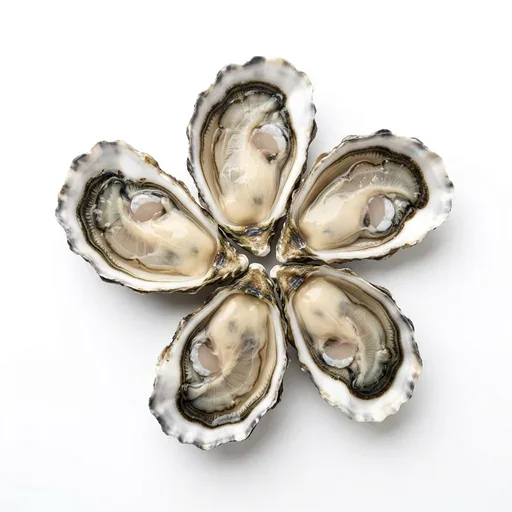
Find it inOysters, raw592 % per 100 g
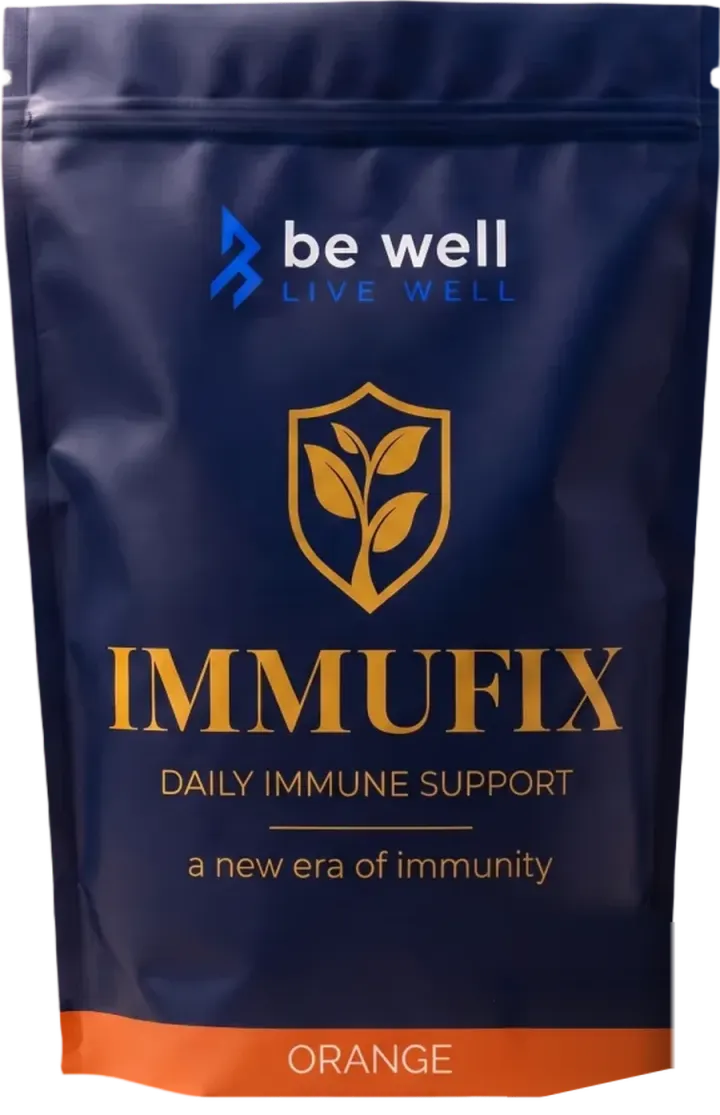
Immufix Daily Immune Support pouch, orange flavour

100 mgVitamin C, 125 %

0.075 mgSelenium, 136 %

0.00125 mgVitamin D, 25 %

Or one scoop of Immufix

Every 25 g scoop declares 100 mg of vitamin C, 0.00125 mg of vitamin D and 0.075 mg of selenium, alongside other vitamins and minerals. Vitamin C, vitamin D and selenium contribute to the normal function of the immune system.

30-day money-back on your first pouch. 75 kcal and 9.9 g of sugars a scoop.

Try your first pouch

30-day money-back guarantee on your first qualifying pouch, less £10 shipping and handling.

Tracked UK delivery

Free standard delivery to UK addresses. Royal Mail 48 tracked, usually 2 to 3 working days.

Made in Cambridgeshire

Made in the UK since 1998, with every nutrient and its declared amount listed on the label.

Chicken eggs against other eggs

Per 100 g, chicken eggs have the most niacin of the 2 here, ahead of eggs (quail, whole, raw).

Eggs, chicken, white, boiledthis page
Eggs, quail, whole, raw−0.1 mg

All values per 100 g, from the same dataset. Differences are against chicken eggs.

Paula Radcliffe
Since that first introduction in 1998, Immufix has remained a constant in my life.

Paula Radcliffe, ambassador and co-owner. Read her story

Taken every morning since 1998.

Paula Radcliffe has taken the same formula since she was 24. Customers rate Immufix 4.8 out of 5 from 89 reviews.

2:15:25World record, 2003
28Years, same routine
6London and New York wins

Questions about chicken eggs

The questions people ask about chicken eggs, answered from the dataset.

How many calories are in a portion of chicken eggs?
A typical portion (60 g, one medium egg) gives 31 kcal. Per 100 g the figure is 52 kcal.
Is chicken eggs a source of niacin?
It is a source of niacin: 4.1 mg per 100 g, 26 % of the NRV, which passes the 15 % threshold for “source of” but not the 30 % needed for “high in”.
Does boiling change the folate in chicken eggs?
Yes. Per 100 g, folate goes from 10 mg raw to 0.004 mg boiled. Part of that is the vitamin or mineral itself changing, part is the change in water content.
Which vitamins and minerals do chicken eggs have most of?
By share of the daily reference intake: niacin (4.1 mg, 26 %), chloride (164 mg, 21 %) and vitamin B12 (0.0005 mg, 20 %) per 100 g.
How these numbers were made
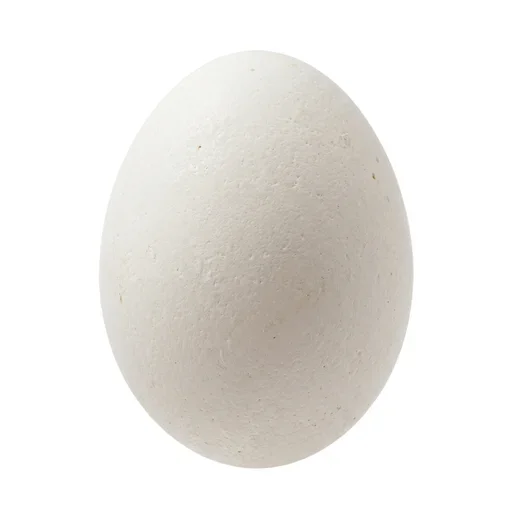
Every figure comes from the UK Composition of Foods Integrated Dataset (CoFID), 2021 edition, record 12-941, Eggs, chicken, white, boiled, 12 analysed samples, published by Public Health England under the Open Government Licence v3.0. Main data references: DH, Nutrient analysis of eggs, 2012. Values are per 100 g of the edible part; a egg is 60 g, one medium egg, the usual UK portion for eggs. Reference intakes follow Regulation (EU) 1169/2011 Annex XIII as retained in GB law; “source of”, “high in” and “low” follow Regulation (EC) 1924/2006, assessed per 100 g. Function lines are the authorised wording from the GB register of nutrition and health claims, credited to the nutrient. Energy is rounded to the whole kcal and kJ; other amounts to one decimal, or two below 1. A trace is shown as “trace” and never gets a figure or a badge; a nutrient never analysed is left off the page. We start from the dataset’s 2,887 records and keep 2,322: records weighed with bone, shell or skin, alcoholic drinks, infant foods, brand-named products, records with fewer than eight measured vitamins and minerals and near-identical variants are left out. Group context uses the 15 eggs kept from the dataset; a rank counts only the foods with a measured figure for that nutrient. Food images are illustrations from Ingredient Atlas, released under CC0; they show the food, not the measured sample, and where no illustration of the exact food exists the nearest one is shown (here: Egg). Checked 5 October 2026. Contains public sector information licensed under the Open Government Licence v3.0.

Nutrition

Eggs, chicken, white, boiled

Calories31.2 kcal
of which starch
0 g
Fibre
0 g
Protein
7.8 g
Salt
0.23 g

Vitamins and minerals

Niacin (vitamin B3)
2.5 mg
Chloride
98.4 mg
Vitamin B12
0.0003 mg
Selenium
0.0066 mg

133 kJ per egg. Values for the edible portion. Source: UK CoFID 2021.

All 22 vitamins and minerals